
Which ICE Detention Rights Still Hold in 2026
ICE detention rights now sit amid a live conflict among agency policy, BIA precedent, and district court orders, with bond-eligibility protections stayed except in the Central District of California. Counsel can use this dated, source-linked checklist to verify each release pathway—bond, habeas, discretionary parole, counsel, and consular notification—for the specific detainee before filing.
- Applicable role
- Immigration attorney
- Workflow stage
- pre-filing
- Primary source
- Matter of Yajure Hurtado
Last verified: August 2, 2026. This is a filing-oriented check on ICE detention legal rights in immigration enforcement, not legal advice and not an evergreen rights sheet. A detained person may have a path to request release; that does not mean the immigration judge has jurisdiction to grant bond, that a district court order is currently usable in the place of detention, or that a bond grant will result in immediate release.
The first question in 2026 is no longer simply “can this person ask for bond?” It is: which authority controls this detainee, in this location, today? Since July 2025, ICE has taken the position that people who entered without inspection are barred from bond regardless of how long they have lived in the United States; the BIA endorsed that position in Matter of Yajure Hurtado, decided September 5, 2025; district court orders in Maldonado Bautista then pushed back; and, as of a March 6, 2026 stay pending appeal, those district court protections are stayed outside the Central District of California, according to NILC’s April 8, 2026 update. [1]
Bond eligibility is the highest-risk verification item
For many detained undocumented entrants, bond is now the release pathway most likely to be described too broadly. The older practical assumption—request a custody redetermination hearing before an immigration judge and litigate danger and flight risk—can fail before the hearing reaches those questions. The threshold fight is whether the immigration judge has bond authority at all.
| Detainee location or controlling venue | Working bond-hearing status as of Aug. 2, 2026 | Authority to verify before filing | Filing consequence |
|---|---|---|---|
| Central District of California | Maldonado Bautista protections remain the important exception identified in the April 8, 2026 update; do not assume the March 6 stay eliminated protection there. [1] | Maldonado Bautista district court orders and current docket/stay status; NILC April 8, 2026 update as a secondary tracker. [1] | Request bond and preserve arguments against ICE’s entry-without-inspection bar; attach or cite the current controlling order if available. |
| Texas, Louisiana, Mississippi | The Fifth Circuit’s Buenrostro-Mendez v. Bondi follows Yajure Hurtado, so immigration judges may deny bond hearings on entry-without-inspection grounds. [1] | Fifth Circuit authority, Matter of Yajure Hurtado, and any later appellate or Supreme Court stay/order. | Do not file as if bond eligibility is settled in the detainee’s favor; preserve objections and evaluate habeas or parole immediately. |
| Outside the Central District of California and outside the Fifth Circuit | Maldonado Bautista protections were stayed on March 6, 2026 pending government appeal, except within the Central District of California. [1] | Current circuit law, local district court orders, Maldonado Bautista stay status, and Matter of Yajure Hurtado. | Requesting bond may still preserve the issue, but counsel should expect ICE to invoke the July 2025 position and Yajure Hurtado. |
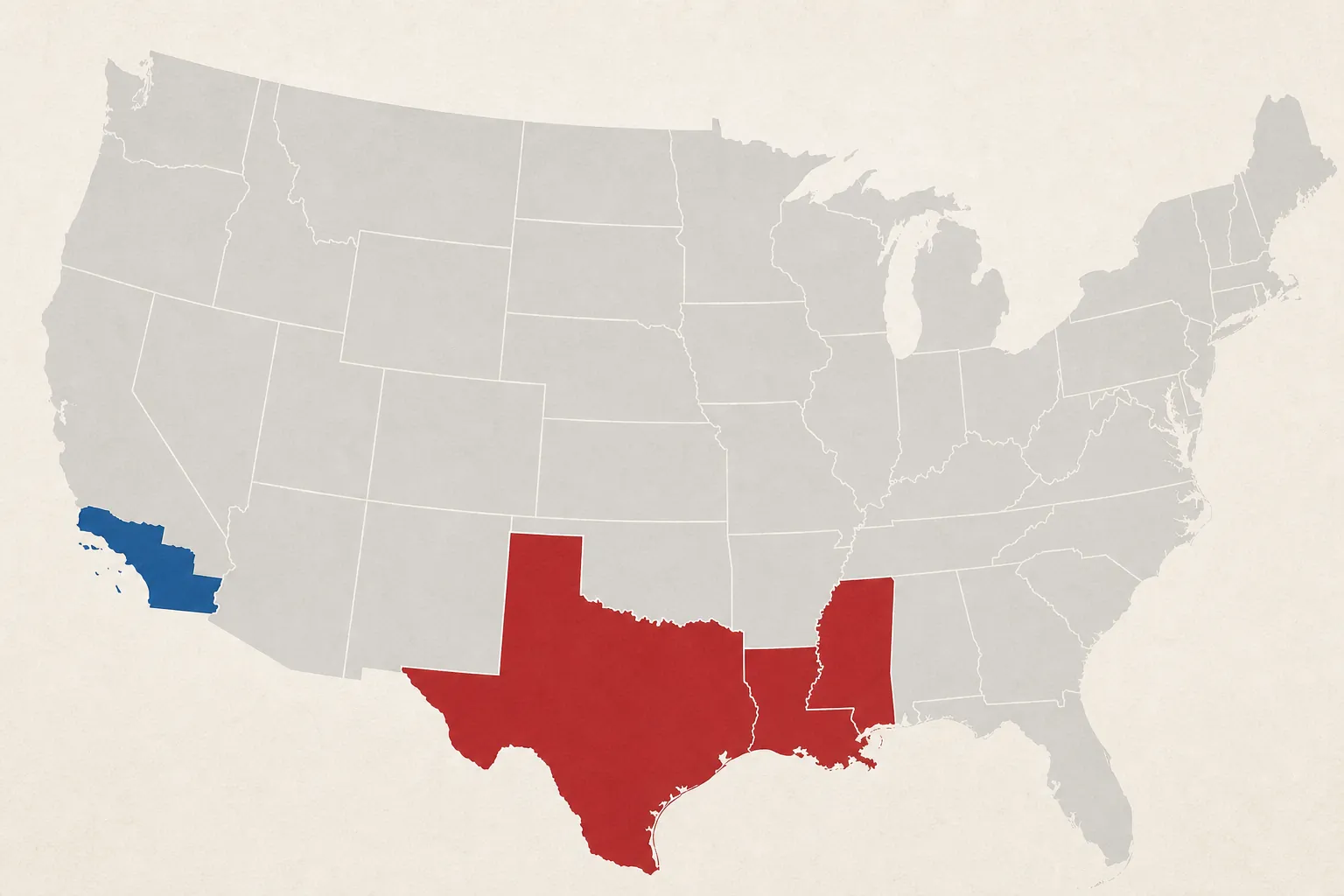
The source hierarchy matters. ICE’s July 2025 position changed what officers and government counsel would argue. Matter of Yajure Hurtado made that position BIA precedent. Maldonado Bautista created district court protection for a class of people, but the March 6, 2026 stay limited its practical reach. Buenrostro-Mendez supplies a Fifth Circuit answer. These are not interchangeable “updates”; they control different actors in different places.
A cautious bond packet in Q3 2026 should therefore separate three requests: first, a request that the immigration judge find bond jurisdiction; second, if jurisdiction is found, the usual custody evidence on danger and flight risk; third, preservation of the statutory and constitutional objections if the immigration judge denies a hearing under Yajure Hurtado or circuit authority. Blending those into one generic “bond request” makes the record harder to use later.
A bond grant may still be blocked by an automatic stay
Last verified: August 2, 2026. Before telling a family that bond means release, check whether ICE reserved or filed an appeal that triggers an automatic stay under 8 C.F.R. § 1003.19. The practical consequence is severe: the immigration judge may grant bond, the family may be ready to pay, and the person may still remain detained while the government’s appeal blocks release.
The check is mechanical but often missed under time pressure: after a bond grant, confirm whether DHS invoked the automatic stay procedure, whether the notice was timely, what appeal deadline applies, and whether any separate motion can be made to challenge continued detention. A bond order belongs in the release file; proof that the stay does or does not apply belongs there too.
Habeas is not a side issue when bond is unavailable
Last verified: August 2, 2026. If the immigration judge denies bond jurisdiction, or if detention continues after a bond grant because of a stay, habeas review may become the practical release vehicle. It is not a substitute for building the immigration record; it is the forum where unlawful detention arguments may be tested when the administrative route is closed, delayed, or structurally inadequate for the person’s claim.
The access problem is not theoretical. NILC reported in October 2025, citing TRAC, that roughly 80% of people in immigration proceedings lack counsel; TRAC’s detention quick facts remain a useful source for checking current detention and representation context. [2][3]
That number does not prove that habeas petitions will succeed. It does explain why a release workflow that treats habeas as an afterthought will fail many detained people before any merits question is reached. Someone has to identify the district of confinement, obtain the A-number, confirm the detention authority being invoked, collect the immigration judge’s bond ruling or refusal, and preserve the timeline of transfers and custody reviews.
- Verify the custodian and district of confinement. Venue and respondent questions can change after transfer; save facility records and locator screenshots when they matter.
- Attach the administrative custody record. Include the bond request, denial, jurisdiction ruling, automatic-stay notice, parole request, and any proof of medical or mental-health vulnerability.
- Do not overclaim the class-wide effect of Maldonado Bautista. Outside the Central District of California, the March 6, 2026 stay is the fact that must be confronted first. [1]
- Route early to pro bono or habeas counsel. The record needed for habeas is easier to collect before transfer, after-hours facility confusion, or removal scheduling compresses the window.
Discretionary parole: request it, but do not describe it as an entitlement
Last verified: August 2, 2026. Parole remains an important request to make, especially where the person has physical or mental-health vulnerability, pregnancy, caregiving facts, disability-related needs, or other circumstances that make detention unusually harmful. The filing posture is different from bond: counsel is asking DHS to exercise discretion, not asking an immigration judge to set bond after finding statutory authority.
A parole packet should be built as if the reviewing officer has no time and no context. Put the requested action on the first page. Identify the current facility, A-number, medical or vulnerability evidence, proposed address, sponsor information, transportation plan, and any pending court dates. If bond law is hostile in the jurisdiction, say so only as needed to explain why parole is urgent; do not let the parole request become a full bond brief.
- Preserve proof of submission: email receipts, fax confirmations, facility contact logs, and names or titles of officials who accepted the packet.
- Separate humanitarian evidence from legal argument: medical letters, prescriptions, psychological evaluations, and family-support declarations should be easy to find.
- Update after transfer: a parole request sent to the wrong facility or field office can disappear in practice even when the legal request remains sound.
Counsel access and G-28 filing: make representation visible before the next move
Last verified: August 2, 2026. The right to counsel in immigration detention is not a right to government-appointed counsel for most people. For a detained person, the more immediate question is whether the lawyer or accredited representative has been recognized in the file early enough to receive notices, request records, schedule calls, and stop avoidable default.
File the G-28 as soon as representation is accepted, then confirm where it has been recognized: ICE, EOIR, or both, depending on the proceeding and request. A family member saying “we have a lawyer” does not put the attorney into the agency file. A signed retainer does not guarantee facility access. A G-28 sent to one component may not solve notice problems in another.
| Operational check | What to save | What not to assume |
|---|---|---|
| G-28 submitted | Stamped copy, e-filing receipt, email confirmation, fax proof, or other transmission record | That all DHS and EOIR components can see the same appearance |
| Attorney call or visit requested | Facility request log, call confirmation, denial reason, date and time | That counsel access problems will be remembered unless documented |
| Notice address confirmed | Current address in EOIR and DHS records, plus proof of correction request | That a transfer automatically updates every notice channel |
| Bond, parole, or habeas packet prepared | Complete PDF, exhibits, proof of service, and version date | That the last version survived after a rushed supplement or emergency filing |
Consular notification, identity records, and entry documents
Last verified: August 2, 2026. Consular notification is easy to mention and easy to leave unverified. Check the person’s nationality, whether notification is mandatory or requested, whether the consulate was contacted, and whether the detained person wants consular involvement when the rule permits choice. The issue may matter for family contact, identity documents, travel-document disputes, medical advocacy, or later litigation over detention conditions.
Entry documents should be preserved even when current bond law is hostile. Save notices to appear, parole paperwork, I-94 records if any, credible-fear or asylum-screening papers, prior filings, release paperwork from earlier encounters, and any document showing how DHS classified the person at entry or arrest. In the present bond conflict, classification is often the first factual hinge; losing the entry record forces counsel to litigate from the government’s shorthand.
- Ask the detained person or family for photos of every DHS document before mailing originals anywhere.
- Keep envelope images and receipt dates when notices arrived by mail.
- Record name variations, date-of-birth variations, and A-number variations; locator and court searches can fail on small mismatches.
- Do not treat “entered without inspection” as established until the charging document, DHS custody position, and client account have been compared.
Locating the detainee is part of the rights check
Last verified: August 2, 2026. Use ICE’s Online Detainee Locator System when the A-number and biographical details are available, but do not stop there if the search fails. Recent arrest, spelling variation, age or birthdate mismatch, transfer, use of a different name, or data lag can all defeat a locator search. A failed search is not proof that the person is not in ICE custody.
For filing purposes, save the search terms used and the time of search when location is disputed or urgent. If a family representative is calling facilities, the call log should include date, time, phone number, person reached, and exact answer given. Those notes can become the only clean record of where the person was believed to be before a transfer or missed hearing.
The filing rule for Q3 2026
In Q3 2026, treat every ICE detention release pathway as a dated, jurisdiction-specific claim. Bond eligibility carries the highest verification burden because agency policy, BIA precedent, district court orders, a stay pending appeal, and circuit authority now point different ways depending on location. Habeas, parole, counsel access, consular notification, document preservation, and detainee location checks should proceed even when bond law is uncertain, because those steps preserve the record the next filing will need.
References
- Rapid Response Update on Bond Eligibility for Undocumented Immigrants, National Immigration Law Center, Apr. 8, 2026.
- ICE is detaining indiscriminately. And releasing almost no one., National Immigration Law Center, Oct. 21, 2025.
- Immigration Detention Quick Facts, TRAC.
Grounded in
This procedure is grounded in Matter of Yajure Hurtado, independent of any single documented case. See the Regulation tracker for the governing text.
Cases this step would have prevented
No cases have been explicitly linked to this checklist yet. See Risk Digest for documented incidents generally.
← Back to WorkflowsReport a correction or tip
Spotted an outdated figure, a misstated fact, or a ruling this workflow checklist should reflect? Public comments are disabled for this content given the professional cost of a misreported case outcome, penalty amount, or rule text — use the structured correction channel instead.
Report a correction or tip for this record →