
Assessing Rivian's Robotaxi Legal and Regulatory Hurdles
This article maps the fragmented regulatory landscape, unsettled liability frameworks, and active litigation Rivian must navigate before its 2028 robotaxi deployment, giving counsel a framework for tracking AV risk for fleet clients.
- Applicable role
- in-house counsel
- Workflow stage
- pre-filing
The legally important phrase in Uber and Rivian’s robotaxi announcement is not “up to 50,000.” It is the condition that deployment depends on regulatory approval. Uber’s March 19, 2026 investor release describes a $1.25 billion investment in Rivian across five tranches through 2031, tied to a plan to deploy up to 50,000 fully autonomous, Level 4 R2-based robotaxis, with initial pilots targeted for San Francisco and Miami in 2028; CNBC reported the same core deal structure and timing the day of the announcement.[1][2]
For a fleet lawyer, that makes the 2028 date a verification problem before it is an operations plan. The target depends on permits, state-level operating rules, federal equipment movement, insurance and indemnity allocation, and the legal effect of Rivian’s own autonomy representations. None of those issues proves the deal cannot proceed. Each one affects whether a pilot can be treated as operationally real, contractually financeable, and defensible if the first serious incident arrives before the model is mature.

The Deal Creates a Compliance Calendar
The Uber-Rivian structure matters because it gives counsel dates, quantities, and dependencies to track. The announcement is not merely a future product aspiration; it links capital, fleet scale, pilot cities, and autonomy level. A five-tranche investment through 2031 gives transaction lawyers a sequence of milestones to compare against permitting progress, vehicle readiness, and any changes in the legal environment between now and the planned launch window.[1]
The first two named cities also pull the analysis into specific jurisdictions. San Francisco puts California’s autonomous-vehicle permitting and enforcement architecture at the center of the file. Miami requires a separate Florida review, but the available materials here support a deeper California analysis than a Florida one. That distinction should stay visible: counsel should not turn a two-city pilot announcement into a generalized U.S. approval assumption.
The vehicle description adds another dependency. Rivian’s public autonomy materials distinguish its newer Rivian Autonomy Platform, described as using 11 cameras, five radars, and a computer with 10 times more power than the prior generation, from Gen 1 vehicles that do not have that same hardware stack.[3] That split matters for the robotaxi project because the announced service is Level 4, not merely a consumer hands-free feature. If a fleet partner is buying, financing, insuring, or operating the vehicles, the diligence question is not whether Rivian has an autonomy brand story. It is which hardware, software, operational design domain, remote-assistance model, and update pathway attach to the specific fleet units.
| Deal Element | Legal Verification Point |
|---|---|
| $1.25B investment across five tranches through 2031 | Tie tranche conditions and public milestones to permit status, vehicle certification, insurance placement, and unresolved litigation disclosures. |
| Up to 50,000 Level 4 R2 vehicles by 2031 | Separate scalable fleet authorization from limited pilot authorization; verify whether each city and state allows the intended driverless operations. |
| 2028 pilots in San Francisco and Miami | Maintain city- and state-specific approval files rather than a single national robotaxi compliance memo. |
| Regulatory approval condition | Treat approvals as a condition precedent to deployment assumptions, not as a post-announcement compliance footnote. |
State Approval Is the First Gate, Not Background Noise
The usual phrase “patchwork regulation” is too soft unless it is attached to something a legal team can route. The AI Laws by State autonomous-vehicle tracker reported 145 AI- and AV-related bills across 34 states in its May 2026 update.[4] That count should not be treated as a stable legal inventory; the tracker itself is a starting point that must be checked against primary state sources. But it is enough to show why a 25-city, multi-year robotaxi rollout cannot be diligenced from federal law alone.
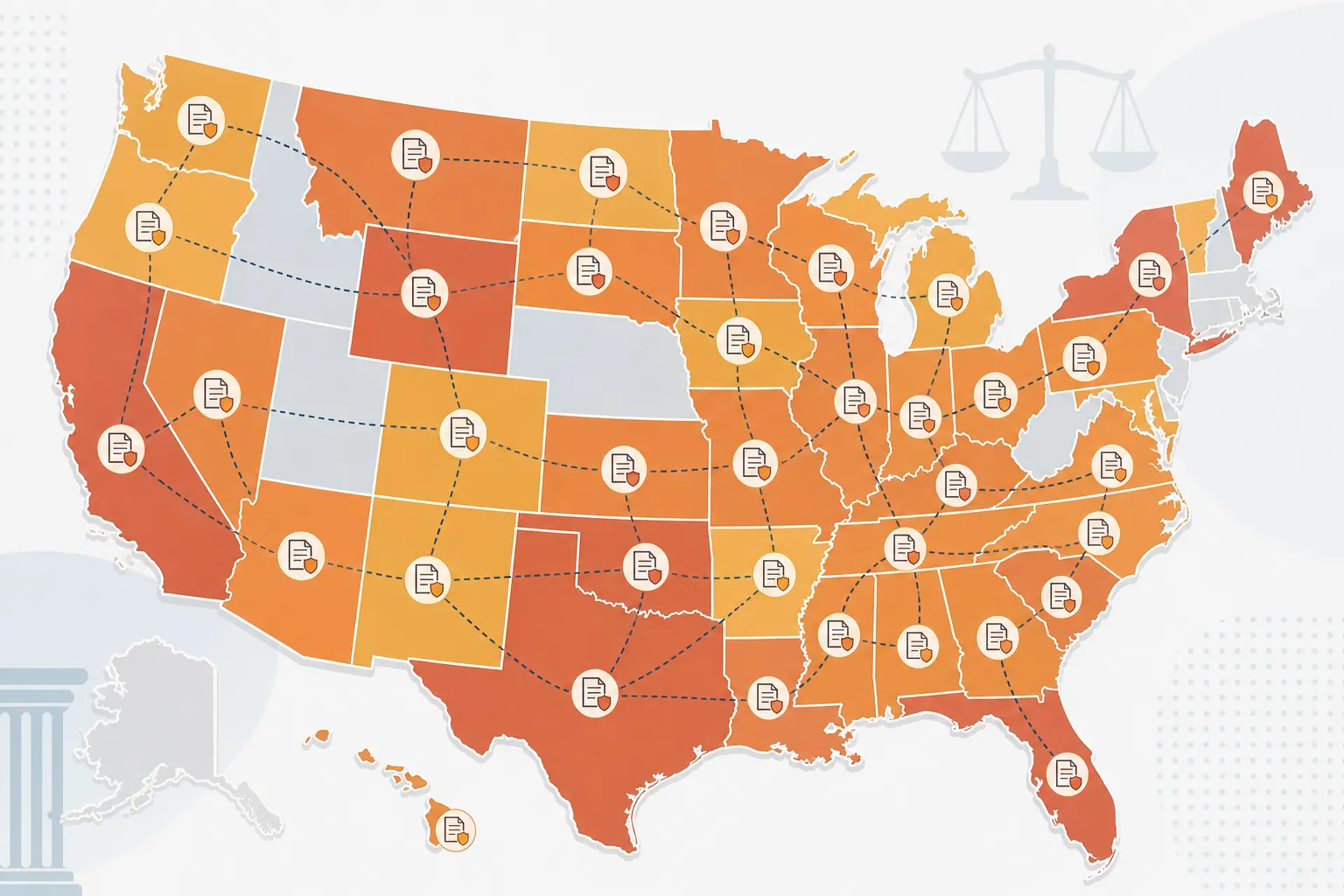
California is the immediate test because San Francisco is named as a planned 2028 pilot market. The May 2026 tracker identifies California DMV changes expanding permit-suspension authority and authorizing ticketing of autonomous vehicles, and Southern California Law Review’s April 2026 robotaxi discussion also highlights California’s movement toward direct accountability for AV conduct.[4][5] For fleet counsel, that means the relevant California file is not limited to whether an AV company has obtained a permit. It must also track suspension triggers, reporting obligations, enforcement discretion, traffic-citation handling, and who inside the fleet organization receives and escalates DMV communications.
AB Davies, described in the available materials as a California AV accountability bill introduced in April 2026, is especially important because it is framed as legislation holding AV builders accountable for AI traffic violations.[5] The bill should not be overread from the limited source record here. Its final text, status, and any enacted form need primary-source verification. Still, its direction is significant: California is not only asking whether driverless vehicles may operate; it is working through how to assign responsibility when the vehicle, rather than a human driver, commits the act that would normally produce a ticket.
That shift can affect contracts before it affects a courtroom. A fleet agreement that treats traffic citations as a routine driver-compliance issue will not fit a Level 4 service if the citation points back to automated driving behavior, mapping decisions, remote-assistance protocols, or vehicle design. The operator may receive the notice, while the manufacturer may control the system that caused the conduct and the platform may control dispatch, trip acceptance, or service-area limits. Those roles need to be mapped before the pilot, not reconstructed after the first enforcement letter.
Federal Movement Helps, but It Does Not Replace State Files
Federal developments are relevant, but the sources here do not show a single federal approval gate that clears Rivian’s state operating path. Dentons’ 2026 U.S. autonomous-vehicles guide discusses federal activity including the SELF DRIVE Act, identified as H.R. 7390, and NHTSA movement on equipment rules such as a brake-pedal proposal.[6] The AV Industry Association’s policy materials also point to federal legislative priorities, including the BUILD America 250 Act.[7] Those developments may affect vehicle standards, exemptions, national consistency, or deployment incentives. They do not eliminate the need to verify California DMV status, local operating conditions, or state enforcement authority for a San Francisco pilot.
That is the practical ordering: federal law can change the ceiling or the equipment pathway, while state law often controls the operating doorway. A fleet client preparing for 2028 needs both files, but the state file is where a named city pilot can stall first.
Level 4 Crashes Move the Liability Conversation Away From Ordinary Driver Negligence
The liability problem is not that autonomous vehicles create an entirely new law of accidents. It is that Level 4 deployment changes the defendant map. Bailey & Galyen’s February 2026 Texas practitioner analysis describes Level 4 rideshare crashes as being treated more like product-liability cases than ordinary motor-vehicle negligence claims.[8] Federal Bar Association CLE materials similarly frame autonomous-vehicle liability around legal theories, data challenges, and human-factors issues rather than a simple driver-fault model.[9]

For a Rivian-Uber robotaxi, the working liability model needs at least three columns. The manufacturer column asks whether hardware design, sensor placement, redundancy, warnings, or maintenance specifications contributed to the incident. The AI developer or autonomy-system column asks whether perception, prediction, planning, mapping, or update decisions created algorithmic negligence or defect theories. The fleet-operator and platform column asks whether the vehicle was deployed in the right location, at the right time, under the right weather, maintenance, supervision, and remote-assistance conditions.
Those columns should be reflected in indemnity, insurance, incident-response, and data-access terms. If the operator cannot obtain logs quickly, it cannot defend itself quickly. If the platform controls dispatch but the manufacturer controls operating-domain restrictions, counsel needs a pre-incident rule for who stops service when a condition changes. If an over-the-air update alters performance, the contract should identify who validates the update for fleet use and who bears the consequence if the update changes the risk profile.
Texas is useful here as a liability signal, not as a rule for California or Florida. The February 2026 analysis is jurisdiction-specific practitioner commentary, not a national holding.[8] Its value is that it captures the direction of litigation framing: once a human driver is no longer the operational center of the crash, plaintiffs have a stronger reason to plead defect, software, data, and deployment-control theories. A fleet client should expect plaintiffs to seek the party with the deepest control record, not merely the entity whose logo appears in the app.
Marketing Claims Are Already in the File
The pending class action over Rivian autonomy claims is not an adjudicated finding, and it should not be treated as one. TechCrunch reported that Rivian owners filed suit on June 18, 2026 in the Central District of California, alleging false promises about self-driving features; PRNewswire carried Coleman Law’s announcement describing a nationwide class action asserting fraud, negligent misrepresentation, and unjust enrichment theories tied to alleged Level 3 marketing over a five-year period for Gen 1 R1T and R1S vehicles.[10][11] The docket number and exact PACER details were not independently verified in the research materials, so counsel should confirm the complaint, parties, claims, and procedural posture directly before relying on them.
Even with that limitation, the case belongs in the robotaxi diligence file. The allegations focus on a gap between claimed or expected autonomy capability and the hardware available in earlier vehicles. TechCrunch’s coverage ties the dispute to the Gen 1 versus Gen 2 split, including the newer stack of 11 cameras, five radars, and a more powerful computer needed for Rivian’s Universal Hands-Free feature.[10] Rivian’s own autonomy page describes the newer Rivian Autonomy Platform in similar hardware terms.[3]
That does not mean a consumer-vehicle marketing suit decides whether a purpose-built Level 4 robotaxi can lawfully operate in 2028. It does mean Rivian’s autonomy vocabulary is under litigation pressure at the same time it is entering a high-profile fleet autonomy arrangement. Procurement counsel should ask whether investor materials, consumer-facing autonomy pages, fleet technical schedules, and insurance submissions use consistent terms for capability, upgradeability, supervision, and operational design domain.
The Tesla comparison should be kept narrow. TechCrunch’s Rivian article notes California DMV action involving Tesla Autopilot marketing, including a February 2026 license-suspension threat.[10] That parallel is useful as a regulatory-marketing precedent: California has shown willingness to scrutinize autonomy representations, not only vehicle operation. It is not proof that Rivian faces the same result, and it should not be used as a shortcut around the actual Rivian pleadings and regulatory record.
What Counsel Should Track Before Treating 2028 as Real
A useful monitoring file should separate the issues rather than collapse them into one “AV risk” folder. The deal can advance on one track while another track worsens. A federal equipment proposal can move while California enforcement authority tightens. A class action can remain unresolved while procurement negotiations require representations and indemnities now.
- State permits and enforcement: maintain separate California and Florida files for pilot authority, DMV or equivalent agency permits, suspension rules, ticketing treatment, local operating constraints, and incident-reporting obligations; include last-verified dates because May 2026 tracker data may become stale quickly.
- Federal rule movement: track the SELF DRIVE Act, NHTSA equipment proposals, and federal AV legislation for changes that affect vehicle design, exemptions, or national deployment assumptions, without treating federal activity as a substitute for state approval.
- Liability allocation: build a pre-incident matrix for manufacturer hardware, autonomy software, platform dispatch, fleet maintenance, remote assistance, mapping, weather restrictions, and update approval.
- Rivian capability representations: preserve versions of investor releases, autonomy pages, procurement materials, technical schedules, and insurance submissions so counsel can compare how Level 4 capability, hardware, supervision, and upgrade paths are described to different audiences.
- Class-action status: verify the June 2026 complaint through court records, then track motions, amended pleadings, certification activity, discovery disputes, and any statements that could affect fleet disclosure, trust, or negotiating leverage.
The material risk is not that Rivian’s robotaxi plan is impossible. The risk is that the legal prerequisites are fragmented, time-sensitive, and tied to facts that can change between announcement and deployment: state permission to operate, enforcement rules for AI driving behavior, product-liability theories for Level 4 crashes, and a live dispute over autonomy representations. A fleet partner that treats those items as closing conditions and monitoring duties will be in a better position than one that waits for the 2028 launch window to ask whether compliance is complete.
References
- Uber and Rivian Partner to Deploy up to 50,000 Fully Autonomous Robotaxis, Uber Investor Relations, March 19, 2026, link
- Uber, Rivian robotaxi deal reporting, CNBC, March 19, 2026, link
- Rivian Autonomy, Rivian, link
- Autonomous Vehicle Tracker, AI Laws by State, May 2026, link
- Regulating Robotaxis, Southern California Law Review, April 22, 2026, link
- 2026 US Autonomous Vehicles Guide, Dentons, March 30, 2026, link
- Policy, AV Industry Association, link
- The 2026 AI Liability Shift: Who Pays for a Self-Driving Rideshare Crash in DFW?, Bailey & Galyen, February 2026, link
- The Future of Autonomous Vehicle Liability: Legal Theories, Data Challenges, and Human Factors, Federal Bar Association CLE, link
- Rivian owners file lawsuit alleging false promises on self-driving features, TechCrunch, June 18, 2026, link
- Coleman Law Files Nationwide Class Action Against Rivian Over Promised Self-Driving Capabilities, PRNewswire, June 18, 2026, link
Grounded in
This procedure is grounded in the cited rule or opinion, independent of any single documented case. See the Regulation tracker for the governing text.
Cases this step would have prevented
No cases have been explicitly linked to this checklist yet. See Risk Digest for documented incidents generally.
← Back to WorkflowsReport a correction or tip
Spotted an outdated figure, a misstated fact, or a ruling this workflow checklist should reflect? Public comments are disabled for this content given the professional cost of a misreported case outcome, penalty amount, or rule text — use the structured correction channel instead.
Report a correction or tip for this record →