
Why Most Robot Vacuum Alternatives Still Carry Legal Risk
Buying a US-headquartered robot vacuum after the FCC ban does not insulate your firm from legal exposure. This article explains why nearly all commercially available models remain foreign-produced under federal procurement rules and identifies the data-security, government-contractor compliance, and regulatory risks that persist regardless of brand choice.
- Applicable role
- in-house counsel
- Workflow stage
- pre-filing
- Primary source
- FCC Covered List (July 2026)
The easy procurement answer is to replace the banned robot vacuum with a different label: SharkNinja instead of Ecovacs, Eufy/Anker instead of a covered supplier, Dreame if the facilities team already likes the platform, or a newer domestic-facing option such as Matic. That is where many reviews go wrong. For legal review of robot vacuum alternatives after an FCC ban, the first question is not whether the new box carries a familiar U.S. retail brand. It is whether the device remains a “foreign-produced advanced robotic device,” whether it qualifies as a domestic end product, and whether its components and data behavior create separate risks after the brand-level Covered List concern appears to be solved.
The FCC’s July 28, 2026 Covered List action added foreign-produced advanced robotic devices, and the agency’s FAQ confirms that robot vacuums are within that category; the National Security Determination also frames these devices as data-collecting systems, not merely office appliances.[1][2] PCMag separately confirmed the practical implication for robot vacuums after the FCC action.[3] That makes a replacement purchase a procurement file, not just a facilities ticket.
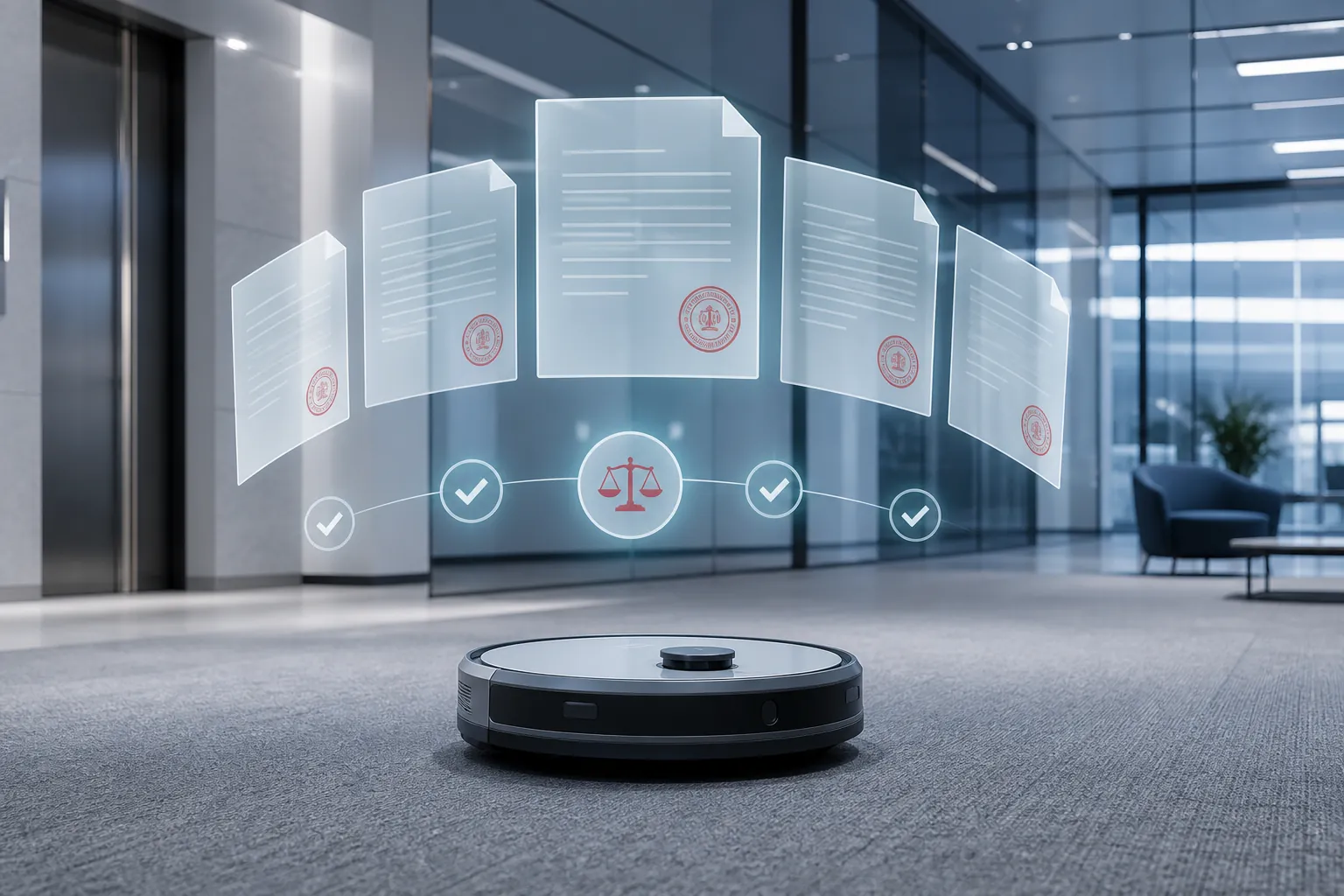
The Brand Change Is Only the Start of the Review
A brand substitution can reduce one obvious problem. It may move the buyer away from a named vendor on the Covered List. It may also make the purchase easier to explain to a partner, a landlord, or an office manager who has been told to stop buying from a particular supplier. But it does not, by itself, answer the operative production question.
The Buy American Act domestic-end-product test at 48 CFR § 25.101(a) is the useful place to begin because the available sources tie the FCC boundary to that procurement concept. A device is not treated as a domestic end product merely because the seller is U.S.-headquartered or because customer support, marketing, or final invoicing runs through a U.S. entity. The relevant threshold is component sourcing: more than 65% U.S.-sourced components are required for the domestic-end-product analysis identified in the current materials.[1][4]
That distinction is not cosmetic. A SharkNinja purchase may look safer because SharkNinja is U.S.-headquartered, but the available record identifies SharkNinja production as Vietnam/China. Eufy/Anker and Dreame remain tied to China. Matic is described as assembled in California but below the 65% U.S.-component threshold. On that record, the common alternatives do not become clean domestic end products simply because the procurement team changed the logo on the invoice.[4]
| Procurement Question | Why It Matters |
|---|---|
| Is the brand itself on the Covered List? | This screens for the most visible FCC issue, but it is not the whole analysis. |
| Where is the device produced? | The FCC category turns on foreign-produced advanced robotic devices, not only named consumer brands. |
| Does it meet the domestic-end-product threshold? | The Buy American Act analysis requires more than 65% U.S.-sourced components. |
| What logic-bearing hardware is inside? | Component-level restrictions can make the bill of materials more important than the retail brand. |
| What data does it collect and transmit? | Floor-plan, sensor, and network behavior can create confidentiality and contractor-compliance issues even without an import prohibition. |
Country-Neutral Language Makes the U.S. Brand Trap Worse
The Mayer Brown analysis is important because it notes that the restriction is country-neutral on its face.[5] That point is uncomfortable in an internal review, because procurement teams often assume the risk turns on China alone. In practice, the safer question is narrower and less satisfying: can the buyer document that this particular model is not foreign-produced for the relevant rule, or that it qualifies under the domestic-end-product test?
For most commercially available robot vacuums, the answer appears to be no on the current record. The available materials do not identify a major robot-vacuum manufacturer that satisfies the 65% domestic-sourcing threshold. That does not mean every non-banned model is automatically prohibited in every setting; it means the buyer should not write “non-banned brand” in the file and treat that phrase as a legal conclusion.
This is also where market language can become misleading. “U.S. company,” “assembled in California,” “sold by a U.S. retailer,” and “not currently named on the Covered List” may all be true and still fail to answer the production and component-sourcing questions. The legal file needs the test the agency and procurement rules care about, not the description that looked best on the product page.
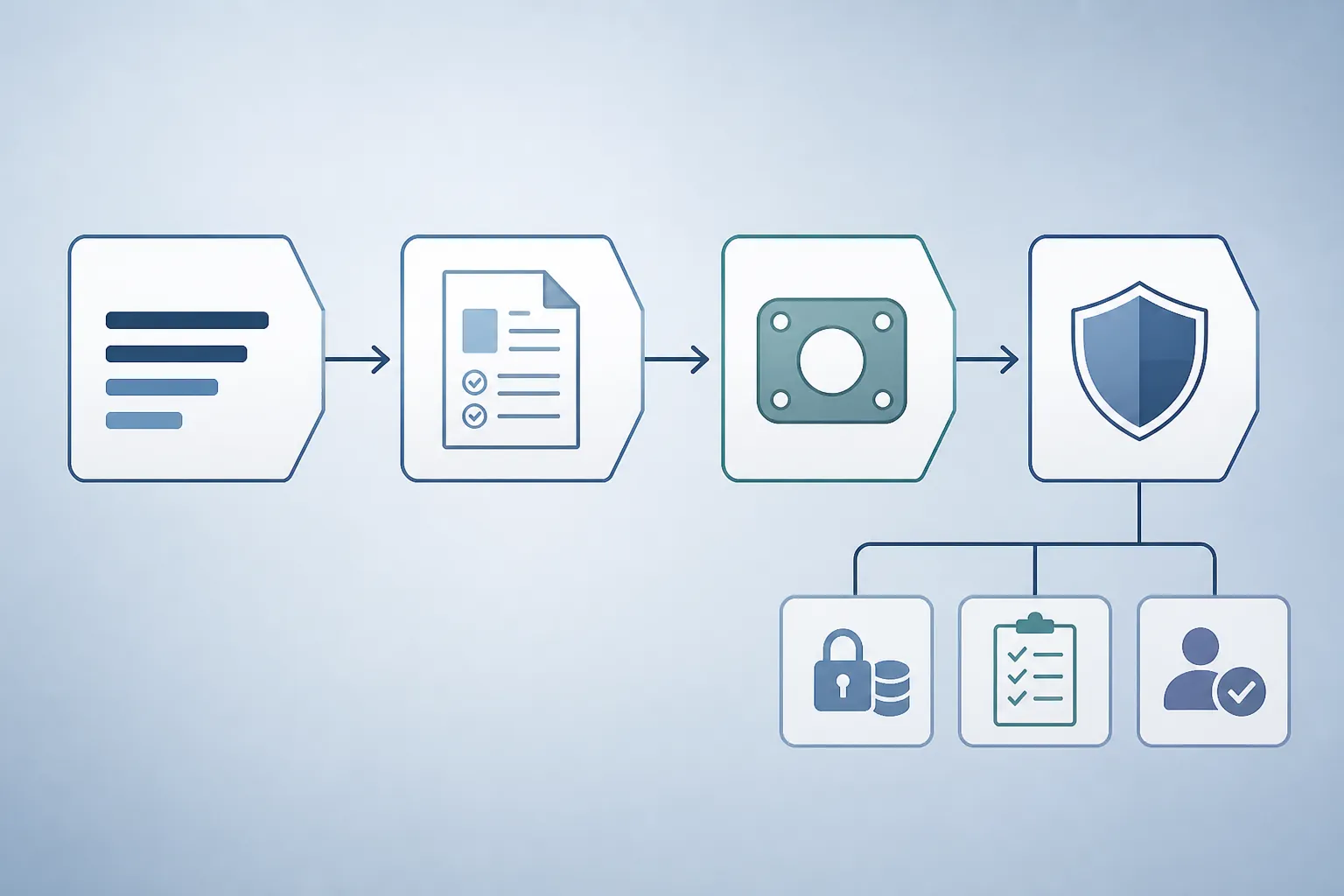
The Bill of Materials Can Matter More Than the Final Label
The next step is component diligence. Cooley’s alert identifies a new restriction on devices containing “logic-bearing hardware components” produced by Covered List entities.[6] For a robot vacuum, that is the part of the review that should make counsel slow down. A device that looks like a commodity appliance is still a mobile sensor platform with processors, radios, cameras or mapping sensors in some models, firmware, charging infrastructure, and cloud connectivity.
The practical problem is that buyers rarely receive a complete bill of materials during ordinary office procurement. The reseller may provide a model number, a country-of-origin statement, a cybersecurity white paper, and a warranty document. That package may be enough to buy a vacuum cleaner for a home office. It is not always enough to support a government-contractor procurement file or a law-firm confidentiality review.
A defensible review asks for more targeted documentation: production location for the specific model, component-origin information where available, identification of logic-bearing hardware suppliers, FCC equipment authorization status, data-processing disclosures, and any statement about Covered List entities in the supply chain. If the vendor cannot provide component-level information, that fact belongs in the record. Silence is not proof of compliance; it is a risk notation.
Conditional Approval Exists, but It Is Not a Shortcut
There is a published Conditional Approval pathway, but it should not be treated as a blanket exemption. The Department of War guidance requires a detailed onshoring plan, milestones over a one-to-five-year period, and full supply-chain disclosure.[7] As of July 31, 2026, the available record identifies no robot-vacuum manufacturer that had received such a Conditional Approval.[7]
That timing matters. The FCC action is only days old, and the exemption landscape may change. Reuters, citing four unnamed sources, reported an expectation that many non-Chinese suppliers may be exempted.[8] That is useful context for monitoring. It is not a procurement assumption. A buyer making a decision now still needs to record what is true now: whether an approval exists, whether the model is covered by it, and whether the vendor can document the required supply-chain commitments.
The revocation mechanism also has a procedural buffer. Under 47 CFR § 2.939(e), limitation or revocation of equipment authorization requires public notice, a 30-day comment period, and public-interest balancing before taking effect.[9] That process reduces the chance of an invisible overnight authorization loss. It does not make current uncertainty disappear, and it does not relieve the purchaser from documenting why a model was acceptable at the time of procurement.
After the FCC Question, the Data Question Remains
The National Security Determination states that these devices “collect data that could be leveraged by malign actors to surveil Americans.”[2] That sentence is doing more work than a consumer warning. In an office, a robot vacuum may encounter floor layouts, conference-room locations, restricted areas, visitor patterns, Wi-Fi environment details, and in some models sensor data that is not obvious from the purchase order.
For a law firm, the issue is not that every vacuum map contains privileged information. The issue is that a device moving through client spaces can become part of the firm’s confidentiality risk analysis. ABA Model Rule 1.6 requires lawyers to protect information relating to the representation of a client, and that duty is not limited to documents labeled confidential.[10] If a device vendor stores maps in the cloud, permits remote access, trains models on environmental data, or routes telemetry through foreign infrastructure, the firm should be able to show that it evaluated those facts before deployment.
For government contractors, the concern can be sharper. The Covered List action is not an ITAR classification, and the available record identifies no ITAR ruling that treats robot vacuums as defense articles as of July 31, 2026. The ITAR angle should therefore be labeled as inferential. But contractors subject to DFARS 252.225-7048 may still have obligations that make office-deployed robots relevant when those devices collect floor-plan, facility, or network-adjacent data in controlled environments.[11]
That is the point at which a procurement file should separate three ideas that are often blurred together: FCC Covered List status, export-control classification, and contractor cybersecurity or supply-chain obligations. The first may be visible from agency materials. The second is not established for robot vacuums on the current record. The third can still require action because the contractor’s own clauses and operating environment may make the device relevant.
A Replacement File Should Show the Legal Work
The useful output is not a ranking of SharkNinja, Eufy, Dreame, Matic, or any other model. The useful output is a decision record that shows which legal questions were asked and where the evidence stopped. That record should be short enough for facilities to use and specific enough for counsel to defend later.
- Identify the exact model, SKU, seller, importer, and FCC equipment authorization information.
- Document whether the brand or relevant supplier appears on the FCC Covered List at the time of review.
- Request production-origin and component-sourcing information, including any support for domestic-end-product treatment.
- Ask specifically about logic-bearing hardware components and whether any are produced by Covered List entities.
- Review data collection, map storage, telemetry, remote access, cloud processing, retention, and vendor subprocessors.
- Check government-contract clauses, including DFARS obligations, before deployment in contractor or controlled spaces.
- Record whether Conditional Approval exists for the manufacturer or model, and whether any FCC authorization limitation or revocation proceeding is pending.
If the file cannot establish domestic production or component sourcing, the conclusion should say so. A careful unresolved-risk memo is better than a confident sentence built on a retail listing. It gives the organization a basis to limit deployment, disable mapping or cloud features where possible, keep the device out of sensitive areas, impose vendor contractual controls, or defer the purchase until the regulatory picture changes.
What the Brand Switch Actually Buys
Switching away from a banned or plainly covered supplier may still be sensible. It can reduce a visible Covered List problem and may be necessary as an interim operational step. But it does not create a clean legal harbor when the replacement is also foreign-produced, lacks evidence of more than 65% U.S.-sourced components, or contains logic-bearing hardware that has not been reviewed.
The better posture is documentary: production origin, component sourcing where available, network and data behavior, applicable government-contracting clauses, and any Conditional Approval or FCC authorization change. That is the difference between “we changed brands” and “we made a procurement decision the record can support.”
References
- Covered List FAQs: Robots and Inverters, Federal Communications Commission, July 2026.
- National Security Determination for Advanced Robotic Devices, Federal Communications Commission, July 2026.
- FCC Ban on Foreign-Made Robots Includes Robot Vacuums, PCMag.
- 48 CFR § 25.101(a), Federal Acquisition Regulation.
- FCC Adds Foreign-Produced Power Inverters and Advanced Robotic Devices to Covered List, Mayer Brown, July 2026.
- FCC Expands Restrictions on Covered List Equipment and Supply Chains, Cooley, July 29, 2026.
- Conditional Approval Guidance for Advanced Robotic Devices, Department of War, July 2026.
- FCC Expected to Exempt Many Non-Chinese Suppliers, Reuters, July 2026.
- 47 CFR § 2.939(e), Federal Communications Commission.
- Model Rule 1.6: Confidentiality of Information, American Bar Association.
- DFARS 252.225-7048, Defense Federal Acquisition Regulation Supplement.
Grounded in
This procedure is grounded in FCC Covered List (July 2026), independent of any single documented case. See the Regulation tracker for the governing text.
Cases this step would have prevented
No cases have been explicitly linked to this checklist yet. See Risk Digest for documented incidents generally.
← Back to WorkflowsReport a correction or tip
Spotted an outdated figure, a misstated fact, or a ruling this workflow checklist should reflect? Public comments are disabled for this content given the professional cost of a misreported case outcome, penalty amount, or rule text — use the structured correction channel instead.
Report a correction or tip for this record →