
Which Sweet v. McMahon discharge deadline applies to you?
All Sweet v. McMahon decision deadlines have now passed, so the open question for borrowers is no longer eligibility but whether discharge, refund, and credit repair are actually moving. Identify your group's deadline and notice schedule, confirm relief is on track, and escalate through documented channels when it is not.
- Applicable role
- Borrowers, attorneys, and advocates
- Workflow stage
- post-filing
- Primary source
- Sweet v. McMahon, No. 3:19-cv-03674-WHA
Status first: the deadline you need is probably not the one in the headline
Last verified: August 2, 2026, UTC. The current case name is Sweet v. McMahon, formerly Sweet v. Cardona, No. 3:19-cv-03674-WHA. All settlement decision deadlines discussed below have now passed; the live question for most borrowers is whether the discharge, refund, and credit-reporting relief required for their group is actually being delivered on the correct completion schedule. This is a verification record, not legal advice.
Start by separating three dates that are often collapsed into one sentence online: the decision deadline, the notice date, and the relief-completion deadline. A decision deadline is when the Department of Education had to decide a borrower-defense application for a group. A notice date is when the borrower was told that a missed deadline or group placement made them eligible for relief. A relief-completion deadline is the later date by which discharge, refund, and credit repair are supposed to be completed. PPSL’s case page and borrower-facing FAQ are the main public starting points for this borrower-level timeline check.[1][2]
The large borrower counts explain why the settlement keeps appearing in national coverage, but they do not prove that any one account is fixed. NPR and CNBC used a 450,000-borrower frame in July 2026 coverage; PPSL has also described the settlement as covering more than 500,000 borrowers, while reporting the scale as at least $23 billion; and NPR reported that an April 2026 Education Department filing said roughly $12 billion had been delivered to about 300,000 borrowers since 2022.[3][4][5] Those numbers are scale context. Your file still turns on group, notice, and delivery status.
The appeal posture is no longer a reason to treat the deadlines as suspended. PPSL reported on July 17, 2026 that the Ninth Circuit rejected the Department of Education’s bid to delay Sweet settlement relief, and the Ninth Circuit’s memorandum disposition was filed the same day.[5][6] That does not mean every borrower’s account will already show a zero balance, a refund, and clean credit tradelines. It means the borrower’s task has moved from waiting for a merits outcome to checking whether the correct relief window is being honored.
The group-by-group discharge timeline
Use the table as a routing tool, not as a substitute for your own notice. The date in your email, StudentAid account, servicer record, or counsel file may be the cleaner exhibit if you need to show late relief. PPSL’s borrower FAQ describes Full Settlement Relief as discharge of covered federal student loans, refunds of amounts paid to the federal government on those loans, and deletion of associated negative credit tradelines.[2]
| Borrower group | What deadline applied | Did a missed deadline trigger automatic Full Settlement Relief? | Notice date to look for | Relief-completion date now controlling |
|---|---|---|---|---|
| Automatic relief group: class members tied to Exhibit C schools | Full Settlement Relief was originally due by January 28, 2024. PPSL records that ED missed that deadline, plaintiffs moved to enforce on March 19, 2024, and substantially all relief was later ordered on an August 31, 2024 schedule as reflected in PPSL’s chronology.[1][2] | This group was not waiting on an individual merits decision in the same way as the decision groups; relief was automatic under the settlement group placement.[2] | Look for the original class/automatic-relief notice and any later servicer or StudentAid discharge communication. | If covered relief is still absent as of August 2026, treat it as overdue and preserve records before escalating. |
| Decision Group 1 | PPSL’s borrower-facing deadline guidance places this group’s decision deadline on July 28, 2023.[2] | Yes, if ED did not issue a timely decision by the applicable deadline, the settlement mechanism treated the borrower as entitled to Full Settlement Relief.[2] | Look for the individual decision notice or any automatic-relief notice tied to the missed deadline. | For a missed-decision file, the one-year relief window would have run to July 28, 2024 under PPSL’s guidance.[2] |
| Decision Group 2 | PPSL’s borrower-facing deadline guidance places this group’s decision deadline on January 28, 2024.[2] | Yes, if ED did not issue a timely decision by the applicable deadline.[2] | Look for the individual decision notice or missed-deadline relief notice. | For a missed-decision file, the one-year relief window would have run to January 28, 2025 under PPSL’s guidance.[2] |
| Decision Group 3 | PPSL’s borrower-facing deadline guidance places this group’s decision deadline on July 28, 2024.[2] | Yes, if ED did not issue a timely decision by the applicable deadline.[2] | Look for the individual decision notice or missed-deadline relief notice. | For a missed-decision file, the one-year relief window would have run to July 28, 2025 under PPSL’s guidance.[2] |
| Decision Group 4 | PPSL’s borrower-facing deadline guidance places this group’s decision deadline on January 28, 2025.[2] | Yes, if ED did not issue a timely decision by the applicable deadline.[2] | Look for the individual decision notice or missed-deadline relief notice. | For a missed-decision file, the one-year relief window would have run to January 28, 2026 under PPSL’s guidance.[2] |
| Decision Group 5 | PPSL’s borrower-facing deadline guidance places this group’s decision deadline on July 28, 2025.[2] | Yes, if ED did not issue a timely decision by the applicable deadline.[2] | Look for the individual decision notice or missed-deadline relief notice. | For a missed-decision file, the one-year relief window would have run to July 28, 2026 under PPSL’s guidance.[2] |
| Post-class Exhibit C applicants: borrower-defense applications filed June 23 through November 15, 2022 and tied to Exhibit C schools | The January 28, 2026 decision deadline was missed for roughly 170,000 Exhibit C post-class applicants, according to PPSL’s borrower guidance.[2] | Yes. PPSL states that the missed deadline triggered automatic Full Settlement Relief for these Exhibit C post-class applicants.[2] | March 30, 2026 eligibility notice.[2] | Relief is due within one year of that notice date: March 30, 2027, under PPSL’s guidance.[2] |
| Post-class non-Exhibit C applicants: borrower-defense applications filed June 23 through November 15, 2022 and not tied to Exhibit C schools | The April 15, 2026 decision deadline was missed for all roughly 30,000 non-Exhibit C post-class applicants, according to PPSL’s borrower guidance.[2] | Yes. PPSL states that the missed deadline triggered automatic Full Settlement Relief for this group.[2] | June 15, 2026 eligibility notice for the final roughly 30,000 non-Exhibit C post-class borrowers.[2] | Relief is due within one year of that notice date: June 15, 2027, under PPSL’s guidance.[2] |
If you are reading older coverage under Sweet v. Cardona, check whether it explains the McMahon substitution and the July 2026 appellate disposition. Stale case names are not automatically wrong, but they often travel with stale assumptions about delay. The safest path is to match the article against the current case page, the current borrower FAQ, and your dated notice before deciding that relief is late.[1][2][5][6]
How to verify your own file without turning every screen into a false alarm
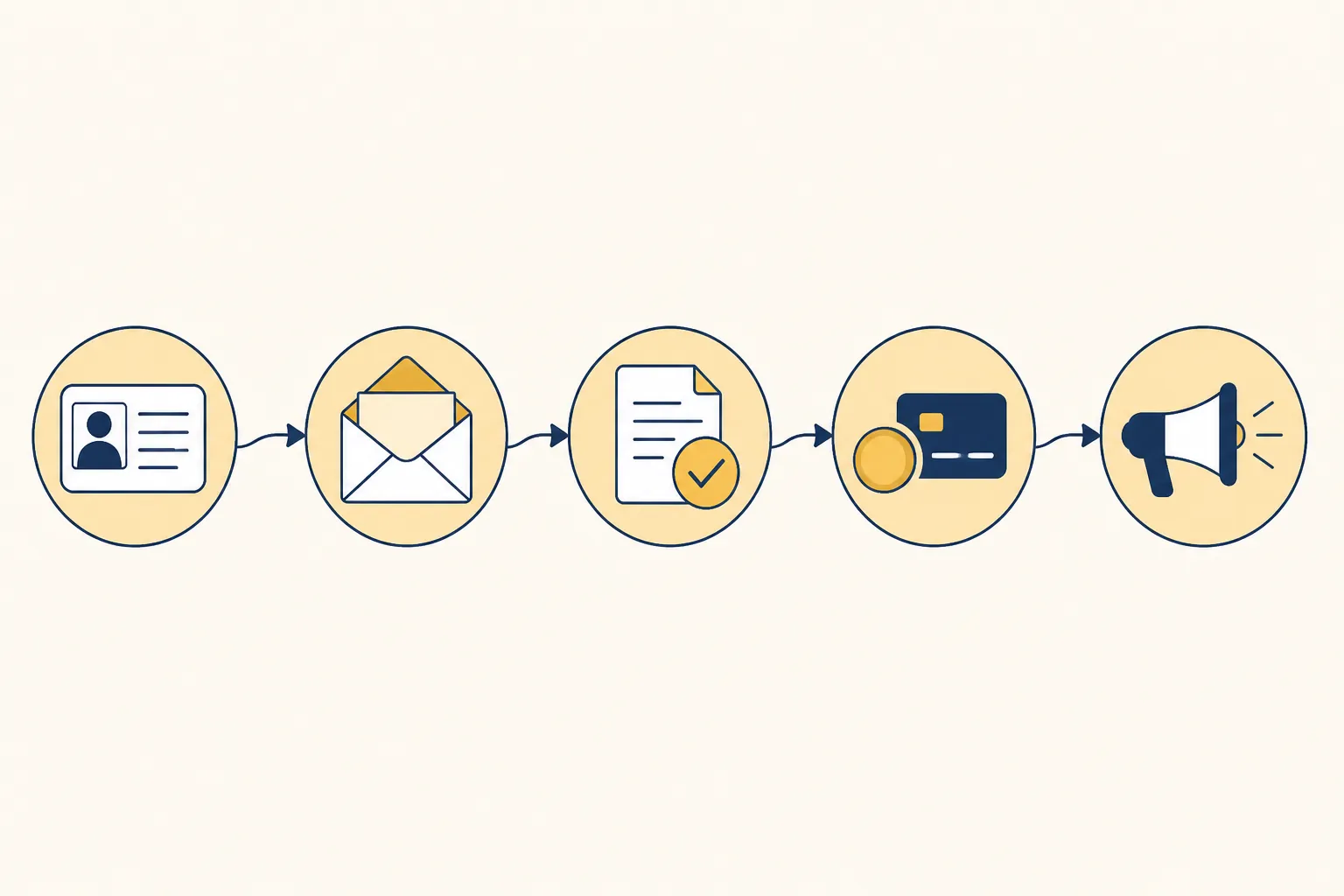
The practical problem is usually not one clean missing item. It is a borrower with no email, a servicer balance that fell and then reappeared, a Treasury payment with no Sweet label, and a credit report that still shows the old negative line. Those facts may point in different directions. Put them in date order before you conclude that the settlement has failed in your file.
1. Confirm the group before checking the deadline
First, identify whether the application was a class application, a post-class application, or outside the Sweet settlement window. For this timeline, the post-class window is June 23 through November 15, 2022. Then determine whether the school connection puts the borrower in an Exhibit C path or a non-Exhibit C path. Do not rely only on a school-count sentence in a news article; the public materials have not always used the same school count, and borrower-level placement should come from the corrected Exhibit C materials, the notice, or PPSL’s current guidance.[2]
For attorneys or advocates checking several files, make a simple index: borrower name, application date, school, class or post-class status, Exhibit C status, notice date, servicer, StudentAid balance date, refund evidence, and credit-report status. That is the table you will need if you later have to show that a completion window has passed.
2. Locate the notice, then preserve the absence if there is no notice
For post-class Exhibit C borrowers, the notice date to look for is March 30, 2026. For post-class non-Exhibit C borrowers, the notice date to look for is June 15, 2026. PPSL states that these notices correspond to missed decision deadlines and one-year relief windows into 2027.[2]
Search more than the visible inbox. Check spam, archived mail, older email addresses used for StudentAid, servicer message centers, downloaded StudentAid correspondence, and any counsel inbox if a lawyer filed or updated the borrower-defense application. If there is no notice, record that too: take dated screenshots of the search terms, the account message center, and the contact email shown on the federal account. A missing notice is not proof that the borrower is outside the settlement. It is a verification problem.
3. Check discharge in both the servicer account and StudentAid
Servicer screens and StudentAid records do not always update at the same time. Capture both. Record the date, the loan type, the balance, the status label, and any transaction history showing discharge, adjustment, reversal, forbearance, or transfer. If a balance dropped once and then reappeared, keep both screenshots. The reappearance may be a timing artifact, but it is still the kind of artifact that becomes important if the completion deadline passes.
Do not check only the total balance. A total can hide a partial discharge, a consolidation complication, or a loan that moved servicers. If the record shows multiple loans, compare loan-by-loan status. The question is not merely whether the account looks smaller; it is whether the covered loans received the settlement relief required for that borrower’s group.
4. Treat refunds and credit repair as separate checks
A discharge screen is not the end of the file. PPSL’s FAQ explains that Full Settlement Relief includes refunds of payments made to the federal government on covered loans and deletion of associated negative credit tradelines.[2] Refunds may arrive from the U.S. Treasury, may come in multiple payments, and may not carry a label that says Sweet. That is why a bank deposit or paper check should be copied, dated, and matched against the borrower’s payment history before anyone assumes it is unrelated.

For credit reporting, pull the reports that matter to the borrower’s actual dispute. Save the report date, bureau, creditor or servicer name, account number fragment, status, balance, and any negative payment history still appearing. If a tradeline is removed from one bureau but remains on another, preserve that difference instead of summarizing it away. The settlement relief item is deletion of the negative tradeline, not a vague improvement in credit score.[2]
5. Escalate only after you have a dated packet
A useful packet is small but dated: the borrower-defense application identifier if available, the group placement evidence, the notice or evidence of no notice, StudentAid screenshots, servicer screenshots, refund evidence, credit-report pages, and a one-page chronology. Keep the language narrow. “My March 30, 2026 notice puts me in the post-class Exhibit C relief window, and the following covered loan still shows a balance on this date” is more useful than “my forgiveness was denied” when there is no denial.
Escalation should run through documented borrower-defense, servicer, and PPSL-facing channels identified in current guidance, with copies kept of every submission and response.[1][2] If the borrower has counsel, counsel should control the contact strategy; if the borrower is pro se, the same rule still applies: one dated record beats five undocumented phone calls.
Do not pay anyone who claims they can speed up a Sweet discharge. The relief described here is settlement relief, not a private application service. Scam reports can be filed with the FTC at ReportFraud.ftc.gov.[7]
Why verification still matters after the decision deadlines
On June 18, 2026, plaintiffs served a formal Notice of Material Breach alleging that more than 1,000 class members still lacked required relief, including at least 122 borrowers in the automatic relief group and at least 929 borrowers in decision groups 1 through 4; PPSL’s chronology also notes more than 120 borrowers described as overdue nearly 18 months.[1] Those allegations are not a shortcut around the borrower’s own proof. They are the reason a missing notice, a lingering tradeline, or a servicer balance that will not stay discharged should be documented instead of dismissed as “just processing.”
The post-class groups are in a different posture from the older overdue class files. Their one-year delivery windows run to March 30, 2027 for Exhibit C post-class borrowers and June 15, 2027 for non-Exhibit C post-class borrowers, according to PPSL’s guidance.[2] That means a borrower in one of those groups may be inside the delivery window even if nothing has visibly completed yet. Inside the window, the job is to monitor and preserve. After the window, the same record becomes an escalation file.
The cleanest practical judgment is this: every decision deadline has passed, but not every delivery deadline has. If your group, notice date, and relief window show that relief should already be complete and the account still does not reflect discharge, refund, or credit repair, verify the record and escalate through documented channels. If your group is still inside a 2027 delivery window, keep the evidence trail current and do not mistake a quiet inbox for a failed application.
References
- Sweet v. McMahon, PPSL.
- Sweet v. McMahon Class Members, PPSL.
- The student loans of 450K defrauded borrowers are being erased, NPR, July 31, 2026.
- Sweet v. McMahon student loans borrower defense, CNBC, July 31, 2026.
- Appeals Court Rejects Department of Education’s Bid to Delay Sweet Settlement Relief, PPSL, July 17, 2026.
- Memorandum Disposition, No. 26-1136, U.S. Court of Appeals for the Ninth Circuit, July 17, 2026.
- ReportFraud.ftc.gov, Federal Trade Commission.
Grounded in
This procedure is grounded in Sweet v. McMahon, No. 3:19-cv-03674-WHA, independent of any single documented case. See the Regulation tracker for the governing text.
Cases this step would have prevented
No cases have been explicitly linked to this checklist yet. See Risk Digest for documented incidents generally.
← Back to WorkflowsReport a correction or tip
Spotted an outdated figure, a misstated fact, or a ruling this workflow checklist should reflect? Public comments are disabled for this content given the professional cost of a misreported case outcome, penalty amount, or rule text — use the structured correction channel instead.
Report a correction or tip for this record →