
Who Is Liable in the Walmart EnHomee Dresser Recall?
A legal assessment of the three-tier liability—manufacturer, seller, and marketplace platform—in the CPSC's EnHomee 9-drawer dresser recall (No. 26-633) for STURDY Act violation, covering claims beyond the refund remedy and the implications of repeated recalls.
- Applicable role
- attorney
- Workflow stage
- pre-filing
- Primary source
- CPSC Recall No. 26-633
The starting point is not Walmart’s return counter. It is CPSC Recall No. 26-633, announced July 23, 2026: EnHomee 9-drawer fabric dressers, manufactured by Xuzhou Mingquanhe Household Co. and sold on Walmart.com by Raybee-Direct, are being recalled because they violate the STURDY Act’s mandatory standard for clothing storage units and pose tip-over and entrapment hazards. The notice covers 16,809 units, offers a refund, and reports no injuries as of the recall announcement.[1]
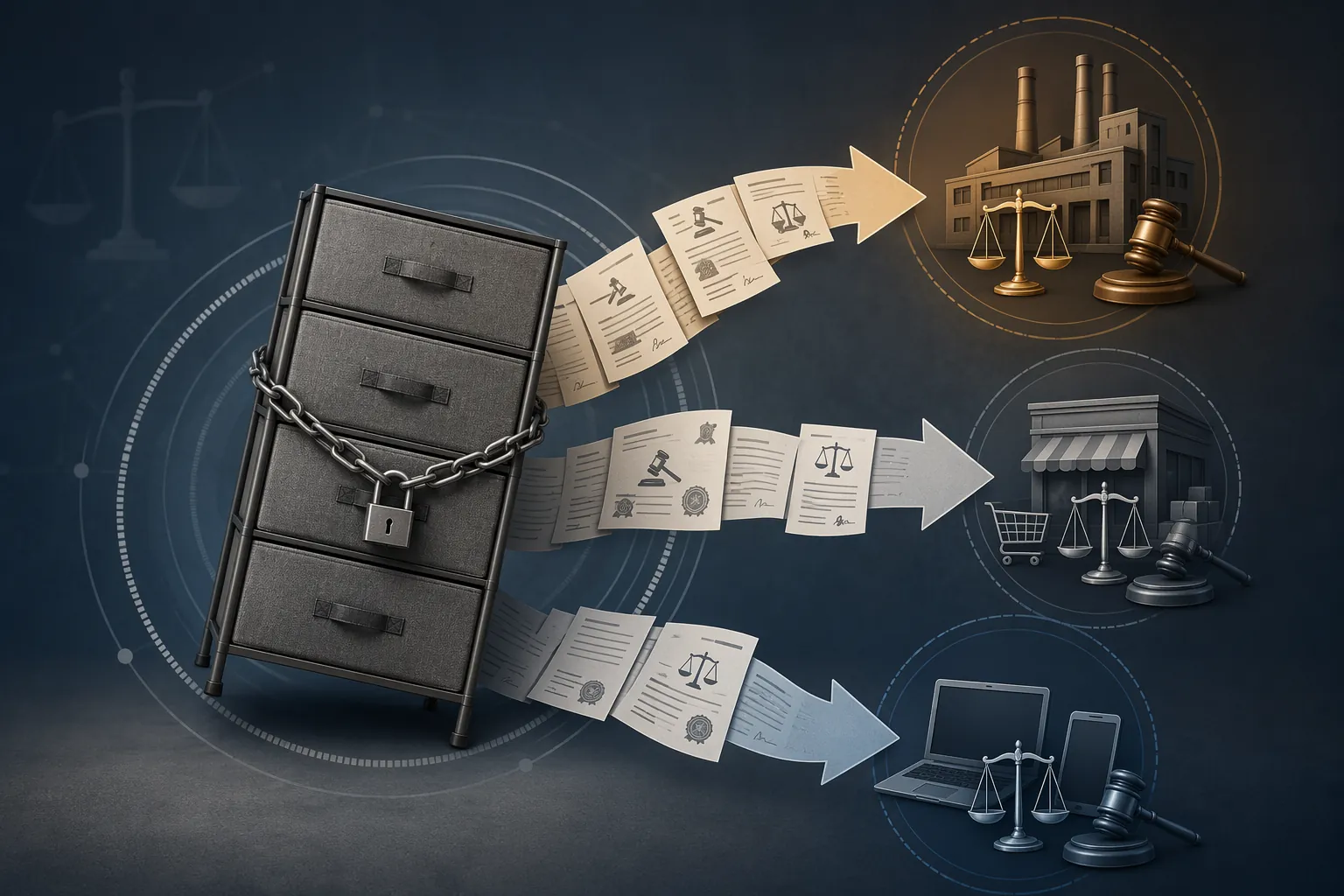
That record does three different things. It gives affected consumers the basic return instructions. It supplies defect evidence against the parties that placed the dresser into commerce. And it raises, but does not automatically answer, the harder marketplace question: when a product is sold “on Walmart.com” by a third-party seller, how far does Walmart’s legal exposure travel with the transaction?
What the recall proves, and what it does not
The CPSC notice proves enough to matter. It identifies the product, the selling channel, the seller, the manufacturer, the unit count, the hazard category, the mandatory-standard violation, and the remedy. For a liability screen, that is not a public-relations event; it is a federal safety record attached to a specific product line.
| Verified point | Legal significance |
|---|---|
| Recall No. 26-633, announced July 23, 2026 | Creates a dated federal record for the specific EnHomee 9-drawer fabric dresser recall |
| 16,809 units | Frames the possible affected purchaser group and economic-loss exposure |
| STURDY Act violation | Strengthens defect, negligence, and warranty theories against parties in the distribution chain |
| Sold on Walmart.com by Raybee-Direct | Separates the third-party seller question from the marketplace-platform question |
| No reported injuries | Keeps the present damages picture closer to refund, loss-of-use, and economic-loss claims |
The same notice does not prove that a consumer was injured, that Walmart was the statutory seller in every jurisdiction, or that a class action has already been filed over Recall No. 26-633. Those distinctions are not technicalities. They decide whether the case is presently about reimbursement and prohibited sales, or about bodily injury damages.
The refund remedy is the floor, not the liability ceiling
The recall remedy tells affected purchasers to stop using the dresser and seek a refund. That is the immediate consumer instruction. It also quietly transfers work to the household: identify the product, remove it from use, preserve purchase records, contact the recall channel, and decide whether a refund resolves the harm created by owning a product that should not have been sold in that condition.
A refund may be adequate for some buyers. It is not a legal release unless the consumer gives one, and it does not erase the underlying safety violation. If a mandatory standard was violated, the refund remedy answers only one remedial question: how the recall sponsor proposes to get the product out of homes. It does not decide negligence, warranty, consumer-protection, or marketplace-liability issues.
For consumers seeking Walmart EnHomee dresser recall return instructions, the practical sequence is narrow: stop using the recalled dresser, keep proof of purchase and communications, follow the CPSC-listed refund process, and do not resell or pass along the recalled unit. The legal reason for that last point is not etiquette; federal law prohibits selling or distributing recalled consumer products, including after a recall enters the public record.
Manufacturer and seller exposure is the strongest part of the claim map
The clearest exposure sits with the parties closest to the product: Xuzhou Mingquanhe Household Co. as manufacturer and Raybee-Direct / Changsha Yiman Keji as the seller identified in the recall materials. The CPSC’s STURDY Act violation finding gives claimants a cleaner theory than a general allegation that a dresser was unsafe. It points to a federal mandatory standard for clothing storage units and says this product violated it.[1]
In a negligence case, that matters because violation of a safety statute or mandatory product standard can support negligence-per-se or evidence-of-negligence arguments, depending on state law. In a warranty case, it matters because a dresser sold for household clothing storage that violates the mandatory standard for that product category is difficult to defend as ordinary, conforming merchandise. Those claims still require the usual state-law elements, including purchase, product identification, causation, damages, and sometimes notice. The recall does not file the lawsuit for the buyer.
The absence of reported injuries narrows the present damages discussion. A buyer who has not suffered physical injury is more likely to be arguing economic loss: purchase price, replacement cost, loss of use, time spent pursuing the remedy, or statutory relief where consumer-protection law allows it. If an injury later appears, the same STURDY Act violation would carry different weight because causation and damages would no longer be confined to a refund dispute.
Walmart’s marketplace exposure is plausible, but not automatic
The phrase “sold on Walmart.com” is doing too much work if it is treated as the whole liability analysis. The CPSC notice identifies Raybee-Direct as the seller. That distinction gives Walmart an obvious defense: it can argue that it operated as a marketplace platform rather than as the product’s seller, manufacturer, or importer.[1]
That defense is serious. It is not conclusive everywhere. Marketplace-liability analysis has developed around questions that courts and commentators have associated with Amazon cases such as Loomis and Bolger: whether the platform received a financial benefit, whether it played an integral role in the transaction, and whether it exercised control or influence over the listing, payment, fulfillment, communications, or remedy structure.[2][3]

For Walmart, the strongest plaintiff-side argument is not that a logo appeared on a webpage. It is that the marketplace architecture made the sale commercially possible and gave consumers the trust, checkout pathway, and transaction interface through which the product reached the home. The strongest defense is that Raybee-Direct, not Walmart, was the identified seller, and that the platform should not be converted into the strict-liability seller of every third-party product absent a jurisdiction’s law supporting that move.
That is why the present Walmart exposure is viable but limited. Without reported injuries, the immediate claim universe is unlikely to resemble a catastrophic tip-over case. It is closer to economic-loss and recall-remedy litigation: whether purchasers received an adequate refund, whether the marketplace’s representations or controls created obligations, and whether continued sale after recall notice would create separate prohibited-sale or consumer-protection exposure.
The repeated EnHomee recall pattern changes the risk assessment
Recall No. 26-633 would be easier to cabin if it stood alone. It does not. CPSC Recall No. 25-474 covered about 11,200 EnHomee 13-drawer dressers sold by EnHomee Direct on multiple platforms, including Amazon, Wayfair, Shein, TikTok, Shopify, and Temu, for the same broad category of tip-over and entrapment hazards and mandatory-standard violation.[4] Recall No. 26-255 covered about 5,000 EnHomee 10-drawer dressers sold on Amazon, again citing tip-over and entrapment hazards and violation of the mandatory standard for clothing storage units.[5] Recall No. 26-633 then added 16,809 9-drawer units sold on Walmart.com by Raybee-Direct.[1]
| CPSC action | Product | Units identified in brief | Selling channel noted |
|---|---|---|---|
| Recall No. 25-474 | EnHomee 13-drawer dressers | About 11,200 | Multiple platforms including Amazon, Wayfair, Shein, TikTok, Shopify, and Temu |
| Recall No. 26-255 | EnHomee 10-drawer dressers | About 5,000 | Amazon |
| Recall No. 26-633 | EnHomee 9-drawer fabric dressers | 16,809 | Walmart.com by Raybee-Direct |
| Warning No. 25-154 | EnHomee 12-drawer tall fabric dressers | About 3,300 | Seller uncooperative; no remedy available |
The warning belongs in the pattern analysis, but it should not be merged with the recalls. CPSC Warning No. 25-154 involved about 3,300 EnHomee 12-drawer tall fabric dressers and stated that the seller was uncooperative, leaving no remedy available.[6] That is a more severe consumer-remedy problem than Recall No. 26-633, where a refund process exists. It is also useful evidence that the broader product family and selling ecosystem have repeatedly drawn federal safety attention.
Across the three recalls and the warning, the research record identifies roughly 36,309 affected EnHomee units. That number should not be inflated into an injury count, because it is not one. It is a scale marker for exposure, notice, and pattern evidence.
Where pattern evidence may matter
Repeated recalls can matter in three ways. First, they may support state consumer-protection claims if plaintiffs can show that sellers or platforms knew, or should have known, that EnHomee clothing-storage units had recurring compliance problems. Second, they may affect enhanced-damages arguments in states where repeated conduct, notice, or reckless disregard changes the remedy. Third, they sharpen the consequences of any post-recall sale because 15 U.S.C. § 2068 prohibits selling recalled consumer products.
None of that makes punitive damages inevitable. Pattern evidence is not a substitute for proof of state of mind, causation, classwide reliance where required, or actual damages. It is, however, the part of the file that makes this recall harder to treat as an isolated vendor mishap. Three recalls in 11 months, plus a separate warning with no remedy, is the kind of sequence that counsel will use to ask who was monitoring the product category and what each participant knew before the next listing went live.
The class-action posture is still preliminary
As of July 24, 2026, the research materials do not show that a class-action lawsuit has been formally filed against Walmart, Raybee-Direct, Changsha Yiman Keji, or Xuzhou Mingquanhe Household Co. for Recall No. 26-633. Existing class-action investigation material addresses EnHomee recall issues more generally and similar recalled-dresser scenarios, but it should not be cited as proof that this specific Walmart.com recall is already in litigation.[7]
If a class case develops, the easier common questions would likely concern product identification, purchase channel, recall notice, refund availability, and the STURDY Act violation. The harder questions would include damages variation, whether consumers already received refunds, whether state-law warranty and consumer-protection elements can be managed together, and whether Walmart’s marketplace role can be resolved classwide rather than buyer by buyer or state by state.
Why the IKEA settlement is only a category benchmark
The IKEA dresser litigation sits in the background of every serious furniture tip-over discussion because the consequences there were catastrophic. IKEA reached a $46 million settlement after the death of a toddler killed by a dresser tip-over.[8] That figure is useful as a reminder that clothing-storage furniture can create severe injury exposure when a tip-over occurs.
It is not a damages forecast for the Walmart EnHomee 9-drawer recall. The current CPSC notice reports no injuries, involves a third-party marketplace sale structure, and arises under a different regulatory landscape. Treating the IKEA settlement as a price tag for this recall would collapse the very distinctions that decide liability.
The bounded legal assessment
The strongest present claims are against the manufacturer and identified seller. The CPSC’s STURDY Act violation finding gives consumers and counsel concrete defect evidence, not merely dissatisfaction with a recalled purchase. Negligence, warranty, and state consumer-protection theories all become more plausible when the product is alleged by the federal safety agency to violate the mandatory standard for its category.
Walmart’s exposure is real but narrower. Marketplace liability can survive where the platform’s financial benefit, integral transactional role, and control or influence over the sale make passive-intermediary treatment unrealistic. It can also fail where state law treats the third-party seller as the relevant seller and the platform as too remote. On the present record, with no reported injuries, Walmart’s risk is more likely to center on economic-loss, refund, representation, and post-recall-sale theories than on personal-injury damages.
The recall pattern is the file’s pressure point. Recall Nos. 25-474, 26-255, and 26-633, plus Warning No. 25-154, support notice and pattern arguments more strongly than they support any claim that injury damages already exist. As of July 24, 2026, the legal picture is therefore strongest on defect and distribution-chain responsibility, plausible but jurisdiction-dependent on Walmart marketplace liability, and more developed on repeated compliance failure than on reported physical harm.
References
- EnHomee 9-Drawer Fabric Dressers Recalled Due to Risk of Serious Injury or Death from Tip-Over and Entrapment Hazards; Violates Mandatory Standard for Clothing Storage Units; Sold on Walmart.com by Raybee-Direct, CPSC, July 23, 2026
- Recalled Dressers Sold at Walmart, KBA Attorneys
- Hurt by a Product That Has Been Recalled?, Hallandalelaw
- EnHomee Dressers Recalled Due to Risk of Serious Injury or Death from Tip-Over and Entrapment; Violates Mandatory Standard for Clothing Storage Units; Sold by EnHomee Direct, CPSC
- EnHomee 10-Drawer Dressers Recalled Due to Risk of Serious Injury or Death from Tip-Over and Entrapment Hazards; Violates Mandatory Standard for Clothing Storage Units, CPSC
- CPSC Warns Consumers to Immediately Stop Using EnHomee Tall Fabric Dressers, CPSC
- EnHomee Dresser Recall Class Action Lawsuit, Classactionlawsuithelp.com
- IKEA Reaches $46 Million Settlement Over Death Of Toddler Killed By Dresser Tip-Over, NPR, January 7, 2020
Grounded in
This procedure is grounded in CPSC Recall No. 26-633, independent of any single documented case. See the Regulation tracker for the governing text.
Cases this step would have prevented
No cases have been explicitly linked to this checklist yet. See Risk Digest for documented incidents generally.
← Back to WorkflowsReport a correction or tip
Spotted an outdated figure, a misstated fact, or a ruling this workflow checklist should reflect? Public comments are disabled for this content given the professional cost of a misreported case outcome, penalty amount, or rule text — use the structured correction channel instead.
Report a correction or tip for this record →