
Free AI contract review is no longer a curiosity for lawyers who are merely experimenting with software. By 2026, Clio reports that 71% of solo practitioners and 75% of small firms have adopted AI, which means the practical question has shifted from whether lawyers will try these tools to what they can responsibly trust them to do.[1]
That pressure lands hardest in exactly the place where free tools are most tempting: a solo or small-firm lawyer reviewing a vendor MSA, SaaS agreement, employment form, or consulting contract without a legal ops team behind them. A free chatbot that can flag a missing indemnity cap or summarize a termination clause may save time. But a tool that confidently misses a numeric threshold, a cross-reference, or the absence of required language has not reduced the lawyer’s risk. It has just moved the risk to a quieter part of the workflow.
The useful comparison is not “which free AI sounds most lawyerly.” It is whether the tool can support a lawyer-supervised review of contract risk. On that question, the market separates into three tiers: general-purpose AI free tiers, legal-specific freemium tools, and consumer-oriented summary tools.
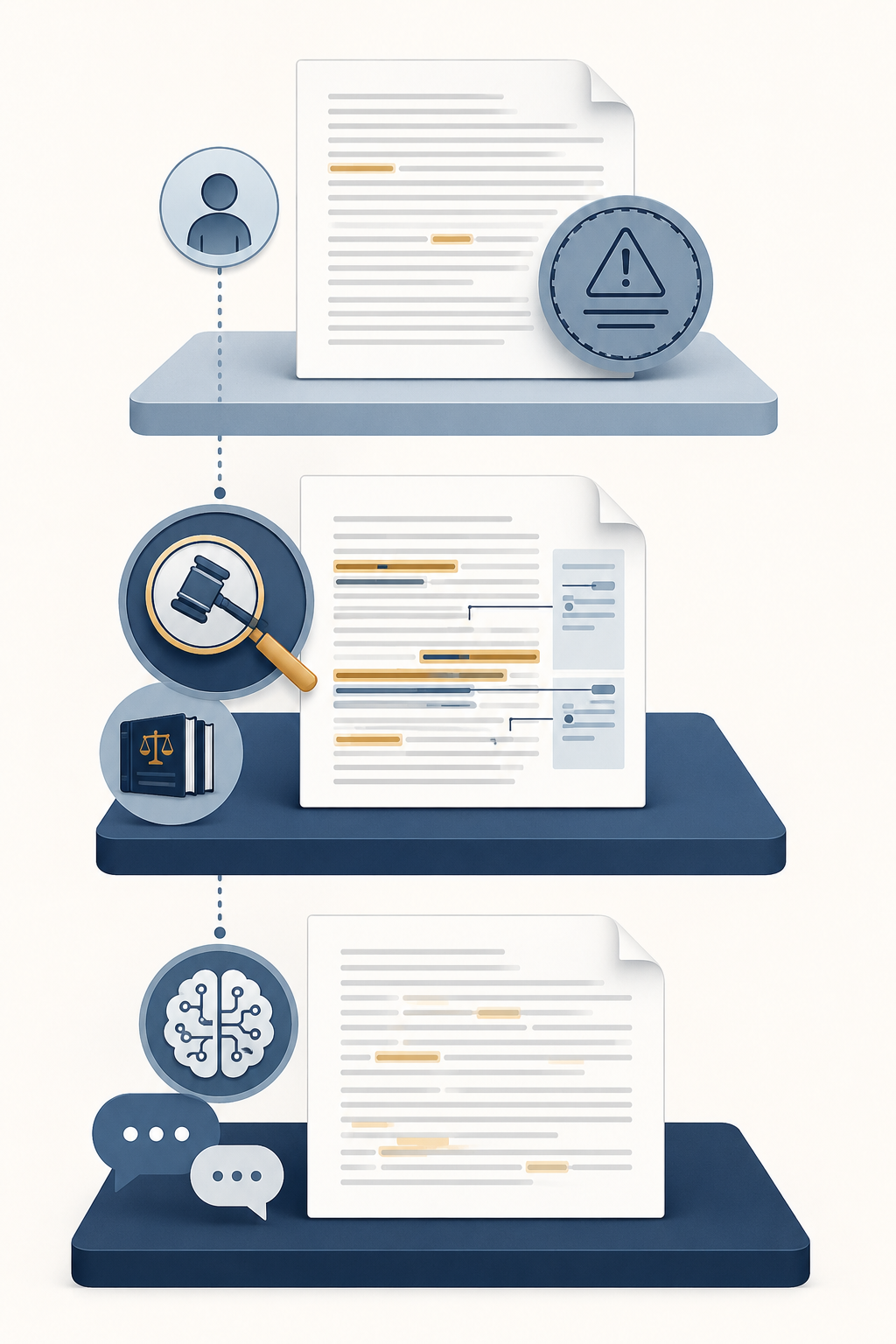
The Reliability Gap Is Not Subtle
The strongest available benchmark in this area is LegalOn’s 2026 Contract Review Benchmark. It tested 11 AI models, including GPT-5.1, Claude Opus 4.6, and Gemini 3.1 Pro, across 3,282 contracts and 21 precision-critical guidelines. LegalOn reported that purpose-built AI was preferred 1.8 times more often than the strongest general-purpose model and completed reviews 17 times faster.[2]
That benchmark should be read with its source in view. LegalOn is a vendor in the contract-review market, and the benchmark is also a marketing asset. Still, the tested failure modes are the ones contract lawyers actually care about: numeric thresholds, multi-part requirements, cross-references, and absence checks. Those are not polish problems. They are review problems.
A plain-English summary can be perfectly fluent while still missing that an indemnity obligation is one-sided, that liability is uncapped for a category of damages, or that a required carveout never appears. LegalOn’s benchmark found that general-purpose models struggled with exactly those precision tasks, while purpose-built systems performed better on contract-specific review criteria.[2]
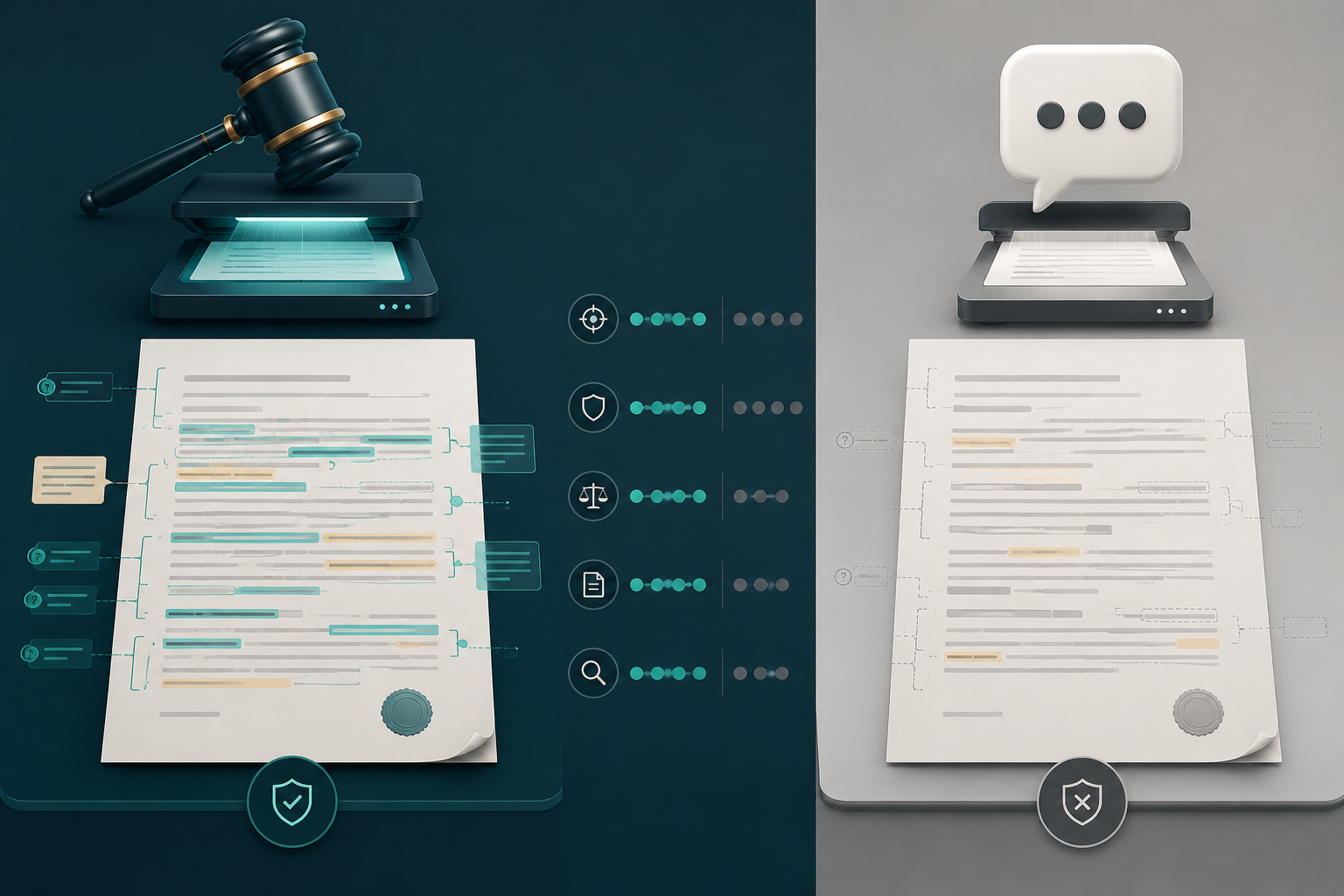
Simular.ai’s cross-tool testing points in the same direction from a different angle. It tested 10 tools against three identical contracts: a 12-page SaaS agreement with planted issues, a standard employment agreement, and a GSA consulting contract. It found that tools without purpose-built legal training consistently missed unlimited liability clauses and one-sided indemnification, while purpose-built tools caught those issues consistently.[3]
That does not prove every legal-specific AI tool is reliable or every general-purpose model is useless. It does support a narrower, more practical conclusion: for contract review, the differences show up where mistakes are costly and easy to overlook at 11 p.m.
The Three Tiers of Free AI Contract Review
| Tier | Examples | Best use | Do not trust it for |
|---|---|---|---|
| General-purpose free AI | ChatGPT, Claude, Gemini free or consumer tiers | Initial issue spotting, clause explanation, drafting a review checklist | Final risk calls, jurisdiction-sensitive enforceability, numeric thresholds, absence checks, cross-references |
| Legal-specific freemium tools | Sai, TheLawGPT, Genie AI, goHeather, SpotDraft basic/free offerings where available | Lawyer-supervised contract-review support, clause risk detection, playbook-style review | Unverified legal conclusions, matters outside the tool’s stated scope, confidential uploads without checking data terms |
| Consumer-oriented free tools | Rocket Lawyer, Lawdistrict, ContractCrab | Plain-English summaries for nonlawyer orientation | Professional legal review, privilege-sensitive analysis, attorney work product substitutes |
The table is not a ranking of brand prestige. It is a risk map. A lawyer choosing among free AI contract review tools should first decide what job the tool is being asked to perform. “Explain this clause” is one job. “Tell me whether this SaaS agreement matches my client’s risk position” is another.
Tier 1: General-Purpose Free AI
Free or consumer versions of ChatGPT, Claude, and Gemini can be useful at the very beginning of a review. They can translate dense contract language into ordinary English, generate a first-pass checklist, compare a clause against a hypothetical preferred position, or identify provisions that deserve closer attention.
The trouble begins when the output is treated as review rather than preparation. A general model may say a limitation-of-liability clause is “standard” without noticing that the cap is tied to fees paid in a short lookback period, that IP indemnity is carved out asymmetrically, or that a cross-reference points to the wrong section. The LegalOn benchmark’s reported weaknesses in numeric thresholds, multi-part requirements, cross-references, and absence checks are precisely why general-purpose free AI belongs at the front of the workflow, not the end.[2]
There is also a repeatability problem. Dan Cumberland Labs cites DocuSign research for the concern that general-purpose AI tools lack consistency guarantees, meaning the same clause can receive different interpretations across sessions.[4] A lawyer can work around some inconsistency by using a structured prompt and a fixed checklist, but that workaround does not turn a consumer chatbot into a defensible contract-review system.
- Reasonable use: ask for a clause inventory, a list of possible negotiation issues, or a plain-English explanation before attorney review.
- Higher-risk use: ask whether the agreement is acceptable for a particular client without independently checking the contract.
- Unacceptable shortcut: upload a confidential client contract to a free consumer tier without checking retention, training, and confidentiality terms.
Tier 2: Legal-Specific Freemium Tools
Legal-specific freemium tools are the only plausible free or low-cost candidates for actual contract-review support. They are built around legal documents rather than open-ended conversation, and many are designed to identify risky clauses, compare language against playbooks, or surface contract issues by category.
The tradeoff is that “free” usually means constrained. The research available for 2026 points to limited free usage, trials, or low-cost starter plans rather than unlimited attorney-grade review. TheLawGPT’s Starter plan is listed at $19.99 per month, SpotDraft has been reported to offer a free basic plan, and goHeather states that data is never used for training with 30-day API log retention.[3] Sai’s free-tier status is less clear from the available materials and may be trial-based rather than a permanent free plan, so it should be verified directly before relying on it for a cost comparison.[3]
For a small firm, the relevant question is not whether a freemium legal tool can replace a full enterprise CLM platform. It usually cannot. The question is whether it can make a lawyer’s review more reliable at the margin: catching a missing non-solicit carveout, flagging an uncapped indemnity, identifying a unilateral termination right, or showing that a contract does not contain a required security exhibit.
Enterprise-oriented systems such as LegalOn, Ironclad, Icertis, Luminance, LinkSquares, and Kira sit in the background of this discussion because they shape expectations for what serious AI contract review can do. But they are not the main answer for a lawyer searching for free AI contract review. LegalOn pricing has been reported in the $3,000 to $8,000 per year range, and Spellbook has been reported at about $179 per month, which may be reasonable for some practices but not “free” in any ordinary small-firm budgeting sense.[3]
Tier 3: Consumer-Oriented Free Tools
Consumer-oriented tools such as Rocket Lawyer, Lawdistrict, and ContractCrab can be helpful when the task is orientation. A founder or business owner may need to know what a contract appears to cover before calling counsel. A lawyer may use a summary as a quick way to see whether a client has uploaded the right document.
That is different from legal review. These tools are summary-oriented and commonly disclaim that their output is not legal advice. For a practicing lawyer, that disclaimer is not a technicality. It tells you what the tool is not promising to do: apply professional judgment, account for the client’s risk tolerance, preserve privilege, or verify that the contract does or does not contain required language.
A consumer summary tool can make a document easier to talk about. It should not be treated as a second lawyer.
The Professional Responsibility Screen
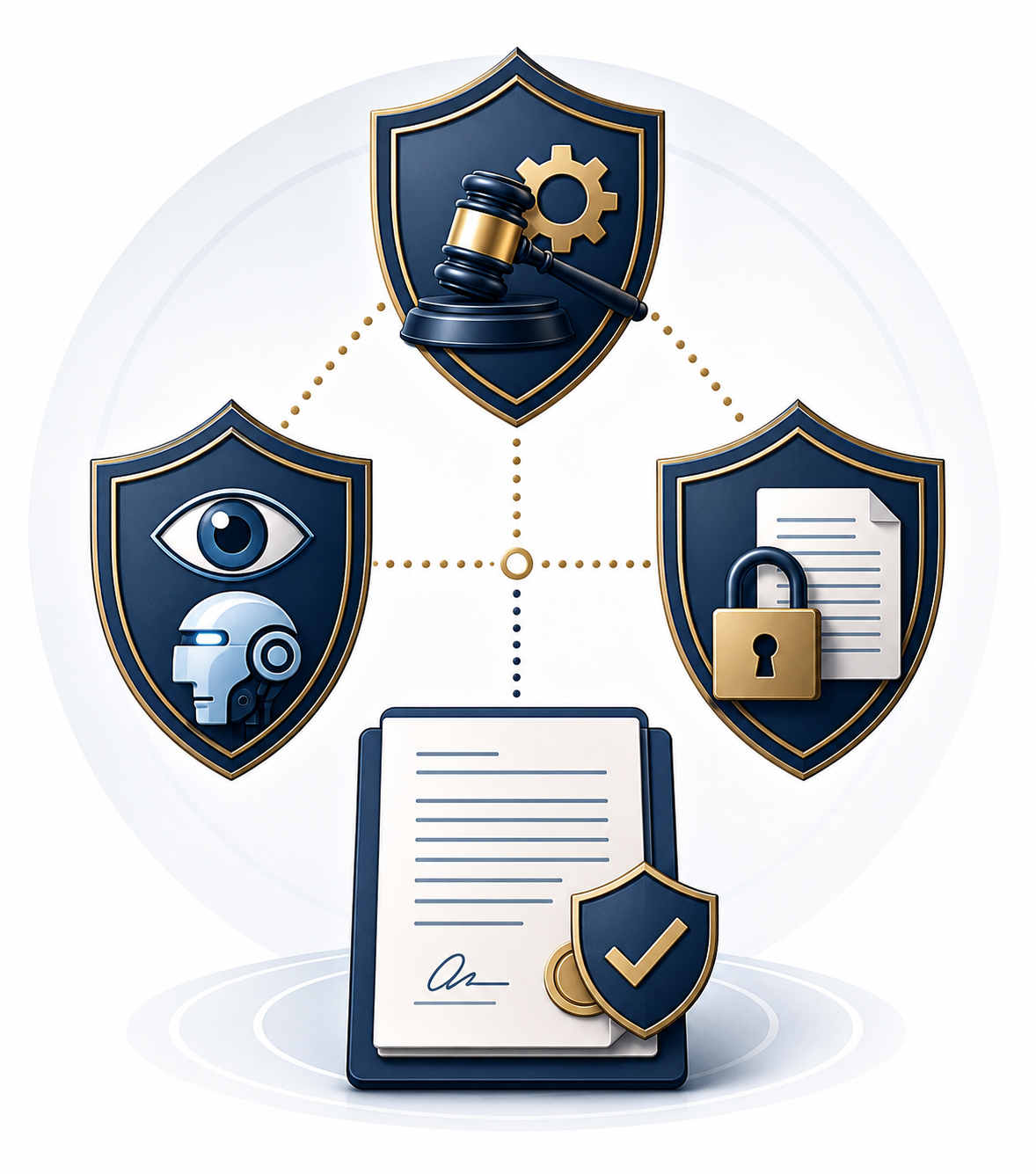
A free tool does not create a free zone around professional responsibility. The lawyer still owes the same duties of competence, supervision, and confidentiality. The fact that a tool is convenient may make those duties more pressing, not less.
Model Rule 1.1 frames competence, including the need to understand the benefits and risks associated with relevant technology. Model Rule 5.3 requires lawyers to supervise nonlawyer assistance, and Gavel’s 2026 guide cites ABA Formal Opinion 512 in applying that supervision principle to AI output. Model Rule 1.6 brings confidentiality into the analysis, because contract uploads can contain client confidences, deal terms, pricing, personal data, trade secrets, or privileged context.[5]
Harvey’s contract-review guidance reaches the same practical place: legal AI selection is not only about features, but about the surrounding workflow, verification, security, and fit for legal work.[6] A tool that produces a plausible answer but gives the lawyer no reliable way to verify how it handled the document is a weak fit for professional review.
Confidentiality Comes Before Convenience
The most tempting free workflow is also the one that needs the most caution: paste the contract into a consumer chatbot and ask for risks. Gavel states that free tiers of ChatGPT, Claude, and Gemini train on user inputs by default, creating privilege and confidentiality exposure without informed client consent.[5]
That statement should not be overread. Paid, enterprise, or business versions of major AI tools may offer different retention, training, opt-out, or zero-retention terms. The point is narrower and more important for this comparison: a lawyer evaluating free consumer tiers should not assume the data terms are suitable for client contracts.
- Before uploading a client contract, check whether inputs are used for training.
- Check retention periods, deletion controls, and whether API logs are stored.
- Confirm whether the vendor offers contractual confidentiality commitments suitable for legal work.
- Consider whether informed client consent is required before using the tool on client materials.
- Use redaction only when it does not distort the legal analysis the tool is being asked to perform.
Supervision Means More Than Reading the Output
Supervising AI output is not satisfied by glancing at a confident paragraph and deciding it sounds right. In contract review, supervision means checking the answer against the document. If the tool says the agreement has a mutual indemnity, the lawyer has to look at the indemnity clause. If the tool says liability is capped, the lawyer has to confirm the cap, the carveouts, and the lookback period. If the tool says the agreement contains no automatic renewal, the lawyer has to verify the renewal, term, termination, and notice provisions.
That verification burden is why free AI is most valuable when it reduces search time rather than replaces judgment. A useful tool points the lawyer to the clauses that deserve attention. A dangerous tool invites the lawyer to stop looking.
How to Choose Without Pretending There Is a Universal Winner
For a solo or small-firm lawyer, the best free AI contract review tool is not necessarily the one with the most impressive demo. It is the one that fits the task, the confidentiality posture, and the review process the lawyer can actually defend later.
| If the task is | Use | Verification required |
|---|---|---|
| Understanding the structure of a contract before review | General-purpose free AI or consumer summary tool | Confirm all summaries against the original contract |
| Spotting potential negotiation issues | General-purpose AI with a lawyer-created checklist, or a legal-specific freemium tool | Check each flagged and unflagged issue against the contract |
| Reviewing for client-specific risk positions | Legal-specific freemium or paid legal AI with playbook support | Attorney review remains required for every material conclusion |
| Handling confidential client contracts | A tool with acceptable confidentiality, retention, and training terms | Confirm data terms before upload and document the workflow |
| Replacing attorney review | No free tool | Not available |
A sensible small-firm workflow may use more than one tier. A lawyer might use a general-purpose model to generate a preliminary issue list from a redacted form, then use a legal-specific tool to compare a live agreement against a playbook, then perform the final review manually. That is a different risk posture from uploading the full client contract to a free chatbot and sending the chatbot’s conclusions to the client.
The decision rule is straightforward. Free general AI may help with preliminary issue spotting. Legal-specific freemium tools are the only credible free or low-cost candidates for lawyer-supervised contract-review support. Consumer summary tools are not professional review systems. None of them satisfies a lawyer’s obligations without independent verification.
References
- Free Legal AI Tools That Actually Work, Clio, https://www.clio.com/resources/ai-for-lawyers/free-legal-ai-tools/
- The 2026 Contract Review Benchmark, LegalOn, https://www.legalontech.com/post/the-contract-review-benchmark-2026
- 10 Best AI Contract Review Tools in 2026, Simular.ai, https://www.simular.ai/alternatives/ai-contract-review-tools
- Best AI Contract Review Software: 2026 Vendor Comparison, Dan Cumberland Labs, https://dancumberlandlabs.com/blog/ai-contract-review-software/
- Best AI Contract Review Tools for Lawyers Ranked (2026 Guide), Gavel, https://www.gavel.io/resources/best-ai-contract-review-tools-for-lawyers-in-2026
- Choosing Legal AI for Contract Review, Harvey, https://www.harvey.ai/blog/ai-contract-review-guide
Comments
Join the discussion with an anonymous comment.