
News & Market Intelligence
Short, source-cited news items and analytical commentary covering legal AI product releases, funding rounds, acquisitions, market consolidation, and strategic developments in the legal technology sector. Each item is dated, links to primary sources or credible trade reporting, and is tagged by topic. This group serves legal tech professionals and legal ops leaders who monitor the market for intelligence relevant to their technology stack or investment decisions. It is distinct from workflow-guides (process education), tool-profiles (maintained product records), and regulatory-tracker (rules and obligations). Articles here are time-sensitive and should carry publication dates prominently. Editorial framing should distinguish independently reported facts from vendor-issued press releases.
Items are labeled by source type — independent reporting, vendor press release, or trade publication — to distinguish editorial coverage from vendor-issued content.
News items
Legal AI Startup Funding Rounds and Acquisitions: 2024–2025 Market Activity Log
A structured log of documented funding rounds, acquisitions, and notable corporate events in the legal AI market across 2024 and 2025, compiled from press releases, SEC filings, and named trade publications.
Read more →Legal Tech AI Startup Acquisitions: 2024–2025 Market Log
A structured log of documented acquisitions involving AI-focused legal technology startups during 2024 and 2025, with disclosed deal sizes, acquirer identities, and sourced trade reporting. Intended for procurement teams, competitive intelligence, and legal ops professionals tracking market consolidation.
Read more →
How Election Laws Are Reshaping Voter Enthusiasm for 2026
New state election laws enacted in 2025–2026 selectively raise barriers for Democratic-leaning demographics, amplifying a 22-point enthusiasm gap favoring Democrats ahead of the 2026 midterms. This article maps the divergent state-level landscape of 44 restrictive and 16 expansive laws onto measured partisan enthusiasm patterns.
Read more →
How the 2027 COLA Forecast Reshapes Social Security Taxation
The projected 3.8%–4.7% COLA for 2027 will push more retirees above the frozen IRC §86 thresholds, triggering increased federal taxation of benefits. Tax attorneys and estate planners need to understand this stealth tax effect and develop planning strategies before the official October 2026 announcement.
Read more →
The 25th Amendment's Legal Process for Cognitive Fitness
A procedural reference on Section 4 of the 25th Amendment covering the legal triggers, timelines, vote requirements, and the unresolved gap between medical evidence and political judgment in determining presidential cognitive incapacity.
Read more →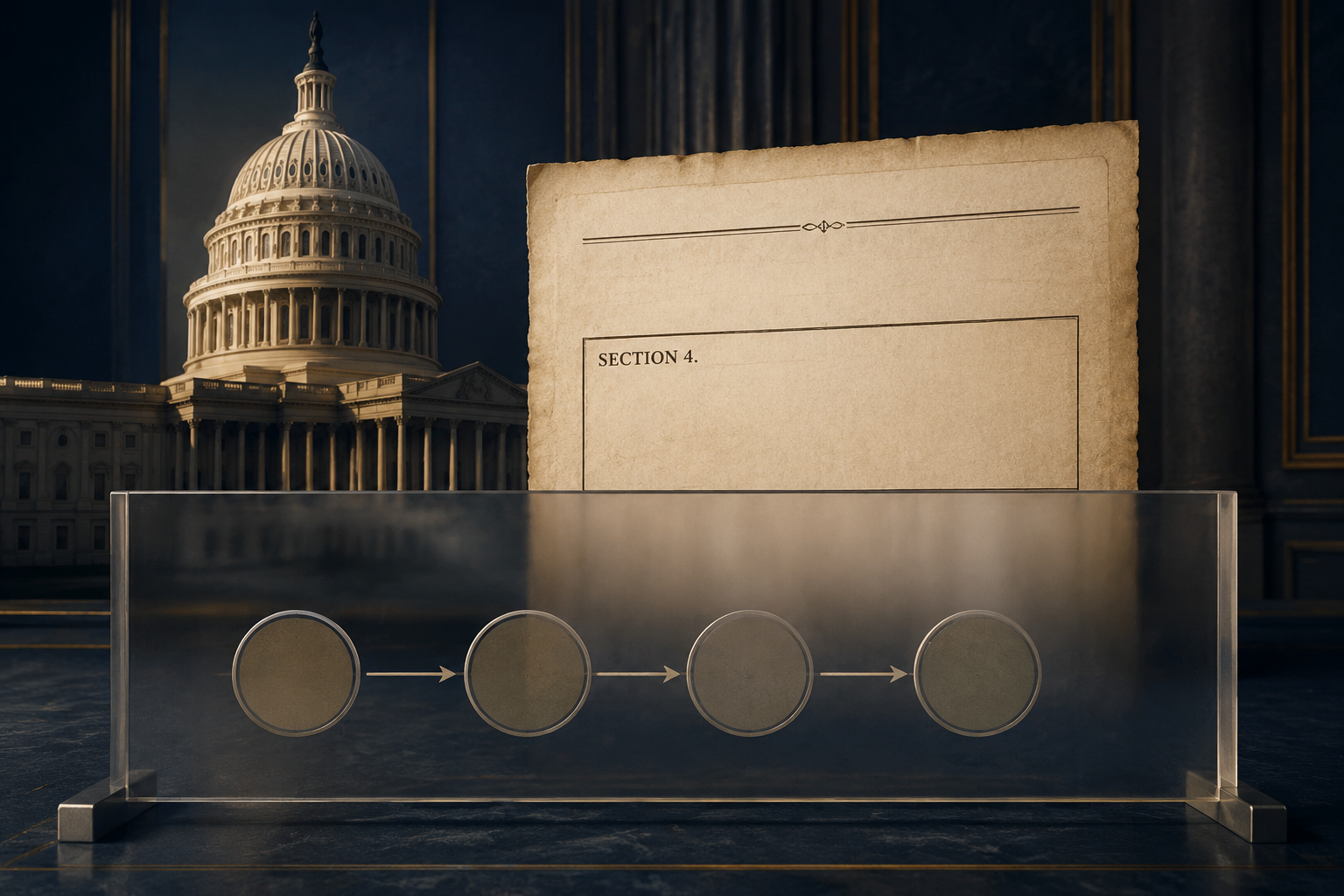
Four times the 25th Amendment's removal process was almost invoked
The 25th Amendment's Section 4 presidential removal process has been seriously considered in 1981, 2018, 2021, and 2026 — but never invoked. This article traces its history from the drafting through the latest legislative effort to make it operational.
Read more →
AA2653's Cancellation Exposes the Limits of US Air Travel Rights
Using the July 17, 2026 American Airlines 2653 incident as a case study, this analysis explains what US aviation consumer protection law requires when a domestic flight is cancelled for a mechanical reason, and where the legal gaps remain compared to frameworks like EU 261/2004.
Read more →
Legal implications of the AA2653 engine failure for airlines
The July 17, 2026 AA2653 engine backfire event at Fresno Yosemite International Airport had no injuries, but it triggered a cascade of legal exposures for the airline—from NTSB classification questions and FAA enforcement risk to passenger litigation and manufacturer liability. This article walks airline counsel through the distinct legal obligations and litigation risks that activate after a low-severity engine incident.
Read more →
Why the AA584 Fuel Diversion Raises Legal Concerns for American Airlines
A legal analysis of the American Airlines AA584 fuel diversion, examining FAA compliance with 14 CFR § 121.639 fuel reserve requirements, passenger refund obligations under the 2024 DOT automatic refund rule, and potential enforcement or litigation exposure.
Read more →
ACLU Lawsuits Challenge School Social Media Bans Post-Mahanoy
Since the Supreme Court's Mahanoy decision, the ACLU has launched multiple First Amendment lawsuits against school social media restrictions. This article maps the major cases, legal theories, and implications for school districts navigating student and parent speech online.
Read more →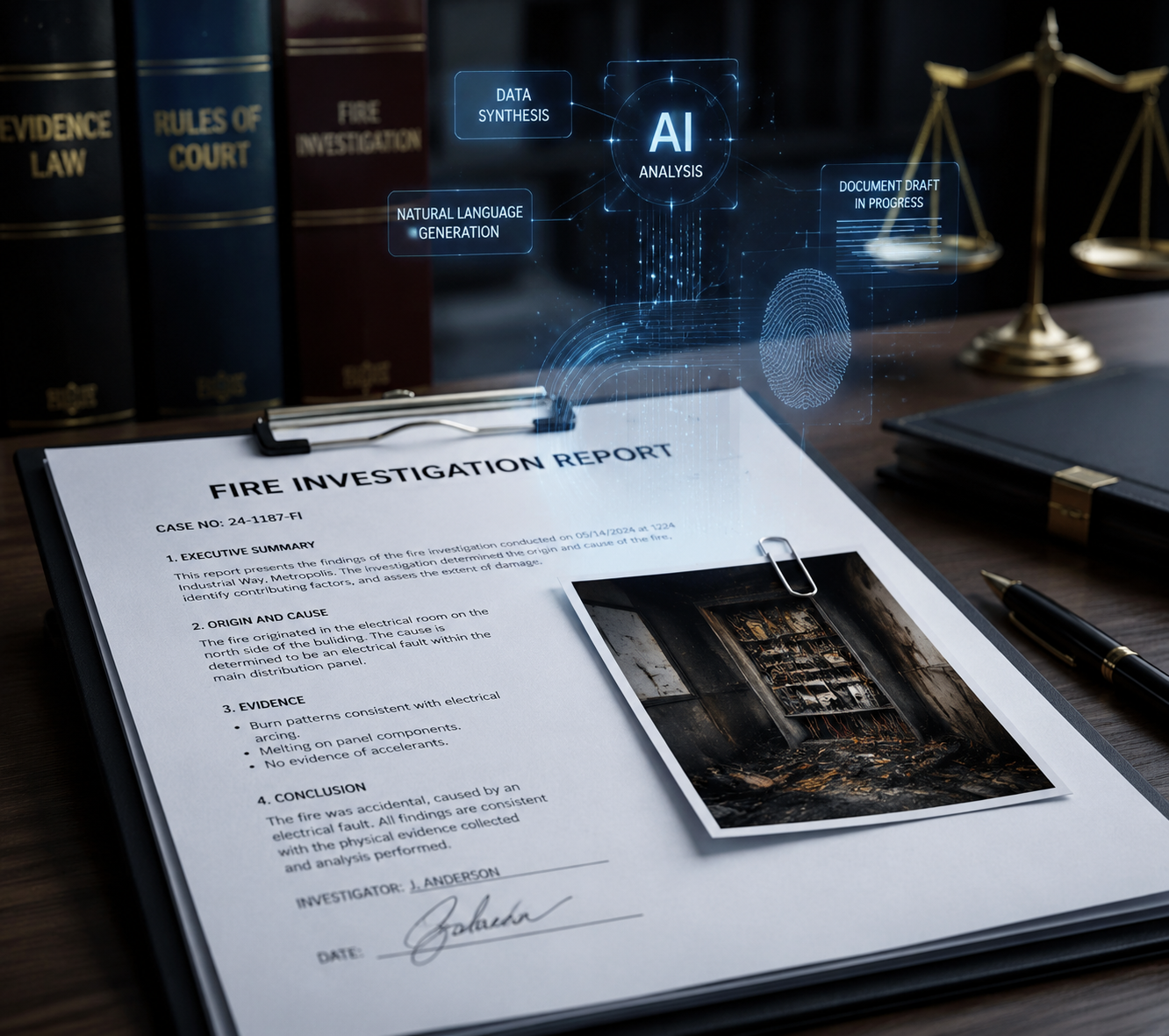
What Attorneys Need to Know About AI in Apartment Fire Reports
This article explains the admissibility risks attorneys face when fire investigation reports are drafted with AI assistance, drawing on FRE 702, Daubert standards, and analogous forensic challenges to provide practical guidance for preserving or challenging AI-assisted evidence.
BlazestackRead more →
How AI Is Breaking the Billable Hour
AI adoption among solo and small firm lawyers has surged, but pricing models remain stuck on the billable hour—creating a structural tension that threatens firm profitability. This article examines the data behind the pricing paradox and offers strategic guidance for firms and in-house counsel navigating the shift toward value-based billing.
Clio, Thomson ReutersRead more →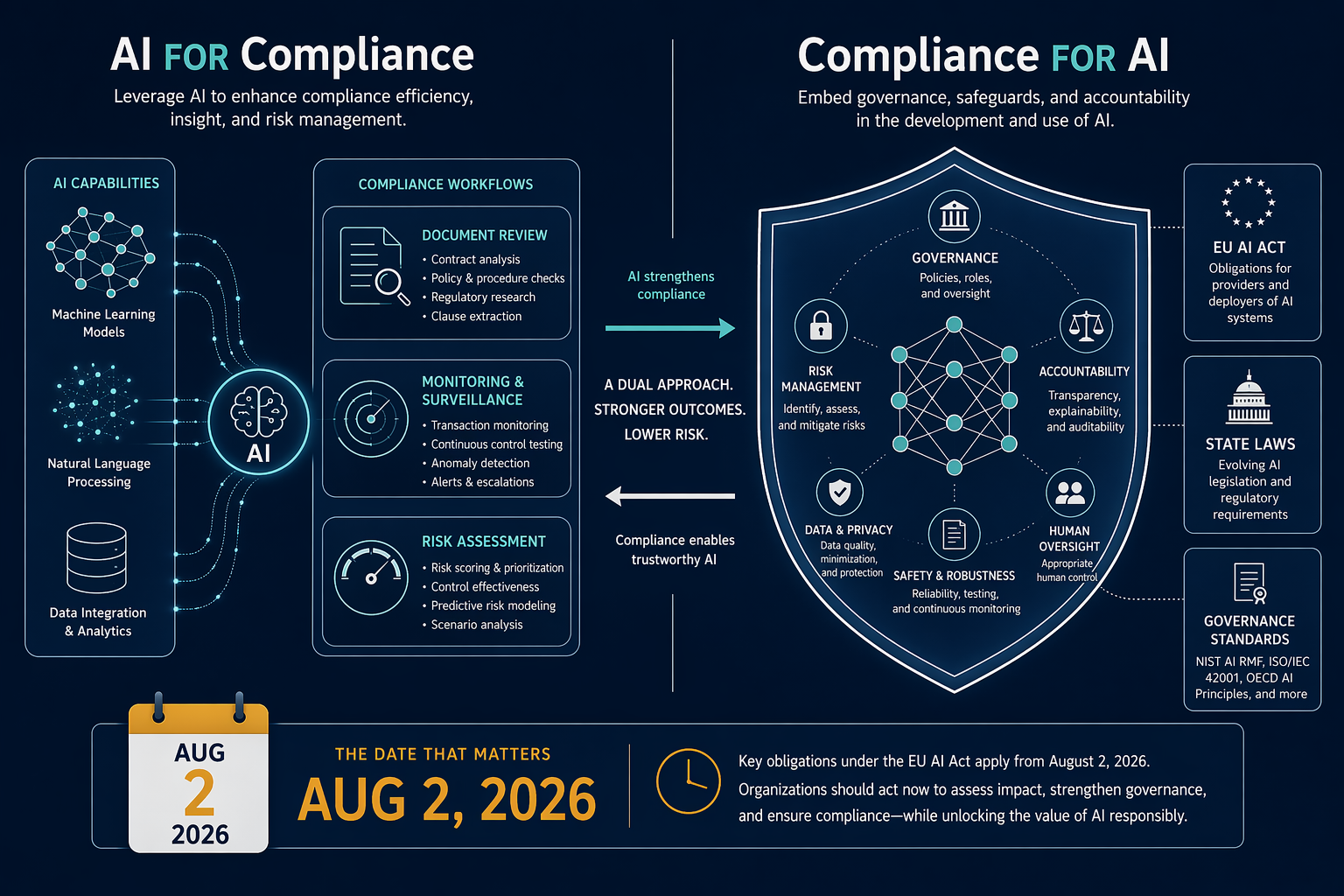
AI Compliance in 2026: The Enforcement Shift — How Regulators Are Moving From Guidance to Penalties
This article analyzes the decisive shift in AI regulation from voluntary guidance to concrete enforcement actions in 2026, covering EU AI Act penalties, U.S. state attorney general settlements, FTC consent orders, SEC examination priorities, and the growing role of cyber insurance. It is written for risk officers, compliance leaders, and in-house counsel who need to understand the real-world consequences of non-compliance.
Workado, DoNotPay, Growth CaveRead more →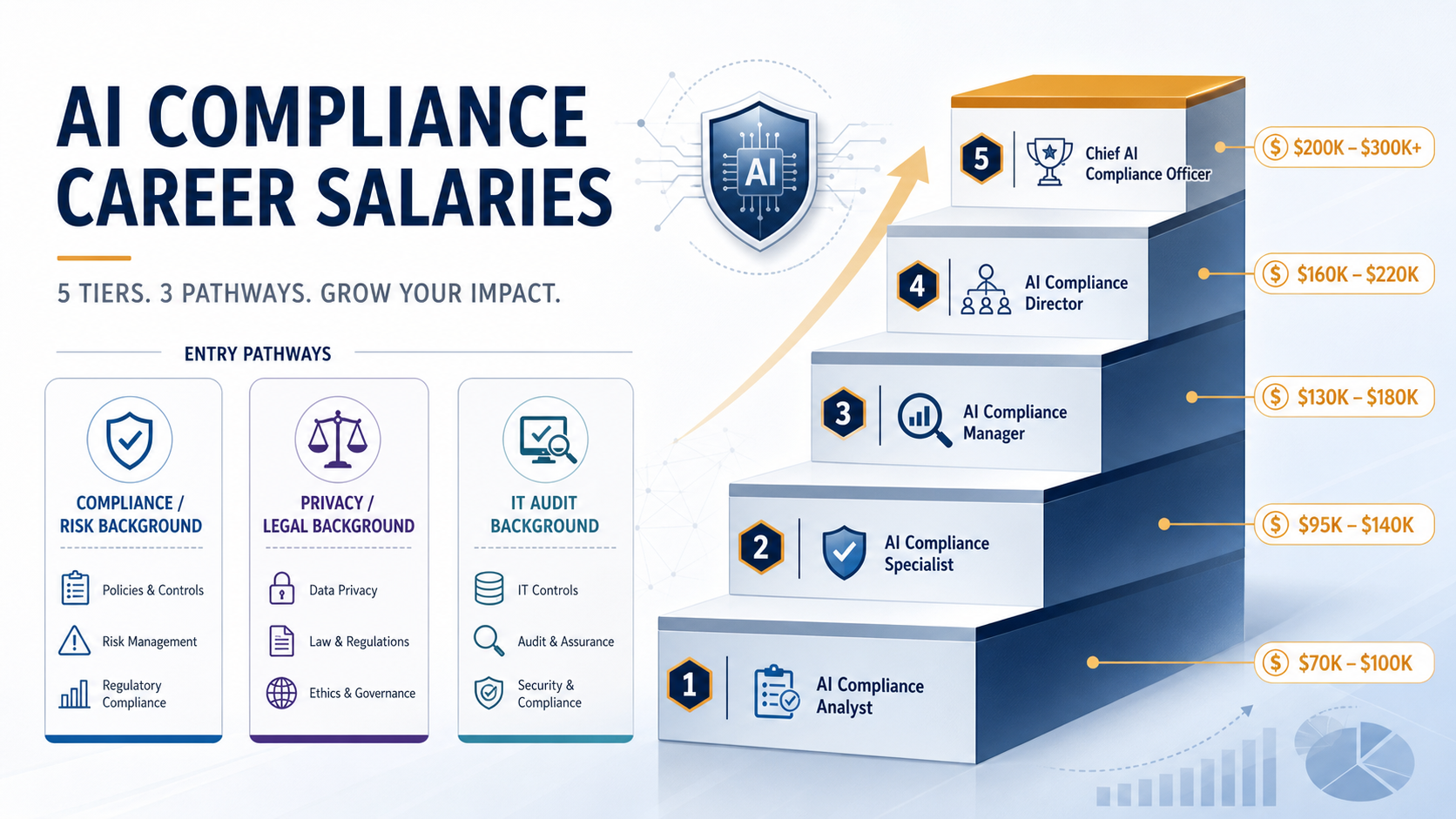
The AI Compliance Jobs Boom: What Roles Exist, What They Pay, and How to Break In
A market intelligence guide for compliance, risk, privacy, and legal professionals evaluating a career pivot into AI governance. Covers the demand-supply gap, role tiers, salary benchmarks by geography, certification ROI, feeder paths with transition timelines, and actionable next steps.
Read more →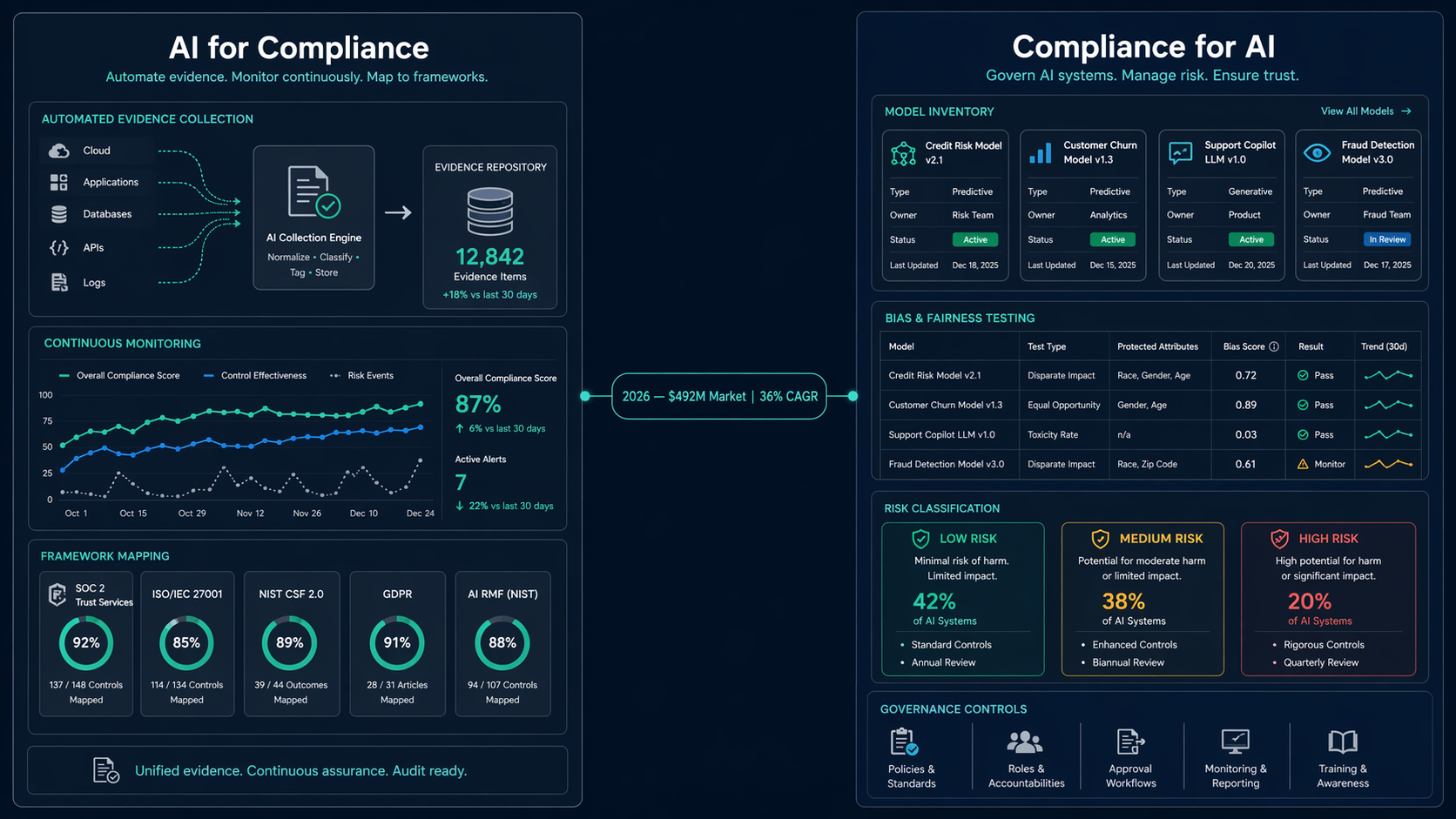
AI Compliance Software in 2026: A Buyer’s Guide to the Two-Market Split
This guide helps compliance officers, legal ops leaders, and IT security managers navigate the 2026 AI compliance software market by introducing a two-market split — AI for compliance vs. compliance for AI — and providing a role-based evaluation framework, tool-by-tool comparison, and industry-specific considerations.
Drata, Vanta, Centraleyes, AuditBoard, Compliance.ai/Archer, Sprinto, Hyperproof, LogicGate, Optro, Bretton AI, Hybridity, VendictRead more →
AI Discovery and Brady Compliance in the Sam Nordquist Case
The Sam Nordquist case — with seven defendants and massive digital evidence — illustrates how AI-assisted discovery tools can help prosecutors manage evidence but also risk suppressing exculpatory material. This article analyzes the constitutional and practical implications, drawing on new research and governance frameworks.
VeritoneRead more →
Which Laws Apply to AI-Generated Election Fraud Claims?
As the 2026 midterm elections approach, legal professionals face a fragmented landscape of state and federal laws addressing AI-generated content that falsely claims election fraud. This article analyzes which statutes are most defensible against First Amendment challenge and how campaigns and platforms can operationalize compliance.
Wiley ReinRead more →
How AI Helps Plaintiff Attorneys Evaluate Hit-and-Run Claims
This article provides a framework for plaintiff attorneys to adapt AI tools — intake screening, investigation support, medical-record analysis, and demand-letter generation — for the distinct challenges of hit-and-run claims, including UM/UIM coverage analysis, evidence preservation, and case valuation without an identified defendant.
EvenUp, Salvi LawRead more →
AI Evidence and Criminal Charges for Fatal Reckless Driving
As prosecutors increasingly use AI-powered crash reconstruction, EDR data, and bodycam transcription in fatal reckless driving cases, defense attorneys face new professional obligations to understand and challenge this evidence under Daubert and existing ethics rules — even as proposed FRE 707 remains pending.
JusticeText, Reduct.Video, CoCounsel, Paxton AI, SentencingStats, Clearview AIRead more →
AI fake endorsements test election law boundaries
The June 2026 forgery charges against former NYC Council candidate Jonathan Rinaldi provide a landmark test of whether existing criminal statutes can police AI-generated political deception, revealing a critical gap in state AI-specific laws that target candidate deepfakes but not fabricated third-party endorsements.
Read more →
How AI Forecasting Helps Plan for Social Security Benefit Cuts
With a confirmed 22% Social Security benefit cut by 2032, legal professionals can use AI predictive analytics to forecast policy scenarios and client impacts, but must navigate the legal limits of the Flemming v. Nestor framework and Antideficiency Act.
Read more →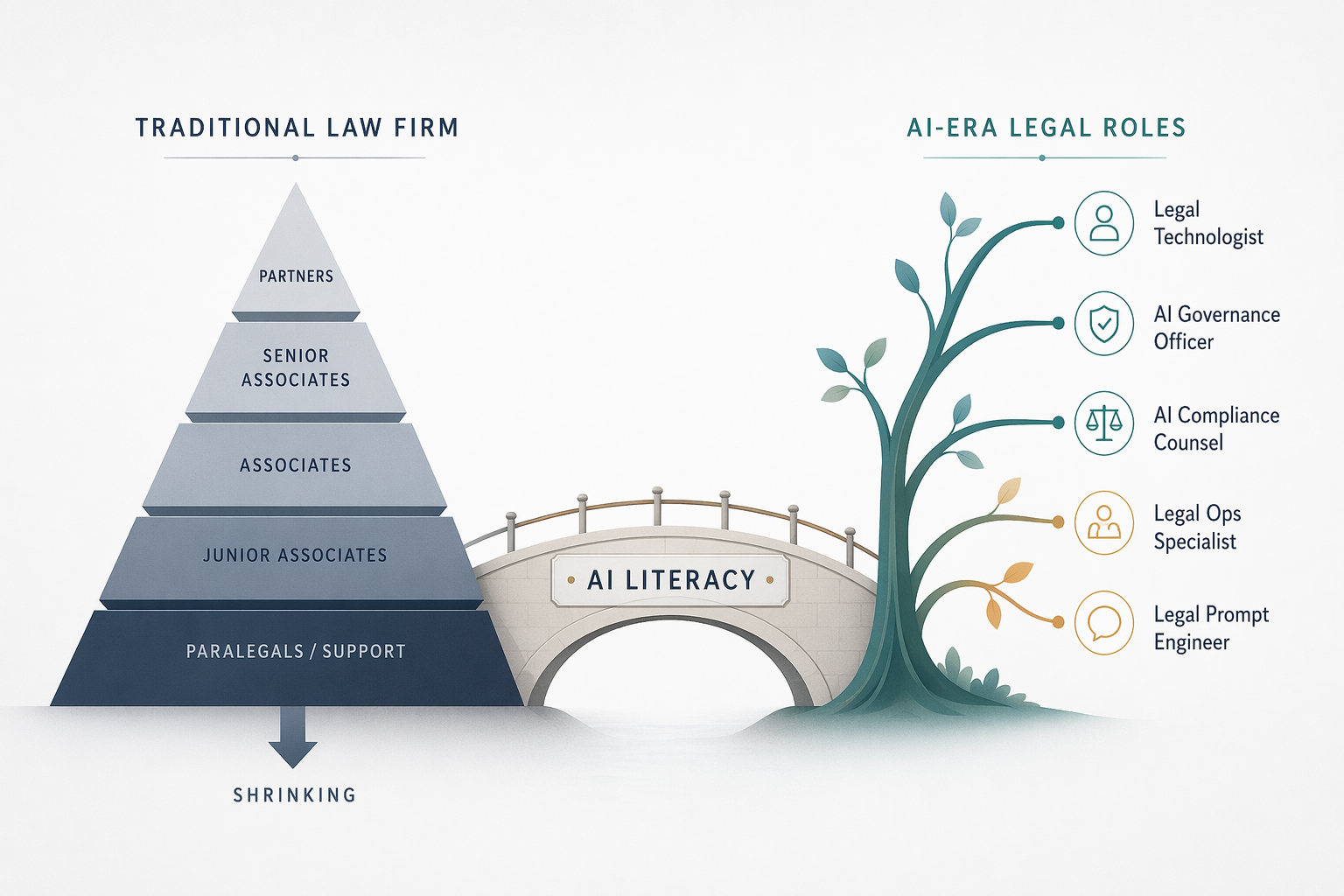
The AI Lawyer Jobs Landscape in 2026: 8 New Roles That Didn't Exist Three Years Ago — With Salary Ranges and Entry Paths
This article provides attorneys, law students, and career-changing legal professionals with a detailed inventory of eight newly-emerged AI-focused legal roles, including concrete salary ranges, hiring demand signals, and actionable entry paths — built on the thesis that AI has created premium-priced hybrid roles rather than eliminated jobs.
Covington, DLA Piper, Morrison Foerster, Baker McKenzie, Harvey, LexisNexis, Thomson ReutersRead more →
AI Legal Ethics in 2026: What Every Lawyer Must Know About the New Duty of Technological Competence
This article provides practicing attorneys, in-house counsel, and risk managers with a clear, actionable map of the crystallized ethical framework for AI in legal practice — grounded in specific bar opinions, sanction cases, and model rules — and delivers a ready-to-implement compliance framework for Q3 2026.
Florida Bar, ABA, GC AIRead more →
What the 2026 Data Reveals About AI in Legal Services
The 2026 survey data shows 79% of legal professionals use AI tools, but firm-wide generative AI deployment is only 21%, and most firms lack ROI measurement and formal policies. This article breaks down the gulf between individual experimentation and organizational readiness.
Clio, Thomson Reuters, Legartis, EverlawRead more →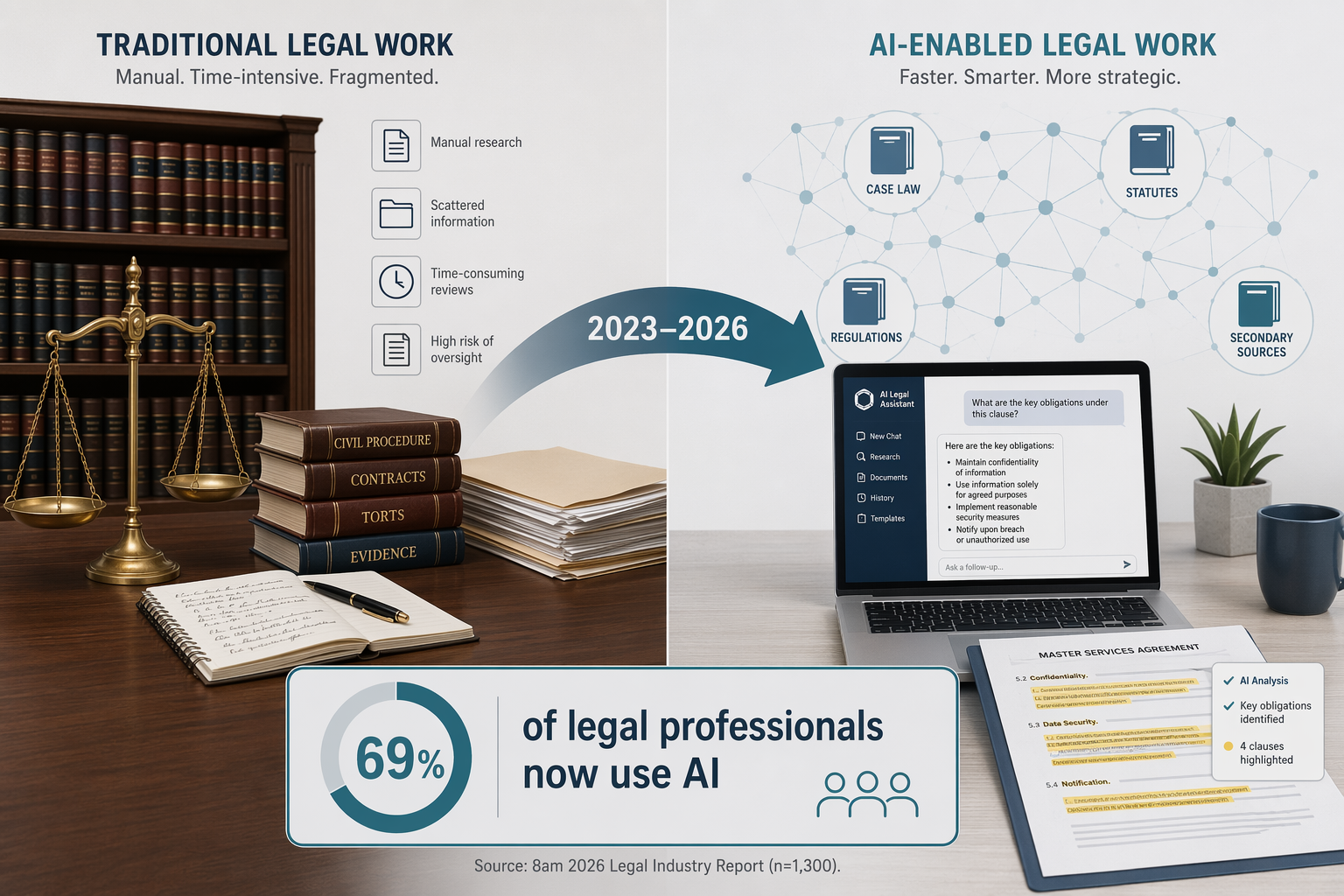
AI Legal Services Adoption in 2026: What the Data Actually Shows — and Why Adoption Outpacing Governance Is the Real Story
This article synthesizes the latest 2026 survey data from 8am, Clio, and Thomson Reuters to give law firm leaders and legal ops professionals a clear, evidence-based picture of AI adoption versus organizational readiness — and what to do about the growing gap.
8am, Clio, Thomson ReutersRead more →
The AI Pricing Paradox: Why Law Firm Efficiency Gains Aren't Translating to Revenue — and What to Do About It
For law firm leaders and legal ops professionals: a data-driven analysis of why surging AI adoption is creating an efficiency-revenue paradox, with 2026 survey statistics on pricing inaction, ROI tracking gaps, and actionable frameworks for monetizing AI-driven productivity.
Clio, Thomson Reuters, Wolters Kluwer, 8amRead more →
What the numbers say about AI replacing lawyers in 2026
This article analyzes the latest 2026 data on legal AI adoption, employment, and task automation to provide a sourced, nuanced answer to whether AI will replace lawyers. It moves past the binary debate to show where real disruption is happening and what it means for different legal roles.
Clio, Thomson Reuters, Wolters Kluwer, EverlawRead more →
AI Shipwreck Discovery Leaves Maritime Law in Uncharted Waters
When an AI model detects a submerged shipwreck from sonar data, existing admiralty and heritage laws struggle to determine who the discoverer is and what obligations attach. This article examines the regulatory gaps and what they mean for maritime attorneys.
Read more →
How AI Shipwreck Treasure Valuations Are Testing Salvage Law
AI coin grading and provenance tools promise faster shipwreck treasure valuations, but courts are increasingly skeptical of unverified machine-generated evidence. This analysis examines how 2025–2026 case law on AI expert testimony may reshape salvage award calculations under the 1989 Salvage Convention.
Read more →
AI super PACs expose gaps in campaign finance law
AI-industry super PACs have deployed over $200 million in the 2026 midterms using shell companies and influencer networks that exploit gaps in federal campaign finance law. This article examines the novel structures, pending enforcement actions, and regulatory uncertainties practitioners face this cycle.
Read more →
Can AI Timeline Tools Handle the Evidence in the Sam Nordquist Case?
This article examines how AI-powered chronology and timeline tools can help legal teams manage the massive digital evidence sets in complex criminal cases like the Sam Nordquist torture-killing prosecution, and highlights the professional responsibility obligations to independently verify AI-generated outputs following recent court sanctions.
NexLaw, Paxton, Casefleet, ChronoVaultRead more →
The AI Trust Gap Law Firms Can No Longer Ignore
This article examines the growing transparency divide between corporate legal departments and their outside counsel regarding AI usage, revealing that 68% of in-house teams do not know how their firms use AI on their matters. It analyzes the strategic risks this gap creates and offers practical steps for both sides to begin the conversation.
Thomson Reuters, 8am, EverlawRead more →
How AI Water Monitoring Creates New Evidence in Legionella Litigation
Continuous AI-powered water monitoring generates timestamped records of temperature, flow, and disinfectant levels, transforming how courts evaluate premises liability in Legionella cases. This article examines how this new evidence class affects breach of duty, constructive notice, and Daubert admissibility for both plaintiffs and defendants.
Read more →
How to Use AI for Witness Impeachment in Depositions
A structured comparison of AI deposition analysis tools for witness impeachment, including vendor-claimed time savings, hallucination risk benchmarks, and a practical workflow methodology for safe integration.
esumry, CaseMark, AI.Law, Steno, Verbit, Clio, NexLaw, FilevineRead more →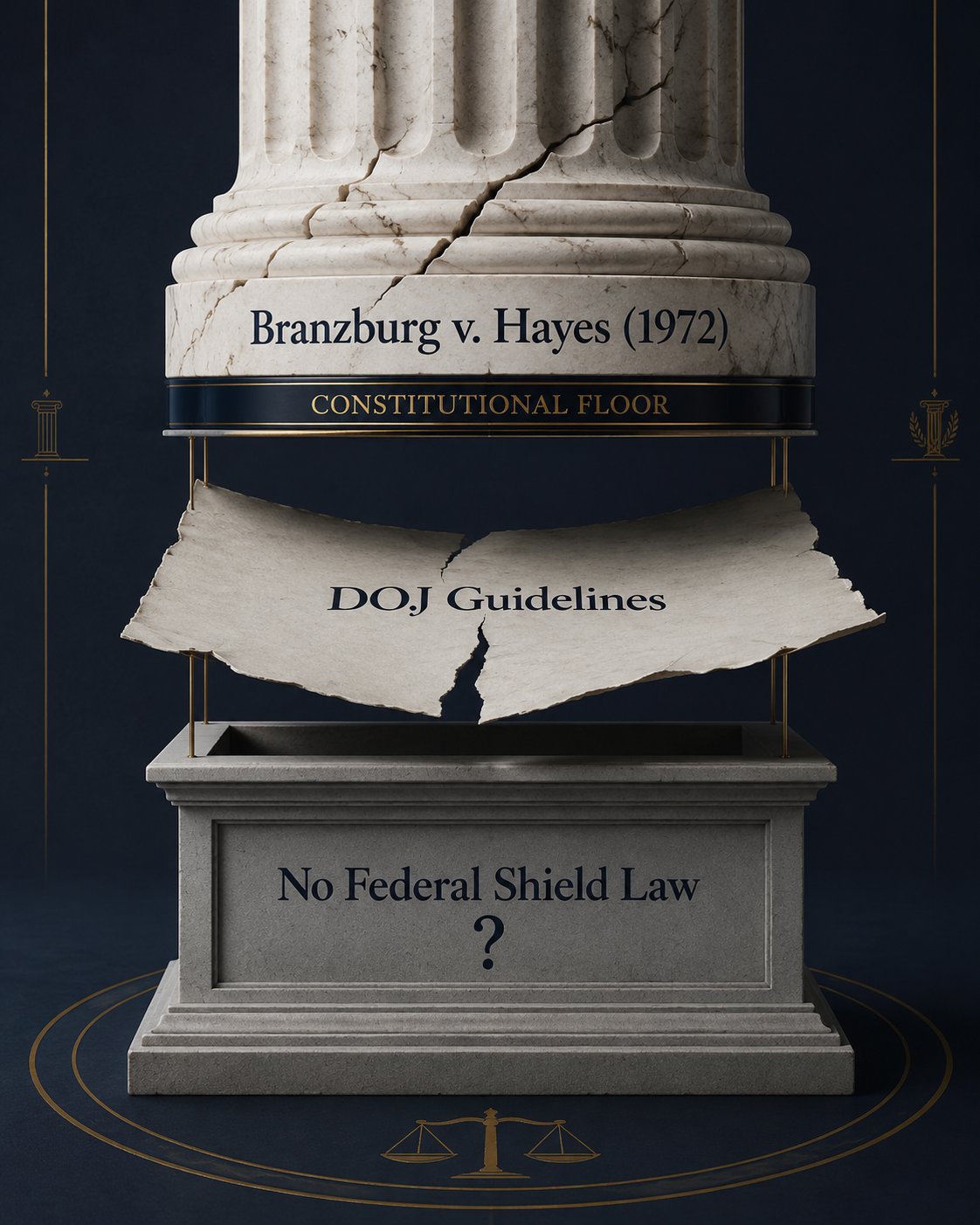
What Legally Protects Journalists From Subpoenas Like the Air Force One Case?
This article analyzes the legal framework governing DOJ subpoenas of journalists in national security leak investigations, focusing on the NYT Air Force One subpoenas and how they test the limits of Branzburg v. Hayes, the Bondi-era DOJ media guideline rescission, and the absence of a federal shield law.
Read more →
What Legal Claims Arise When an Airline Employee Threatens to Call ICE?
A legal claims analysis of rights and remedies available when an airline employee threatens to call ICE on a passenger based on national-origin stereotyping, using the July 2026 SFO United incident as a case study. The Unruh Act offers the strongest state-law remedy, but the absence of a federal private right of action and the risk of Airline Deregulation Act preemption create significant practical obstacles.
Read more →
The Legal Consequences of an Airspace Violation and NORAD Intercept
An analysis of the three-tier legal response chain triggered when an airspace violation escalates to a NORAD intercept — from FAA administrative action through civil penalties to DOJ criminal prosecution under 49 U.S.C. § 46307, and the intent-based factors that determine which tier applies in the heightened enforcement environment of 2025–2026.
Read more →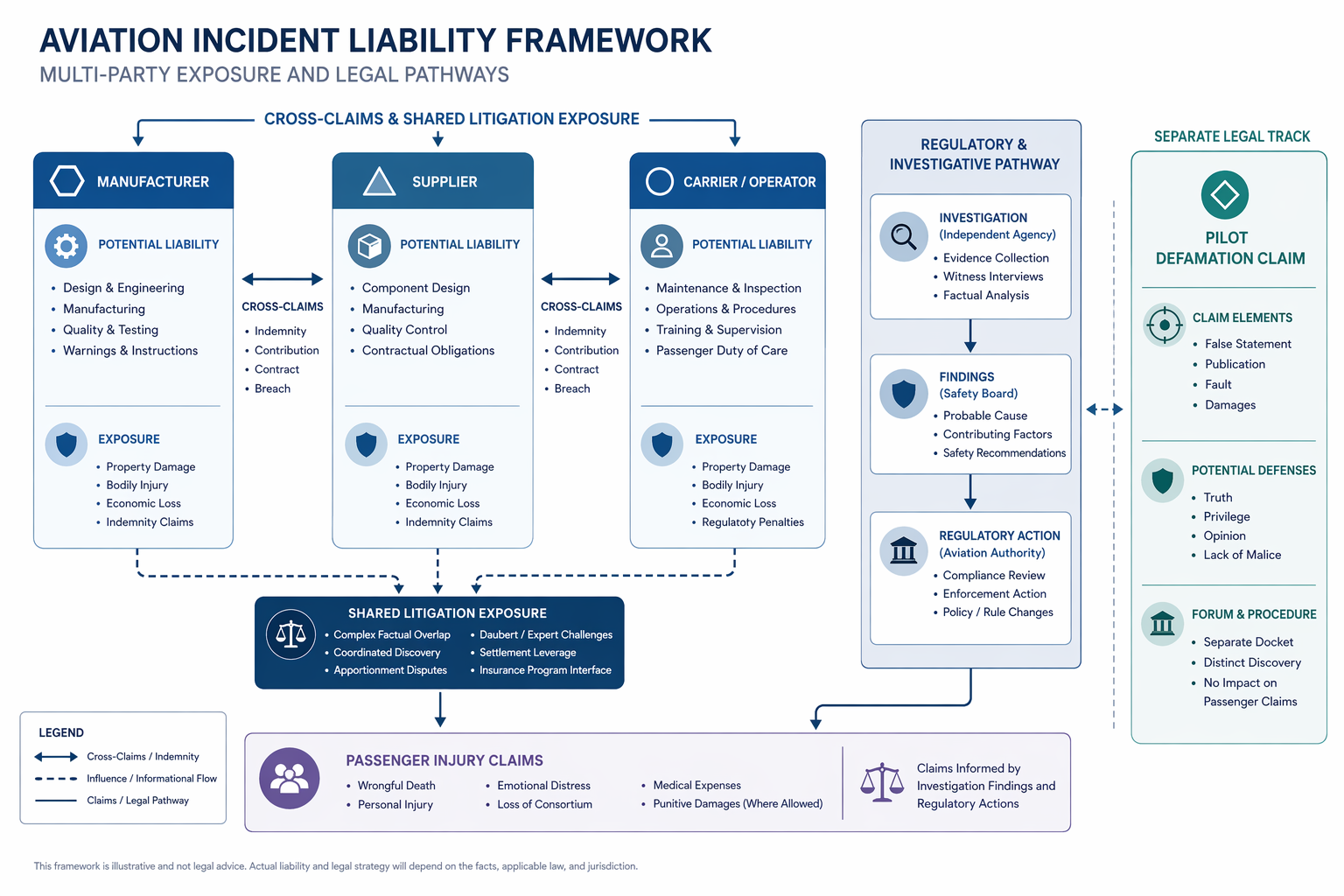
Liability and investigation after the Alaska Airlines emergency landing
A structured analysis of the legal liability landscape and ongoing investigations following the Alaska Airlines Flight 1282 door plug blowout, covering overlapping class actions, a pilot defamation suit, the DOJ criminal probe, and the FAA's proposed $3.1M fine.
Read more →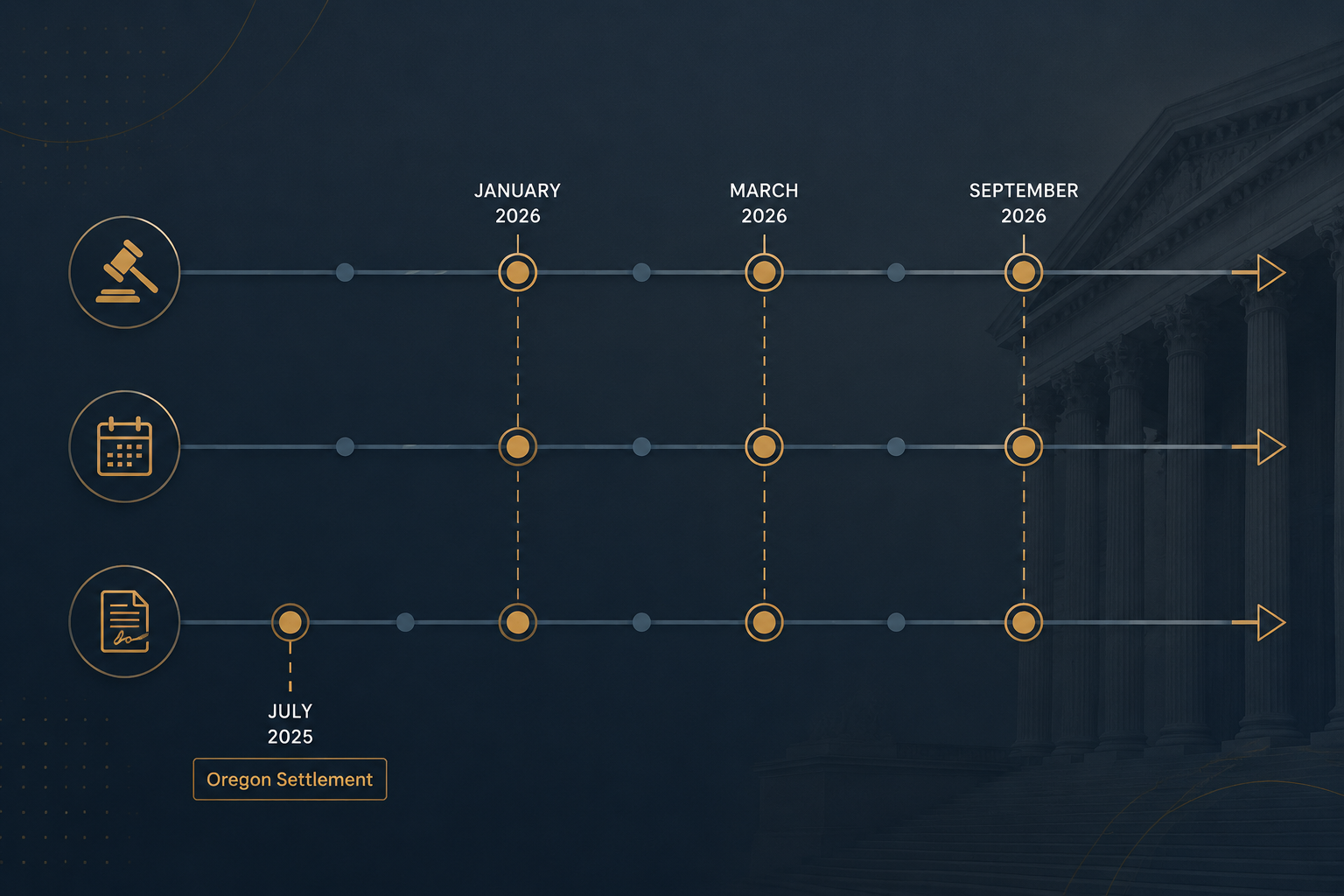
Alaska Airlines Emergency Declaration: The Lawsuits and Trial Timeline
This article tracks every major civil lawsuit stemming from the January 2024 Alaska Airlines door plug blowout, including the January, March, and September 2026 trial dates and the first confidential settlement. It covers the legal theories being tested and what the schedule signals for aviation product liability litigation.
Stritmatter Law, LindquistRead more →
How Operator Status Determines Alcatraz Boat Accident Liability
This article compares the May 2026 Alcatraz City Cruises ferry crash and the July 2026 Volare charter capsize, showing how operator status, ticket contracts, and maritime law create fundamentally different liability frameworks and procedural deadlines for injured parties.
J&Y Law, Naylor Law, BoatLawRead more →