
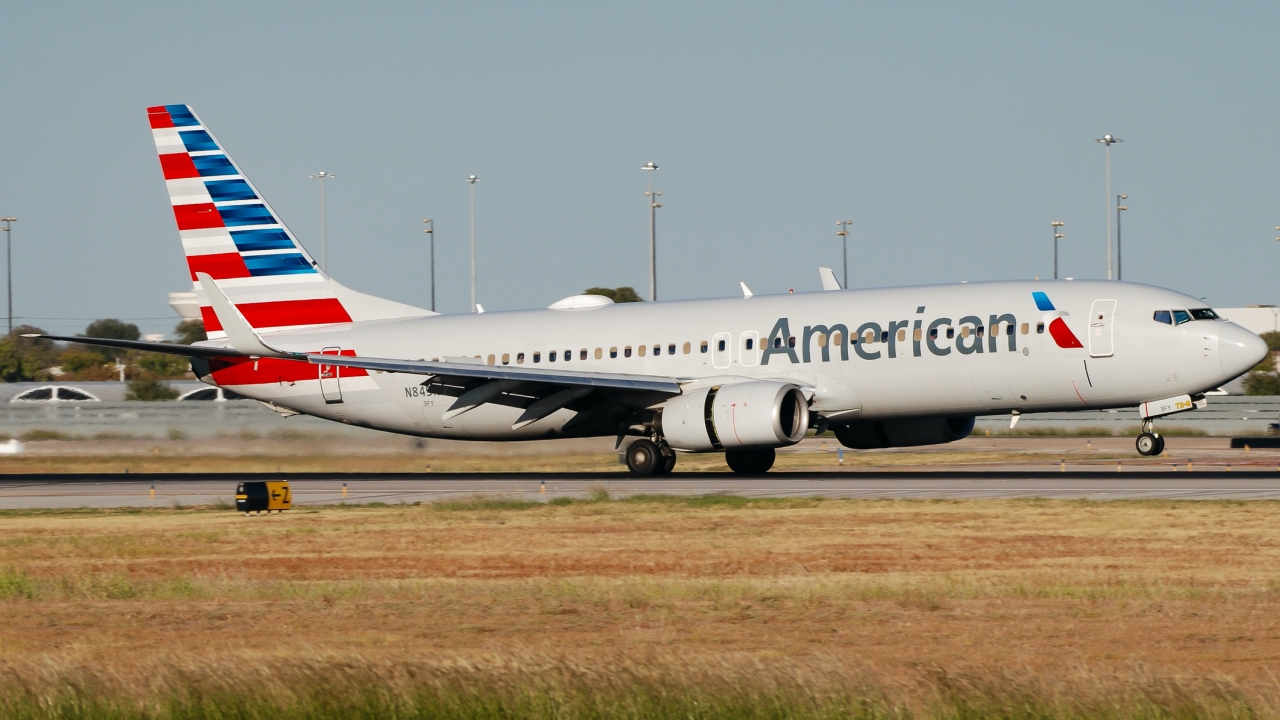
American Airlines Flight 2653 was scheduled to operate from Fresno Yosemite International Airport to Dallas Fort Worth on July 17, 2026, using a Boeing 737-800. Shortly after pushback, reports described a suspected engine backfire or fire-warning event, the aircraft returned to the gate, and the flight was cancelled rather than operated.[1][2][3]
That sequence matters for the legal analysis because it is not merely a weather disruption, air traffic control constraint, or airport-security event. On the facts currently reported, AA2653 was a domestic American Airlines cancellation tied to an aircraft mechanical issue. Two days after the incident, there is not enough public information to say what every passenger received, whether each passenger chose rebooking or refund, or whether vouchers were issued at the gate. The narrower question is what the law and American’s published commitments made available once the flight was cancelled for that reason.
Why the mechanical cause changes the classification
The DOT’s Airline Cancellation and Delay Dashboard separates disruptions into categories that are within an airline’s control and those that are not. It lists maintenance or crew problems as controllable, while weather, air traffic control, security, and medical emergencies fall on the uncontrollable side.[4]
A suspected engine backfire is not automatically proof of negligence, and it does not require a public finding that American did anything wrong. But for DOT consumer-protection purposes, mechanical issues are operational responsibilities the carrier is expected to manage. That makes the AA2653 cancellation a useful example of a controllable cancellation, not because the incident was dramatic, but because the governing category is relatively clear.
The word “controllable” should not be allowed to do more work than the framework assigns to it. It helps determine what amenities an airline has committed to provide and whether the carrier can characterize the event as outside its responsibility. It does not, by itself, create a US statutory right to a separate cash payment for inconvenience.
The strongest right is the refund right
For a cancelled domestic flight, the primary federal remedy is straightforward: if the passenger does not accept the alternative transportation or travel credit offered, the airline must provide an automatic refund. The DOT’s April 2024 final rule, codified in 14 CFR Part 260, requires cash refunds for cancelled or significantly changed flights, in the original form of payment, without requiring consumers to submit a special refund request.[5]
The cause of the cancellation does not defeat that refund right. A passenger on AA2653 who declined rebooking or did not accept another offered option would not need to prove that the suspected engine problem was avoidable, negligent, or poorly handled. The triggering fact is the cancellation of the purchased air transportation and the passenger’s nonacceptance of the alternative.
Timing is also regulated. For credit card purchases, the refund must be made within seven business days; for other payment methods, the rule uses a longer refund window.[5] The legal significance is practical: the carrier cannot convert the cancelled itinerary into a voucher-first process if the passenger is entitled to money back in the original form of payment.
| Question | AA2653 legal answer, based on current public facts |
|---|---|
| Was the reported mechanical issue controllable under the DOT dashboard framework? | Yes. Mechanical or maintenance-related problems are treated as controllable airline disruptions. |
| Does controllable status matter to the refund right? | Not in the sense of causation. The refund rule applies to cancellations regardless of cause when the passenger does not accept alternative transportation or a travel credit. |
| Must the refund be cash rather than a voucher? | Yes, where the passenger is entitled to a refund, it must be in the original form of payment unless the consumer affirmatively chooses another form. |
| Does US law add fixed inconvenience compensation because the cause was mechanical? | No. The US framework does not impose EU-style fixed cash compensation for this domestic cancellation. |
Amenities are a separate layer, not the same thing as a refund
The DOT dashboard also records airline commitments for controllable cancellations and delays. American Airlines is listed as committing to meals or meal cash/vouchers when passengers wait three hours or more for a new flight after a controllable cancellation or delay, and to hotel accommodations when a controllable cancellation or delay requires an overnight stay away from home.[4]
American’s own Customer Service Plan similarly addresses service obligations during controllable disruptions, including meal vouchers for delays of three hours or more and hotel accommodations for overnight disruptions where the airline is responsible.[6] Those commitments matter, but they should not be collapsed into the federal refund mandate. A meal voucher is not a refund. A hotel room is not statutory compensation. They are service-plan commitments that become relevant because the cause is treated as controllable.
For AA2653, that distinction keeps the analysis honest. Passengers may have been entitled to amenities if they were waiting for replacement transportation long enough, or if the cancellation forced an overnight stay under the conditions American publishes. But the available public reporting does not establish each traveler’s waiting time, residence, onward itinerary, or whether American in fact provided those amenities. The entitlement analysis is stronger than any passenger-level factual conclusion at this stage.
The December 2025 enforcement-discretion notice does not change this result
A recent DOT enforcement-discretion notice could create confusion if read too broadly. In December 2025, the Department addressed enforcement discretion for a specific category involving renumbered-flight refunds and extended that pause to July 2027.[7]
That is not the reported AA2653 problem. AA2653 was not described as a flight that operated under a different number while triggering a disputed renumbering rule. It was reported as a flight that pushed back, returned to the gate after a suspected engine-related event, and was cancelled. The ordinary cancellation-refund rule remains the relevant starting point.
For counsel advising on a similar fact pattern, the enforcement-discretion notice is worth flagging but not worth overreading. It may affect a narrow class of refund enforcement questions. It does not erase the automatic-refund obligation for a standard mechanical cancellation.
Why this still falls short of EU-style compensation
The common comparison is EU Regulation 261/2004, and the comparison is useful only if it is kept structurally precise. EU 261 can require fixed compensation of €250, €400, or €600 depending on route distance and eligibility, subject to defenses such as extraordinary circumstances.[8]

The US regime does not have an equivalent fixed-compensation statute for a domestic American Airlines cancellation caused by a mechanical issue. DOT rules can make the refund automatic and prompt. The dashboard can document service commitments for meals, hotels, rebooking, and related assistance. Those protections are real, but they do not price the passenger’s lost time as a separate statutory injury.
That gap is the central legal lesson of AA2653. The mechanical cause strengthens the passenger’s position against any suggestion that the disruption was outside the airline’s responsibility. It does not transform the cancellation into a US-law right to fixed cash compensation beyond the refund and applicable amenities.
The bounded answer for AA2653
On the presently reported facts, AA2653 sits in the DOT’s controllable-disruption category because the cancellation was tied to a suspected mechanical engine issue. Passengers who did not accept alternative transportation were entitled to an automatic refund in the original form of payment, with credit card refunds due within seven business days. Depending on the actual delay, rebooking, and overnight facts for each traveler, American’s controllable-disruption commitments may also have required meals or hotel accommodation.
What the incident does not support is a claim that US passengers receive EU-style statutory compensation simply because the airline controlled the cause. The US system recognizes mechanical cancellations as the airline’s responsibility, but it mainly converts that recognition into refund processing and service commitments. For lost time, inconvenience, and disrupted plans, the federal remedy remains much thinner.
References
- American Airlines Cancels Flight Minutes After Pushback Due To Suspected Engine Backfire — Simple Flying — July 2026
- Local coverage of AA2653 fire-warning and return-to-gate sequence — YourCentralValley.com — July 2026
- AeroXplorer coverage of American Airlines Flight 2653 — AeroXplorer — July 2026
- Airline Cancellation and Delay Dashboard — U.S. Department of Transportation
- Refunds and Other Consumer Protections — Federal Register — April 26, 2024
- Customer Service Plan — American Airlines
- Enforcement discretion notice for renumbered-flight refunds — Federal Register — December 2025
- Regulation (EC) No 261/2004 — EUR-Lex — February 11, 2004
Comments
Join the discussion with an anonymous comment.