
AMBER Alert legal procedures in an abduction investigation are often described as if a single national authority decides whether the public receives an alert. That is not how the system works. The federal government supplies coordination, infrastructure, recommended criteria, training support, and funding incentives; activation decisions still run through state and local rules, state AMBER Alert plans, and the discretion of officials who must decide whether a case fits their jurisdiction’s threshold.
That distinction matters in the first hours of a child-abduction case. A prosecutor advising investigators, a defense lawyer reviewing police conduct, or a child-protection attorney trying to understand why an alert did or did not issue cannot treat “AMBER Alert” as a federal entitlement. It is a federally coordinated, state-implemented emergency alert mechanism. The legal work begins with that awkward structure.
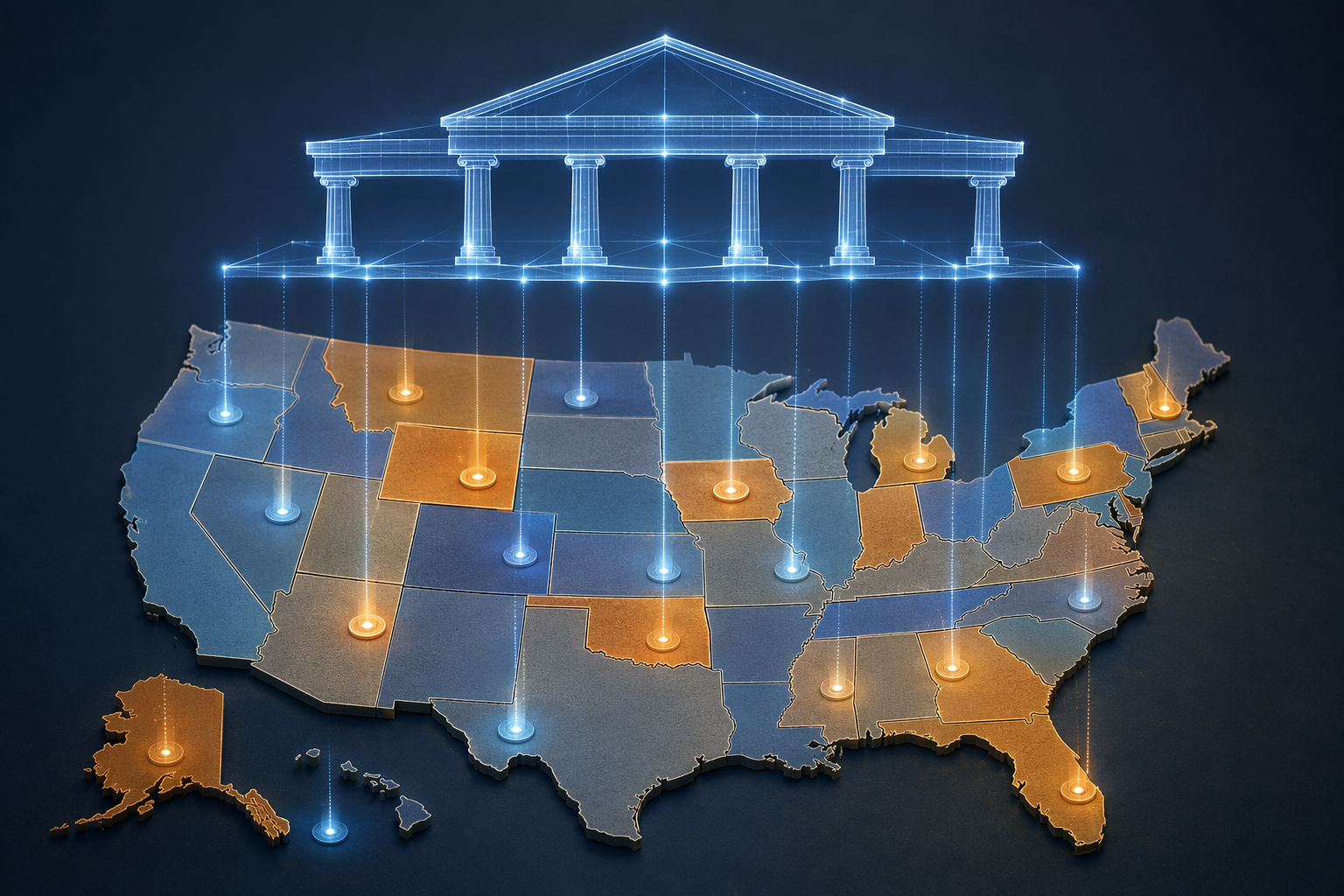
The Federal Framework Encourages, Coordinates, and Funds; It Does Not Create One Activation Code
The federal statutory anchor is the PROTECT Act of 2003. The Department of Justice described the Act as creating a National AMBER Alert Coordinator within DOJ, authorizing $25 million in grants to states for AMBER Alert communications systems, extending wiretap authority in child-abduction investigations, and eliminating the statute of limitations for federal kidnapping and certain other federal abduction offenses.[1]
Those are substantial federal interventions. They support faster communication, stronger investigative tools, and interstate coordination. They do not, however, convert every qualifying-looking child-abduction report into a federally mandated public alert. The Act’s importance is structural: it makes AMBER Alert capacity a national law-enforcement priority while leaving activation thresholds to state implementation.
That allocation of authority explains why public-facing language can mislead. “National AMBER Alert system” is accurate if it means a coordinated network supported by DOJ and connected to national alerting and criminal-justice information infrastructure. It is inaccurate if it implies that Washington applies a uniform activation rule to every reported abduction.
The DOJ Criteria Are the Operating Reference, Not Binding Federal Law
DOJ’s Office of Justice Programs identifies five recommended criteria for issuing an AMBER Alert: law enforcement must confirm that a child has been abducted; the child must be at risk of serious bodily injury or death; there must be enough descriptive information about the child, suspect, or vehicle to make an alert useful; the child must be 17 years old or younger; and the child’s name and critical data elements must be entered into the National Crime Information Center system.[2]
| DOJ recommended criterion | Procedural significance |
|---|---|
| Confirmed abduction | Screens out vague disappearances, runaways, and cases where law enforcement has not yet established an abduction basis. |
| Imminent danger of serious bodily injury or death | Requires more than custody conflict or unexplained absence; the case must present a serious safety threat. |
| Sufficient descriptive information | Connects the public alert to an actionable investigative lead, such as a vehicle, suspect, or child description. |
| Child is 17 or younger | Creates the federal recommended age boundary, though states may set different thresholds. |
| NCIC entry | Links alert activation to national criminal-justice information systems rather than treating the alert as a standalone media broadcast. |
The word “recommended” does real legal work here. DOJ guidance supplies a national benchmark and discourages overuse, but it is not a federal activation statute that binds every state AMBER Alert coordinator in the same way. A state may incorporate the DOJ criteria closely, modify them, or add state-specific limitations. For practitioners, the relevant question is not only whether the facts satisfy DOJ’s list. The question is whether they satisfy the state plan and the decision-maker applying it.

NCIC Entry Is a Gate, Not a Clerical Afterthought
The fifth DOJ criterion is easy to underread because it sounds administrative. It is not. Requiring entry of the child’s name and critical data into NCIC places the alert decision inside the national criminal-justice information system. The alert is not merely a message to phones or highway signs; it is tied to a record that law enforcement agencies across jurisdictions can query and act on.[2]
Suzanne’s Law makes that timing sharper. DOJ’s AMBER Alert legislation materials describe the law, enacted as part of the PROTECT Act, as requiring law enforcement to make immediate NCIC entries for missing persons under age 21 and eliminating any waiting period. DOJ contrasts this with prior policies under which agencies could delay entry for 24 to 72 hours.[3]
That rule changes what can happen while a case is still unstable. A delayed database entry can mean that an officer in another state, a border jurisdiction, or a transit corridor is working without the record that would connect a stop or sighting to the missing-child investigation. Immediate NCIC entry does not guarantee an AMBER Alert, and it does not prove an abduction. It does preserve the information channel that makes an alert, a recovery, or an interstate law-enforcement encounter more likely to connect to the same case.
Activation Is a State Decision With Real Jurisdictional Consequences
State variation is not a footnote to the federal scheme. It is where many hard cases live. A 2008 Associated Press review reported that 12 states would not issue AMBER Alerts for parental abductions in custody disputes and that state age thresholds varied, with some states setting limits below DOJ’s recommended 17-and-younger criterion.[6]
Those distinctions can matter profoundly in family-abduction cases. A parental taking may be legally serious, may violate a custody order, and may require urgent law-enforcement action. But if a state’s AMBER Alert plan excludes or narrows parental-abduction eligibility unless additional danger facts are present, the alert mechanism may be unavailable even while other criminal or civil remedies remain active. That is not a semantic distinction; it affects which tools are placed in front of the public and when.
Age thresholds create a different problem. A 16- or 17-year-old may fall within DOJ’s recommended criterion, but a state with a lower threshold may not treat the case the same way. For interstate investigations, the result can be especially untidy: the originating state, destination state, and neighboring broadcast areas may be working from different eligibility assumptions.
Texas illustrates how state political choices can expand access to alerts. Reporting on Athena’s Law described a local override mechanism that allows local officials to issue an alert when the state declines, and noted that Texas issued 49 of the 185 AMBER Alerts in the United States in 2023, or 26% of the national total.[7]
That number should not be inflated into a simple claim that more alerts mean better outcomes. It does show that state procedural design can change alert volume. A local override rule reallocates decision-making power. It may give local officials a way to act when they believe state-level gatekeeping is too restrictive; it may also raise familiar concerns about consistency and overuse. The available source supports the narrower point: state law can materially alter access to the AMBER Alert mechanism.
Effectiveness Data Should Be Read as Contribution, Not Causation
DOJ reports that, as of December 31, 2025, 1,312 children had been recovered through AMBER Alerts and that at least 252 children had been specifically rescued through Wireless Emergency Alerts.[4]
Those figures justify taking the system seriously. They do not justify treating every activation as the sole cause of a recovery. DOJ’s public statistics count alerts as part of recovery outcomes; they do not provide, for the full dataset, a separate direct-attribution-only measure that would isolate the alert from police work, family reporting, surveillance, tips, traffic stops, or suspect conduct. For legal analysis, that distinction is not academic. It affects how one evaluates a denied alert, a delayed alert, or an alert that issued but did not produce the decisive lead.
The more defensible lesson is procedural, not celebratory. AMBER Alerts can be operationally powerful when the facts meet the criteria and the information is specific enough for the public to act on. The system’s value depends on fast classification, accurate database entry, and coherent jurisdictional coordination.
What Happens When a Case Does Not Meet AMBER Criteria
A denial or non-activation does not mean law enforcement lacks tools. DOJ’s AMBER Alert FAQs describe the Child Abduction Response Team program as an investigative framework for missing-child and child-abduction cases, and report that the CART program had trained more than 11,400 members across 48 states and territories as of December 2024.[5]
That distinction is useful in litigation and case review. AMBER Alert eligibility is one question. Investigative adequacy is another. A case may fall short of an alert threshold because there is no confirmed abduction, no specific vehicle description, or insufficient evidence of imminent serious harm. Investigators may still have duties to enter records, interview witnesses, preserve digital evidence, coordinate with child-protection authorities, or deploy specialized missing-child resources.
For prosecutors and agency counsel, the documentation burden is obvious. If an alert is requested and denied, the file should show who made the decision, which criteria were considered, which facts were known at the time, and whether later facts changed the eligibility analysis. A clean record does not make a wrong decision right, but it prevents an urgent discretionary call from being reconstructed later as if everyone had information they did not yet possess.
Denied Requests Are Hard to Evaluate Because the National Data Is Thin
One of the largest transparency problems is not the number of alerts issued; it is the limited public view into alerts requested and denied. USA TODAY’s 2023 investigation reported denial-rate data for four states from 2017 through 2022: Indiana denied 52% of requests, Wisconsin 28%, Ohio 61%, and Michigan 22%.[8]
Those figures are useful precisely because they are limited. They do not establish a national denial rate. They do not prove that one state was too strict or another appropriately cautious. They do show that denial practices are measurable in at least some jurisdictions and that, without a national database of denied requests, policymakers and practitioners are left with a partial view of how often children are screened out of the alert system.
That gap makes after-the-fact review difficult. Issued alerts are visible. Denied requests may sit inside local case files, state police communications, or coordinator logs. For a lawyer trying to assess whether a decision was consistent with state policy, the missing denominator is often the most important one: not how many alerts succeeded, but how many cases sought access to the mechanism and why they were refused.
The Practical Legal Questions to Ask in an Abduction Investigation
In a live or retrospective abduction matter, the useful questions are procedural and jurisdiction-specific. They should be asked before anyone assumes that a federal label supplies a federal answer.
- Which state AMBER Alert plan governed the initial decision, and did that plan adopt DOJ’s recommended criteria exactly or modify them?
- Was the abduction confirmed under the applicable state standard, or was the case still classified as a missing-child report, runaway, custody dispute, or endangered missing person?
- What evidence supported imminent danger of serious bodily injury or death at the time the decision was made?
- Was there enough descriptive information for the public alert to be actionable, including suspect, child, vehicle, route, or destination information?
- Was the child’s information entered into NCIC immediately, and did the entry include the critical data needed for interstate law-enforcement use?
- If the case crossed state lines, who coordinated with neighboring or destination-state alert authorities, and did those states apply different eligibility thresholds?
These questions do not turn an AMBER Alert into a private legal remedy, and this article is informational rather than legal advice. They do, however, identify where the legal procedure actually sits: in the space between federal guidance, state activation authority, database entry, and the facts available to investigators at a particular moment.
The Bottom Line for Legal Practitioners
The AMBER Alert framework is powerful because it can move information quickly across public and law-enforcement channels. It is fragmented because the decision to activate remains state-driven, guided but not commanded by DOJ criteria. In an abduction investigation, a child’s access to the alert system may depend on the state’s age threshold, treatment of parental abductions, danger standard, descriptive-information requirement, NCIC practices, and any local override rule. Anyone handling an abduction-related matter should treat activation as a jurisdiction-specific procedural question, not as a single federal switch.
References
- PROTECT Act Fact Sheet, DOJ Office of Public Affairs, April 30, 2003, https://www.justice.gov/archive/opa/pr/2003/April/03_ag_266.htm
- Guidelines for Issuing AMBER Alerts, DOJ Office of Justice Programs, https://amberalert.ojp.gov/about/guidelines-for-issuing-alerts
- AMBER Alert Legislation, DOJ Office of Justice Programs, https://amberalert.ojp.gov/about/legislation
- AMBER Alert Statistics, DOJ Office of Justice Programs, https://amberalert.ojp.gov/statistics
- Frequently Asked Questions, DOJ Office of Justice Programs, https://amberalert.ojp.gov/about/faqs
- States Diverge on Amber Alerts, Law.com / Associated Press, https://www.law.com/article/almID/1202551711126/
- Are too many AMBER Alerts making us ignore them?, Texas Standard, https://texasstandard.org/stories/texas-amber-alerts-effectiveness-athenas-law/
- AMBER Alerts for missing children rarely help, USA TODAY, February 23, 2023, https://www.usatoday.com/in-depth/news/investigations/2023/02/23/amber-alert-missing-children-usa-today-data-analysis-finds-kids-rarely-helped/11089397002/
Comments
Join the discussion with an anonymous comment.