
The newest case against Andrew Truelove starts with a television studio, but it does not stay there for long. On July 16, 2026, Truelove was accused of breaching security at 30 Rockefeller Center, entering through an employee-only stairwell, approaching “Today” co-host Craig Melvin, asking where Al Roker was, and making an allegedly racist statement about wanting to call a Black famous person the N-word.[1][2]
By the next day, the case had moved from a media-security incident into felony hate-crime prosecution. Truelove was arraigned July 17 before Judge Jeffrey Gershuny and charged with third-degree burglary as a hate crime and third-degree menacing as a hate crime; he was ordered held on $10,000 cash bail, with protective orders issued for Melvin and Roker and a next court date set for July 22, 2026.[3][4]
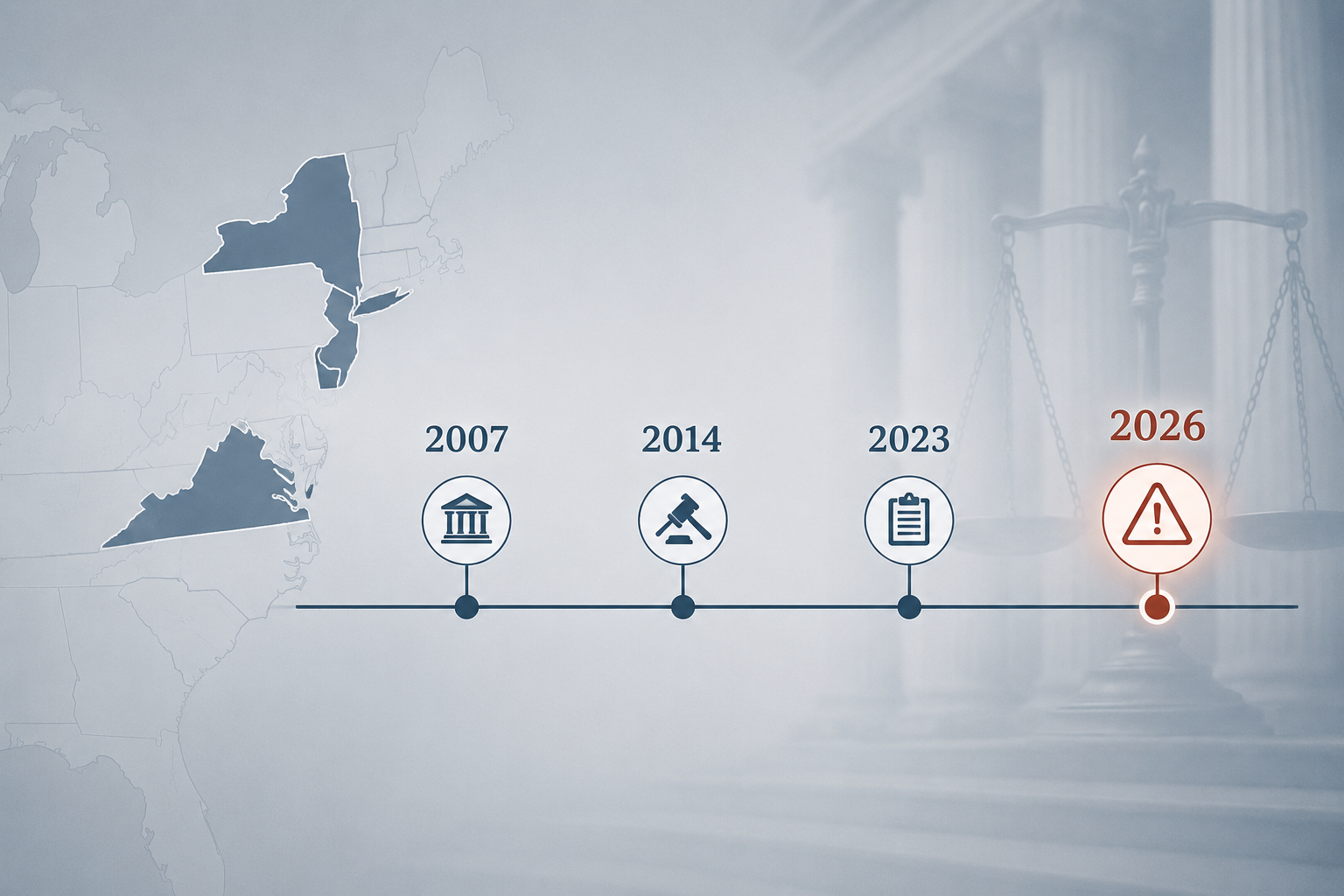
That posture matters. The current New York allegations are not convictions. But Truelove’s criminal history and current legal issues are not limited to the July 2026 incident. His public record runs from a 2007 child-abduction case in Virginia, through the 2014 theft of Sandy Hook memorial signs, through homelessness documented in California, and into a fast New York sequence of misdemeanor and felony allegations before the July 2026 hate-crime charges.
The Current New York Case Is Pending, Not Proved
The pending case turns on more than whether Truelove got inside the building. Prosecutors have treated the alleged conduct as hate-motivated because of the reported racial statement directed toward a Black public figure. The most serious count, third-degree burglary as a hate crime, has been reported as carrying exposure of up to 15 years if he is convicted.[4]
The public record also places the July 16 arrest almost immediately after another New York disposition. In June 2026, Truelove pleaded guilty to felony criminal mischief, received a six-month jail sentence with credit for time served, and was placed on five years of probation, according to reporting on his New York docket history.[2][1]
That timing will matter to both sides. For prosecutors, the July arrest can be framed as rapid escalation while under active court supervision. For defense counsel, the same timeline may raise questions about mental health, housing, supervision conditions, and whether the facts alleged at 30 Rock support the enhanced hate-crime counts. None of those arguments resolves the case before arraignment records, charging papers, and later court action do.
A Legal Timeline, With the Court Posture Kept Separate
| Date or period | Place | Legal event | Status in the public record |
|---|---|---|---|
| 2007–2010 | Virginia | Truelove grabbed an 8-year-old girl at Granby High School while carrying a lug wrench; he was later sentenced to four years. | Conviction and sentence reported in 2010; psychiatrist found bipolar disorder symptoms in 2009, and the judge ordered psychiatric care and medication compliance.[5] |
| 2014 | Connecticut / New Jersey | He was arrested with stolen Sandy Hook memorial signs for 7-year-old victims Grace McDonnell and Chase Kowalski. | Reported as motivated by conspiracy beliefs that the shooting was a hoax; he received a 12-month sentence.[6] |
| 2023 | California | A Los Angeles Times profile documented homelessness in Torrance after Truelove said he had been released from prison in April 2021. | Biographical and social-services account; the reported release date and inheritance amount came from Truelove’s own account, not an independently verified corrections record.[7] |
| July–September 2025 | New York | Five criminal mischief charges were reported across this period. | Prior New York docket history reported in coverage of the 2026 case; exact underlying incidents require court-file verification.[2][1] |
| January 2026 | New York | An assault case was reported before the later 2026 charges. | Reported charge history; disposition details are not fully established in the available materials.[2][1] |
| May–June 2026 | New York | Trespass and reckless-endangerment allegations were followed by a felony criminal-mischief guilty plea. | June 2026 plea reported as six months in jail, credited time served, and five years of probation.[2][1] |
| July 16–17, 2026 | New York | The Today show breach led to burglary and menacing hate-crime charges. | Pending allegations; arraigned July 17, held on $10,000 cash bail, protective orders issued, next court date July 22.[3][4] |
Virginia: The First Known Conviction Was Not Minor
The 2007 Virginia case is the first hard anchor in the known record, and it should not be treated as atmospheric background. Truelove grabbed an 8-year-old girl at Granby High School while carrying a lug wrench, and in 2010 he was sentenced to four years in prison for abduction.[5]
The mental health record entered the case before sentencing. A psychiatrist found symptoms of bipolar disorder in 2009, and the judge ordered psychiatric care and medication compliance as part of the sentence.[5] That is a legal fact, not a diagnosis that explains every later act. It shows that the court had already seen instability serious enough to attach treatment conditions to a criminal sentence.
The distinction is important because the harm in the Virginia case was concrete: a child was grabbed at a school. The presence of a mental health finding does not soften the act into a misunderstanding. It does, however, make the later record harder to read as a series of isolated surprises.
Sandy Hook Memorial Signs: Ideology Becomes Part of the Record
In 2014, Truelove was arrested after memorial signs for two 7-year-old Sandy Hook victims, Grace McDonnell and Chase Kowalski, were stolen. Reuters reported that he was motivated by the conspiracy belief that the Sandy Hook shooting was a hoax, and that he was sentenced to 12 months.[6]
That case did not involve a celebrity target or a television set. It involved the public memory of murdered children. It also placed ideological fixation directly into the record: not as speculation from observers, but as the reported motive behind the theft of memorial signs.
The available sourcing leaves some procedural questions unresolved, including the exact charging jurisdiction and the full charging path across Connecticut and New Jersey. The conviction and sentence are the sturdier points. The broader conclusion should stay narrow: by 2014, Truelove’s criminal record included conduct tied to conspiracy beliefs and directed at grieving families’ memorials.
California Adds Context, Not a Complete Explanation
The California material is different in kind. A 2023 Los Angeles Times profile followed Truelove after he told a shelter intake worker he had been released from prison in April 2021, inherited about $50,000 after his father’s death, spent through it within two years, and was homeless in Torrance with about $200 remaining by May 2023.[7]
Those details are useful, but they need a label. The release date and inheritance figure came from Truelove’s account as reported in the profile; they are not the same as a certified corrections record or probate file. The PTSD documentation reported in that profile belongs in the timeline because it shows another mental health marker after the earlier bipolar-disorder finding.[7]
What the California chapter does not prove is causation. Homelessness, trauma symptoms, and financial collapse may explain instability and exposure to crisis systems. They do not establish why Truelove later allegedly targeted particular people or why prior court contact did not produce durable treatment, compliance, or supervision. The record supports concern, not a clean causal chain.
New York Shows Speed
The New York period is striking less for any single lower-level allegation than for compression. Coverage of the July 2026 case reported five criminal mischief charges between July and September 2025, an assault case in January 2026, trespass and reckless-endangerment allegations in May 2026, and the June 2026 felony criminal-mischief plea that placed him on probation shortly before the 30 Rock arrest.[2][1]
A probationary sentence is not simply a lighter ending to a case. It creates live legal obligations. If a person is arrested on new felony charges weeks later, the new case may be litigated on its own facts while also creating exposure to consequences in the earlier case. The available public materials do not yet establish what violation proceedings, if any, prosecutors will pursue from the June plea.
The July 2026 hate-crime charges also change the scale. A building breach at NBC might have remained a trespass or security case in another fact pattern. Here, the alleged racial statement, the approach toward Melvin, and the request for Roker are the facts that appear to have moved the case into hate-crime territory.[1][2][4]
What the Mental Health Record Can and Cannot Carry
There are at least two documented mental health points in the public record: bipolar disorder symptoms identified by a psychiatrist in connection with the Virginia case, and PTSD documented in the 2023 California profile.[5][7] Those points matter because courts and service systems were not encountering Truelove as a blank slate.
They do not, by themselves, answer legal responsibility. The current New York charges will turn on statutory elements, evidence, intent, and any defenses raised in court. A mental health history may affect competency, mitigation, treatment conditions, plea negotiations, or sentencing, but the available record does not establish that any particular diagnosis caused the alleged July 16 conduct.
The harder institutional question is narrower and more durable: after a judge had ordered psychiatric care and medication compliance in 2010, and after later records showed homelessness and PTSD, what sustained intervention actually followed? The public materials do not answer that. They show contact with courts, jail or prison sentences, probation, shelters, and media-visible crisis points. They do not show a continuous treatment record.
What Lawyers Are Likely Looking At Now
For prosecutors, the strongest public-facing facts are chronological and specific: a pending allegation involving a Black television host, an allegedly explicit racial statement, a second named target in Al Roker, a recent felony plea, and a longer record containing ideologically charged conduct. The hate-crime enhancement will still have to be proved through admissible evidence, not through a general claim that Truelove is dangerous.
For the defense, the public record offers several pressure points without erasing the alleged harm. Counsel can test how Truelove entered the building, what exactly was said, who heard it, whether the facts support burglary rather than a lesser entry offense, how menacing is being charged, and whether mental health issues affect competency, intent, mitigation, or release conditions.
Bail and protective orders already show the court treating the named targets as requiring protection while the case is pending. Truelove remained held at Rikers Island because the $10,000 cash bail had not been posted, according to the reported arraignment status.[3][4]
The Record as of July 19, 2026
As of July 19, 2026, the live case is still in an early posture. The next reported court date is July 22, and any new filing, bail change, indictment, plea discussion, competency issue, or revised protective order could change the public account quickly.[4]
Even with that caution, the timeline is already clear enough to resist two easy versions of the story. This is not just a one-day breach at a television studio. It is also not a complete explanation through mental illness alone. The known record shows a 2007 child abduction, a 2014 conspiracy-driven memorial-sign theft, documented mental health findings, homelessness and PTSD documentation, repeated New York justice-system contact, a June 2026 felony plea, and now the most serious known legal jeopardy in Truelove’s public record: felony hate-crime charges carrying reported exposure of up to 15 years if convicted.[4]
References
- Man breaches security at 30 Rock, approaches 'Today' co-host Craig Melvin — CNN, July 16, 2026
- Exclusive | Craig Melvin targeted in alleged hate crime incident — NY Post, July 16, 2026
- Man arraigned on hate crime charges after breaching 'Today' show studio security — The Hill, July 17, 2026
- 'Today' Intruder Faces 15 Years Prison If Convicted, Al Roker and Craig Melvin Granted TRO — People, July 2026
- Man gets 4 years for abduction at Granby High — Virginian-Pilot, May 22, 2010
- Virginia man with stolen Sandy Hook memorial signs is arrested — Reuters, 2014
- From a one-way flight to sleeping in a parking lot: A California dream gone sour — LA Times, July 23, 2023
Comments
Join the discussion with an anonymous comment.