
The legal problem with the Asana did not begin after lawyers had a stable fact pattern. It began while the vessel was still under duress. On July 17, 2026, assailants boarded and seized the chemical-products tanker Asana in the Gulf of Aden, after the vessel sent a distress call; the reported operator was Exon Energy, no armed security team was aboard, Somali piracy was suspected, and UKMTO and EU Aspides were monitoring the incident. [1]
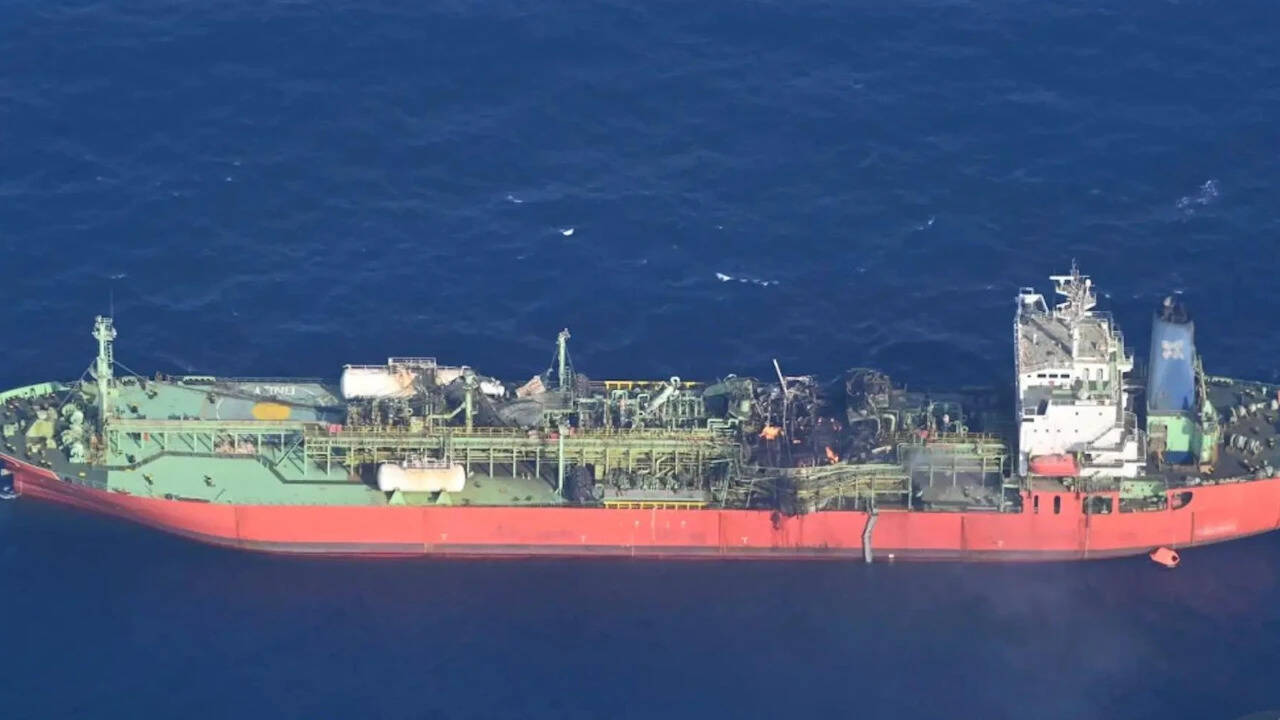
As of July 19, 2026, several facts that would normally anchor the legal file remained unsettled: crew status, ransom demands, resolution, and even the vessel’s flag status at the time of seizure. That uncertainty is not a reporting inconvenience. In maritime-law terms, those missing facts are the machinery of the problem: they decide which state can act, whether a naval seizure is framed as anti-piracy enforcement, whether sanctions or ransom rules are triggered, and whether any prosecutor can hold the case once the boarding party is captured.
The Gulf of Aden context matters, but only because it changes the risk assessment around this particular seizure. MARAD’s 2026 advisory records three hijackings and six boarding or armed-robbery incidents in the Gulf of Aden since January 2025, as well as seven incidents involving firearms between July and November 2025. [2] Industry reporting also treats the April 2026 Honour 25 seizure, reported 30 nautical miles off Puntland, followed by the Sward and Eureka hijackings, as evidence that Somali mothership operations have resumed. [3]
That does not make every boarding in the region legally identical. The Asana should not be folded into the separate Basset incident in the Singapore Strait, which involved a different geography and legal setting. The Gulf of Aden location puts UNCLOS piracy rules, regional naval response, and the SUA Convention into play in a way the Singapore Strait incident does not.
Flag Status Is Not a Technicality
Before the label “piracy” does any useful work, counsel needs to know what flag the Asana was entitled to fly when she was seized. Flag state jurisdiction is the default organizing principle of public law at sea. It affects who may assert primary authority over the ship, who receives notifications, who consents to certain law-enforcement measures, and whose domestic criminal law may be easiest to invoke.
UNCLOS Article 105 gives every state authority to seize a pirate ship or aircraft, or a ship taken by piracy and under pirate control, on the high seas or in another place outside the jurisdiction of any state. The courts of the seizing state may decide penalties and action concerning the ship, aircraft, or property, subject to third-party rights. [4]
That universal language is powerful, but it is not a substitute for the whole jurisdictional file. If the vessel’s flag status is unconfirmed, responders may still act in a genuine distress and piracy scenario, but insurers, operators, and prosecutors are left working around a hole in the basic record. The flag question can affect evidence requests, diplomatic correspondence, crew repatriation, cargo handling, and the later choice of forum.
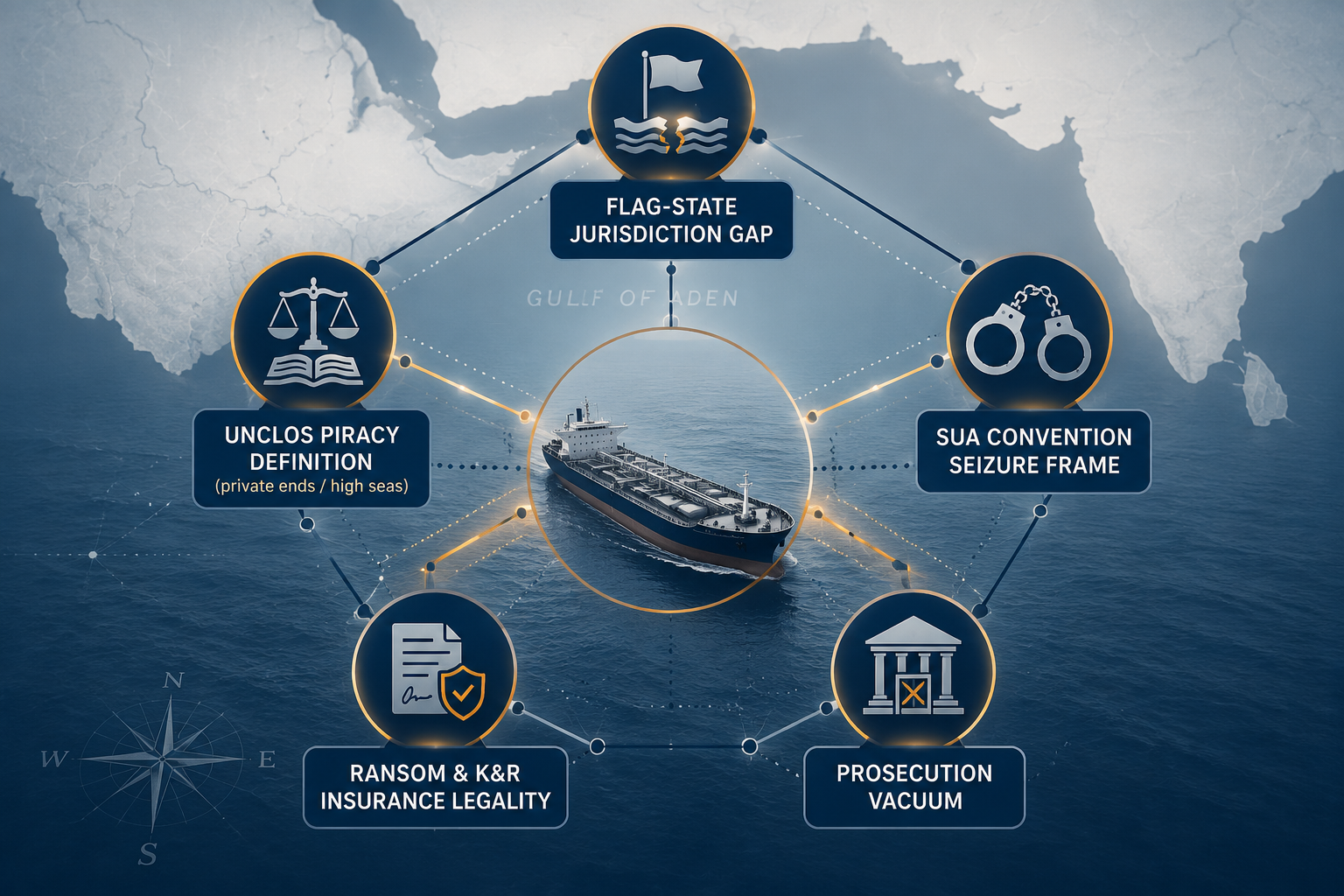
For a tanker carrying chemical products, the flag question also intersects with commercial control. A vessel operator can notify security centers and insurers immediately, but decisions about deviation, port of refuge, cargo discharge, salvage support, and evidence preservation all become harder when the public-law chain of authority is incomplete. The legal stack starts moving before the registry question is tidied up.
The UNCLOS Piracy Label Has Conditions
UNCLOS Article 101 defines piracy through specific elements. The conduct must include illegal acts of violence, detention, or depredation, committed for private ends by the crew or passengers of a private ship or aircraft, and directed on the high seas against another ship or aircraft, or against persons or property aboard it. The definition also covers similar acts in places outside the jurisdiction of any state, voluntary participation in a pirate ship, and intentional facilitation. [4]
Those words matter in the Asana file because the report does not merely say “armed men boarded a tanker.” It places the seizure in the Gulf of Aden, identifies suspected Somali piracy, reports a distress call, and notes that no armed team was aboard. [1] If the attack occurred on the high seas or outside the jurisdiction of any state, the UNCLOS route is more straightforward. If later facts place key conduct inside a territorial sea, the legal characterization shifts toward armed robbery at sea or domestic criminal jurisdiction, even if the same operational actors are involved.
The “private ends” element is the more delicate issue. Conventional Somali ransom piracy usually fits comfortably enough: the motive is commercial coercion, not state enforcement. But the current reporting environment includes an allegation that Houthi forces have supplied Somali pirate groups with GPS devices, weapons, and logistical support. That allegation comes from analysts cited in shipping-industry reporting, not from a government finding or UN determination, so it should not be treated as established fact. [3]
Even at that caveated level, the allegation changes the legal question. If later evidence shows ordinary ransom piracy with opportunistic external supply, the private-ends analysis may remain intact. If evidence shows the boarding was directed, controlled, or materially integrated into a state-linked campaign, counsel has to ask whether the case still belongs inside the UNCLOS piracy frame or whether another body of law better captures the conduct. That is not an academic distinction when a naval unit is deciding what authority it has to board, detain, or transfer suspects.
| Unresolved Asana fact | Why it matters legally |
|---|---|
| Flag status unconfirmed | Affects primary jurisdiction, notifications, evidence channels, and prosecution options. |
| Exact location and jurisdictional waters | Determines whether UNCLOS high-seas piracy authority fits cleanly or whether coastal-state law dominates. |
| Crew status unknown | Shapes urgency, ransom pressure, insurance response, and potential hostage-taking charges. |
| Ransom demand unknown | Affects K&R coverage, sanctions screening, payment legality, and force majeure analysis. |
| Possible outside facilitation unproven | Could complicate the UNCLOS private-ends element and move the file toward state-linked conduct analysis. |
SUA Covers Conduct UNCLOS Handles Awkwardly
The SUA Convention enters because it is built around violent interference with ships, not around the narrower high-seas piracy definition. Article 3(1) covers, among other offenses, unlawfully and intentionally seizing or exercising control over a ship by force, threat, or intimidation. [4]
That formulation is often more useful for a live tanker seizure than a debate over whether every UNCLOS element is already satisfied. If armed assailants board a chemical-products tanker and take control through force or threats, the conduct may fall within SUA-style offenses even where the piracy label is contested because of location, motive, or state-linked facilitation. SUA is not a replacement for UNCLOS seizure authority; it is a different treaty frame that may supply a prosecutable offense where the piracy definition is under stress.
That distinction matters for evidence collection. A naval responder thinking in UNCLOS terms asks whether the facts support pirate-ship seizure and detention. A prosecutor thinking in SUA terms asks whether the evidence proves unlawful seizure or control of a ship by force, threat, or intimidation, and whether domestic implementing legislation creates jurisdiction. The same boarding ladder, distress call, weapons evidence, bridge-control evidence, crew statements, and communications logs can matter under both theories, but not always for the same reason.
The Asana facts released so far are enough to justify urgent legal triage, not enough to support a final classification. A suspected Somali piracy case may become a relatively conventional piracy prosecution if the evidence supports high-seas private-ends violence. It may become a SUA-centered case if piracy elements become contested. It may become harder still if state-linked facilitation proves more than ambient support.
Commercial Decisions Arrive Before Legal Certainty
The public-law uncertainty does not wait politely outside the claims room. Once a chemical tanker is seized, the operator, P&I club, hull underwriters, cargo interests, crisis-response consultants, and K&R insurers may all be asked to make decisions while the legal classification remains provisional.
Ransom is the most obvious pressure point, but it is not a single yes-or-no question. A K&R policy may respond to kidnapping or extortion risk, yet payment still requires sanctions screening, counterterrorism analysis, policy-condition review, and attention to the identity of intermediaries. If the only working theory is ransom piracy, one set of controls applies. If credible evidence links facilitators to a sanctioned or state-linked armed group, the payment analysis can change quickly.
Force majeure analysis is similarly fact-sensitive. The seizure may interrupt charter performance, cargo delivery, laytime, demurrage, or contractual voyage obligations. But a party invoking force majeure still has to work through the actual clause: whether piracy, seizure, war risks, detention, government restraint, or similar language appears; whether notice was timely; whether alternate performance was possible; and whether the party claiming relief caused or worsened the delay.
Chemical cargo adds practical urgency without changing the treaty analysis by itself. The legal significance lies in the consequences of delay and control: cargo condition, safe navigation, port-entry decisions, pollution risk, and emergency response planning. A sensational description of a chemical tanker does not answer the law. The cargo matters when it changes who must act and how quickly.
The Prosecution File Can Still Fall Between Forums
UNCLOS gives seizure authority in piracy cases, but it does not by itself solve extradition, transfer, or domestic charging problems. Article 105 points to the courts of the seizing state, yet a seizing state still needs domestic offenses, admissible evidence, custody arrangements, translation capacity, witnesses, and political willingness to take the case. [4]
The post-Maersk Alabama prosecution of Abduwali Muse in U.S. federal court remains a useful benchmark because it shows what universal-jurisdiction prosecution can look like when the forum problem is solved. It should not be mistaken for a template that automatically appears after every hijacking. The United States had custody, evidence, charges, and a forum prepared to proceed. In a Gulf of Aden tanker seizure involving uncertain flag status, multinational monitoring, and potentially disputed legal characterization, those pieces may not align.
That is where the Asana incident becomes more than another security alert. If suspects are intercepted, the case may require choices among the flag state, a seizing naval state, a coastal state, a state of crew nationality, a state connected to the operator, or a state with SUA implementing legislation. Each option carries different evidentiary burdens and diplomatic costs. If no state wants the file, “universal jurisdiction” can look much thinner in practice than it does in a treaty summary.
This is also why the Asana analysis sits beside, rather than inside, other tanker-law problems. The site’s Strait of Hormuz tanker-crisis analysis turns on transit passage and competing seizure regimes. Its cargo-ship drone-attack article works through the law of armed conflict and the law of the sea. Asana belongs in the same neighborhood, but its center of gravity is different: criminal jurisdiction, treaty fit, ransom legality, and forum selection after a private vessel is taken by force.
A Provisional Legal Assessment
On the present record, Asana is properly treated as a suspected Somali piracy incident involving a chemical-products tanker in the Gulf of Aden. It is not yet possible to say, responsibly, that every UNCLOS piracy element is satisfied, that a ransom demand has been made, that crew harm has occurred, or that alleged Houthi facilitation is established. Those points may change as official information develops.
The bounded conclusion is still strong. The Asana hijacking already exposes how UNCLOS, SUA, K&R insurance practice, sanctions review, force majeure analysis, and domestic prosecution pathways depend on one another in real time. Existing legal summaries often treat those frameworks in separate compartments. A chemical tanker seizure does not. It forces the operator, the naval responder, the insurer, and the eventual prosecutor to work across all of them while the facts are still incomplete.
References
- Assailants board chemical products tanker off Yemen in suspected pirate hijacking, sources say, The Straits Times.
- 2026-002-Gulf of Aden, Arabian Sea, Indian Ocean-Piracy/Armed Robbery/Kidnapping for Ransom, MARAD.
- Top Maritime Piracy Hotspots in 2026: Critical Risk Zones for Ship Operators, Nautilus Shipping.
- Piracy: Legal Framework, United Nations.
Comments
Join the discussion with an anonymous comment.