
Ayrton Senna’s recognition as a Hero of the Fatherland is now a federal fact in Brazil, but it is not yet a completed public inscription. Law No. 15,447/2026, signed by President Luiz Inácio Lula da Silva on July 1, 2026 and published in the Diário Oficial da União the same day, recognizes Senna as a Hero of the Fatherland.[1][2] That answers the first legal question. It does not answer the physical one: whether his name has been added to the Livro de Aço, the steel Book of Heroes and Heroines of the Fatherland kept in Brasília.
That distinction matters because Brazil’s system does not operate only through a presidential signature. The title travels through Congress as a federal law, then points toward a public registry object: a book made of steel pages, housed in the Panteão da Pátria. At present, those two phases are out of sync. Senna has the statute. The book, according to the available reporting, has not had new pages added since 2018, and approved names are waiting for physical space.[3]
The law made Senna a Hero of the Fatherland
Senna’s designation followed the ordinary legislative route for this kind of federal honor. The proposal began as Bill 789/2024, sponsored by Senator Astronauta Marcos Pontes of PL-SP. In the Senate, it was approved terminatively by the Sports Committee, known as CEsp, and then moved to the Chamber of Deputies, which passed it in March 2026. The presidential sanction on July 1 converted that legislative approval into Law No. 15,447/2026.[2]
For legal purposes, that sequence is the operative act. A bill cleared the necessary congressional path, the president sanctioned it, and the law entered the official record through publication. Nothing in the materials suggests the title depends on a later vote or another presidential act. Senna is, by statute, a Hero of the Fatherland.
The reason this designation could be proposed in 2024 lies in an earlier eligibility change. Brazil shortened the post-mortem waiting period for inclusion from 50 years to 10 years through a 2015 law change under President Dilma Rousseff, a change originally aimed at enabling Leonel Brizola’s entry.[3] Senna died in 1994. Under the older 50-year rule, his eligibility would still have been decades away in 2024; under the 10-year rule, the timing was no obstacle.
This is not the first time federal law has attached an honorary public role to Senna. In 2023, Law No. 14,559 designated him Patron of Brazilian Sport.[4] That earlier category is useful mainly as a contrast. “Patron” honors a figure in relation to a field. “Hero of the Fatherland” places the person in a national civic register alongside figures treated as part of the country’s official memory.
The steel book is not just ceremony
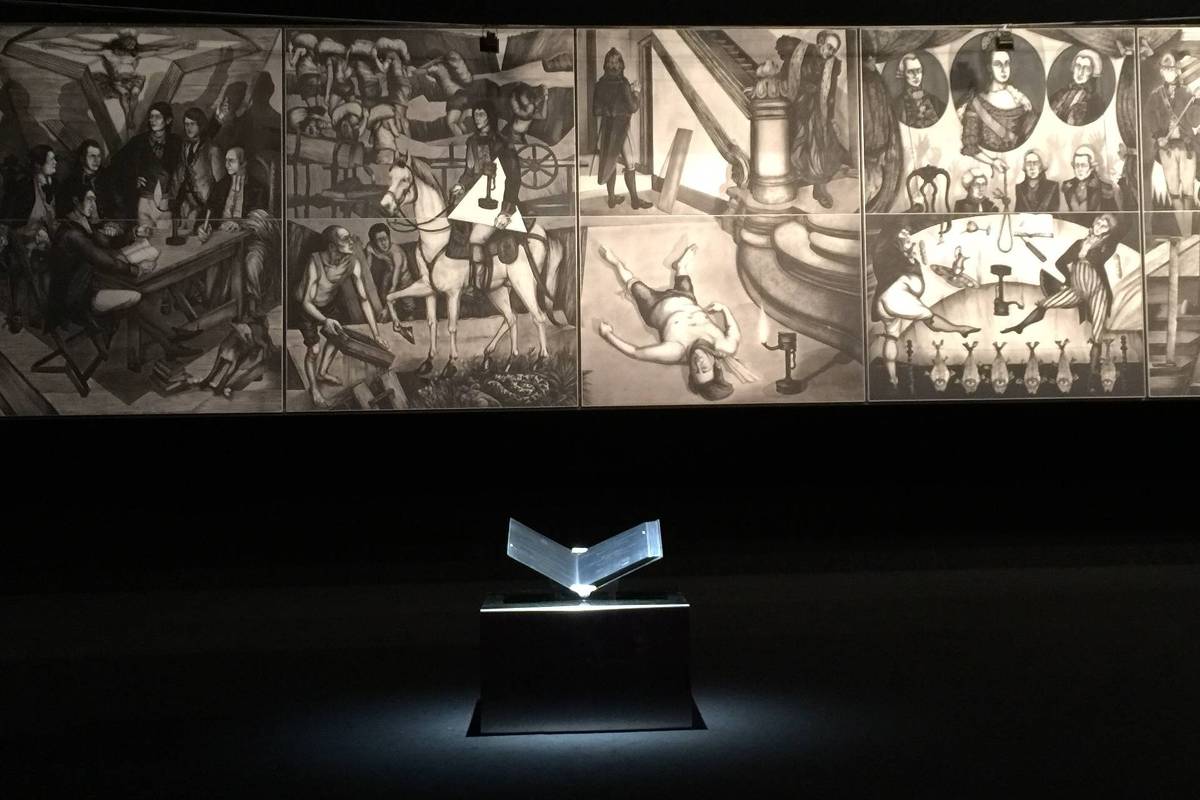
The Book of Heroes and Heroines of the Fatherland was created in 1992. It consists of steel pages and is kept in the Panteão da Pátria, in Brasília’s Praça dos Três Poderes.[5] The Pantheon itself is a modernist civic building designed by Oscar Niemeyer, a fact that helps explain why the registry is not treated as an ordinary file cabinet or a replaceable ledger.[6]
In a purely digital administrative system, the gap between legal recognition and registry update might be a matter of database access. Here it is more literal. A name must be placed into a physical heritage object. The book’s material form is part of the legal architecture of remembrance: Congress decides who may enter, but the visible public record depends on the capacity, custody, and maintenance of a steel artifact.
That is why the question “Has Senna been named a Hero of the Fatherland?” and the question “Is Senna’s name in the Livro de Aço?” do not currently have the same answer. The first is answered by Law No. 15,447/2026. The second depends on an inscription step that has been blocked by the book’s physical condition and capacity.
The book already includes names such as Tiradentes, Zumbi dos Palmares, Santos Dumont, Machado de Assis, and Chico Xavier.[5] Lists of famous names can turn quickly into civic decoration, but legally they perform a simpler function: they show that the registry is cumulative. Each new statute does not create a separate monument. It asks the same object to absorb another official act of memory.
Where Senna’s case now sits
| Phase | Senna’s status | What it means |
|---|---|---|
| Eligibility | Met | The post-mortem waiting period had been shortened from 50 years to 10 years, and Senna died in 1994. |
| Bill introduction | Completed | Bill 789/2024 was sponsored by Sen. Astronauta Marcos Pontes. |
| Congressional approval | Completed | The proposal cleared the Senate committee process and was passed by the Chamber in March 2026. |
| Presidential sanction and publication | Completed | Law No. 15,447/2026 was signed and published on July 1, 2026. |
| Physical inscription | Pending on available materials | The Livro de Aço has lacked new pages since 2018, and approved names are backlogged. |
The unfinished step is not a hidden legal challenge to Senna’s title. It is an administrative and material bottleneck. Folha de S.Paulo reported in 2024 that no new pages had been added to the Livro de Aço since 2018, when Miguel Arraes became the last entry, and that the book was outdated because it lacked pages.[3] The same report described the need for specialized work to expand the steel book, rather than a simple clerical update.[3]
The backlog figure is the number that best reveals the mismatch between legislative speed and institutional upkeep. The available materials identify 27 legislatively approved names awaiting physical inscription. Senna is now among those whose recognition is valid in law but whose registry placement depends on the book being physically expanded.
There is a small counting caution here. Senado Notícias has referred to 64 titles in the book, while Folha reported 60 names.[3][5] The discrepancy may reflect differences in how group entries or titles are counted, but the materials do not resolve it. For Senna’s legal status, the ambiguity is not decisive. For anyone maintaining a public registry, it is exactly the kind of ambiguity that shows why ceremonial records still need careful administration.
Why another law would not fix the backlog
Once Congress has approved the designation and the president has sanctioned it, the remaining problem is not a lack of legal authorization for Senna. A second statute saying the same thing would not create steel pages, procure specialized services, or complete conservation-sensitive work inside the Pantheon. The law can designate; it cannot, by itself, engrave.
Folha reported that the Federal District Cultural Secretariat planned a June 2024 tender for 10 new steel pages, but the available research does not establish whether that procurement was completed, altered, delayed, or superseded.[3] That uncertainty is important. It prevents a stronger claim that nothing has happened administratively since the report, while still supporting the narrower point: the publicly documented bottleneck was physical expansion of the Livro de Aço, not the absence of further honorary legislation.
This is the least glamorous part of the recognition system, and the most revealing. Honorary law often appears weightless because it does not regulate conduct in the ordinary sense. It does not tax, license, prohibit, or appropriate in the way lawyers usually track state power. But Brazil’s Hero of the Fatherland mechanism attaches symbolic judgment to an object that must be conserved, expanded, and made legible to visitors. The downstream office inherits the physical consequences of the upstream vote.
What the designation does, and does not, confer
Senna’s recognition is honorific. The materials do not support any claim that Law No. 15,447/2026 creates substantive legal rights, privileges, obligations, benefits, or regulatory consequences. Its practical legal effect is recognition by federal law and the associated expectation of inscription in the Livro de Aço when the registry can receive the name.
That limited effect should not be mistaken for insignificance. States use honorific statutes to choose which lives become part of official civic memory. Senna’s public resonance makes the July 2026 law easy to understand culturally: in Brazil, his name has long exceeded the category of motorsport celebrity. The harder part is institutional. Recognition becomes complete in public form only when the state’s symbolic machinery can carry what its legislature has approved.
As of the current materials, then, the most accurate statement is double-sided. Ayrton Senna is legally a Hero of the Fatherland under Law No. 15,447/2026. His inscription in the Livro de Aço remains pending until the steel book is physically expanded and the custodial inscription process occurs. Brazil’s system has not failed at passing honorary laws; it has allowed the public record those laws point toward to fall out of step with the legislation itself.
References
- Lei reconhece Ayrton Senna como Herói da Pátria — Agência Senado — July 1, 2026
- Lei reconhece Ayrton Senna como Herói da Pátria — Câmara dos Deputados
- Livro de heróis da pátria está desatualizado há 6 anos por falta de páginas — Folha de S.Paulo — May 2024
- Lei torna Ayrton Senna patrono do esporte brasileiro — Câmara dos Deputados
- Conheça os heróis e as heroínas da Pátria — Senado Notícias — March 2023
- Tancredo Neves Pantheon of the Fatherland and Freedom — Wikipedia
Comments
Join the discussion with an anonymous comment.