
The useful legal question after the Beyoncé-Jay-Z mansion gate-crash arrest is not whether the headline sounds cinematic. It is what, exactly, would be shown to a judge if a security video from the estate were later offered in court after being “enhanced.” A camera file, a cleaned-up copy of that file, and an AI reconstruction that fills in missing visual information are not the same exhibit.
The reported incident is straightforward enough at the surface. Keith Jonathan Webster, 63, allegedly drove through a mechanical security gate at Beyoncé and Jay-Z’s East Hampton estate on July 15, 2026. Reports say he was charged with felony criminal mischief in the second degree and misdemeanor criminal trespass in the third degree, appeared disoriented at arraignment, had no known connection to the residents, and was sent to Stony Brook University Hospital for a mental health evaluation.[1][2][3][4]
Those facts matter, but not because celebrity ownership changes the rules of evidence. They matter because a gated estate is the kind of place where everyone expects cameras, and a damaged mechanical gate is the kind of event that invites someone to make a poor-quality clip look more legible. As of July 20, 2026, the public reports identify a security guard, an impounded vehicle, and physical gate damage. They do not confirm that gate-camera footage exists, that prosecutors possess it, or that anyone has enhanced it.
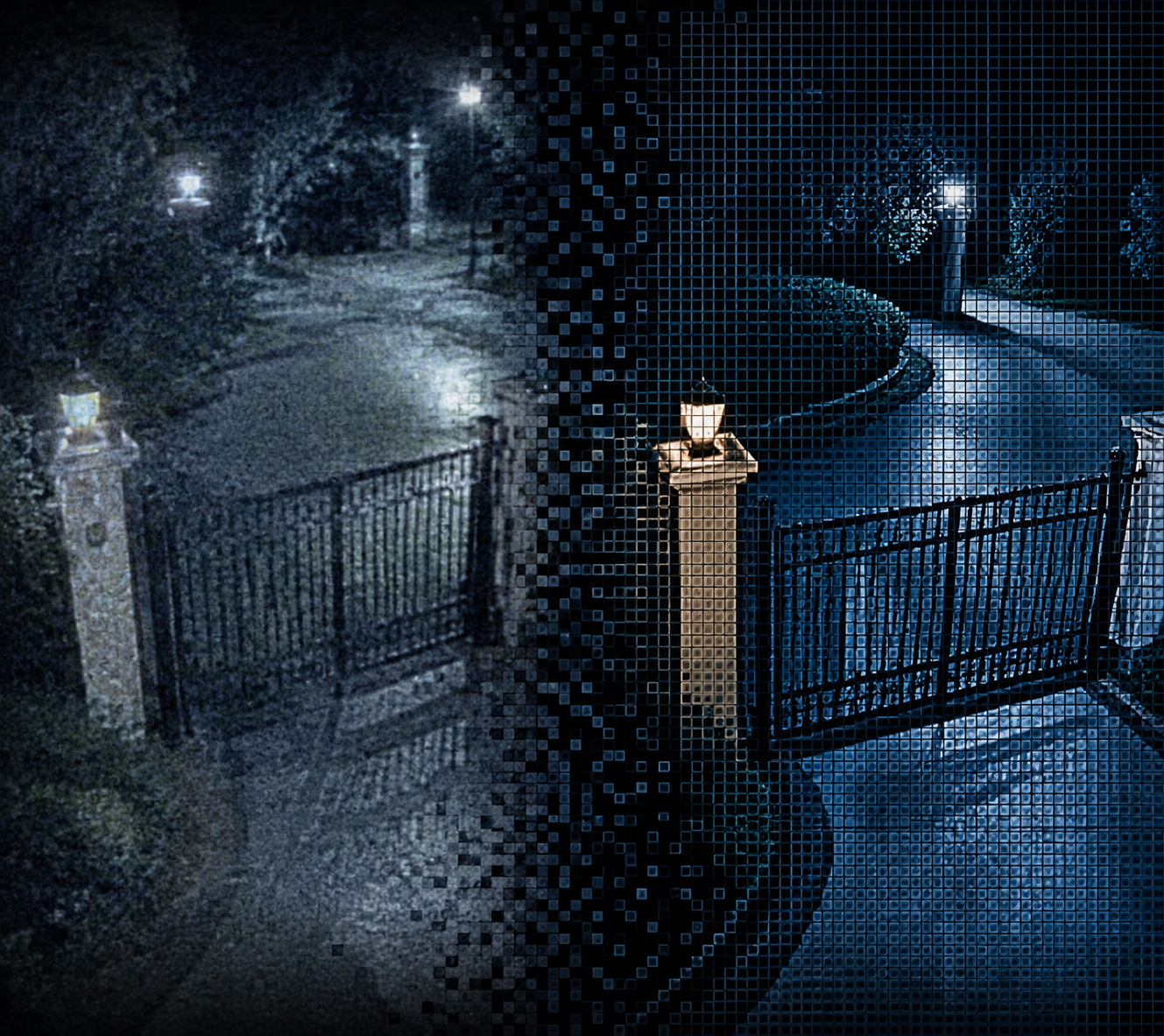
That uncertainty is the hinge. If the case stays with the guard’s testimony, the vehicle, photographs of the gate, repair records, and ordinary authentication of any original camera file, the AI issue may never arrive. If a washed-out gate view is run through an AI enhancement tool and then offered as the cleaner version of what happened, the litigation changes. The objection is no longer just “the video is blurry.” It becomes: how much of this image did the camera record, and how much did the software generate?
The charge sheet is not the evidentiary problem
The reported felony charge, criminal mischief in the second degree under New York Penal Law § 145.10, concerns intentionally damaging another person’s property in an amount exceeding the statutory threshold and is classified as a Class D felony.[5] The reported misdemeanor charge, criminal trespass in the third degree under New York Penal Law § 140.10, concerns knowingly entering or remaining unlawfully in specified kinds of property and is treated as a misdemeanor offense.[6]
Those charges can be proved or contested through ordinary evidence. A guard can testify to what he saw. The vehicle can be inspected. The gate can be photographed, repaired, valued, and compared against damage patterns. Mental condition may become relevant through separate procedural routes, given the reported hospital evaluation, but that is not the AI-video question.
The AI-video question arises only if a party tries to convert uncertain footage into persuasive footage. That is where courts need a vocabulary more precise than “enhanced.” Some enhancement changes contrast, adjusts brightness, stabilizes shake, or preserves a native frame while making it easier to view. Other enhancement, especially modern AI upscaling, can generate new pixels that were never captured by the sensor. The first category may still raise authentication questions. The second can become a reliability hearing.
Puloka is the ruling every defense lawyer will reach for
The most useful current case for this problem is not from New York and not from a celebrity prosecution. It is State v. Puloka, a March 29, 2024 King County Superior Court ruling from Washington that excluded Topaz Video AI-enhanced footage under Frye.[7]
Puloka is a trial-court ruling, not appellate law. It is not binding on a New York court hearing an East Hampton case. Its value is more practical than formal. It gives counsel a concrete record of how one court dealt with AI-upscaled video when the proponent could not treat the output as a neutral improvement of the original.
The Puloka court focused on the difference between clarification and creation. The enhancement involved 16x magnification, and the court found that “the vast majority of displayed pixels were generated by the algorithm” rather than directly recorded by the camera.[7] That finding is the center of gravity. A jury looking at the enhanced version might believe it is seeing more of the original scene, when it is actually seeing a software model’s best-looking reconstruction.
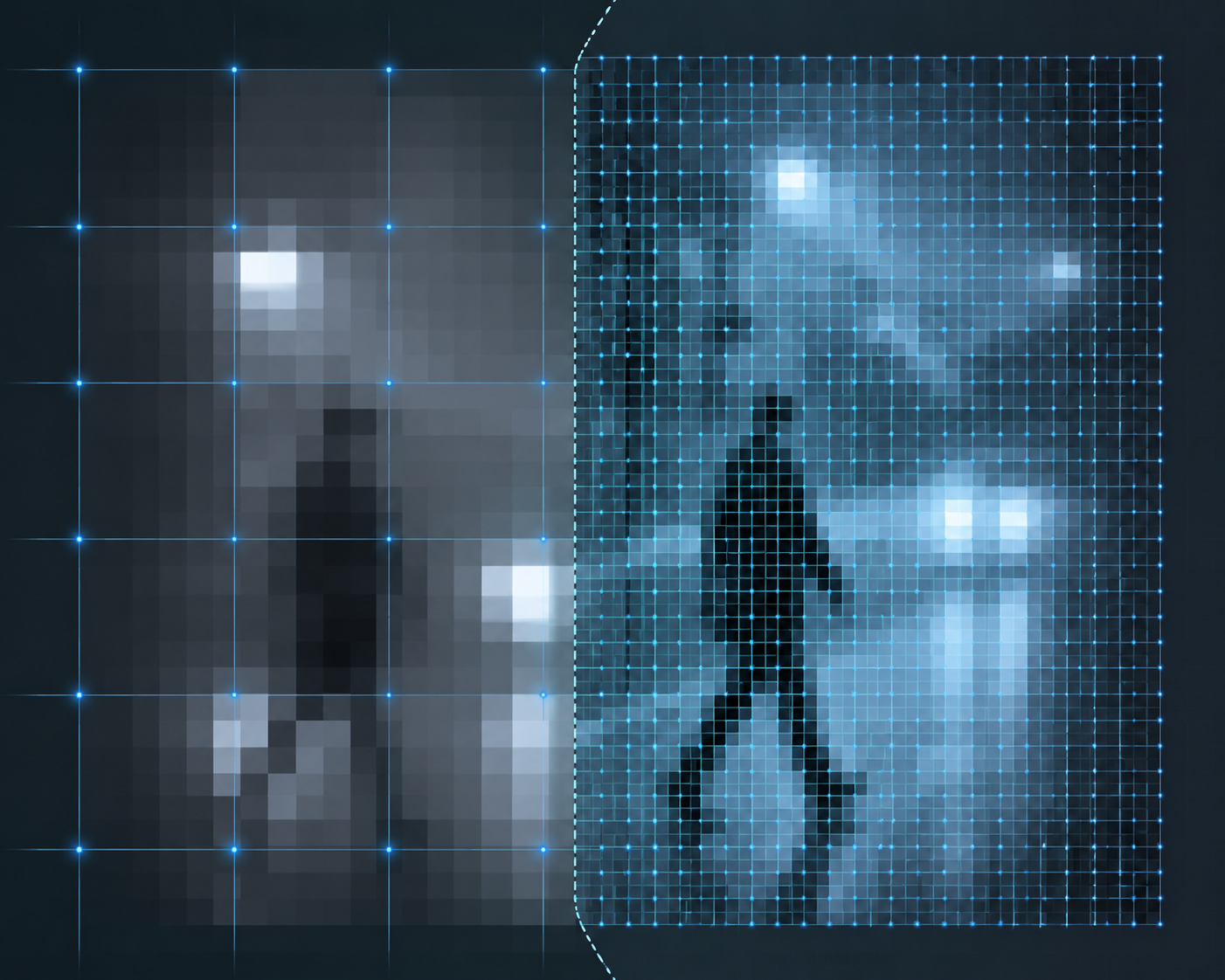
That distinction is not technical hair-splitting. In a conference room, a clearer face, a sharper license plate, or a more defined vehicle path can feel like recovered reality. But if the camera did not record the detail, the exhibit has moved from evidence into inference. Courts already allow inference; witnesses, experts, and lawyers make inferences all the time. The problem is disguise. An AI-upscaled image can present inference with the visual authority of a photograph.
Puloka also emphasized opacity and non-reproducibility. The reported analysis described a process in which the same input could produce different outputs, undermining a core forensic expectation: if a method is reliable, another competent examiner should be able to understand it, repeat it, and test whether the same result follows.[7]
That is where the Scientific Working Group on Digital Evidence matters. SWGDE guidance, as discussed in the Puloka analysis, places transparency and repeatability at the center of digital-forensic reliability and cautions against opaque machine-learning enhancement tools.[7] A tool that cannot explain how it produced a frame, cannot be meaningfully validated against the original, and cannot reliably reproduce the same output is a poor candidate for admission as forensic video evidence.
The motion is aimed at the enhanced exhibit, not necessarily the event
In a gate-crash case, the defense does not need to claim that no crash occurred in order to challenge an AI-enhanced clip. That is often the cleaner litigation posture. A motion in limine can accept, for purposes of the motion, that the state has a damaged gate, a vehicle, and a guard witness. The target is narrower: the proponent should not be permitted to show the jury a machine-generated visual reconstruction while calling it enhanced security footage.
The first demand is always provenance. Counsel needs the native recording, not a phone video of a monitor, not a compressed export stripped of metadata, and not the vendor-enhanced version alone. The chain should identify the camera system, file format, export method, timestamps, compression history, every software tool used, every setting changed, and every person who handled the file.
- Ask for the original camera file and any native export logs.
- Ask for the enhanced file, the intermediate files, and the full processing notes.
- Ask which software, model, version, settings, and hardware produced the output.
- Ask whether the same input produces the same output when the process is repeated.
- Ask whether the proponent can separate sensor-recorded pixels from generated pixels.
That discovery is not busywork. If the proponent cannot say what the software added, the court cannot fairly assess whether the exhibit is a demonstrative aid, an expert opinion embedded in video form, or purported substantive evidence. The label controls less than the function. A jury shown an upscaled gate clip may use it to decide identity, speed, intent, path of travel, or whether the driver appeared aware of the barrier. Those are factual conclusions, not aesthetic preferences.
Frye and Daubert both lead to the same uncomfortable questions
Jurisdictions frame reliability differently. Frye asks whether the relevant scientific principle or technique has general acceptance in the appropriate field. Daubert-style analysis asks about reliability through factors such as testing, error rate, peer review, standards, and fit. For AI-upscaled video, the practical questions overlap.
| Question | Why it matters |
|---|---|
| Did the tool clarify recorded information or generate new visual content? | A clarification exhibit may be treated differently from a reconstruction that supplies missing pixels. |
| Can the process be repeated with the same result? | Non-reproducibility undermines ordinary forensic verification. |
| Can an examiner explain the model’s operation and settings? | Opaque processing makes cross-examination and judicial gatekeeping weaker. |
| Has the method been validated for the task at issue? | A tool useful for consumer video restoration is not automatically reliable for criminal identification or event reconstruction. |
| Will jurors understand what was generated? | A visually persuasive exhibit can overstate the certainty of the underlying recording. |
Puloka supplies the defense with a way to make those questions concrete. It is not enough to say “AI is dangerous” or “deepfakes exist.” The better argument is that this particular enhancement method produced a display in which most visible pixels were not sensor-recorded, that the process was opaque, that repeat runs could differ, and that SWGDE-aligned forensic expectations require transparency and reproducibility.[7]
A prosecutor or civil proponent may still try to distinguish Puloka. The tool may be different. The enhancement may be limited to brightness, contrast, or stabilization. The proponent may offer a qualified forensic video analyst who preserved the original file, documented the process, validated the output, and makes clear that generated details are not independent proof. Those differences matter. Puloka is strongest when the enhancement substantially invents the image and the proponent cannot explain or reproduce the invention.
Judges are being prepared to ask better questions
Puloka is also not happening in isolation. Proposed Federal Rule of Evidence 707, as discussed in the same Criminal Legal News analysis, would subject machine-generated evidence to reliability standards analogous to expert testimony, even though it has not been enacted.[7] Its importance is directional: evidence law is beginning to separate machine output from ordinary records and ordinary demonstratives.
The National Center for State Courts has taken the same problem seriously from the bench side. In 2025, NCSC published materials warning that AI-generated evidence threatens public trust in courts and providing judges with a guide for evaluating AI-generated evidence.[8][9] Those bench materials do not decide admissibility in any individual case. They do show that judges are being encouraged to ask who created the output, how it was generated, whether it can be tested, and how its limits should be explained.
That institutional posture matters in a case with emotionally sticky facts. A celebrity home, a broken gate, and an allegedly disoriented stranger are not neutral images. If an enhanced clip exists, the court’s job is not to make the footage more watchable for the jury. It is to decide whether the watchable version remains tied closely enough to what the camera actually captured.
Where the Beyoncé-Jay-Z incident fits
On the present public record, the strongest evidence in the East Hampton incident may be non-digital: the guard, the vehicle, and the damaged gate. That evidence has its own authentication and credibility issues, but it does not require the court to decide whether an algorithm has manufactured most of what the jurors are seeing.
If camera footage later appears, the next distinction is simple but decisive. An original gate-camera file can be relevant even if it is ugly. A conventional copy can be admissible if properly authenticated. A modestly adjusted viewing version may be allowed with appropriate foundation. But an AI-upscaled version that creates the majority of visible detail should face a Puloka-style challenge before it reaches the jury.
The defense motion should not overreach. It should not ask the judge to suppress every video because one version passed through software. It should ask the court to require the original, inspect the enhancement process, hold a reliability hearing if generated content is material, and exclude or sharply limit any exhibit that cannot be explained, reproduced, or validated.
That is the practical lesson. A gate camera may record an event. An AI tool may make a degraded image look coherent. Those two facts do not prove that the coherent image is what happened. If the enhancement algorithm generates the majority of the pixels, Puloka gives defense counsel concrete persuasive authority for exclusion, especially when the proponent cannot document the process or reproduce the result. The fight should be about provenance, reproducibility, and whether the court is being shown evidence or a machine’s reconstruction.
References
- Keith Jonathan Webster accused of crashing through Beyoncé and Jay-Z’s East Hampton estate gate, Fox News, July 2026
- Man arrested after allegedly crashing through Beyoncé and Jay-Z’s East Hampton mansion gate, Page Six, July 2026
- Beyoncé and Jay-Z estate gate-crash arrest coverage, Complex, July 2026
- Beyoncé and Jay-Z mansion gate-crash incident coverage, Vulture, July 2026
- New York Penal Law § 145.10: Criminal Mischief in the Second Degree, New York State Senate
- New York Penal Law § 140.10: Criminal Trespass in the Third Degree, New York State Senate
- When AI Invents the Pixels: Challenging AI-Enhanced Video Evidence in Criminal Cases, Criminal Legal News, Dec. 15, 2025
- AI-generated evidence is a threat to public trust in the courts, National Center for State Courts
- AI-generated evidence: A guide for judges, National Center for State Courts, 2025
Comments
Join the discussion with an anonymous comment.