
On July 21, 2026, the D.C. Circuit voted 2-1 to let the Biden biographer recordings move forward while keeping release paused until August 3, 2026 so Biden can seek further review. That came after Judge Friedrich refused to block disclosure in the district court and gave only a three-week stay, and it sits alongside Biden’s own May 27 suit against DOJ and the separate Heritage Foundation FOIA litigation over the same material [1][2][3][6]. This account relies on published coverage of the opinions and orders rather than the full text of every filing.

The FOIA question under the headline
Strip away the political noise and the legal fight is more ordinary, and more stubborn, than the press spin suggests: when private conversations are pulled into government hands by subpoena, the criminal investigation closes without charges, and a later administration changes course, what privacy interest still survives under FOIA Exemptions 6 and 7(C)? The dispute is not about whether the recordings are embarrassing. It is about whether the remaining privacy interest is strong enough to outweigh the public’s interest in understanding how a special counsel decided not to charge after reviewing them. Biden’s side has tried to frame the tapes as diary-like material that carried an implied expectation of confidentiality; the government’s later release position turns that expectation into the central issue, because a FOIA balance can look very different after DOJ has already decided the privacy side is narrower than it first claimed [3][4].
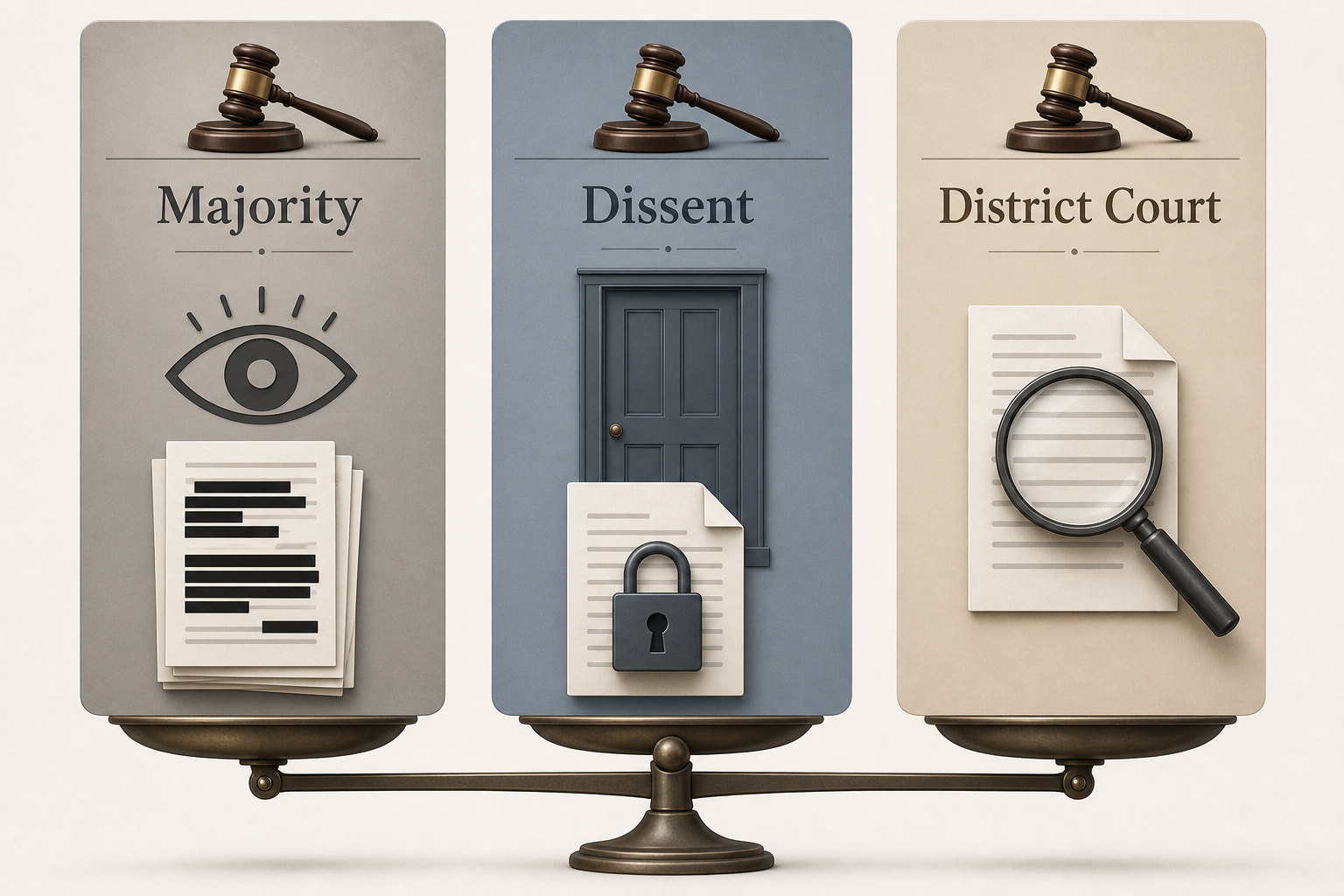
- The D.C. Circuit majority treated the public interest as substantial: the public has a weighty and significant interest in evaluating a special counsel’s no-charge decision, especially where the dispute concerns a former public official and the government has already redacted the most intimate material [1][5].
- Judge Pan’s dissent took the opposite side of the same FOIA balance, not as a political rebuke but as a privacy judgment: the conversations were made in Biden’s home, obtained through compelled process in a criminal investigation that ended without indictment, and disclosure would be effectively irreversible, so a substantial privacy interest remained [5][7].
- Judge Friedrich’s district court ruling mattered because it supplied the factual footing for the split. After personally reviewing the redacted material, she said there was no mention of highly sensitive topics like illness or death and no non-public persons, which she treated as a meaningful reduction in the remaining privacy interest [2][6].
Why the split is doctrinal, not just political
What makes the ruling worth more than the usual partisan shorthand is that both sides are answering the same FOIA problem from different ends of the same record. The majority’s view narrows the privacy side once redactions have removed family and health references and once the government’s own posture shifts toward disclosure. The dissent refuses to let those redactions do all the work, because the underlying fact pattern still involves a private conversation captured by compulsory process, held by the government after a closed criminal inquiry, and now exposed in a way that cannot really be undone. That is the core tension: whether the record should be treated as materially de-identified government material or as private speech that keeps enough of its original character to stay protected.
The broader backdrop only sharpens that question. The Trump DOJ reversed the earlier withholding position and said it would release the recordings, which turned the case into a direct test of whether the government can recast the privacy-public-interest balance after the fact. The material is also part of a wider ghostwriter dispute that included the Zwonitzer immunity and deleted-files episode, so the tapes were never floating in a vacuum; they were already inside a cluster of investigative and congressional pressures, even if those side threads do not decide the FOIA issue by themselves [4][8].
What the ruling leaves open
The practical consequence is narrower than either side’s rhetoric. The D.C. Circuit did not announce a rule that every subpoenaed recording from a closed investigation must be released, and it did not say that private speech loses all protection once it enters a government file. It did something more FOIA-specific and less theatrical: it held that, on this record, after extensive redaction and in light of the public interest in reviewing a special counsel’s decision not to charge, the privacy interest was not enough to keep the tapes sealed for now. That leaves future litigants with a clearer balancing exercise and an unresolved boundary for the harder cases, especially where the subject is a public figure who is never charged and the records reached the government only because the investigation had compulsory reach.
Until the stay expires on August 3, 2026, or a higher court steps in, that boundary stays contested rather than settled. What the panel has done is make the tension visible: one judge sees redaction plus a no-charge file as enough to tip the scale toward disclosure, another sees compelled private conversations and irreversible release as enough to preserve a substantial privacy interest, and the district court sits in the middle with a factual finding that the most sensitive material was already stripped away [1][2][5].
References
- CBS News: Appeals court denies Biden bid to block release of tapes with biographer for now (July 21, 2026)
- CBS News: Judge blocks DOJ from releasing Biden's conversations with biographer for 3 weeks (June 19-20, 2026)
- CBS News: Biden sues Justice Department to block release of audio files from biographer interviews (May 27, 2026)
- POLITICO: Lawyers: Biden to fight DOJ plan to release audio of his talks with ghostwriter (May 10, 2026)
- The Hill: Appeals court rejects Biden's bid to block release of recordings of ghostwriter interviews (July 21, 2026)
- USA TODAY: Judge allows release of Biden memoir audio to Heritage Foundation (June 20, 2026)
- NOTUS: Biden Loses His Appeal to Halt Release of Memoir Recordings (July 21, 2026)
- New York Magazine / Intelligencer: Joe Biden Doesn't Want His Ghostwriter Tapes Made Public (2026)
Comments
Join the discussion with an anonymous comment.