
On July 21, the D.C. Circuit affirmed release of the redacted audio and transcripts tied to Biden's ghostwriter interviews, with Judges Srinivasan and Katsas in the majority and Judge Pan dissenting. The panel also stayed its mandate until Aug. 3, 2026, giving Biden a short window to seek further review. [1]
The case reached that point quickly. Biden sued on May 26 in D.C. federal court after DOJ moved to release the materials to the Heritage Foundation, and he framed the change as a Privacy Act, APA, and FOIA Exemption 6 problem. The district court rejected his injunction bid, and the circuit briefly put the release order on hold on July 10 before deciding the merits. [2][3][1]
What The Majority Treated As Decisive
The records themselves are part of why this fight looks different from the usual Exemption 6 dispute. The recordings span about 70 hours of memoir interviews between Biden and ghostwriter Mark Zwonitzer, made in Biden's home between 2007 and 2021 and later turned over to DOJ during the Hur investigation under a confidentiality condition. [4]
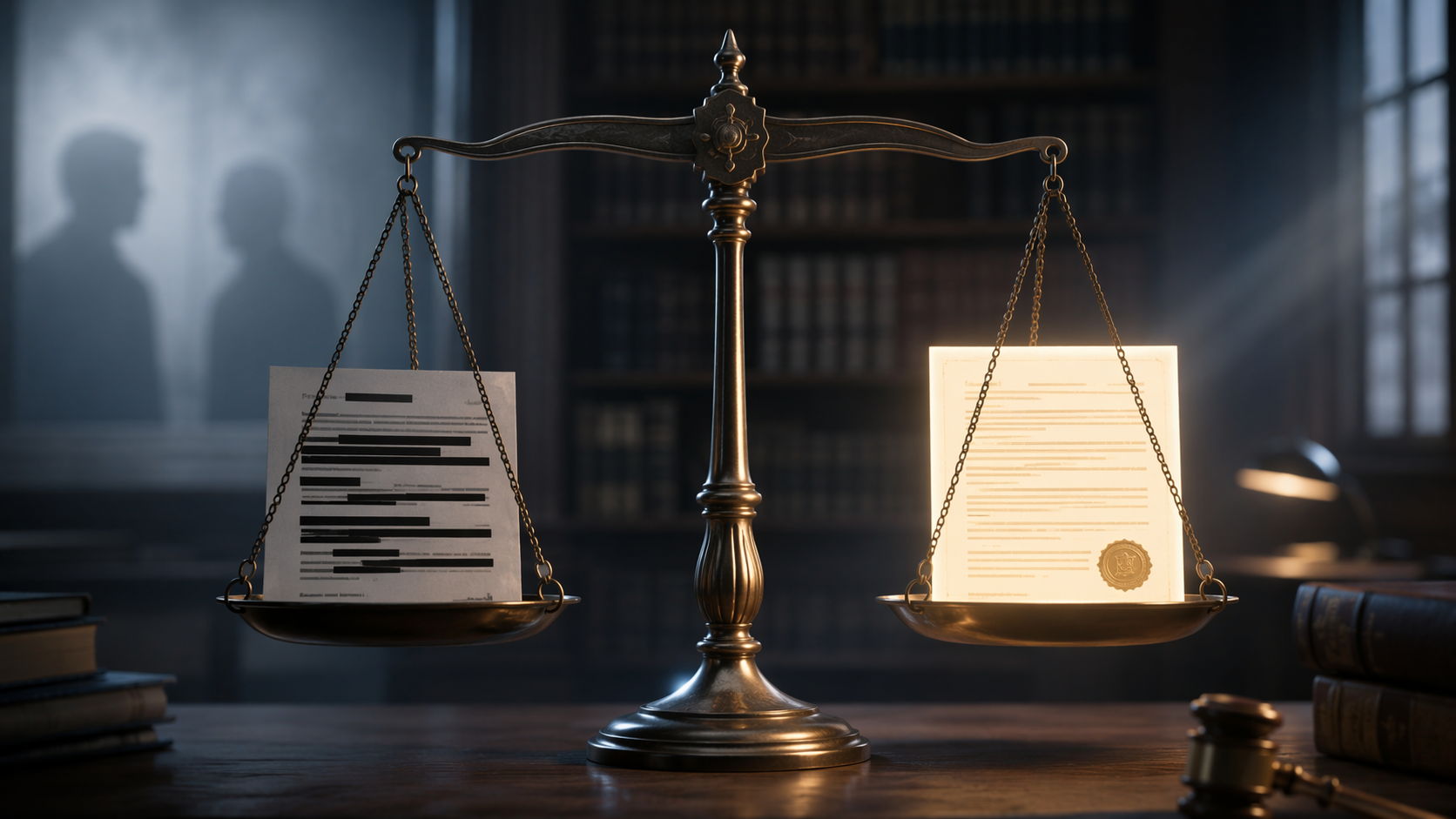
Once the investigation, its target, and the special counsel report were already public, the majority treated the remaining redactions as the central variable. That is the quiet move in the opinion: the court did not announce that privacy vanishes when a probe becomes known, only that the marginal privacy harm from disclosing heavily redacted evidentiary material is thinner than agencies often claim. In that setting, the public-interest side no longer has to overcome a fully intact privacy interest; it has to justify access to what still remains after the government has already hidden the most sensitive parts.
Why The Public-Interest Showing Got Easier
That distinction matters in future FOIA litigation. If the point of withholding is to protect privacy, but the investigation, the subject, and the report are already out in the open, the agency has to show what concrete privacy injury survives the redactions. For requesters, that lowers the burden from proving why a closed-file investigation matters at all to explaining why the still-withheld fragments are worth seeing.
The ruling is therefore narrower than a banner about disclosure always winning. It is tied to records whose secrecy had already been thinned by earlier disclosure, and to a posture where the court could compare what the public already knew with what the black bars still concealed. That is a different case from one involving untouched files, a live investigation, or records that would reveal new facts rather than just the edges of a known episode.
What The Dissent Keeps Alive
Judge Pan's dissent has the cleaner privacy logic. She emphasized that the conversations took place in Biden's home and that the recordings were gathered in a criminal investigation that did not lead to an indictment, a combination that she viewed as strengthening rather than weakening the privacy interest. [1] That is not a frivolous position. A no-charge outcome can make disclosure feel less like accountability and more like government publication of investigative material that never matured into a prosecution.
The Next FOIA Fight
The panel left behind a usable frame for later cases. Exemption 6 gets harder for agencies when a request targets records from a concluded investigation, the key facts are already public, and the disputed material has been pared down by redaction before the court ever sees it. That will matter in special-counsel disputes and other investigatory records cases where the fight is no longer over whether the government investigated, but over how much privacy still survives after the report is out and the file is mostly blacked out.
The tension the opinion leaves in place is familiar, but sharper now: courts still have to decide how much weight to give the home setting, the criminal-investigation context, and the absence of charges when the materials at issue are already heavily redacted. The D.C. Circuit lowered the requester's burden in that specific posture; the next court to face a similar record will have to decide whether that is the right balance, or whether Pan's no-indictment view should carry more force in a different case.
References
- Appeals court rejects Biden's bid to block release of recordings of ghostwriter interviews — AP News, July 21, 2026
- Biden sues DOJ to stop release of audio and transcripts tied to special counsel probe — NPR, May 27, 2026
- Appeals court denies Biden bid to block release of tapes with biographer for now — CBS News, July 10, 2026
- Biden's bid to block release of recordings made with ghostwriter fails — The Guardian, June 19, 2026
Comments
Join the discussion with an anonymous comment.