
The first legal fact in the Blanche confirmation fight is not a forecast. It is an order. On June 25, 2026, Judge Emmet Sullivan ruled that Todd Blanche had “conceded” a violation of the Epstein Files Transparency Act, a law passed in November 2025 to require broader disclosure of Epstein-related records than ordinary FOIA practice would demand. Sullivan found that the Justice Department “does not respond substantively” to challenges over specific withheld records and ordered DOJ to unredact the material or justify the withholding by July 2.[1]
That is where the legal implications for Epstein accusers begin: with the same official seeking to lead the department whose disclosure decisions are already under judicial rebuke. The Senate Judiciary Committee vote was expected on July 30, 2026, with the full Senate vote still uncertain.[3][4] The issue is not whether Blanche can survive a hard hearing. It is what happens to the remaining legal routes for Epstein accusers if the official tied to the disputed release regime becomes the Attorney General.
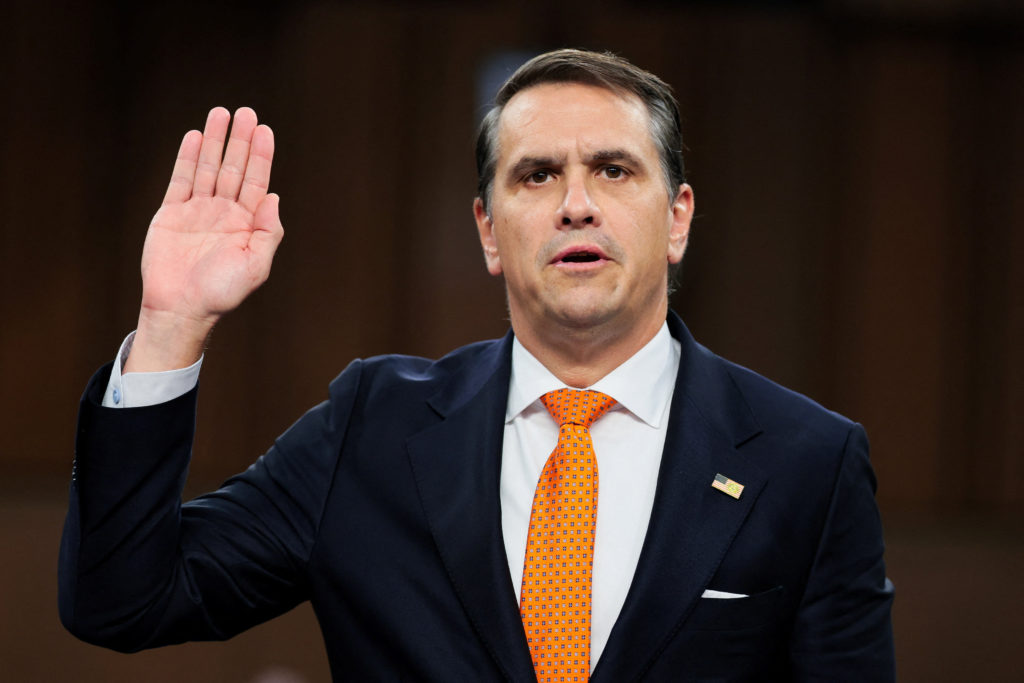
Four legal fronts remain visible. One is statutory enforcement under the Transparency Act. One is private-law exposure from the publication of survivor information. One is the federal prosecution track, where DOJ has now signaled no evidentiary basis for additional Epstein-related prosecutions. The fourth is state investigation, where at least one attorney general says DOJ delay has blocked access to records. None of those fronts is solved by releasing a large stack of pages. In this record, volume is not the same thing as compliance.
The statutory violation is already on the docket
The Epstein Files Transparency Act matters because it changes the baseline. FOIA often lets an agency defend with exemptions, processing limits, and deference to law-enforcement sensitivities. The Transparency Act, as described in Sullivan’s ruling, imposed a more specific obligation on Epstein-related records: DOJ had to disclose more, and when it withheld material, it had to answer challenges with more than general assurances.[1]
That distinction explains why DOJ’s release of more than 3 million pages is not a complete defense. The legal question is not whether the public received a large production. It is whether the department complied with the statute when accusers, lawyers, and other challengers identified specific records that remained withheld or improperly redacted. Sullivan’s order says DOJ did not meet that burden; the department was told to unredact or justify by a date certain.[1]
Blanche’s admission that “approximately 1% of the documents” contained redaction errors also does less work than it first appears to do.[1] In ordinary public-relations arithmetic, 1% can sound minor. In a survivor disclosure case, the denominator is a distraction. A single failed redaction can publish a name, address, phone number, workplace, or image. The remedial question is not whether the error rate looks small across millions of pages. It is whether the errors exposed identifiable people and whether the agency had a legally adequate process to prevent or correct that exposure.
Confirmation would not erase Sullivan’s order. Courts do not vanish because a nominee is elevated. But confirmation would affect posture. The Attorney General controls how the department litigates compliance, how aggressively it cures redaction failures, how it responds to future challenges, and how much institutional weight is placed behind survivors’ objections. If the official associated with the conceded violation becomes the department head, accusers must pursue statutory accountability against an agency newly led by the person whose conduct is part of the dispute.
Privacy harm is not collateral to the files fight
The privacy front is where the word “files” becomes misleading. Dani Bensky testified that her name, phone number, addresses, and workplace appeared across three separate document releases: December 2025, January 2026, and a third release, despite advocacy by her lawyer. She said “hundreds of victims were outed.” Survivors also reported threats and job losses after disclosures, and nude photos showing victims’ faces were published.[2]
That testimony supplies the legal center of the confirmation dispute. A redaction failure is not only an embarrassment to an agency. It can become an injury that forces a survivor to decide whether to sue, whether to move, whether to alert an employer, whether to change contact information, whether to withdraw from public life, and whether to trust the same government actor with any future cooperation.
Privacy tort exposure sits awkwardly beside statutory disclosure enforcement because the two bodies of law pull in different directions. The Transparency Act pushes toward public release. Privacy claims focus on whether release was careless, excessive, or unlawfully identifying. The hard legal work is in the seam: what did the statute require DOJ to publish, what did it allow DOJ to withhold, and what information about victims should never have left the building in identifiable form?
Liz Stein’s testimony sharpened that seam. According to PBS, Stein testified that 800 DOJ reviewers examined the files “for redactions only” and were not instructed to identify investigative leads.[3] If accurate, that describes a process built to screen for disclosure risk while leaving potential criminal follow-up outside the reviewers’ assignment. For survivors, it is a bitter division of labor: the government says it was reviewing for privacy protection, survivors say private information still escaped, and the same review apparently was not designed to harvest leads for accountability.
The existing survivor doxing litigation belongs in this broader map, but it does not answer all of it. For a closer treatment of that remedial track, see How the Epstein Survivor Doxing Lawsuit Tests Privacy Law. The point here is narrower: private litigation may be one of the few places where disclosure harm can be translated into damages, injunctions, or discovery. It is also slow, expensive, and dependent on doctrines that were not designed for a mass government release of abuse-related records.
A Blanche-led DOJ would therefore face two incompatible-looking claims from the same injured group. Survivors can argue the department failed to disclose enough under the statute when it withheld records without adequate justification. They can also argue the department disclosed too much when it exposed identifying information. That is not a contradiction by the survivors. It is the consequence of a records regime that treats lawful transparency and victim protection as simultaneous duties.
The federal prosecution door is closing
The prosecution issue is easier to state and harder to remedy. Blanche told senators that DOJ has no evidence to support additional Epstein-related prosecutions. When asked whether justice can be delivered for survivors, he answered, “I don’t know.” Survivors, by contrast, have said investigative leads appear on “almost every page.”[3][4]
That exchange should not be inflated into a promise that no prosecution can ever occur. Evidence can change; witnesses can come forward; state authorities can pursue their own theories. But as a federal signal, it is significant. The department’s nominee for Attorney General told the Senate that DOJ does not have an evidentiary path for additional Epstein-related charges. For accusers still waiting for prosecutors to connect names, records, travel, money, and abuse allegations, that is a closure signal from the institution with the largest federal file.
It also narrows the practical value of continued disclosure. Public records can inform civil claims, journalism, congressional oversight, and state investigations. They do not automatically become indictments. If DOJ’s position is that the available evidence does not support further federal prosecution, then accusers must look elsewhere for remedies: private claims, statutory compliance litigation, licensing or employment consequences for named third parties where evidence supports them, and state-level criminal review.
This is where institutional history matters, but only up to a point. Readers who want the longer account of DOJ treatment of Epstein survivors can read Three Phases of Institutional Gaslighting in the Epstein Case. For the confirmation decision, the sharper legal fact is current posture: the nominee has already told the Senate that the department lacks evidence for additional federal cases.
State investigations depend on federal records
If the federal prosecution door is closing, the state door matters more. That is why New Mexico Attorney General Raul Torrez’s July 9, 2026 letter carries legal weight beyond ordinary intergovernmental friction. Torrez said DOJ had waited more than 130 days to respond to records requests for a state-level Epstein investigation.[3]
A state attorney general cannot evaluate charges, limitations issues, witness needs, or investigative gaps without records. Delay is not the same thing as denial, and the public materials do not establish that DOJ permanently refused the requests. But a delay of more than 130 days is enough to affect legal work. Investigators lose time. Witnesses wait longer. Survivors who have already been exposed through federal releases are asked to keep faith with another process whose pace depends on DOJ cooperation.
This is the counterpoint to the federal no-evidence position. If DOJ says it has no basis for more federal prosecutions, state investigators should be able to test their own jurisdictional routes with the records they need. If DOJ also controls, delays, or narrows access to those records, survivors face a dead end inside the department and a bottleneck outside it.
What confirmation would change
The confirmation decision does not create the accusers’ injuries. The alleged abuse predated this fight. The disclosure failures, redaction disputes, and investigative frustrations are already in motion. What confirmation would do is place the same official at the head of the department responsible for responding to the court order, defending or correcting the release process, evaluating survivor privacy claims, deciding federal prosecutorial posture, and cooperating with state investigators.
| Legal front | What is open | What is closing or blocked |
|---|---|---|
| Transparency Act enforcement | Court-supervised unredaction or justification after Sullivan’s June 25 order | DOJ discretion may harden if the official tied to the conceded violation leads the agency |
| Privacy exposure | Private claims and remedial litigation over identifying information, threats, job losses, and published images | Government defenses may limit recovery, and litigation cannot undo public disclosure |
| Federal prosecution | Theoretical possibility if evidence changes | DOJ has told senators it has no evidence to support additional Epstein-related prosecutions |
| State investigation | State attorneys general may pursue jurisdiction-specific leads | Access depends on DOJ records cooperation, including requests already delayed more than 130 days |
For accusers and their lawyers, that means each available path comes with an institutional counterweight. The statutory route requires litigating against DOJ. The privacy route may require suing over harms caused by DOJ’s own release process. The prosecution route runs into DOJ’s stated lack of evidence. The state route depends on DOJ producing records to another sovereign. Confirmation would not make Blanche omnipotent, but it would align those chokepoints under his authority.
If Blanche is confirmed, Epstein accusers face an agency head already tied to a disputed disclosure regime, a Justice Department position that additional federal prosecutions lack evidentiary support, and a federal department accused by a state attorney general of delaying records needed for state-level follow-through. If he is blocked, that does not promise justice. It only preserves the possibility that a new appointment could reset the department’s posture before the remaining legal routes harden into exhaustion.
References
- Judge says Blanche ‘conceded’ to violating law, orders Epstein files be unredacted, SAN.com, June 25, 2026
- Epstein accuser blasts DOJ privacy breaches at Blanche confirmation, USA Today, July 16, 2026
- 3 major takeaways from Todd Blanche’s attorney general confirmation hearing, PBS
- Blanche faces questions on DOJ fund, Epstein files at attorney general confirmation hearing, CBS News
Comments
Join the discussion with an anonymous comment.