
The first legal question after the Pensacola Beach flyover is not whether the pass looked dangerous. It is whether a civilian property owner can turn a low military maneuver, reported damage, and an internal “unsafe” assessment into a forum with power to award money.
As of July 20, 2026, the public record is still thin where lawyers would want it to be thick. On July 15, a Blue Angels aircraft flew low over Pensacola Beach. Reporting has described the pass as roughly 40 feet above the beach, but that figure rests on unnamed-source reporting, not an official Navy altitude release. The same public reporting says Blue Angels commanding officer Capt. Adam Bryan characterized the maneuver as “unsafe” by team standards. No publicly reported civilian injuries or lawsuits had emerged by July 20, and the Navy had not released the measurements, waiver details, pilot identification, or investigative findings that would normally anchor a liability analysis.[1][2][3]
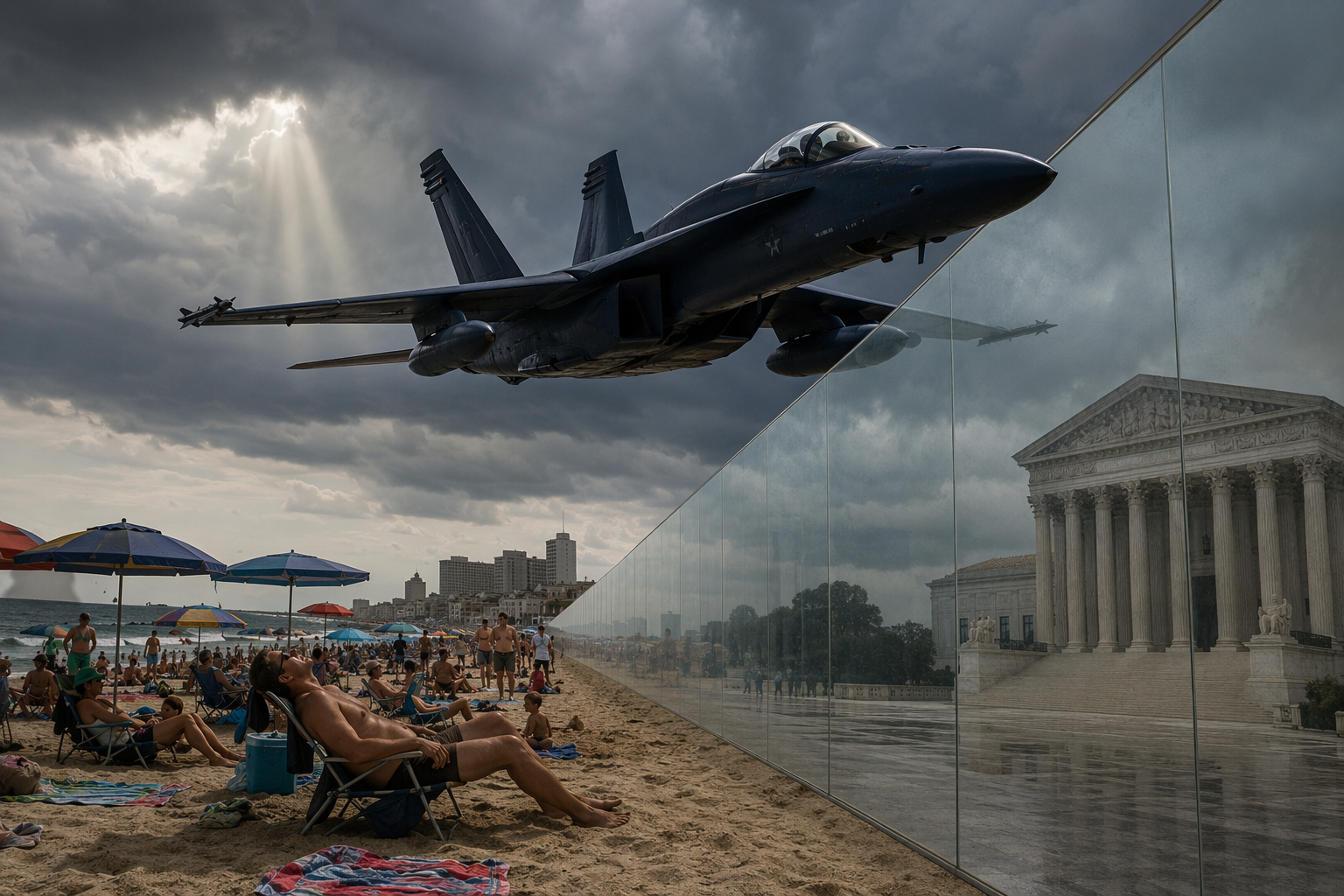
That gap matters because the legal implications of the Blue Angels flyover investigation do not turn on public alarm alone. They turn on waiver, jurisdiction, sovereign immunity, administrative discretion, and reviewability. A maneuver can be unsafe under Navy standards and still leave civilians with no reliable damages remedy.
The Civilian Altitude Rule Is Only the Starting Point
For a civilian pilot, the instinctive starting place is 14 CFR § 91.119. The rule generally requires aircraft over “any open air assembly of persons” to maintain an altitude of 1,000 feet above the highest obstacle within a horizontal radius of 2,000 feet, subject to listed exceptions for takeoff and landing.[4] A crowded beach during a public aviation event is exactly the kind of setting that makes the rule feel intuitive to non-specialists: people are gathered, they cannot all move quickly, and a low pass concentrates risk on people who did not choose to be part of the aircraft operation.
But § 91.119 does not by itself answer the Pensacola Beach problem. Airshow and demonstration operations may proceed under FAA waiver structures that can waive specified Part 91 requirements for authorized performances. The FAA’s own airshow waiver materials identify Part 91 provisions that may be waived in that context, including minimum safe altitude rules.[5] That does not mean every low pass is approved, or that this particular pass fell inside the waiver. It means the ordinary civilian baseline is not enough to prove that a regulatory violation occurred.
The missing document is not a technicality. The July 15 waiver parameters have not been publicly released in a form that would let an outside lawyer compare the actual path, altitude, timing, crowd line, and maneuver profile against the authorized envelope. Without those parameters, the analysis cannot responsibly say that the pass violated a specific FAA waiver condition. It can only say that the reported altitude is far below the ordinary civilian minimum and that the Navy’s own commanding officer reportedly called the maneuver unsafe by team standards.[1][4][5]
Even if a violation existed, the next step would still not be a damages claim for beachgoers. FAA enforcement is a public regulatory mechanism. It can support certificates, sanctions, waivers, and compliance actions in the proper case. It is not a private compensation system for a cracked window, a damaged roof fixture, or a business interruption claim.
FAA Enforcement Does Not Become a Civilian Damages Remedy
The Federal Aviation Administration sits awkwardly in this fact pattern. Federal law gives the United States sovereignty over U.S. airspace and gives the FAA broad authority to regulate the use of navigable airspace.[6] That general authority is real, but it does not automatically place every military flight decision into an FAA enforcement lane that civilians can use.
Military aircraft operate inside a mixed system of federal aviation rules, military command authority, interagency coordination, and event-specific authorizations. The FAA may set airshow waiver conditions, coordinate airspace, and regulate civil aviation safety. But a Navy demonstration aircraft flown by a Navy pilot does not become an ordinary civil operator merely because civilians witnessed the maneuver from a beach.
| Possible path | What it would need to do | Problem in the Pensacola Beach record |
|---|---|---|
| FAA minimum-altitude enforcement | Show an applicable rule or waiver condition was violated | The public record lacks the July 15 waiver details and official altitude data |
| FAA-based civil lawsuit | Give civilians a private damages cause of action | FAA enforcement does not itself compensate property owners |
| Navy safety review | Create a factual record or command accountability finding | It is not a private remedy and no completed findings have been released |
| FTCA lawsuit | Fit within the United States’ waiver of sovereign immunity | Discretionary function and military aviation precedent create major barriers |
| Military Claims Act claim | Provide administrative payment for property damage | It is capped, discretionary, and not judicially appealable |
This is where many public explanations overstate the law. “Unsafe” is not the same word as “actionable.” An FAA rule, a waiver condition, an internal Navy standard, and a private tort duty are different instruments. They may overlap factually. They do not collapse into one another.
The FTCA Looks Tempting Until Sovereign Immunity Reappears
The Federal Tort Claims Act is the statute civilian lawyers usually reach for when federal conduct injures a private person or damages private property. In broad terms, it waives sovereign immunity for certain torts committed by federal employees acting within the scope of employment. That framing makes the Pensacola Beach claim look, at first glance, like a conventional federal negligence problem: a government pilot made an unsafe low pass, property was allegedly damaged, and civilians had no control over the risk.
The problem is the discretionary function exception. Under 28 USC § 2680(a), the FTCA does not waive immunity for claims based on a federal employee’s performance, or failure to perform, a discretionary function or duty. In military aviation cases, that exception is not a footnote. It is often the main event.
Laird v. Nelms is the hard precedent that keeps this analysis from becoming a simple negligence exercise. In that 1972 Supreme Court case, claims arose from property damage allegedly caused by sonic booms from military aircraft. The Court held that the FTCA did not authorize strict-liability recovery against the United States for ultrahazardous activity and treated the claim through the limits of the government’s statutory waiver rather than through the intuitive unfairness of leaving property owners uncompensated.
Pensacola Beach is not a sonic-boom case on the known facts. It is also not yet an FTCA case at all; no publicly reported FTCA lawsuit had tested the July 15 facts as of July 20, 2026.[2][3] But Laird matters because it shows how quickly military flight damage moves from ordinary tort instincts into sovereign-immunity limits. A claimant would need more than video, alarm, and a command officer’s “unsafe” assessment. The claimant would need a way to avoid the argument that the challenged conduct involved judgment about demonstration flight operations, pilot maneuvering, training, safety margins, and military command decisions.
That is not impossible in the abstract. If a plaintiff could identify a mandatory, specific, non-discretionary directive that the pilot violated, the analysis would be sharper. For example, a binding altitude floor in the governing waiver or Navy order could matter if the aircraft indisputably crossed it. But that is exactly the record outsiders do not yet have: official altitude, exact route, event authorization, and the governing operational language. The currently public facts support concern; they do not yet supply a clean FTCA pleading path.
The Military Claims Act Is the Closest Live Channel, Not a Court Case
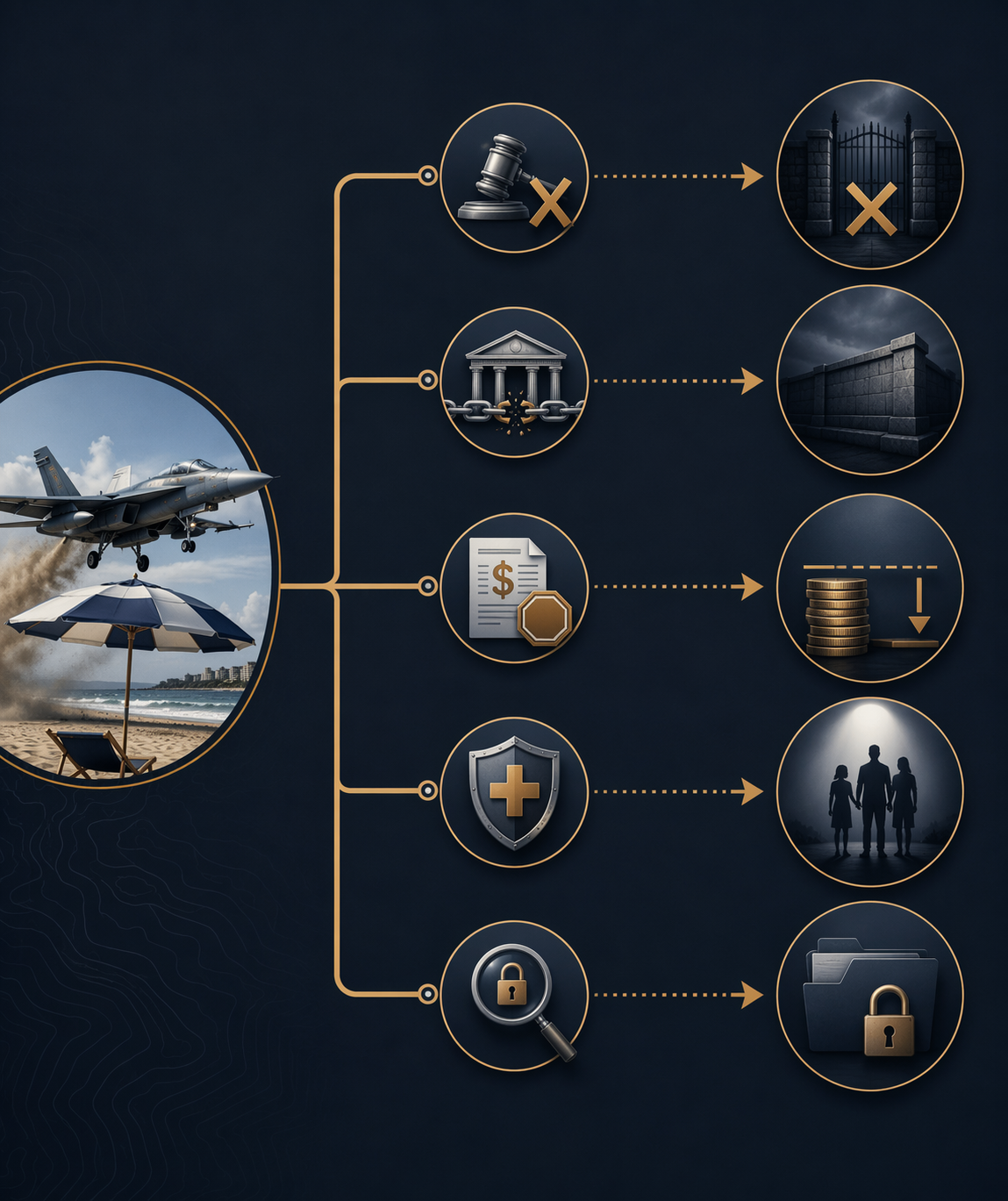
For property damage without reported physical injury, the Military Claims Act is the most plausible civilian channel. The statute authorizes administrative settlement of certain claims for property damage, personal injury, or death caused by military personnel or civilian employees of a military department acting within the scope of employment, or otherwise incident to noncombat activities of the armed forces.[7]
That description fits the shape of the Pensacola Beach complaints better than the other mechanisms. A military aircraft, a public demonstration context, alleged civilian property damage, and no reported personal-injury lawsuit all point toward an administrative claim rather than immediate courtroom litigation. Practical military-aviation claims guidance likewise treats the Military Claims Act as a key route for claims arising from military aviation incidents, while emphasizing that the process is administrative rather than an ordinary civil action.[8][9]
But “closest” does not mean “adequate.” The Military Claims Act has a $100,000 settlement cap under 10 USC § 2733, a two-year filing window, and no judicial appeal from an administrative denial.[7] Those limits are especially important in a property-damage-only incident. A claimant may be able to submit repair invoices, photographs, insurance correspondence, and timing evidence. The claimant still cannot force a federal judge to review the Navy’s merits decision under the statute if the agency denies the claim.
That is the liability gap in its most practical form. The one mechanism that appears to fit the civilian property-damage fact pattern is not a damages lawsuit. It is a discretionary administrative process with a cap and no ordinary appeal. For a small property claim, that may be the only path worth filing. For a claimant looking for discovery, sworn testimony, public findings, punitive accountability, or judicial review, it is not built to do that work.
Feres Does Not Explain the Civilian Gap
The Feres doctrine often appears whenever military injury and federal liability are discussed, but it should not carry more weight here than it deserves. Feres bars FTCA suits by service members for injuries that are incident to military service. That boundary matters for a pilot, crew member, maintainer, or service member participant injured in a service-connected setting. It does not answer the civilian beachgoer’s property-damage question.
For civilians, the barrier is not Feres. It is the combination of no private FAA damages route, FTCA immunity defenses, missing non-discretionary facts, and the limited nature of the Military Claims Act. Calling the problem “Feres” would be a category error. The civilian claimant is outside the service-member bar and still may have nowhere effective to go.
The Kadena Contrast Shows What Is Missing
The 2025 Kadena HH-60W rotorwash fatality is useful only as a procedural contrast. In that case, the Air Force released fatal mishap investigation results after an HH-60W incident at Kadena Air Base, giving the public a formal account of what the accident investigation process found.[10] The facts and severity are different, and it would be careless to treat a fatal rotorwash mishap as an emotional analog for reported property damage at Pensacola Beach.
The contrast is institutional. A completed accident investigation can identify causal factors, command issues, human factors, procedural failures, and factual measurements. It may not guarantee compensation, and it may not create a private cause of action. But it gives lawyers a record to test against claims statutes, immunity doctrines, and administrative remedies.
Pensacola Beach does not yet have that kind of public record. The reported political closure of the Navy review cut off, or at least interrupted, the fact-finding channel that would have mattered most to outside counsel. That does not prove liability. It does mean the public record is missing the material lawyers would normally use to separate an embarrassing deviation from a legally consequential violation.[2][3]
Why the Navy Review Cannot Substitute for a Remedy
An internal Navy review could have mattered in three ways. It could have confirmed the aircraft’s altitude and path. It could have compared the maneuver against Blue Angels standards, waiver limits, and command approvals. It could have identified whether the unsafe act was an individual deviation, a planning failure, a supervision failure, or something else.
None of those functions is the same as compensating civilians. A safety review can discipline personnel, change procedures, or produce findings. It does not itself waive sovereign immunity. It does not give a property owner a private right of action. It does not make the Military Claims Act appealable. And unless its findings identify a specific mandatory rule that was violated, it may not solve the FTCA discretionary-function problem either.
That distinction is easy to lose because the word “unsafe” feels decisive. In litigation screening, it is only the beginning. Unsafe under team standards may support internal accountability. Unsafe under a binding operational directive may support a stronger statutory argument. Unsafe in a general sense may support public criticism and still fail as a claim.
The Practical Screen for Affected Property Claims
For attorneys advising affected civilians, the current screen is narrow and document-heavy. The threshold question is not whether the client was frightened or whether the maneuver looked indefensible. The threshold question is whether any enforceable mechanism reaches the loss.
- Confirm the loss type: property damage, physical injury, business interruption, insurance deductible, or another claimed economic loss.
- Separate reported facts from official facts: altitude estimates, aircraft path, pilot identity, waiver language, and Navy findings are not interchangeable.
- Check whether any specific, mandatory directive governed the maneuver and whether public evidence shows a violation.
- Treat FAA materials as regulatory context, not as a private damages engine.
- Evaluate FTCA only after confronting discretionary function immunity and military aviation precedent.
- Consider the Military Claims Act as the main administrative route for property damage, while advising plainly about the cap, discretion, deadline, and lack of judicial appeal.
The absence of publicly reported injuries also matters. Personal injury would not automatically defeat sovereign immunity, but it would change the economics, evidentiary urgency, and litigation posture. With the public record currently centered on property damage, the most realistic path is administrative presentation, not a federal lawsuit designed to test the entire Blue Angels command structure.[2][3]
That is an unsatisfying answer for a civilian who did nothing more than stand on a beach or own property nearby. It is also the answer the statutes point toward. As of Q3 2026, the Pensacola Beach incident exposes a near-total civilian liability gap for property damage from a military flyover: FAA rules supply context, not compensation; the FTCA faces sovereign-immunity and discretionary-function barriers; Feres is largely beside the point for civilians; the Navy review cannot create a private remedy; and the Military Claims Act remains the only plausible administrative channel, capped and discretionary as it is.
References
- Navy says Blue Angels' Pensacola flyover was unsafe - Task & Purpose - https://taskandpurpose.com/news/navy-blue-angels-pensacola-unsafe-flyover/
- No Reprimands For Blue Angels Flyover That Ripped Past Pensacola Beach, Navy Secretary Says - Forbes - https://www.forbes.com/sites/saradorn/2026/07/16/no-reprimands-for-blue-angels-flyover-that-ripped-past-pensacola-beach-navy-secretary-says/
- Blue Angels won’t be punished after low beach flyover, acting SECNAV says - Navy Times - https://www.navytimes.com/news/your-navy/2026/07/17/blue-angels-wont-be-punished-after-low-beach-flyover-acting-secnav-says/
- 14 CFR § 91.119 - Minimum safe altitudes: General - Cornell Legal Information Institute - https://www.law.cornell.edu/cfr/text/14/91.119
- Waived Regulations Part-91 List - Federal Aviation Administration - https://www.faa.gov/sites/faa.gov/files/about/initiatives/airshow/Waived_Regulations_Part-91_List.pdf
- 49 USC § 40103 - Sovereignty and use of airspace - Cornell Legal Information Institute - https://www.law.cornell.edu/uscode/text/49/40103
- 10 USC § 2733 - Property loss; personal injury or death: incident to noncombat activities of Department of Army, Navy, or Air Force - Cornell Legal Information Institute - https://www.law.cornell.edu/uscode/text/10/2733
- Identifying and Handling a Military Aviation Claim - Attorney at Law Magazine - https://attorneyatlawmagazine.com/public-articles/personal-injury/identifying-and-handling-a-military-aviation-claim
- Claims Against the Military - Military Law Center - https://militarylawcenter.com/claims-against-the-military/
- Fatal HH-60W mishap investigation results released - Kadena Air Base - https://www.kadena.af.mil/News/Article/4384714/fatal-hh-60w-mishap-investigation-results-released/
Comments
Join the discussion with an anonymous comment.