
A Boeing 737-800 fuel emergency landing is not regulated by one aircraft-specific rule. It sits inside a layered system: ICAO standards and phraseology establish the international baseline; national operating rules decide how much fuel must be planned and carried; air traffic procedures determine what happens when the crew says the situation has crossed from advisory to emergency; and investigators later decide whether the sequence shows a planning failure, a communication failure, an unavoidable operational compression, or some combination of those.
For U.S. Part 121 operations, a core domestic fuel-planning anchor is 14 CFR §121.639: enough fuel to fly to the airport to which the flight is dispatched, then to the most distant alternate listed in the dispatch release, and then for 45 minutes at normal cruising fuel consumption.[1] Section 121.645 adds turbine-engine fuel supply requirements for domestic and flag operations, including fuel for approach and landing at the destination and, where applicable, for the alternate.[2] Those rules do not say that a 737-800 can never land with little fuel remaining. They say what must be planned and dispatched before the aircraft is released.
Three terms matter before the incident facts can be read cleanly. “Alternate fuel” is the fuel planned to continue from the destination to an alternate airport when the dispatch rules require one. “Normal cruise consumption” is the regulatory reference point used in §121.639 for the post-alternate 45-minute reserve. “Minimum fuel” is not, by itself, a distress call; it tells air traffic control that the aircraft cannot accept undue delay, but it does not automatically require priority handling. “MAYDAY FUEL” is different. ICAO’s post-2012 phraseology treats it as the declaration that the aircraft’s usable fuel has reached a point where priority handling is required.[3]

The Rule Map Before the Runway
ICAO does not prosecute an airline after a low-fuel landing. Its function is more structural: Annex 6 and related ICAO procedures create the international vocabulary and operating baseline that states then implement through their own law and oversight systems. That distinction matters because a fuel emergency can look internationally standardized in the radio phraseology while still being enforced, investigated, or litigated under national rules.
In the United States, the legal question begins at dispatch. If a Part 121 Boeing 737-800 is released for a domestic operation, the operator must be able to show that the release met the applicable fuel carriage rules at the time of dispatch, not merely that the aircraft eventually landed safely. The 45-minute reserve in §121.639 is often cited because it is easy to remember, but it is not the whole fuel system. The rule also requires fuel to reach the destination and the most distant alternate listed in the release.[1] Section 121.645 then supplies additional turbine-engine requirements that can become important when reconstructing whether the planned fuel was legally sufficient for the operation actually authorized.[2]
EASA’s post-2022 framework moves differently. Instead of a single uniform fuel policy for every operator, the revised European structure allows three schemes: Individual, Basic, and Basic with variations.[4] The point is not that Europe abandoned fuel minima. It is that operators may, subject to approval and conditions, use more tailored fuel planning methods. That flexibility can be defensible when it is supported by data, monitoring, and operational control. It can also make the post-incident question more document-heavy: which scheme applied, what assumptions supported it, and did the flight remain inside those assumptions as weather, traffic, and alternates changed?
The Boeing 737-800 itself is relevant, but it should not be made to carry more legal weight than it can bear. The type is a widely used twin-engine narrow-body aircraft. Unlike some long-haul aircraft, the 737 family is not built around routine fuel dumping as the ordinary answer to an overweight landing problem. That design issue can matter in return-to-field events, but it is separate from the question whether a fuel emergency landing was caused by deficient fuel planning, late declaration, weather compression, traffic delay, or a mechanical event.
Malta Air at Manchester: When a Compliant Plan Meets Compound Delay
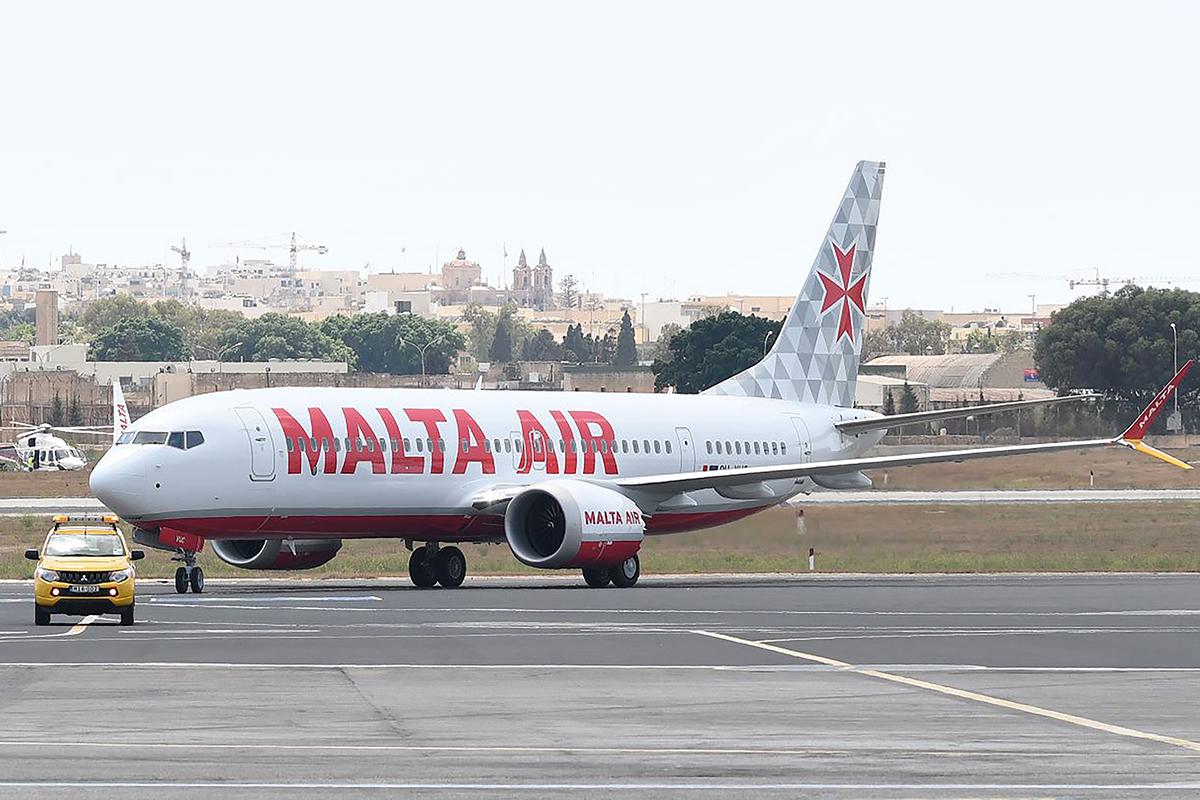
The Malta Air Boeing 737-800 serious incident at Manchester is the cleanest recent stress test of the gap between planned sufficiency and operational survivability. According to The Aviation Herald, the aircraft landed at Manchester on October 3, 2025 with 220 kg of total fuel remaining after three go-arounds across Prestwick and Edinburgh, and the United Kingdom Air Accidents Investigation Branch opened a serious incident investigation.[5]
That sentence is stark, but it should not be over-read. The Aviation Herald is credible incident reporting, not the AAIB’s final factual record. The AAIB had not published final findings in the material available here. The legally disciplined version of the event is therefore narrower: a reported Malta Air 737-800 sequence involved repeated missed approaches or go-arounds, diversion decision-making, and a landing with very low remaining fuel; the national investigator treated the event seriously enough to investigate it as a serious incident.[5]
The operational significance lies in the accumulation. A dispatch release can be lawful when signed. A destination can remain legally and operationally plausible when the aircraft departs. An alternate can appear useful in the flight plan. Then weather, runway availability, traffic sequencing, repeated approaches, and diversion geometry can consume the margin that made the plan look orderly. By the time the aircraft is no longer choosing among good options, the legal question has shifted: not simply “did it carry the required fuel at departure,” but “when did the operator and crew know that the assumptions behind the plan had materially changed, and what did they do with that knowledge?”
This is where minimum fuel rules can be misunderstood. A low-fuel landing is not automatic proof of a regulatory violation. Fuel rules regulate planning, release, monitoring, and operational decision-making; they do not guarantee that the aircraft will land with a comfortable number after several contingencies stack together. The Manchester incident matters because 220 kg is not a planning abstraction. It is the remainder after the system’s buffers have been converted into time, approaches, missed approaches, vectors, and the final landing opportunity.[5]
For lawyers and compliance teams, the document trail will be as important as the fuel number. The dispatch release, weather packages, alternate selection, fuel uplift, operational control communications, ATC recordings, aircraft data, and crew statements all become part of the same question. The eventual finding may identify a planning deficiency, a decision-making problem, an ATC or airport constraint, an unforeseeable compression, or no breach at all. Until the AAIB closes that loop, the incident is evidence of a system vulnerability, not a final adjudication of fault.
The Declaration Threshold Is Not a Formality

The second recurring failure mode is linguistic, but it is not semantic hair-splitting. The system depends on a crew communicating fuel state in terms that trigger the right ATC response. “Minimum fuel” warns that the aircraft cannot accept extra delay. “MAYDAY FUEL” declares distress and priority. The difference can affect sequencing, controller assumptions, later investigation, and liability analysis.
Avianca Flight 52 remains the precedent that gives this distinction its legal force. In 1990, the aircraft crashed after fuel exhaustion near New York, with 73 fatalities; the case is routinely cited for the danger of failing to communicate a fuel emergency in language that results in priority handling.[6] The point is not that every modern low-fuel event resembles Avianca 52. The point is that the system learned, at fatal cost, that “we are low on fuel” and “we are declaring an emergency” are not interchangeable in a congested ATC environment.
ICAO’s 2012 phraseology reform addressed that problem by standardizing “MAYDAY FUEL” for fuel-related distress.[3] FAA InFO 08004, as summarized by SKYbrary, states the operational consequence directly: a fuel emergency declaration is “an explicit statement that priority handling by ATC is both required and expected.”[7] That sentence is unusually useful for legal analysis because it links words spoken on the frequency to the duty of the system to treat the aircraft differently.
The difficult cases are not the ones where the crew plainly declares MAYDAY FUEL and receives priority. They are the cases where fuel is deteriorating, workload is high, the crew is still managing options, and nobody wants to convert a manageable condition into an emergency prematurely. That hesitation is understandable. It is also exactly why standardized phraseology exists. When the threshold is crossed, the radio call is not a confession of bad planning; it is the mechanism that tells ATC the aircraft must be handled as a priority.
Recent Incidents Widen the Frame, But Do Not Prove a Pattern by Themselves
Several 2026 reports show why fuel events should be sorted carefully before they are treated as regulatory evidence. American Airlines AA1049, a Dallas-to-JFK flight, reportedly diverted to Philadelphia in July 2026 for low fuel while about 30 minutes from its destination; the public account was tied to passenger social media and covered by Simple Flying, with no FAA or NTSB determination identified in the available material.[8] That supports a narrow conclusion: the event may be relevant to operational fuel-margin discussion, but it does not establish a Part 121 violation.
American Airlines AA1511 is different in kind. AIRLIVE reported that on January 24, 2026, the aircraft returned to JFK after fumes in the cabin and the crew declared an emergency.[9] That is an emergency-declaration example, but not a fuel-planning example on the facts available here. It belongs in the same regulatory universe because emergency handling, aircraft configuration, possible overweight landing considerations, and post-event reporting can overlap. It should not be turned into evidence of low-fuel risk.
The July 2026 Ryanair Boeing 737-800 incident over Greece also belongs in a separate evidentiary lane. Press accounts described a right-engine issue and cabin decompression, with the NTSB leading the investigation because the aircraft was U.S.-manufactured under the ICAO Annex 13 framework.[10] That illustrates how investigation jurisdiction can follow aircraft design and manufacturing links even when the operation is outside the United States. It does not, on the available facts, prove anything about 737-800 fuel emergency regulation.
There is a broader 2026 fuel context, but it should be handled with the same restraint. AIN reported that Strait of Hormuz disruption was driving jet fuel prices sharply higher, including reports of prices doubling, and EASA issued a May 2026 safety information bulletin addressing Jet A alternatives and fuel tankering.[11][12] Higher fuel prices can increase attention to tankering and fuel policy, but price pressure is not evidence that a particular flight was dispatched unlawfully. It is background pressure on the compliance system, not proof of breach.
How Enforcement Usually Arrives: After the Event, Through Records
Fuel emergency regulation is mostly prospective until something goes wrong. Dispatch rules require planning before release. Operating manuals and approved fuel schemes guide decisions in flight. ATC phraseology governs what the system is told in real time. But enforcement and liability analysis usually arrive later, when investigators, regulators, insurers, and litigants reconstruct the sequence from records that were created under pressure.
| Question | Why it matters legally |
|---|---|
| Was the aircraft dispatched with fuel meeting the applicable rule or approved fuel scheme? | This separates a deficient release from a later operational deterioration. |
| Were destination and alternate assumptions still valid as conditions changed? | This tests whether operational control responded to new facts rather than relying on a stale plan. |
| When did the crew advise minimum fuel or declare MAYDAY FUEL? | This affects ATC priority handling and later assessment of communication adequacy. |
| What fuel remained at landing, and what contingencies had consumed the margin? | This shows whether the final state resulted from one error, multiple contingencies, or an unresolved factual chain. |
| Which authority investigated, and what findings were actually issued? | This keeps incident reporting separate from official conclusions. |
The reactive nature of aviation safety regulation is not limited to fuel planning. FAA material on China Airlines Flight 120 describes the 2007 fuel tank breach investigation and the resulting airworthiness directives, including AD 2007-18-51, AD 2007-18-52, and AD 2011-06-05.[13] That case involved a different failure mode, but it is a useful reminder of institutional timing: the rulebook is not static, and some of its most specific requirements appear only after investigators convert an event into a technical and legal lesson.
For 2025–2026 Boeing 737-800 fuel emergency events, the available material does not identify public FAA civil penalty actions specifically tied to those incidents. That absence should not be overclaimed. It may mean no penalty was issued, that no violation was found, that enforcement was handled outside the public materials reviewed here, or simply that documentation has not surfaced. A careful compliance assessment cannot treat silence as exoneration or as hidden enforcement.
Where the Regulatory Gap Actually Sits
The current framework is not empty. It has dispatch minima, alternate fuel concepts, reserve requirements, approved fuel schemes, standardized emergency phraseology, ATC priority rules, and accident investigation channels. A Boeing 737-800 does not enter a legal vacuum when it approaches a runway with low fuel.
The weakness is more precise. First, minimum fuel compliance can coexist with fragile real-world resilience when contingencies compound. The Malta Air Manchester sequence is important for that reason: it shows how repeated go-arounds and diversion pressures can consume the practical margin between a release that looked adequate and a landing that investigators must examine closely.[5] Second, standardized fuel emergency language only works if crews use it at the threshold where ATC priority is required and if the system responds consistently when they do.[3][7]
Those are not the same problem. One is about planning assumptions and operational buffers. The other is about communication and priority handling after the buffer has eroded. Treating every fuel diversion as a violation blurs the first problem. Treating “minimum fuel” as if it already carries the legal effect of “MAYDAY FUEL” blurs the second. The hard cases sit between those two errors, where the paper plan, the aircraft’s actual fuel state, the crew’s words, and ATC’s understanding no longer line up neatly.
References
- 14 CFR § 121.639 - Fuel supply: All domestic operations, Cornell Legal Information Institute, https://www.law.cornell.edu/cfr/text/14/121.639
- 14 CFR § 121.645 - Fuel supply: Turbine-engine powered airplanes, Cornell Legal Information Institute, https://www.law.cornell.edu/cfr/text/14/121.645
- ICAO Amendment to PANS-ATM: Fuel Emergency Declaration, IFALPA, https://www.ifalpa.org/publications/library/icao-amendment-to-pans-atm-fuel-emergency-declaration--2740
- EASA’s New Fuel Policy, OPSGROUP, https://ops.group/blog/easas-new-fuel-policy/
- Incident: Malta Air B738 at Manchester on Oct 3rd 2025, fuel emergency, The Aviation Herald, https://avherald.com/h?article=52dfe5d7
- Avianca B707 at Cove Neck on Jan 25th 1990, fuel exhaustion, SKYbrary, https://skybrary.aero/accidents-and-incidents/b707-cove-neck-ny-usa-1990
- Fuel - In-flight Fuel Management, SKYbrary, https://skybrary.aero/articles/fuel-flight-fuel-management
- American Airlines Flight Diverts To Philadelphia After Running Low On Fuel, Simple Flying, July 2026, https://simpleflying.com/
- American Airlines Boeing 737 returns to New York JFK after fumes in cabin, AIRLIVE, January 24, 2026, https://www.airlive.net/
- NTSB investigating Ryanair Boeing 737 incident over Greece, The Seattle Times, July 2026, https://www.seattletimes.com/
- Jet Fuel Prices Surge as Strait of Hormuz Risk Rises, AINonline, 2026, https://www.ainonline.com/
- EASA publishes Safety Information Bulletin on Jet A alternatives and fuel tankering, EASA, May 2026, https://www.easa.europa.eu/
- China Airlines Flight 120, FAA Lessons Learned, https://www.faa.gov/lessons_learned/transport_airplane/accidents/B-18616
Comments
Join the discussion with an anonymous comment.