
By July 1, 2026, the Air Force One conversion cost controversy had acquired the one fact that makes the legal question harder rather than easier: a retrofitted Qatari-gifted Boeing 747-8 had flown as Air Force One, while Boeing’s separate VC-25B replacement contract apparently remained in force. The first fact makes the displacement argument visible. The second is what keeps that argument from becoming an easy breach case.
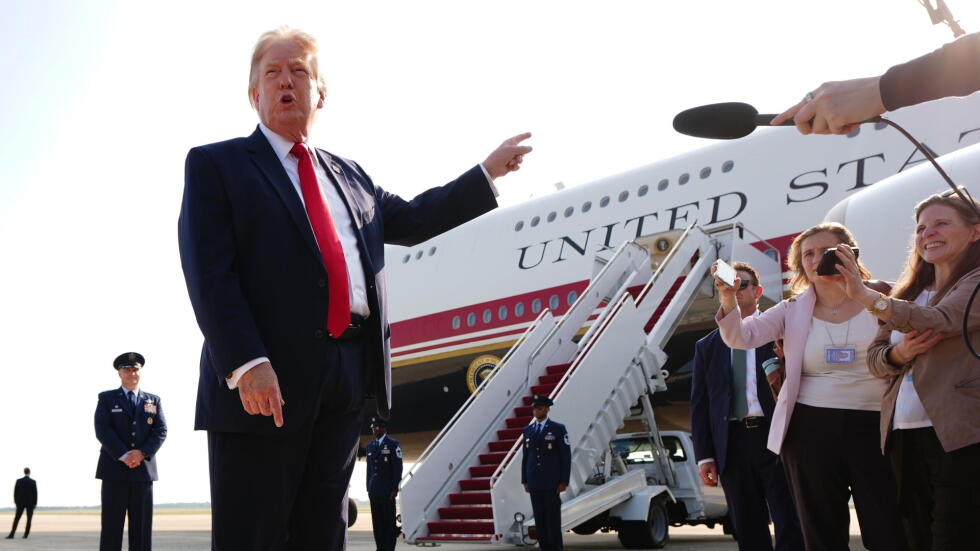
The Associated Press reported that the Qatari bridge aircraft made its first official flight as Air Force One on July 1, 2026, for President Trump’s trip to North Dakota.[1] As of May 2025, however, the Air Force was still describing fiscal year 2027 as the delivery target for the VC-25B program, and former White House ethics chief Richard Painter told Newsweek that Boeing was unlikely to sue because the contract “is still in place.”[2] That continuing contract status matters more than the public theater around the aircraft.
Boeing’s economics are ugly enough without embellishment. Air & Space Forces Magazine reported in October 2023 that new charges had pushed Boeing’s cumulative VC-25B losses above $1.3 billion.[3] The broader controversy now uses a reported $2.8 billion overrun figure, but the legal problem is not solved by making the loss number larger. In the Court of Federal Claims, the first question would be whether the government violated a money-mandating contract obligation, not whether the contractor’s bargain became ruinous.
Bradley Moss gave Newsweek the strongest plaintiff-side version of the theory: Boeing “would almost certainly have a clear breach of contract lawsuit it could bring,” and “if this gift goes forward, it is practically axiomatic that some type of lawsuit will occur.”[2] That is a useful opening position. It is not the same thing as a viable damages judgment.
The Claim Would Have To Fit Through The Tucker Act
Boeing’s plausible forum would be the U.S. Court of Federal Claims under the Tucker Act, which permits suits against the United States for claims founded on express or implied contracts with the government. That matters because the Tucker Act is not a general unfairness statute. It does not pay damages because a procurement decision is wasteful, political, embarrassing, or hostile to a contractor’s expectations. It supplies jurisdiction only when a separate source of law creates a money-mandating right.
For Boeing, that source would have to be the VC-25B contract itself. The reported posture is a firm-fixed-price aircraft conversion program whose costs have moved sharply against the contractor. In that structure, overruns are usually Boeing’s problem unless the company can tie them to a government breach, a compensable change, delay, constructive termination, or another contractually recognized theory. A fixed-price deal can be miserable without becoming unlawful.
The bridge-jet theory would likely sound in functional displacement: the government allegedly accepted and deployed another aircraft for the very presidential-airlift role that gave the VC-25B bargain its value. If the Qatari aircraft became the practical replacement while the government left Boeing nominally performing an increasingly purposeless contract, Boeing could argue that the government destroyed or substantially impaired the bargain it bought.
That is the colorable part. The hard part is identifying the violated promise. A government contract to buy converted aircraft is not usually a promise that the President will never use another aircraft, never accept interim capacity, or never alter the operational mix around the program. Unless the VC-25B contract contains exclusivity language, minimum-use commitments, or a clause that makes the bridge aircraft contractually incompatible with continued performance, Boeing would be trying to convert functional frustration into breach.
That distinction is not academic. Contractors often litigate from the lived reality of what the agency did; the Court of Federal Claims still asks what the agency promised. A bridge aircraft flying as Air Force One may be powerful evidence in politics and appropriations oversight. It is not automatically evidence that the Air Force repudiated the VC-25B contract.
A Live Contract Is A Problem For Boeing, Not A Technicality
Painter’s skepticism starts in the right place: if the VC-25B contract is still in place, the government has not taken the clean step that usually frames the remedy. A formal termination would give Boeing a defined procedural and damages pathway. A live contract with an embarrassing substitute aircraft gives Boeing a more novel and less certain theory.
The distinction affects both liability and damages. If the government terminates for convenience, the contract usually tells the parties what costs, profit, settlement expenses, and limitations apply. If the government breaches, the contractor may pursue expectation-based damages subject to proof, causation, mitigation, and the specific contract terms. If the government does neither formally, Boeing would have to show that the government’s conduct was equivalent to a repudiation, constructive termination, cardinal change, or other legally cognizable interference.
That showing would turn on facts not yet public. Did the Air Force stop requiring VC-25B performance? Did it slow-walk approvals, withhold cooperation, or change requirements because the Qatari aircraft became the operational answer? Did program officials tell Boeing, in substance, that the aircraft were no longer needed? Or did the government continue to administer the contract while using a bridge aircraft for interim presidential travel? Those are different cases.
| Government posture | Likely legal significance |
|---|---|
| Formal termination of the VC-25B contract | Moves the dispute into the contract’s termination-for-convenience framework unless Boeing can show bad faith or another exception. |
| Continued VC-25B performance while the bridge jet flies temporarily | Makes breach harder; Boeing must identify a contract duty violated by the interim use. |
| Bridge jet becomes the practical permanent replacement without formal termination | Creates Boeing’s strongest functional-displacement argument, but still requires proof that the conduct is contractually cognizable. |
| Operational and national-security decisions made by the President or senior officials | Strengthens sovereign-acts and political-question defenses. |
The prior Boeing-Air Force litigation under the same contract family is a reminder that this relationship has already produced disputes capable of appellate review. In Boeing Co. v. Secretary of the Air Force, the Federal Circuit addressed a Boeing dispute involving the Air Force and the VC-25B contract family in 2020.[4] That history does not prove the new claim, but it does make clear that disagreements over this program are not merely press-release hypotheticals.
The Termination Clause Would Be The Government’s First Safe Harbor
The most concrete barrier is contractual: the government’s termination-for-convenience authority. Federal procurement contracts commonly reserve the government’s right to end performance when its needs change, with compensation determined by the termination clause rather than by ordinary breach damages. Contractors dislike the asymmetry after the fact, but they price and perform in a system where that asymmetry is part of the bargain.
If the Air Force eventually terminates the VC-25B contract because the Qatari aircraft has satisfied the presidential-airlift need, Boeing’s damages theory would likely be pulled toward that clause. The company could seek the recovery the clause allows. It would not automatically receive the benefit of a full breach judgment merely because the government’s reason for termination was politically uncomfortable or operationally unusual.
Boeing would therefore need a way around the clause, not just a way into court. In government-contracts litigation, that usually means arguing that the termination was a pretext for bad faith, that the government acted outside the contract’s scope, or that the conduct before termination independently breached specific duties. Those are demanding theories. They become more demanding when the subject is the aircraft used by the President.
The timing also matters. A contractor may prefer to describe the bridge jet as a constructive termination because that sounds remedial. But a court would still ask what the government did to the contract: stopped work, changed work, delayed work, refused acceptance, or merely made the contractor’s business case look worse. The last category is rarely enough.
Sovereign Acts Would Reframe The Gift As Governmental Conduct
If Boeing survived the contract-text fight, the government would have a broader defense waiting: the sovereign acts doctrine. The doctrine protects the United States from contract liability when it acts in its sovereign capacity through public and general acts, rather than as an ordinary contracting party trying to escape a bad deal.
That defense would not be frivolous here. Accepting, reviewing, modifying, securing, and deploying an aircraft for presidential use implicates foreign relations, executive security, military airlift, and national command logistics. The government would argue that those choices were sovereign decisions about the President’s transportation and security, not procurement maneuvers aimed at evading Boeing’s fixed-price contract.
Boeing’s answer would be that the government cannot dress up a procurement substitution as sovereignty if the practical effect is to take the benefit of a replacement aircraft while stranding Boeing inside a losing contract. That answer has force only if the evidence shows targeted interference with the VC-25B bargain. The more the record looks like a presidential-airlift decision of general governmental character, the more difficult Boeing’s breach theory becomes.
The sealed legal reasoning around the Qatar gift is part of the uncertainty, not proof of either side’s case. American Oversight has sued the Justice Department for withholding Attorney General Pam Bondi’s legal memo concerning the reported $400 million jet gifted by Qatar.[5] Until that memo is public, it is not evidence that DOJ endorsed a procurement-law theory, rejected one, or considered Boeing’s contract remedies at all.
The Political Question Problem Is Broader, And Less Predictable
The political question doctrine would come last, but it could dominate the case if Boeing’s theory required a court to second-guess the President’s aircraft choice. Courts are more comfortable interpreting payment clauses than supervising national-security judgments. A damages claim can sometimes avoid that problem by focusing on contract administration, but not if the alleged breach is the decision to use a different presidential aircraft.
There is a narrow version of the case that looks judicially manageable: the Air Force promised X, ordered Y, refused Z, and the contract assigns dollars to that conduct. There is a much broader version that asks a court to decide whether the President should have flown on one aircraft rather than another. Boeing would need the former. Public controversy keeps pulling the facts toward the latter.
That is why the Emoluments Clause fight, the gift controversy, and the politics of the aircraft should not be confused with Boeing’s damages claim. They may affect congressional oversight or public legitimacy. They do not automatically supply Boeing with a money-mandating contract remedy. Readers looking for the companion controversies around L3Harris, the Qatar aircraft, and related ethics issues can start with the earlier analysis of L3Harris’s Air Force One role.
Oversight May Change The Facts, But It Has Not Yet Changed The Claim
Congressional activity matters because it may surface facts about who approved the bridge aircraft, what officials intended it to replace, and whether the VC-25B contract was treated as a live acquisition or a stranded obligation. Rep. Mary Gay Scanlon and House Judiciary Democrats have pursued an investigation tied to H.Res.410 and the Qatar aircraft controversy.[6] That kind of investigation may produce documents useful to a later contract theory.
For now, though, oversight is an uncertainty marker. A congressional inquiry is not a contracting officer’s final decision. A sealed DOJ memo is not a termination notice. A bridge aircraft flight is not, by itself, a repudiation. Each may become important if it reveals that the government internally treated the Qatari aircraft as the permanent substitute for the VC-25B aircraft while continuing to deny Boeing the contractual consequences of that decision.
The same caution applies to broader defense-contracting analogies. Federal procurement disputes often turn less on public expectations than on remedial architecture: who had authority, what instrument governed, what clause allocated the risk, and whether the forum can award the requested money. That theme also appears in other procurement-enforcement settings, including disputes where the contracting vehicle itself narrows the available remedy, as discussed in the site’s analysis of the SpaceX-Pentagon AI contract.
What Would Make Boeing’s Case Stronger
The analysis would shift if the government formally terminated the VC-25B contract. That would not guarantee Boeing a breach recovery, but it would stop the threshold debate over whether anything legally cognizable had happened to the contract. The fight would move to the termination clause, allowable costs, profit, settlement limits, and any argument that the termination was improper or in bad faith.
The case would also look different if documents showed that officials used the Qatari aircraft specifically to avoid the VC-25B bargain. Evidence of targeted conduct matters because sovereign-acts arguments are weaker when the government is acting as a contracting party manipulating its own obligations. The same is true if the Air Force quietly stopped administering the contract while refusing to issue a termination decision.
A permanent designation would matter too. Public reporting describes the Qatari aircraft as a bridge jet. A bridge aircraft can coexist with a delayed replacement program. A permanent replacement is harder to reconcile with continued insistence that Boeing perform the original presidential-aircraft conversion work. Even then, the legal question would remain tied to the contract’s text and remedies rather than to the optics of the substitution.
Boeing may have enough to frame a Tucker Act breach theory if the bridge jet functionally undermines the VC-25B bargain. But unless the government formally terminates the contract or facts emerge showing a contractually cognizable displacement, the termination-for-convenience clause, the sovereign acts defense, and the political question doctrine leave a successful lawsuit unlikely.
References
- Retrofitted Qatari jet takes flight as Air Force One for Trump's trip to North Dakota, AP News
- Boeing Could Sue Over Donald Trump's New Air Force One Plane—Attorney, Newsweek
- New Charge Pushes Boeing's Air Force One Losses to $1.3 Billion, Air & Space Forces Magazine
- Boeing Co. v. Secretary of the Air Force, Justia, 2020
- DOJ Sued for Withholding Legal Memo on Trump Administration's $400 Million Jet Gifted by Qatar, American Oversight
- Scanlon, Judiciary Democrats Launch Investigation into Trump’s Acceptance of $400 Million Luxury Jet from Qatar, Office of Rep. Mary Gay Scanlon
Comments
Join the discussion with an anonymous comment.