
California has not yet filed the two offshore wind lease buyout suits previewed in its notices of intent. That matters. The June 23, 2026 notice concerning Golden State Wind and the July 16, 2026 notice concerning Invenergy/Even Keel Wind each start a 60-day cure period before litigation may proceed, putting the first possible filing window in late August and the second in mid-September 2026.[1] The legal question, for now, is not who likes offshore wind. It is which alleged statutory failures become claims once those cure windows expire.
The claim map is unusually concrete for a pre-suit posture: California says the Department of the Interior canceled or bought out two Outer Continental Shelf offshore wind leases without the hearing, suspension period, governor consultation, and relinquishment process required by the Outer Continental Shelf Lands Act. The state then ties the Treasury payments to the Judgment Fund Act and Antideficiency Act, arguing that “settlement” language cannot supply spending authority if there was no legitimate adverse proceeding to settle.
| Claim cluster | California's alleged failure | Why it matters |
|---|---|---|
| OCSLA hearing | No required hearing before cancellation of the California leases | Creates the cleanest procedural claim if the statute made the hearing mandatory |
| OCSLA suspension prerequisite | No five-year suspension period before cancellation | Challenges whether DOI had reached the statutory point at which cancellation was available |
| Governor consultation | No notice or coordination with California's governor | Frames California as holder of a procedural right, not only as policy objector |
| Relinquishment | Buyouts allegedly bypassed OCSLA relinquishment procedures | Tests whether DOI and lessees could use settlement documents to do what the lease statute regulates |
| Judgment Fund / Antideficiency | Treasury payments allegedly lacked a qualifying settlement and appropriation basis | Moves the dispute from administrative process into federal fiscal law |
The notices start with process, not energy policy
The two leases at issue are easy to overstate and easy to understate. Golden State Wind won a Morro Bay lease at federal auction in 2022 with a $120 million bid and an expected 2 GW project footprint. Invenergy/Even Keel Wind won another Morro Bay lease with a $111.8 million bid. The California Energy Commission says the leases included more than $30 million in workforce training and community benefit commitments that were voided by the federal buyouts.[1]
Those commitments do not, by themselves, prove that California can sue. They do show why the notices are not merely abstract objections to a federal policy reversal. California has spent more than $100 million over the past decade on port, transmission, and supply-chain readiness connected to its offshore wind planning, while maintaining a 25 GW offshore wind target for 2045.[2] That reliance record is the state’s best answer to the predictable standing problem: a court may ask whether state investments adjacent to federal offshore leases are sufficiently concrete, traceable, and redressable when the federal government cancels or buys out lease rights held by private developers.
That standing argument is plausible, not automatic. California is not the lessee. Its injury theory depends on showing that the federal transactions impaired state-backed infrastructure planning, port readiness, workforce commitments, or consultation rights in a way that Article III courts will recognize. The procedural claims are therefore doing double work: they identify alleged statutory violations, and they help explain why California, rather than only a disappointed developer, claims a legally protected stake.
The OCSLA claims are the center of the case
California’s strongest legal architecture sits in OCSLA because the alleged defects are sequential. If the statute requires a hearing before cancellation, a five-year suspension before cancellation, consultation with the affected governor, and a particular path for relinquishment, then DOI cannot cure the omission by calling the end product a buyout. Administrative law often turns on that kind of sequence. The agency either reached the statutory step that authorized its next move, or it did not.
No hearing before cancellation
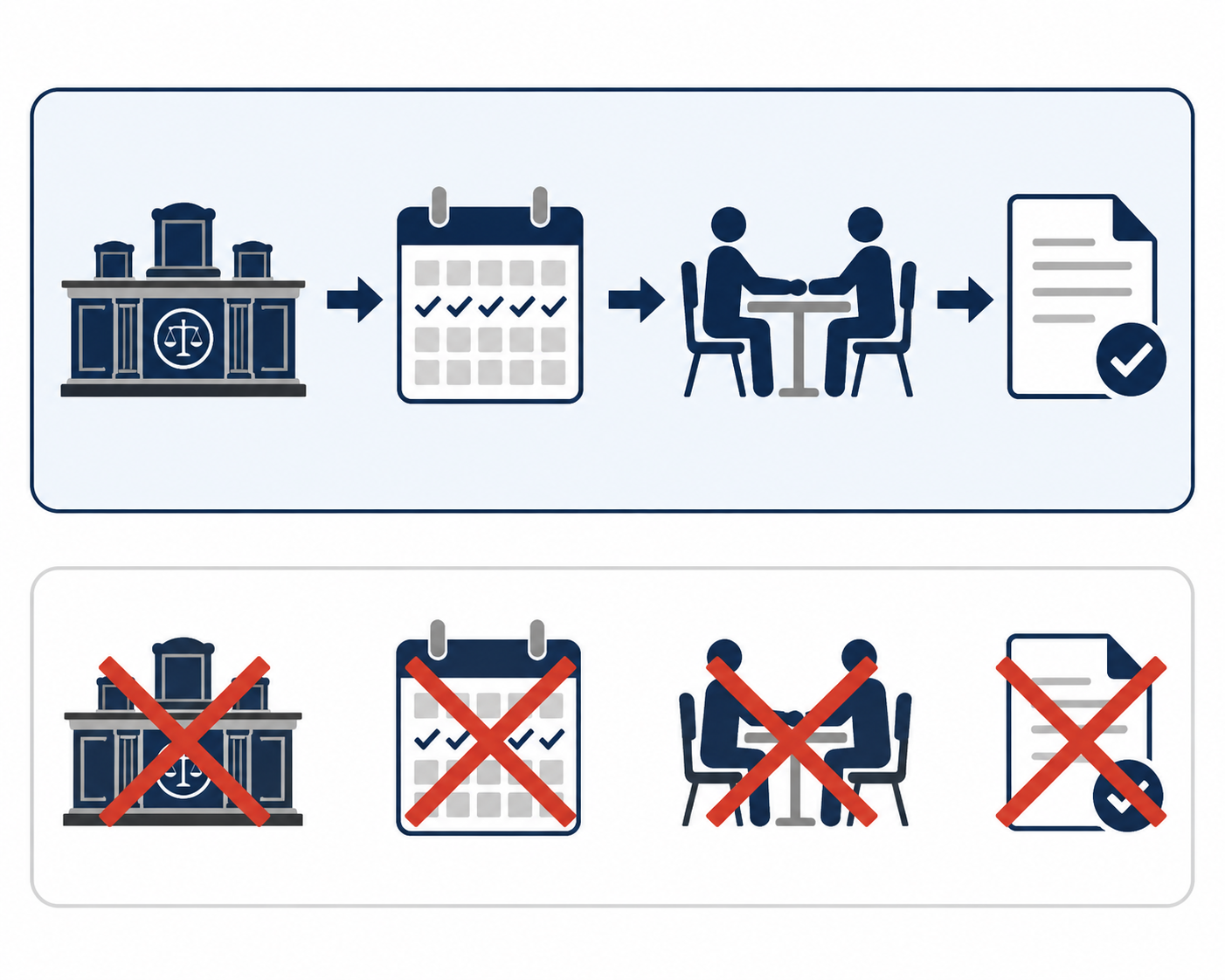
The first alleged violation is blunt: DOI did not hold the OCSLA-required hearing before canceling either California lease. California’s notice position, as summarized by the California Energy Commission and reported by AP, is that no such hearing occurred before the Golden State Wind buyout, and the later notice applies the same theory to Invenergy/Even Keel Wind.[1][3]
That is not a decorative procedural objection. A required hearing creates a record, gives affected parties a chance to contest the factual premise for cancellation, and disciplines the agency’s explanation before money changes hands. If the hearing was mandatory, the government’s later settlement paperwork cannot substitute for the statutory event the agency skipped.
No five-year suspension period
The second OCSLA theory is more structural. California says neither lease had been suspended for the required five-year period before DOI moved to cancellation. The CEC’s July 2026 release describes OCSLA’s cancellation requirements as including a five-year suspension period, and California’s notices treat that requirement as a condition DOI had not satisfied.[1]
This claim matters because it attacks the availability of cancellation itself, not just the manner in which DOI announced it. A hearing defect might be framed as a missing procedural step. A missing suspension period can be framed as the agency acting before the statute allowed cancellation at all. That distinction will matter if DOI argues that the transactions were negotiated resolutions rather than unilateral cancellations.
No governor consultation
California also alleges that DOI failed to notify or coordinate with the governor before the lease terminations. AP’s coverage of the first notice reported California’s position that the federal government failed to consult the governor as required, and the CEC’s later release repeats the state’s consultation objection in connection with the second notice.[1][3]
For standing, this may be more useful than the policy loss itself. A state can have a procedural injury when a federal statute gives it a role in a decision affecting its interests. The harder part is still redressability: California would need to show that a court order requiring lawful consultation, or setting aside the buyouts, would meaningfully address the injury rather than merely reopen a process whose outcome remains uncertain.
Relinquishment cannot be treated as a private exit formality
The fourth OCSLA theory concerns relinquishment. California’s position is that DOI and the developers did not follow the relinquishment procedures governing how federal offshore lease rights may be surrendered. The point is not semantic. If the practical result was the surrender of lease interests, and if OCSLA prescribes how that surrender occurs, then a negotiated buyout cannot simply be placed outside the statute because it was documented as a settlement.
This is where the federal government’s likely defense and California’s best procedural answer meet. DOI may say it did not “cancel” the leases in the contested statutory sense; it resolved disputes and accepted relinquishments. California’s response is that the statute regulates the operative event, not the label attached to it. A court will need the actual lease instruments, settlement documents, and notices to test that characterization.
The fiscal-law claims test whether these were settlements at all
The Judgment Fund Act theory is less tidy than the OCSLA sequence, but it may be the more consequential one for federal payment authority. The Treasury Judgment Fund was reportedly used for approximately $2.6 billion across eight offshore wind lease buyouts, with public reporting sometimes rounding the total as $2.5 billion.[4] California and other states argue that the fund was used without the kind of adverse proceeding or legal liability that would support a compromise settlement.
That argument has unusual evidentiary support for a pre-suit posture. Former BOEM Director Elizabeth Klein and former DOI attorney Tony Irish stated publicly that there is “no existing statutory or regulatory authority” for voluntary reimbursement of offshore wind lease fees, according to ESG Dive’s coverage of congressional testimony.[5] If that testimony accurately describes DOI’s authority, the federal government’s settlement label has to carry substantial legal weight: without a qualifying settlement, the payments start to look like voluntary reimbursements for which Congress had not appropriated money.
The size of the payments also matters, although size alone does not prove illegality. Utility Dive reported that DOI documents showed average pre-Trump DOI Judgment Fund settlements below $10 million, while the TotalEnergies offshore wind deal alone was $928 million.[4] A large settlement can be lawful. But when the amount is so far outside the ordinary range described in the agency’s own analysis, courts and counsel will look harder at what adverse claim was being compromised and who had authority to compromise it.
TotalEnergies’ public explanation gives California another fact to work with, though it should not be treated as proof of bad faith. ESG Dive reported that the company’s CEO said the deal “came from us — we took the initiative.”[5] That statement undercuts any simple account in which the federal government was merely resolving an unavoidable lawsuit or judgment exposure. It supports the narrower proposition that discovery into who initiated the transaction, what claim was threatened, and what legal liability DOI believed it faced will be central to the Judgment Fund theory.
The Invenergy timing issue has the same character: suspicious enough to matter, not sufficient to decide the claim. Utility Dive reported that the Invenergy settlement included investments dated November 2025, before DOI says it accessed the classified Department of Defense report used to justify offshore wind lease buyouts.[4] That timing may support an inference that terms were under discussion before the later national-security rationale entered the record. It does not, without more, establish that the rationale was pretextual.
The Antideficiency Act claim follows the money
The Antideficiency Act theory depends on the Judgment Fund theory but is not identical to it. If federal officials obligated money for voluntary offshore wind lease reimbursements without a statute authorizing the payments and without a proper Judgment Fund settlement, California can argue that officials incurred obligations exceeding or outside congressional appropriation authority.
That claim will require precision. The Antideficiency Act is not a general remedy for bad policy or expensive settlements. The relevant questions are narrower: what legal obligation did the United States incur, what appropriation or permanent indefinite fund was invoked, whether the Judgment Fund’s statutory conditions were satisfied, and whether the officials who approved the payments had authority to bind the Treasury in that posture.
California’s strongest version of the fiscal claim is therefore not that the buyouts were too generous. It is that the federal government used settlement mechanics to do what no existing lease statute or appropriation allowed: reimburse private leaseholders for surrendering federal offshore wind leases outside OCSLA’s cancellation and relinquishment procedures.
What California still has to prove
Three limits should stay visible. First, the actual NOI PDFs would matter. Public releases and news coverage identify the core theories, but the precise statutory citations, jurisdictional allegations, cure demands, and requested remedies will control the litigation papers. The California Attorney General’s June 23 press-release URL was not accessible, although the relevant details were cross-confirmed by the CEC, AP, and ESG Dive.[1][3][6]
Second, the status of the remaining California offshore wind leaseholders is not settled on the available public record. Reporting confirms the Golden State Wind and Invenergy/Even Keel Wind buyouts addressed in California’s two notices, but the existence and current posture of three other California offshore wind leaseholders could not be confirmed from accessible sources as of July 19, 2026. That gap should keep the analysis focused on the two noticed transactions rather than broader claims that every California offshore wind lease has been terminated.
Third, Article III standing is not a formality. California’s more than $100 million in offshore wind-related infrastructure and supply-chain investment gives it a concrete reliance narrative, and the governor-consultation theory supplies a procedural-right theory. But courts may still ask whether those interests are legally protected against federal lease buyouts involving private lessees, and whether the requested relief would redress the state’s claimed injury.
If the cure windows expire without a federal reversal, California has assembled multiple plausible claims for challenging the offshore wind lease buyouts: OCSLA process first, fiscal authority second, policy consequence third. The merits will turn less on offshore wind ambition than on a narrower set of questions federal courts are built to answer: whether DOI skipped statutory prerequisites, whether Treasury paid money under a valid settlement authority, and whether California is the right plaintiff to ask for relief.
References
- California Sends Notice of Intent to File Second Lawsuit Challenging Trump Administration's Unlawful Offshore Wind Lease Buyouts — California Energy Commission, July 2026
- California reaffirms 25 GW offshore wind target for 2045 — offshorewind.biz, May 25, 2026
- California to sue Trump administration for ending state's wind project — AP News
- Trump administration buys out 4 more offshore wind leases for $765M — Utility Dive
- 7 states sue Trump administration over TotalEnergies offshore wind lease buyout — ESG Dive
- California to sue Trump administration over offshore wind buybacks — ESG Dive
Comments
Join the discussion with an anonymous comment.