
The July 2026 Panasonic FlashXpress toaster oven recall starts with remedy design, not courtroom drama. In Canada, the recall covers about 6,000 NB-G205S units; in the United States, it covers about 7,664 NB-G200 and NB-G200SVA units. Health Canada’s notice reports no Canadian injuries, while the U.S. Consumer Product Safety Commission reports five incidents in which the toaster oven tripped a circuit breaker, with no fires or injuries reported.[1][2] For anyone assessing Canadian refund rights or cross-border legal exposure, those details matter more than the word “recall” itself.
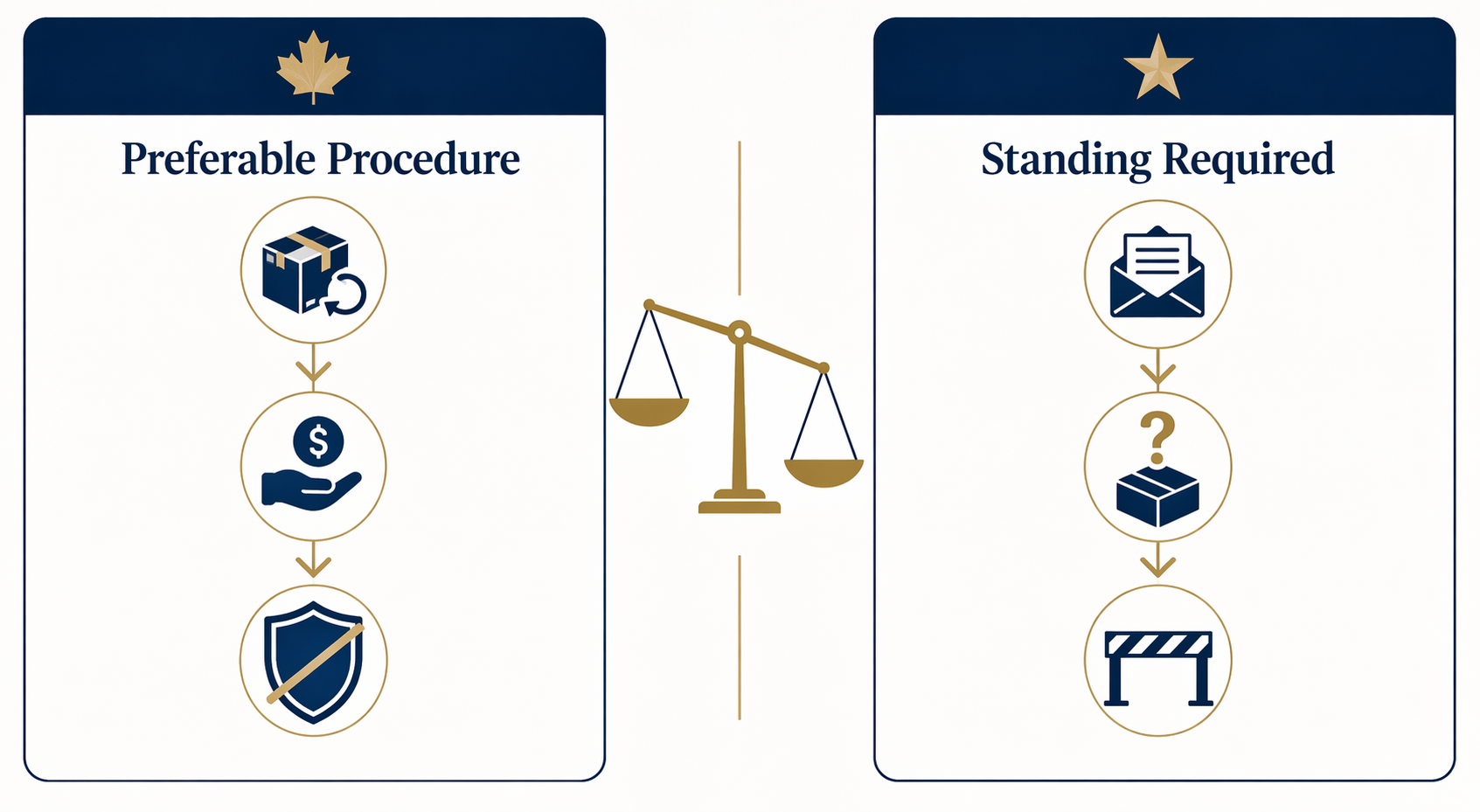
Panasonic’s program is also not a token repair offer. The company’s recall portal describes a prepaid mail-in return process administered through Sedgwick, with consumers directed to register and return the unit for a refund.[3] Costco Canada’s July 17, 2026 member notice gives Canadian purchasers a simpler route: return the recalled toaster oven to any Costco warehouse for a full refund, with no receipt required.[4] That last phrase is not a customer-service flourish. In a consumer economic-loss class action, a no-receipt full refund is a standing and certification fact.
| Jurisdiction | Models identified | Approximate units | Reported incidents or injuries | Refund route that matters legally |
|---|---|---|---|---|
| Canada | NB-G205S | 6,000 | No injuries reported | Panasonic mail-in return; Costco Canada in-warehouse full refund with no receipt required |
| United States | NB-G200 / NB-G200SVA | 7,664 | Five circuit-breaker events; no fires or injuries reported | Panasonic mail-in return through recall portal |
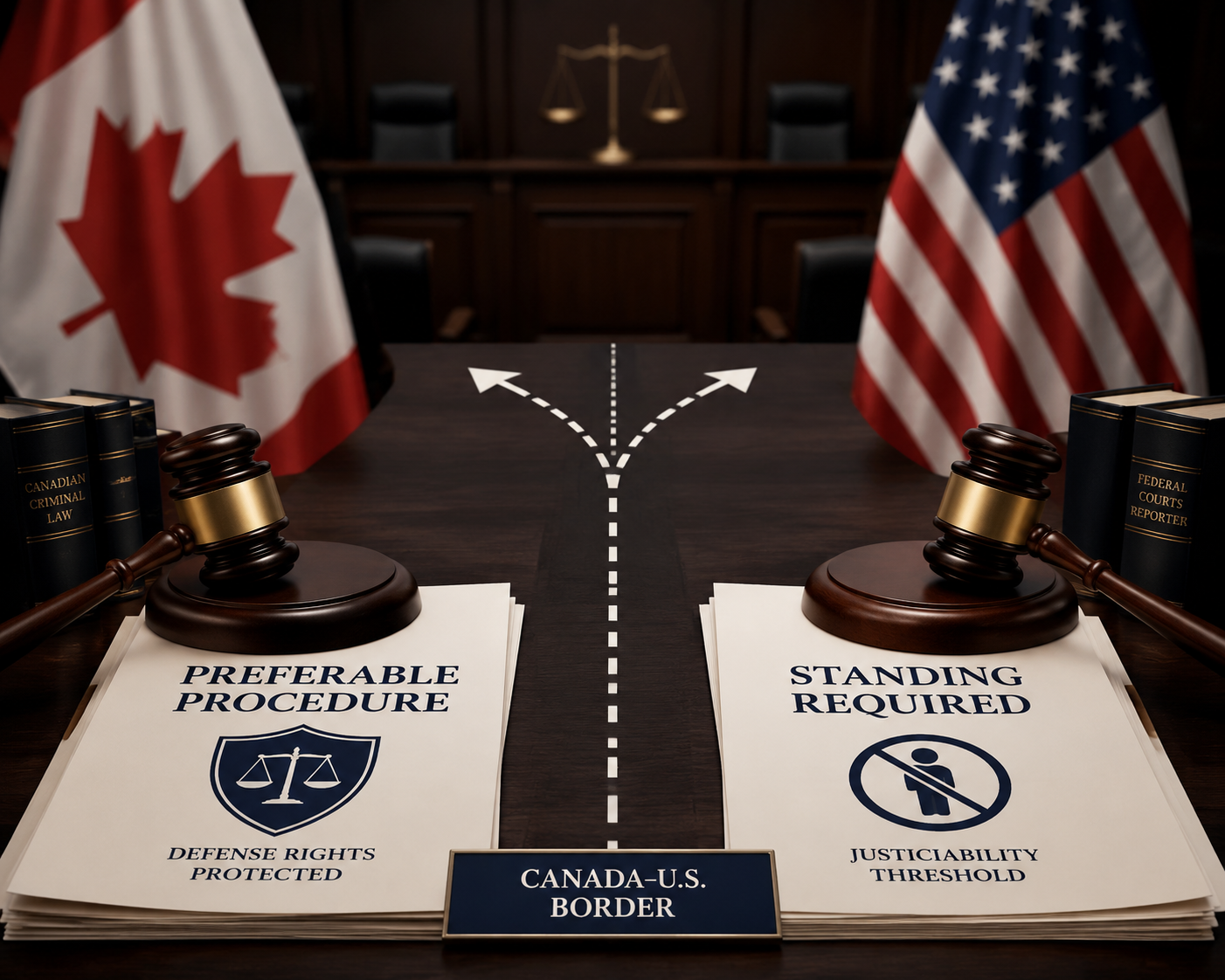
The Canadian Problem for Plaintiffs Is Preferable Procedure
Canada is where Panasonic’s recall architecture does the most immediate litigation work. A plaintiff can still plead that a product was recalled because of an electrical shock or fire hazard. But certification is not granted because a recall exists. The court still asks whether a class proceeding is the preferable procedure for resolving the common issues. Where a voluntary recall already gives consumers a practical remedy, that question becomes difficult for plaintiffs.
Coles v. FCA Canada Inc. is the obvious defense authority. The Ontario Superior Court denied certification in a vehicle recall case after concluding that the manufacturer’s voluntary recall program was a fair, efficient, and manageable way to advance the claims.[5] The point is not that automotive recalls and toaster oven recalls are equivalent. The point is procedural: if the alleged class injury is addressed through an existing recall mechanism, the class action must explain what additional access-to-justice, behavior-modification, or judicial-economy function it serves.
Paquette c. Samsung Electronics Canada Inc. pushes in the same direction from Quebec. There, the Quebec Superior Court denied authorization of a proposed class action concerning recalled Samsung washing machines after finding the recall remedy adequate.[6] Again, the useful lesson is narrower than a manufacturer would like and stronger than a plaintiff intake page would suggest: Canadian courts can treat a well-built recall program as more than background. They can treat it as the better procedure.
Panasonic’s Canadian facts fit that defense narrative unusually well on the present record. The affected model is identified. The Canadian unit count is modest. Health Canada reports no injuries. Panasonic offers a return-and-refund route, and Costco Canada appears to remove two ordinary friction points by allowing warehouse returns and stating that no receipt is required.[2][3][4] Those facts do not prove that every consumer has been made whole. They do, however, make it hard to explain why a class action is the superior mechanism for ordinary refund-based economic loss.
That is especially true because the Canadian case would not be strongest as a personal-injury case on this record. No Canadian injuries are reported in the recall materials.[2] A plaintiff could try to build a claim around diminished value, inconvenience, loss of use, or the allegation that purchasers paid for a product that should never have been sold. But once a full refund is available without proof of purchase at the warehouse level for Costco Canada members, the damages theory starts to look residual rather than central.
There are still facts a plaintiff would want to test. Did every purchaser receive notice? Were non-Costco Canadian purchasers given a refund process as usable as Costco members? Did consumers incur shipping, disposal, time, or replacement costs that the program does not cover? Those questions could matter at the margins. But they are not enough by themselves to make certification likely if the court sees the recall as a functioning compensatory channel rather than an illusory one.
Why the Refund Is More Than a Consumer Remedy
The full-refund structure attacks the ordinary class theory at its base. In a typical post-recall consumer case, plaintiffs try to convert the recall into proof that the product was worth less than represented, unsafe when sold, or unusable without a remedy. If consumers must pay, wait, prove ownership, accept a partial coupon, or keep using an unrepaired product, the class theory has room to breathe. Panasonic’s Canadian path appears designed to close that room.
A no-receipt Costco Canada refund is particularly important because receipts often become a quiet certification problem. They affect class membership, proof of purchase, damages, and claims administration. When the retailer says consumers can return the unit to any warehouse without a receipt, the manufacturer and retailer reduce not only consumer burden but also the argument that litigation is needed to identify and compensate purchasers.[4]
That does not mean the recall eliminates every conceivable claim. A consumer who suffered an injury would be in a different posture. A consumer who tried and failed to obtain the promised refund would have a different record. A recall that quietly excluded obvious categories of purchasers would invite a different preferable-procedure analysis. The current public materials do not point there. They point to a voluntary refund program whose design appears litigation-aware, whether or not Panasonic would describe it that way.
The U.S. Path Is Narrower, but Not Identical
The U.S. analysis is less about preferable procedure and more about standing and defect pleading. Ward v. J.M. Smucker Co., decided by the Sixth Circuit in 2025, dismissed a recall-based class action where the plaintiffs did not allege that their specific purchased products were contaminated. The court’s useful rule for Panasonic is straightforward: a recall notice does not, by itself, establish that every purchaser bought a defective unit.[7]
Applied to the Panasonic recall, that rule creates a substantial pleading problem. The CPSC notice identifies 7,664 affected U.S. units and five reports of the ovens tripping circuit breakers, with no fires or injuries reported.[1] That is enough for a safety agency to support a recall. It is not automatically enough for a consumer plaintiff to plead that their own toaster oven malfunctioned, would have malfunctioned, or contained the same actionable defect in a way that caused compensable loss.
The distinction matters because plaintiffs often want the recall to perform two jobs at once: prove defect and prove injury. Ward resists that shortcut. If a plaintiff only alleges that they purchased a model included in a recall, the court may still ask what happened to that plaintiff’s unit. Did it trip a circuit breaker? Did it spark? Did it fail? Did the plaintiff lose money after refusing or being unable to obtain the offered refund? On the current public record, those questions are not answered by the recall notice.
The U.S. refund process also weakens the cleanest economic-loss theory, though the record is not as favorable as the Costco Canada path. Panasonic’s portal describes a prepaid mail-in return process for a refund.[3] The research materials do not independently confirm that Costco U.S. members have the same in-warehouse, no-receipt return option described by Costco Canada. That jurisdictional difference should not be papered over. For U.S. consumers, the analysis should stay tied to Panasonic’s own recall portal unless a retailer-specific U.S. return right is verified.
Even so, a prepaid refund process narrows damages. A plaintiff who can return the product for a refund must explain what economic injury remains. The answer might be inconvenience, delay, replacement cost, or the alleged overpayment at the time of purchase. Some U.S. consumer statutes may leave room for those theories in the right case. But the combination of a small reported incident count, no reported injuries, no reported fires, and an available refund gives Panasonic several early defenses before a class ever reaches certification.
Solicitation Is Not a Filed Class Action
The litigation market has noticed the recall. Johnson//Becker published a Panasonic toaster ovens recall lawsuit page after the July 16 CPSC notice, seeking contact from affected consumers.[8] That is intake activity. It is not, by itself, a filed complaint, a certified class, or even evidence that a named plaintiff has a viable claim.
This distinction is not pedantic. Recall-driven pages can make a litigation event look more developed than it is. A law firm can solicit consumers because a recall occurred. A complaint, by contrast, must allege injury, causation, jurisdiction, and a theory of relief. A class complaint must then survive the additional burden of showing that common issues, predominance or commonality, adequacy, and a workable damages theory fit the proposed class. Panasonic’s public record gives plaintiffs a starting point, not a completed case.
Professional commentary has correctly observed that post-recall consumer class actions continue to rise, and manufacturers should expect plaintiffs’ lawyers to move quickly after safety notices are issued.[9] But trend context is not case proof. The harder question is whether this recall leaves unrepaired economic loss across a certifiable group. On the present facts, that question is much more difficult for plaintiffs in Canada and still difficult, though not impossible, in the United States.
Where the Risk Actually Diverges
Canada looks substantially more hospitable to a certification defense because Coles and Paquette give courts a doctrinal way to say that the recall itself is the better procedure.[5][6] Panasonic does not have to show that no consumer was inconvenienced. It would want to show that the recall is accessible, complete enough to address the alleged loss, and manageable without judicial supervision. The Costco Canada no-receipt refund helps that argument in a concrete way.[4]
The U.S. remains a nuisance-risk jurisdiction because pleading standards, consumer statutes, and forum selection can vary. A plaintiff firm may still locate a consumer with a stronger individual story than the recall notice suggests. But Ward supplies a useful standing filter: the plaintiff must connect the alleged defect to their own purchased unit, not merely point to the existence of the recall.[7] With five reported circuit-breaker events among 7,664 U.S. units and no reported fires or injuries, that connection is not supplied by the public incident count alone.[1]
The practical result is not that Panasonic has no exposure. Product-liability risk is rarely that tidy at the start of a recall. The more careful conclusion is that the present record favors Panasonic on class-wide economic loss, especially in Canada. If the refund path functions as described, the recall program may do as much litigation work as the defect evidence does.
References
- Panasonic Recalls Electric Toaster Ovens Due to Shock and Fire Hazards, U.S. Consumer Product Safety Commission, July 16, 2026.
- Panasonic FlashXpress Toaster Oven recalled due to electric shock hazard, Health Canada.
- NB-G200 / 205 Product Recall Information - July 2026, Panasonic.
- Panasonic FlashXpress Toaster Oven Recall, Costco Canada, July 17, 2026.
- Coles v. FCA Canada Inc., 2022 ONSC 5575.
- Paquette c. Samsung Electronics Canada Inc., 2020 QCCS 1160.
- Ward v. J.M. Smucker Co., 6th Cir. 2025.
- Panasonic Toaster Ovens Recall Lawsuit, Johnson//Becker.
- The Continuing Rise of Post Recall Consumer Class Actions, Cozen O'Connor, March 2026.
Comments
Join the discussion with an anonymous comment.