
The cleanest number in the Bonomi file is the one that makes the mortgage problem hard to treat as ordinary buyer’s remorse: a Wellfleet property assessed at $4.38 million in 2021 was reassessed at $385,000 in January 2025, a 91 percent collapse attributed to erosion risk rather than a soft luxury market. Before a sale could proceed, the house reportedly had to be demolished at a cost of about $250,000. Local reporting also put the nearby bluff erosion rate at 3.8 to 5.6 feet per year.[1][2]
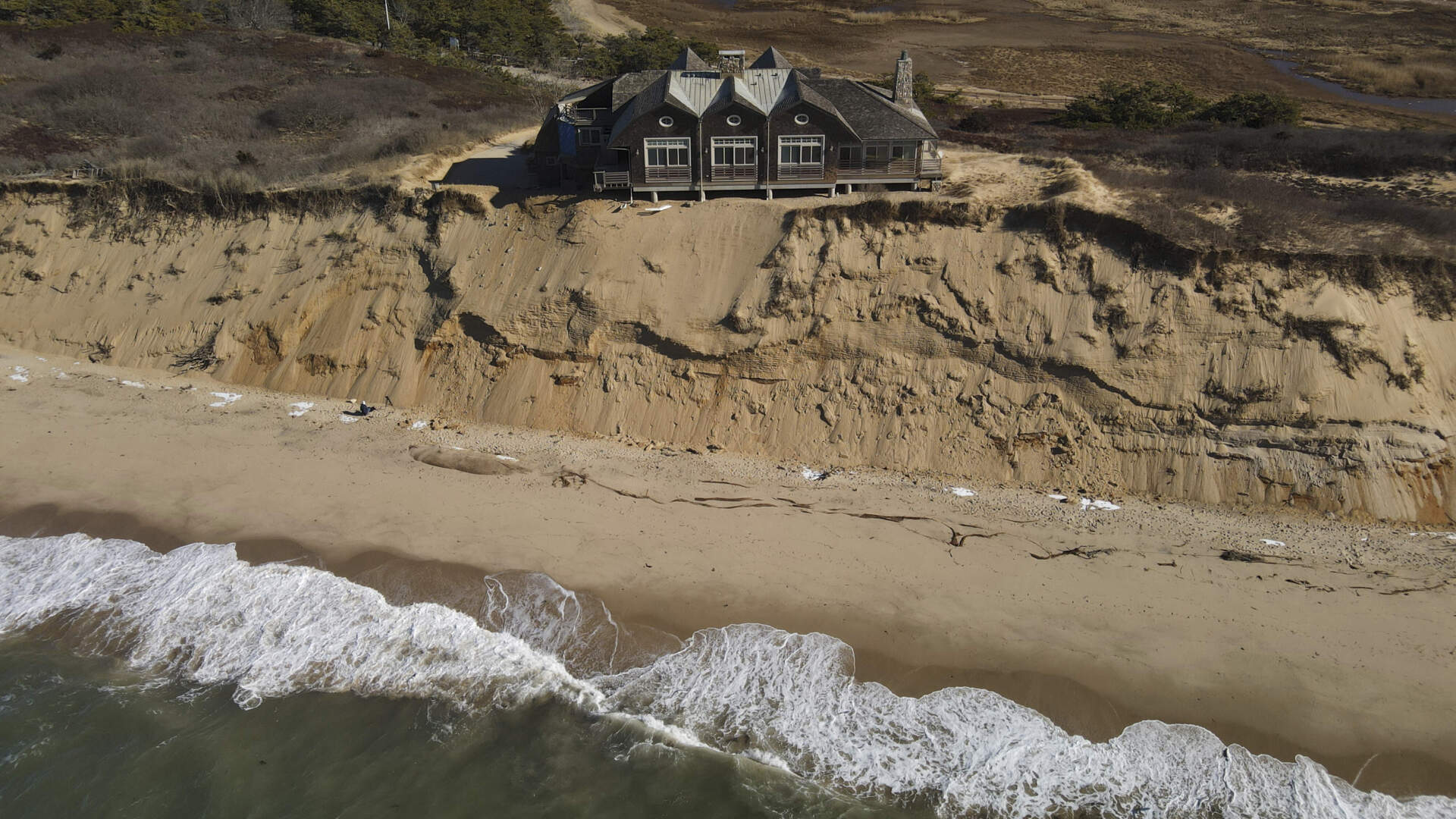
That is the entry point for the Cape Cod mortgage litigation risks lenders should be watching. The case is not important because a house on a cliff makes for irresistible copy. It is important because the collateral problem did not stay in the appraisal file, the buyer’s inspection file, or the town assessor’s office. It moved into litigation over a mortgage loan.
The lawsuit, Bonomi v. JPMorgan Chase, has been reported as pending in the Southern District of New York. The available public record for this discussion comes from news accounts of the complaint, JPMorgan’s reported response, and local reporting; the pleadings themselves were not independently reviewed here. That matters. The allegations remain allegations, and no reported dispositive ruling has resolved whether the borrower, the bank, or any other participant bears liability for what happened.
The lawsuit has two different problems inside it
Coverage of the Bonomi dispute tends to compress the file into one story: a buyer allegedly purchased an obviously imperiled Cape Cod home while suffering from a manic episode and now seeks relief from the mortgage. That is one strand of the case. It is not the only one.
The capacity theory and the collateral theory need to be kept separate. A borrower’s mental condition goes to enforceability, assent, and related defenses. The erosion-driven value collapse goes to what the lender had, or thought it had, as security for the loan. The same file can contain both issues, but they do not prove each other.
The payment history makes that separation harder to ignore. According to reporting that synthesized the Boston Globe’s account, Bonomi made monthly payments of $21,053 from November 2021 through September 2024.[2] Three years of performance does not, by itself, defeat a capacity defense. It does make a simple incapacity narrative less tidy. A lender-side lawyer reading that history would ask different questions from the ones raised by the cliff photograph: who accepted payments, who monitored default risk, when did the collateral become practically unprotectable, and what did the lender know or have reason to know before foreclosure became the next step?
The complaint also reportedly alleges that JPMorgan may have delayed foreclosure “perhaps” to avoid environmental liability tied to possession of eroding coastal collateral.[2] That word does a lot of work. It is litigation positioning, not an established fact. Still, the allegation points toward the risk category the case exposes: once coastal property becomes unstable, foreclosure is no longer just a collection remedy. It may become an environmental, demolition, access, permitting, and public-safety problem.
Massachusetts disclosure law does not fill the diligence gap
Massachusetts is a poor jurisdiction in which to assume that seller disclosure will rescue a lender’s collateral review. The state has no general mandated seller-disclosure form and follows a buyer-beware framework under which sellers are not required to volunteer material defects, subject to narrow exceptions such as lead paint and the prohibition on active concealment.[3]
That doctrine is often discussed as a buyer-side rule. In a coastal lending file, it has a second consequence. If the seller has no broad affirmative duty to volunteer erosion risk, the lender cannot build its risk model around the assumption that a seller disclosure packet will surface the most important condition affecting the collateral. The file may look documented while still missing the question that matters: can the structure remain, can it be protected, and what happens if it cannot?
The absence of claims against the seller or real estate agents, as reported in the Globe’s account, is consistent with how the Massachusetts framework channels responsibility.[4] It does not mean the seller’s knowledge was irrelevant as a factual matter. It means the legal system does not make ordinary seller silence about property condition perform the work that lender diligence failed to perform.
For lender counsel, the practical point is not that every eroding Cape Cod property is unlendable. It is that the ordinary residential closing file can create a false sense of procedural comfort. A title commitment, appraisal, flood-zone notation, inspection contingency, and borrower affidavit may all exist. None necessarily answers whether the property sits in an area where erosion is visible, measurable, already priced by local assessors, and difficult or impossible to mitigate through hard stabilization.
The Seashore overlay changes the collateral analysis
The Cape Cod National Seashore is the part of the file that turns a bad coastal condition into a different lending problem. Local reporting describes federal regulatory authority over revetments and hardened structures within the Seashore, including the ability to deny coastal armoring that might otherwise be assumed as a last-resort stabilization option.[1]
That does not mean every coastal property outside the Seashore can be saved with a seawall, or that every property inside it is doomed. It means a lender cannot treat Cape Cod shoreline risk as one uniform category. A house threatened by erosion in a jurisdiction where hard protection may be available presents one kind of collateral risk. A house threatened by erosion in an area where federal or local restrictions may prevent hard protection presents another.

The distinction matters because mortgage underwriting often assumes that deteriorating collateral can be managed through a familiar sequence: notice, default, insurance review, protective advances, foreclosure, sale, and, if necessary, repair or demolition. Erosion inside a restrictive coastal regime disrupts that sequence. Protective action may require permits. Stabilization may be unavailable. Demolition may become urgent before a foreclosure sale is economically rational. Access may be unsafe or temporary. A lender may be deciding not simply whether the borrower will pay, but whether taking title would import a problem the note balance does not justify.
That is why the Bonomi reassessment is so legally useful. A 91 percent land-value collapse is not just a valuation anecdote. It is a signal that the market, the municipality, or both treated the property’s future utility as radically impaired. When a secured lender continues to carry a loan against collateral that has moved that far, the later dispute is unlikely to stay confined to payment default.
What ordinary loan diligence misses
A residential mortgage file is good at collecting standardized representations. It is less good at forcing nonstandard collateral questions to the surface. Coastal erosion is not always captured by the same tools that catch encroachments, liens, unpaid taxes, or flood-insurance triggers.
| File Question | Why It Matters For Eroding Cape Cod Collateral |
|---|---|
| Is the property inside or affected by Cape Cod National Seashore restrictions? | The answer may determine whether hard stabilization is even a realistic mitigation option. |
| Has the local assessment changed because of erosion risk? | A sharp reassessment can show that the risk has already been translated into public valuation. |
| What is the reported erosion rate for the specific bluff or shoreline segment? | A general coastal-risk label is less useful than a site-specific rate tied to expected remaining land. |
| Would demolition be required before transfer, foreclosure sale, or safe occupancy? | Demolition cost can become a collateral-preservation expense rather than a remote owner problem. |
| Who reviewed coastal permits, conservation restrictions, and armoring limits? | Title, appraisal, and environmental review may each assume the issue belongs to someone else. |
Those are not exotic questions. They are the kind of questions that get skipped when the file is treated as a luxury residential loan with an unusual view rather than as a secured transaction against a wasting asset subject to public-law limits.
The important distinction is between adoption and effectiveness. A lender may have adopted an appraisal process, a flood review, a title process, and a closing checklist. The Bonomi fact pattern asks whether those processes were effective for this kind of collateral. A completed checklist is not the same thing as a defensible coastal-risk analysis.
The capacity defense should not distract from the collateral lesson
The reported capacity allegations are serious, and they may drive the litigation in ways that a collateral lawyer cannot predict from the outside. But for lenders and their counsel, the more transferable lesson is not whether this borrower can prove incapacity. It is that the disputed loan involved collateral whose value and practical utility could change faster than the enforcement process.
That lesson remains even if every capacity allegation were set aside. A borrower could be fully competent, represented, solvent at closing, and willing to pay. The lender would still face the central collateral question if the property sits on an eroding bluff where regulatory limits make stabilization doubtful. Payment capacity and collateral durability are related in underwriting, but they are not substitutes.
Nor should the case be converted into a broad claim that climate change is now a universal foreclosure defense. The available record does not support that. The narrower and stronger point is that measurable erosion, a documented value collapse, demolition exposure, and a restrictive mitigation regime can turn shoreline condition into mortgage litigation risk before a court ever reaches the borrower’s personal defenses.
Where responsibility lands before litigation
Massachusetts caveat emptor pushes diligence pressure away from sellers. The Cape Cod National Seashore overlay can limit the lender’s ability to preserve the collateral after trouble appears. Between those two rules sits the transactional lawyer’s problem: the risk is most manageable before closing, but the ordinary sources of closing comfort may not be designed to identify it.
For lender-side counsel, the safer file is not the one that merely contains more paper. It is the one that shows someone asked the shoreline-specific questions and tied the answers to the credit decision. If the property depends on an assumption that a revetment, seawall, relocation, demolition delay, or emergency permit will be available, that assumption needs support. If support is unavailable, the underwriting record should say so plainly rather than letting silence masquerade as risk acceptance.
The Bonomi case may eventually turn on facts and defenses not visible in the reporting. It should not be treated as a prediction about who wins. Its value for practice is more immediate: Cape Cod erosion exposure, especially where federal or local restrictions may cap mitigation, belongs in its own due-diligence category. Treating it as scenery, buyer preference, or an appraisal footnote leaves the hardest questions for foreclosure counsel, title claims handlers, and litigators after the collateral has already moved.
References
- Bonomi Sues JPMorgan Chase for Giving Him a Loan to Buy Doomed House, Provincetown Independent, February 18, 2026.
- Man Who Bought Cape Cod Home on Edge of Cliff Seeks Release from Mortgage, Realtor.com, July 2026.
- Understanding Disclosure in Massachusetts, buyonthecape.com.
- Man Who Bought Cape Cod Home on Edge of Cliff Seeks Release from Mortgage, Boston Globe, July 16, 2026.
Comments
Join the discussion with an anonymous comment.