
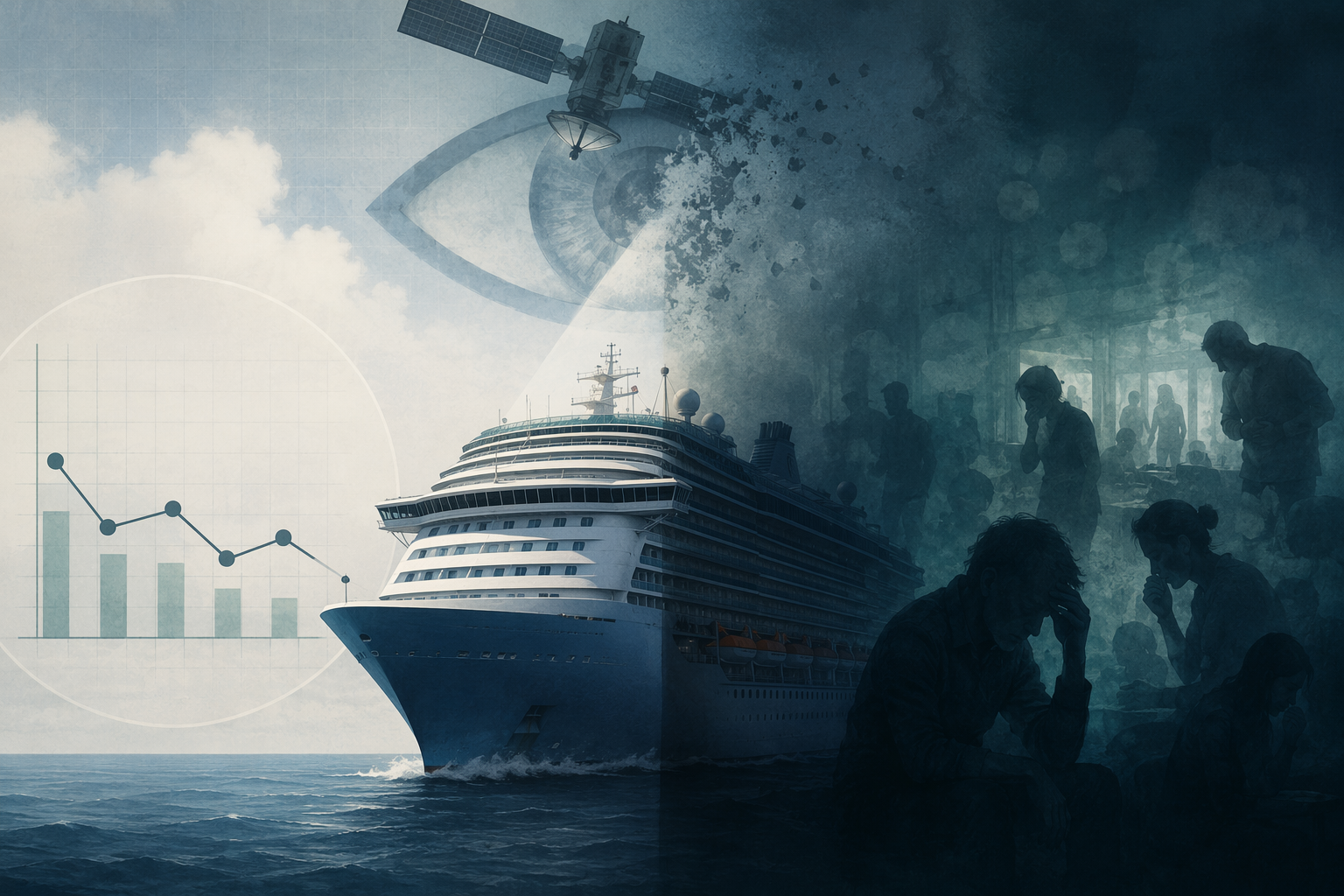
The cleanest-looking number in cruise ship outbreak litigation analysis for 2026 is also the easiest one to misuse: the CDC’s Vessel Sanitation Program has posted eight cruise-ship gastrointestinal illness outbreaks so far this year, compared with 23 posted outbreaks in 2025.[1] On its face, that looks like a decline. In litigation terms, it is better read as a thinner public record.
That distinction matters because the CDC list is not a disease meter installed on every ship. It is a published surveillance record, built from reportable events, agency capacity, cruise-line reporting, and the CDC’s ability to investigate and post what it receives. When the program behind the list is weakened, silence on the page becomes harder to interpret. A missing outbreak entry may mean there was no qualifying outbreak. It may also mean the record never became public in a form a plaintiff can cite.
The CDC List Still Proves Something, Just Not Everything
The 2026 CDC outbreak table remains the first exhibit because it does something private complaints, social-media posts, and passenger message boards cannot do by themselves: it ties a vessel, voyage window, pathogen or suspected pathogen, illness counts, and public-health investigation status to an official federal record.[1] For a plaintiff lawyer, that is not a complete case. It is a usable anchor.
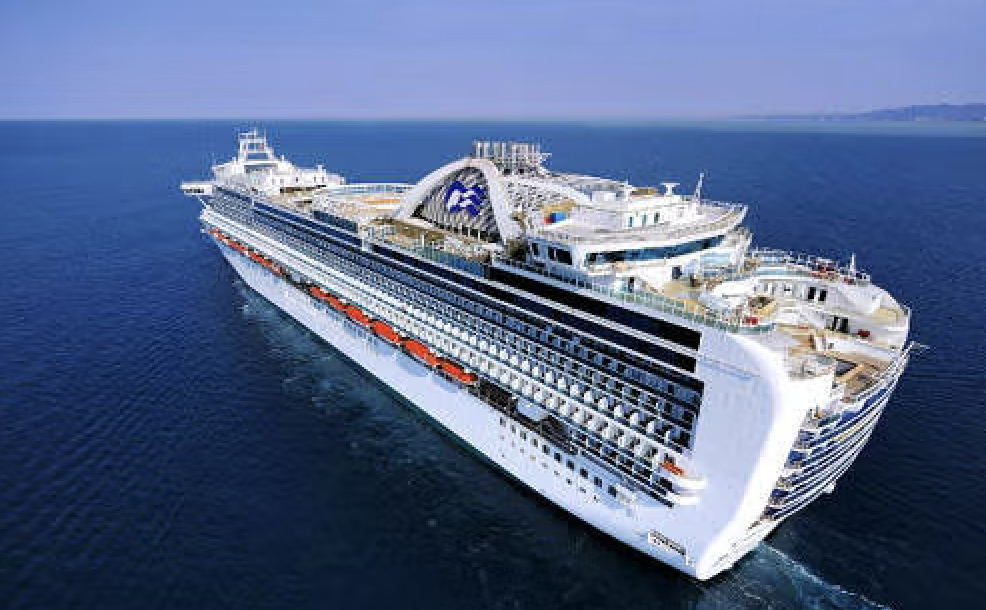
The posted 2026 entries include the usual gastrointestinal terrain, but two entries stand out because they involve E. coli rather than the more familiar cruise-ship norovirus pattern: Seven Seas Mariner and Oceania Insignia.[1] Those events are legally interesting not because E. coli is automatically easier to prove, but because an identified or suspected bacterial pathogen can sharpen questions about food handling, source tracing, onboard response, and whether other passengers or crew had compatible illness in the same voyage window.
The trap is treating the eight posted outbreaks as if they measure the universe of cruise illness in 2026. They do not. They measure documented events that reached the CDC’s public outbreak page. That is a narrower, more defensible statement, and in 2026 the narrower statement is the only one the record comfortably supports.
Why Fewer Posted Outbreaks Became a Weaker Signal
The reason the 2026 count cannot be read casually is the 2025 damage to the surveillance apparatus behind it. CBS News reported that the epidemiologist who led the CDC’s cruise outbreak response was among the workers cut, and that the Vessel Sanitation Program’s full-time civilian staff was reduced to about a dozen commissioned officers.[2] PEOPLE separately reported on the same wave of Vessel Sanitation Program cuts and the loss of staff tied to cruise-ship outbreak work.[3]
That does not prove unposted outbreaks occurred. It proves something more procedural and, for claims work, more important: the absence of a CDC posting is less informative after the staff reduction than it was when the program had more outbreak-response capacity. A defense lawyer can still point to the empty space. A plaintiff lawyer should be slower to concede what that empty space means.
Food Poison Journal’s 2026 analysis makes the same practical point from the foodborne-illness side: the CDC page remains valuable when it documents an outbreak, but the degraded Vessel Sanitation Program makes the public list a less reliable proxy for total illness activity.[4] That is not a reason to inflate weak cases. It is a reason to separate two questions that often get blurred in intake: whether a passenger was sick, and whether the sickness became part of a public-health record.
| Question | What The 2026 Record Can Support | What It Cannot Safely Support |
|---|---|---|
| Are there CDC-documented cruise outbreaks in 2026? | Yes. The CDC has posted eight qualifying outbreak entries so far in 2026. | That the posted count captures every meaningful onboard illness cluster. |
| Does a CDC posting help a lawsuit? | Yes, as official evidence of a voyage-specific documented event. | That every sick passenger on that ship has causation or damages proved. |
| Does no CDC posting defeat a claim? | No, not by itself, especially after the 2025 staffing cuts. | That an unposted voyage had no outbreak or no negligent condition. |
| Do E. coli entries change the legal analysis? | They may sharpen source, exposure, and food-safety questions. | That bacterial identification alone proves liability. |
Documented Outbreak Is Not the Same as Actual Outbreak
A documented outbreak is an event that survived enough reporting, investigation, classification, and publication to appear in a record lawyers can cite. An actual outbreak is a biological and operational event: people became ill in a pattern that may or may not have been reported, investigated, preserved, or made public. Litigation lives in the gap between those two things.
That gap is not academic. In the P&O Ventura dispute, more than 100 passengers reportedly pursued claims while the illness-rate narrative itself became contested: the operator’s figure was reported as under 1%, while claimants pointed to a figure of 12%.[5] The legal fight is not only over whether passengers were miserable. It is over which denominator counts, which symptoms count, who collected the data, and whether the resulting percentage can carry notice, causation, and breach.
That is why the CDC list has outsized value when it exists. It does not eliminate disputes over individual exposure, alternative causes, medical proof, or damages. But it can reduce one important fight: whether a voyage had a recognized outbreak at all. In a thinner surveillance environment, that official recognition becomes scarcer evidence.
Settlement Headlines Need Sorting Before They Become Case Value
The settlement record is just as easy to overread as the outbreak count. Norwegian Cruise Line’s April 2026 multistate settlement was a consumer-protection matter involving 12 states, not a negligence recovery for passengers who contracted a gastrointestinal illness.[6] It belongs in this analysis because it shows a regulatory and consumer-deception track running beside personal-injury litigation, not because it prices cruise outbreak damages.
The New Jersey Attorney General’s release is more useful than the big number attached to the story. It states that, before the settlement, NCL had provided approximately $2.6 billion in credit-card refunds and $505 million in future cruise credits for cancellations from March 2020 through November 2025.[7] Those figures are consumer refunds and credits. They are not proof of what a maritime personal-injury claim is worth, and treating them as a damages benchmark would blur the very categories that decide settlement posture.
The injunctive terms do more legal work. New Jersey said the settlement required senior management approval of sales messaging during disaster declarations.[7] That kind of condition matters because it targets representations to consumers, internal approval controls, and conduct during declared emergencies. It can influence compliance behavior and regulatory leverage without changing what an injured passenger must prove in a negligence case.
Ruby Princess Is Serious Precedent, But Not a U.S. Shortcut
The Ruby Princess class action deserves more respect than a passing international footnote. In October 2023, an Australian court found Carnival and Princess negligent in connection with the COVID-19 outbreak aboard Ruby Princess, and ABC News Australia reported that the negligence finding was affirmed on appeal in August 2025.[8] The lead plaintiff’s award was reported at $4,400, but the monetary figure is less significant than the survival of a cruise-line negligence finding through appellate review.[8]
Its usefulness in a U.S. cruise outbreak lawsuit is therefore conceptual, not controlling. It can help lawyers think through foreseeability, warnings, passenger health risk, and onboard decision-making. It does not rewrite U.S. forum clauses, limitations periods, federal maritime pleading standards, or damages law. A plaintiff who cites Ruby Princess as if it imports an Australian class-action result into a Florida-filed cruise case is asking the case to do work it cannot do.
The Old Procedural Barriers Did Not Disappear
The weakened CDC record changes evidentiary strategy. It does not soften the procedural frame. Federal law permits passenger-ticket contracts for seagoing vessels to require that personal-injury or death lawsuits be filed within at least one year after the injury or death, and cruise tickets commonly use that one-year limitations period.[9] A strong outbreak theory that arrives after the contractual deadline can be dead before pathogen evidence, notice, or corporate conduct ever receives a hearing.
Forum-selection clauses remain another hard edge. In Carnival Cruise Lines, Inc. v. Shute, the U.S. Supreme Court enforced a cruise-ticket forum clause requiring passengers to litigate in Florida.[10] That rule still shapes where many passenger claims must be filed, what costs plaintiffs face, and whether a scattered illness cluster can realistically be coordinated.
Death claims add their own constraint. The Death on the High Seas Act applies to deaths occurring beyond three nautical miles from shore and limits recovery to pecuniary losses.[11] That matters in severe outbreak cases because the emotional and punitive dimensions that often drive public outrage may not map onto recoverable damages under the governing statute.
None of these rules turns on whether the CDC posted eight outbreaks or 23. They decide which courthouse hears the dispute, how quickly a claim must be filed, and what categories of loss survive. The surveillance gap may make outbreak proof harder to obtain, but it does not buy more time.
What the 2026 Record Is Worth
The legal value of the 2026 CDC outbreak page is almost the inverse of the public-health headline. As a measure of total cruise illness, it is weakened by the staff cuts and by the uncertainty those cuts create around non-posted events. As proof of a documented event, it is still powerful. A CDC-confirmed outbreak can support notice arguments, exposure timelines, corporate-response discovery, expert framing, and settlement leverage in ways a loose collection of passenger complaints cannot.
The settlement landscape points in the same direction. Consumer-protection resolutions like the NCL matter can impose messaging controls and refund-related obligations without valuing bodily-injury claims. Negligence precedents like Ruby Princess can show that cruise-line outbreak decisions are litigable, while remaining bounded by jurisdiction. Confidential settlements may exist, but confidential outcomes and law-firm marketing anecdotes are not a reliable sample from which to price a 2026 claim.
The practical conclusion is narrower and more durable than either side’s preferred headline. Fewer CDC-posted cruise outbreaks in 2026 do not prove safer ships. They prove fewer posted outbreaks. When the CDC does document an event, that record may now carry greater strategic weight precisely because the surrounding surveillance environment is less visible. In that setting, evidentiary discipline matters more, not less.
References
- Cruise Ship Outbreaks, Centers for Disease Control and Prevention.
- CDC layoffs hit group that investigates cruise ship outbreaks, CBS News, 2025.
- CDC cruise ship outbreak staff cuts coverage, PEOPLE, 2025.
- CDC Cruise Ship Outbreaks in 2026: What the List Shows — and What It Doesn’t, Food Poison Journal, 2026.
- P&O Ventura illness litigation coverage, Food Poison Journal, 2026.
- Norwegian Cruise Line Agrees to $2 Million Multistate Settlement, Cruise Law News, April 2026.
- Attorney General Platkin Announces Multistate Settlement with Norwegian Cruise Line, New Jersey Office of the Attorney General, April 2026.
- Ruby Princess class action negligence finding coverage, ABC News Australia, October 2023 and August 2025.
- 46 U.S. Code § 30508 — Provisions limiting liability for personal injury or death, Legal Information Institute.
- Carnival Cruise Lines, Inc. v. Shute, 499 U.S. 585, Justia U.S. Supreme Court Center, 1991.
- 46 U.S. Code Chapter 303 — Death on the High Seas, Legal Information Institute.
Comments
Join the discussion with an anonymous comment.