
The cetirizine recall began with something unusually concrete for a pharmaceutical defect: a pharmacy technician saw red-dot discoloration while dispensing tablets. The FDA notice posted July 18, 2026, identifies four lots, GY825029 through GY825032, of 5 mg cetirizine HCl tablets in 100-count bottles, NDC 16571-401-10, manufactured by Unique Pharmaceutical Laboratories, a division of J.B. Chemicals & Pharmaceuticals Ltd. in Gujarat, India, and distributed nationwide by Rising Pharma Holdings in East Brunswick, New Jersey.[1]
That visual discovery matters. It places the defect not in an abstract “possible impurity” category, but in a bottle that had reached the dispensing counter. The contaminant identified in the recall was ranitidine, and the FDA notice warned that patients allergic to ranitidine could experience potentially severe reactions, including anaphylaxis, hypotension, and airway compromise.[1]
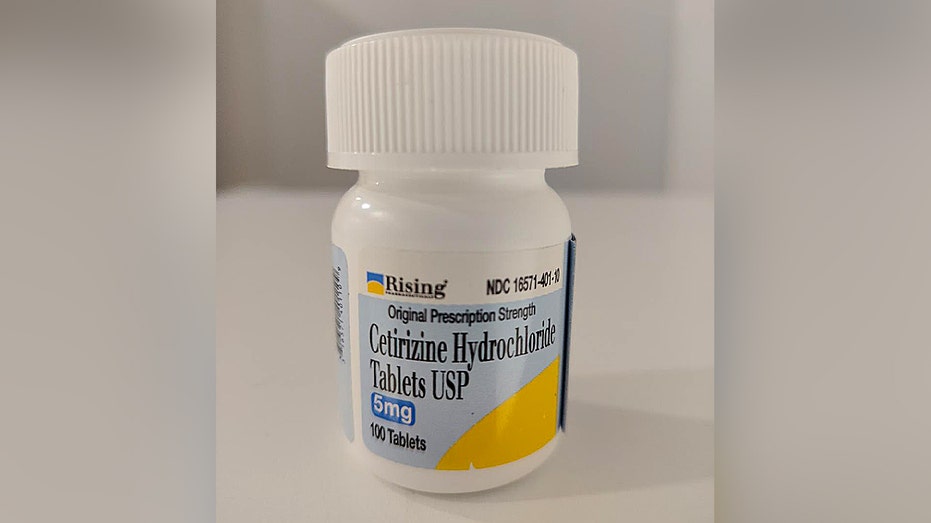
For lawyers and in-house counsel evaluating cetirizine recall legal rights and consumer protection, the unusual feature is not that a generic allergy medication was recalled. It is that ranitidine is not an obscure contaminant. FDA requested removal of all ranitidine products from the market in April 2020 after determining that NDMA levels in some ranitidine products could increase over time and when stored at higher than room temperatures, potentially exposing consumers to unacceptable levels of the probable human carcinogen.[2]
The current recall notice does not quantify how much ranitidine was present, how many bottles were distributed, or how many consumers were exposed. It also does not formally state a recall class. Any description of the event as resembling a Class I risk profile has to be treated as an inference from the FDA’s stated health consequences, not as an FDA classification announced in the notice.[1]
Why ranitidine changes the liability analysis
A first-time cross-contamination event often turns on what the manufacturer could reasonably detect through ordinary quality systems. Ranitidine arrives with a different record. It was removed from the U.S. market in 2020, became the center of MDL-2924, and was later part of large state-court settlement activity. FDA materials also identify approval of reformulated ranitidine in 2025, which matters because it supplies a plausible route by which ranitidine could re-enter active pharmaceutical ingredient environments after the original Zantac withdrawal.[2][3]
That does not prove how ranitidine entered these cetirizine lots. The recall notice does not say whether the event resulted from shared equipment, ingredient handling, packaging, cleaning validation, supplier error, or another failure mode. The legal point is narrower: after the Zantac litigation and FDA action, ranitidine was a documented hazard with known regulatory and litigation history. A company in the chain will have a harder time treating the molecule as a surprise if discovery later shows that ranitidine products, materials, or processes were present in the same manufacturing or distribution ecosystem.
The risk theories also separate. The Zantac record focused heavily on NDMA and cancer risk. The July 2026 cetirizine notice describes an immediate hypersensitivity concern for ranitidine-allergic consumers: anaphylaxis, hypotension, and airway compromise.[1] Those are not interchangeable injuries. A future claimant alleging an allergic reaction from recalled cetirizine would not automatically inherit the Zantac cancer causation record. But the prior ranitidine record may still shape foreseeability, quality-control expectations, and the adequacy of downstream notice.
The chain begins with the manufacturing source
Unique Pharmaceutical Laboratories sits at the first and most obvious point in the chain because the FDA notice identifies it as the manufacturer issuing the voluntary nationwide recall.[1] For a manufacturing-defect theory, the question would not be whether the cetirizine label should have carried a different warning in the abstract. It would be whether these particular lots departed from what they were supposed to be: cetirizine HCl tablets without ranitidine contamination.
That distinction matters because generic drug preemption is strongest when the claim is really a demand that a generic manufacturer unilaterally change FDA-approved labeling. PLIVA v. Mensing is the familiar barrier in that setting. A contamination case can point somewhere else: batch integrity, cleaning procedures, segregation of active pharmaceutical ingredients, release testing, complaint handling, and recall execution. Those theories do not ask the manufacturer to rewrite a generic label; they ask whether the product was made and released as it should have been.
Unique’s hardest factual issues would likely be mundane and document-heavy. Which facilities, lines, equipment, or personnel touched ranitidine and cetirizine? When did reformulated ranitidine materials, if any, enter the relevant environment? What cleaning validation existed for ranitidine residue? Did any deviation, complaint, out-of-specification result, or visual defect precede the pharmacy technician’s observation? The public recall notice does not answer those questions, which is exactly why premature claims about a certified class action or proven exposure event would outrun the record.

Rising Pharma’s position is different from the factory’s
Rising Pharma appears in the recall notice as the nationwide distributor of the affected cetirizine bottles.[1] That role is not a footnote. A distributor or marketer may not have created the contaminant, but it can become central to notice, traceability, customer communications, complaint intake, and the practical mechanics of pulling product from the market.
In a later dispute, Rising’s exposure would likely turn on what responsibilities it assumed and what it knew or should have known at specific times. Did it hold the new drug application or abbreviated application responsibilities, act as labeler, coordinate recall communications, receive pharmacy complaints, or control distribution records? The recall notice confirms nationwide distribution but does not disclose the total number of bottles, the number of retail accounts, or whether Rising had earlier warning signs before the pharmacy technician’s report.[1]
This is where ranitidine’s litigation history becomes practical rather than atmospheric. If a distributor had no reason to suspect a specific contaminant before the visual defect, liability may focus on recall speed and notice adequacy after discovery. If documents showed that ranitidine-related cross-contact was foreseeable because of shared suppliers, shared manufacturing arrangements, or prior deviations, the duty analysis would look more demanding. The difference is not moral intuition; it is chronology.
Retail pharmacies become more than passive endpoints
The pharmacy technician’s role is the part of the notice that should not be flattened into a sentence about nationwide distribution. The defect was detected at dispensing. That means at least one bottle reached a retail pharmacy, was close enough to a consumer transaction to be handled by pharmacy staff, and was visually abnormal enough to trigger concern.[1]
Retail pharmacies generally do not manufacture tablets and usually do not test finished generic drugs for hidden contaminants. But once a recall is announced, pharmacies are no longer merely endpoints. They hold inventory, dispensing records, patient contact information, and substitution histories. Their legally meaningful opportunity may be narrower than the manufacturer’s, but it is real: quarantine affected lots, stop dispensing, identify patients who received the recalled NDC and lot where records permit, and route consumers toward the recall process.
The dispensing-counter discovery also creates a record problem for every actor upstream. If a technician could see red-dot discoloration, investigators will ask whether earlier visual inspections should have caught the same condition. That does not mean every bottle was visibly defective, or that every consumer could have detected ranitidine contamination. It means the recall began with an observable failure point, and observable failure points tend to pull inspection protocols into the center of the case.
Preemption should be separated from contamination
The preemption analysis should not start and end with the word “generic.” PLIVA v. Mensing makes it difficult to pursue certain state-law failure-to-warn theories that depend on a generic manufacturer changing FDA-approved labeling on its own. A court could view some warning-based claims against a generic manufacturer through that lens.
But a ranitidine-in-cetirizine case is not naturally a pure labeling case. The recalled product was supposed to be cetirizine HCl. The alleged problem is that ranitidine was present where it did not belong. Claims framed around manufacturing defect, contamination, failure to follow specifications, inadequate segregation, or negligent recall execution may avoid the core Mensing problem because they do not require a unilateral label change.
Mutual conflict preemption is the argument to watch, not a conclusion to assume. Defendants may argue that federal drug regulation left no room for the specific state-law duty plaintiffs propose, especially if a claim effectively demands a different warning, testing regime, or distribution decision than federal law allowed. Plaintiffs will likely answer that federal law does not authorize contaminated product and that state tort duties can parallel, rather than conflict with, federal manufacturing and recall obligations.
| Actor | Likely factual focus | Preemption pressure |
|---|---|---|
| Unique Pharmaceutical Laboratories | Manufacturing controls, cross-contact prevention, batch release, deviation handling | Lower for contamination and manufacturing-defect theories; higher for label-change theories |
| Rising Pharma Holdings | Distribution records, labeler or marketer role, recall communications, complaint routing | Depends on whether the claim targets labeling authority, notice conduct, or supply-chain control |
| Retail pharmacies | Inventory quarantine, dispensing records, patient notice after recall, response to visible defects | Usually less about federal labeling authority and more about post-recall conduct and state pharmacy duties |
The separate June 2026 cetirizine recall is not this event
There was a separate June 2026 Class III recall involving cetirizine HCl tablets for labeling issues, identified as D-0033-2026. It should not be treated as part of the ranitidine cross-contamination recall. Conflating the two would blur the most important legal distinction here: one event concerns labeling, while the July recall concerns a different active ingredient appearing in the product.
That boundary also matters for class-action discussion. As of July 22, 2026, no post-recall class action has been identified specifically over this cetirizine ranitidine-contamination event. The absence of a filed case does not eliminate potential claims. It does mean that any litigation analysis remains prospective and should not be presented as a report on pending certified litigation.
What future claims would have to prove
The strongest future claims would not be built from the word “recall” alone. They would need exposure proof: purchase or dispensing records tied to the recalled NDC and lots, evidence that the consumer used tablets from those lots, and a medically coherent injury theory. For allergic-reaction claims, timing and ranitidine sensitivity would matter. For economic-loss claims, plaintiffs would still need to connect the product they bought to the recalled lots and articulate the benefit-of-the-bargain or overpayment theory without assuming personal injury.
Notice adequacy will be another fault line. The FDA notice identifies a serious risk to ranitidine-allergic consumers, but public posting is only one part of recall communication.[1] The practical question is how quickly lot information moved from manufacturer to distributor, from distributor to pharmacies, and from pharmacies to patients who may already have received the product. Delay or imprecision at any handoff can become more important than the original contamination if consumers used recalled tablets after a legally meaningful actor had enough information to intervene.
The Zantac record gives plaintiffs a foreseeable-risk narrative, but it does not supply every missing element. It does not prove that ranitidine was present in any individual consumer’s bottle. It does not establish dose. It does not convert a hypersensitivity warning into a cancer claim. It does not decide whether a state-law theory is preempted. Its force is narrower and still important: ranitidine was a known problem molecule before it appeared in these cetirizine lots.
That is why this recall deserves attention beyond ordinary consumer-notice coverage. Ranitidine’s reappearance turns a routine pharmacy-shelf contamination notice into a post-MDL liability test. The outcome of any future case would depend on exposure proof, notice adequacy, actor-specific duties, and whether a court sees the claim as labeling, manufacturing defect, or supply-chain failure.
References
- Unique Pharmaceutical Laboratories, Div. of J.B. Chemicals & Pharmaceuticals Ltd. Issues Voluntary Nationwide Recall of Cetirizine Hydrochloride Tablets USP 5 mg, 100 Count Due to Potential Cross Contamination with Ranitidine, FDA, July 18, 2026
- FDA Requests Removal of All Ranitidine Products (Zantac) from the Market, FDA, April 1, 2020
- Questions and Answers: NDMA impurities in ranitidine (commonly known as Zantac), FDA
Comments
Join the discussion with an anonymous comment.