
The Sunshine Protection Act is not really being judged in the Senate as a convenience bill anymore. As of July 22, 2026, the House has passed it and the Senate has received and referred it to Commerce, but Sen. Tom Cotton's objection has turned the measure into a cloture problem: if he maintains a unanimous-consent block, supporters are staring at a 60-vote threshold they do not appear to have within reach. That is the legal impact that matters here. Child safety is no longer just an argument against permanent daylight saving time; it is the procedural theory of the case.
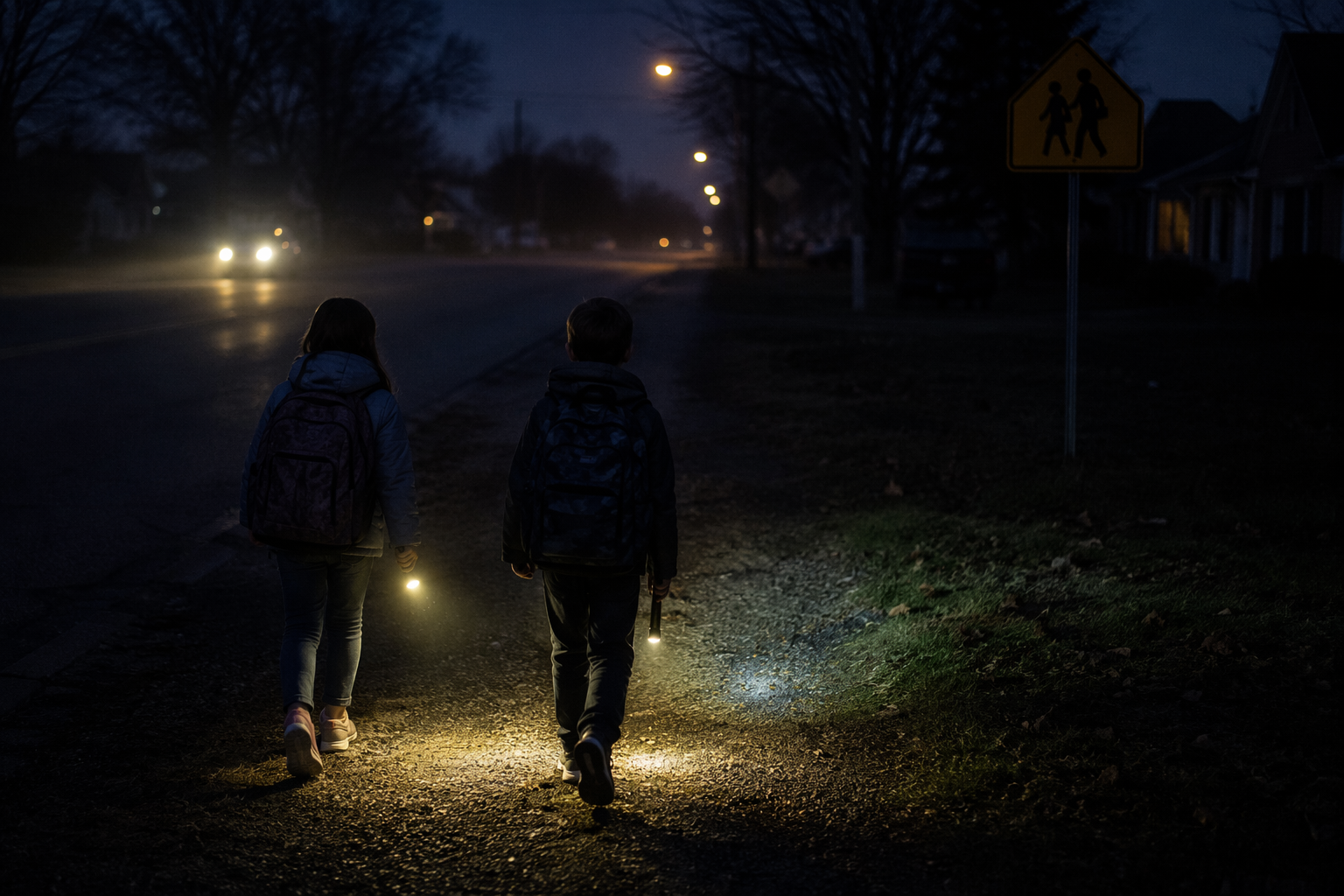
Cotton has made that structure explicit. In his floor speech opposing the bill, he centered the 1974 Florida episode: eight children killed walking to school in pre-dawn darkness during the Nixon year-round DST experiment, compared with two in the same period the prior year. The figure is widely repeated in the DST debate, but the historical record is not as clean as the rhetoric, so it should be treated as a powerful precedent rather than a fully audited dataset. Even with that caution, the story has the right political geometry. It is vivid, morally charged, and easy to map onto school-morning risk.
Why the Florida precedent still matters
The Florida anecdote has survived because it compresses several arguments into one scene. It is not just about daylight; it is about children walking before sunrise, school districts managing bus schedules, and local officials absorbing the liability if a federal clock choice pushes the morning commute darker. That is why Cotton can use it as a blocking argument instead of a policy footnote. Once the debate is framed around child safety, supporters of permanent DST have to prove more than convenience or retail upside; they have to persuade senators that the risk tradeoff is acceptable.
The current bill's posture reinforces that pressure. H.R. 139 was passed by the House on July 14, 2026, then received in the Senate and referred to Commerce on July 15. That leaves the measure in the familiar place where Senate procedure can do more work than floor debate. Cotton's stated willingness to object under unanimous-consent practice matters because it converts a popular-sounding idea into a supermajority test. Once that happens, the burden shifts from proving that year-round DST sounds easier to showing that enough senators are willing to overlook child-safety objections to clear cloture.
The newer evidence makes the objection harder to brush aside
What makes this more than a historical anecdote is the layer of current research underneath it. A Stanford-led study published in PNAS in September 2025 found that, under circadian-informed modeling, permanent standard time would reduce obesity by 0.78 percentage points, or about 2.6 million people, and stroke by 0.09 percentage points, or about 300,000 cases; permanent DST would capture about two-thirds of those benefits. The researchers also flagged a modeling assumption that matters in practice: the results depend on light-exposure and sleep habits that may not match real life, and they did not present the findings as a final policy answer. Even so, the study gave opponents of permanent DST a more modern health frame than a single 1974 incident could provide.
The institutional response has moved in the same direction. Major medical and sleep organizations, including the American Academy of Sleep Medicine, the American Medical Association, the American Academy of Neurology, and the American College of Chest Physicians, have opposed permanent DST, while education organizations such as the National PTA, National Education Association, National School Boards Association, and American Federation of Teachers have formally lined up against it. For a Senate office, that combination matters because it changes the shape of the record. This is no longer just a broad public preference dispute; it is a record populated by bodies that speak for clinicians, educators, and the people responsible for early-morning transport.
The pedestrian-risk material fills in the operational detail. Save Standard Time's public-safety materials note that 70% of pedestrian deaths occur in darkness and that 20% of pedestrian fatalities are children, which is exactly the sort of statistic that translates neatly into school-bus stops, crosswalks, and district-level risk management. A Senate office does not need to accept every policy inference that advocates draw from those numbers to understand why they are useful. They connect the time-change fight to ordinary liability questions: who is waiting at the curb, who is supervising the route, and who bears the blame if the morning is darker for longer.
The counterargument is real, but it does not solve the Senate problem
Supporters of permanent DST still have a coherent answer: more evening light can help after-school activity, late commutes, and some crime and pedestrian exposure patterns. That point should not be dismissed, because it is part of why the bill keeps resurfacing. But the Senate fight is not decided by whether the evening-light argument has merit. It is decided by whether that merit is enough to overcome a safety record that now includes a historical child-fatality precedent, contemporary sleep-medicine evidence, and formal objections from education and medical institutions. On this question, the child-safety frame is stronger because it is procedurally portable: it gives Cotton and like-minded senators a reason to withhold consent and force the bill into a 60-vote posture.
That is why the Sunshine Protection Act's child-safety legal impact is so consequential. It has moved the debate away from a familiar policy preference and into Senate rules, where evidence does not need to prove permanent DST is impossible or uniquely dangerous. It only needs to make a unanimous-consent objection credible enough to force cloture.
References
- H.R.139 - 119th Congress (2025-2026): Sunshine Protection Act of 2025, Congress.gov, 2026, https://www.congress.gov/bill/119th-congress/house-bill/139
- Why Tom Cotton is a major obstacle to daylight saving time, Washington Examiner, July 2026, https://www.washingtonexaminer.com/news/senate/4649175/tom-cotton-obstacle-permanent-daylight-saving-time-legislation/
- Floor Speech on Opposing the Sunshine Protection Act, Sen. Tom Cotton, https://www.cotton.senate.gov/news/speeches/floor-speech-on-opposing-the-sunshine-protection-act
- Florida once tried year-round daylight saving time. Here's what happened, ClickOrlando, Jan. 8, 2025, https://www.clickorlando.com/features/2025/01/08/florida-once-tried-year-round-daylight-saving-time-heres-what-happened/
- Circadian-informed modeling predicts regional health impacts of US time policies, PNAS, 2025, https://www.pnas.org/doi/10.1073/pnas.2508293122
- Study suggests most Americans would be healthier without daylight saving time, Stanford Medicine, Sept. 15, 2025, https://med.stanford.edu/news/all-news/2025/09/daylight-saving-time.html
- Public Safety, Save Standard Time, https://savestandardtime.com/safety/
- House passes bill that would make daylight saving time permanent, NBC News, July 14, 2026, https://www.nbcnews.com/politics/congress/house-passes-bill-daylight-saving-time-permanent-sunshine-protection-rcna587531
Comments
Join the discussion with an anonymous comment.