
Cleo Fields’ decision on July 21 not to seek reelection to Congress is easy to flatten into ordinary redistricting news. It is more precise, and more legally useful, to read it as the first completed chain of consequences after Louisiana v. Callais: a Supreme Court ruling changed the Section 2 standard, Louisiana lawmakers used the new opening to pass another congressional map, Fields’ majority-Black 6th District disappeared as a viable seat, and Fields withdrew from the House race. NOTUS reported that Fields would not seek reelection after the redistricting, quoting him as saying that “the issue is whether or not a person like me will have the opportunity to serve in Congress.”[1]
That framing matters because the legal implications of Fields’ departure from Congress do not turn on whether he personally preferred one office over another. The immediate pressure came from the new district. The Hill reported that the redrawn seat had been rated “solid Republican” by the Cook Political Report, a materially different posture from the majority-Black district Fields had represented.[2] That is the difference between a hard race and a district designed to end the incumbent’s realistic path back to Washington.
The Sequence Is Short, but It Does the Work
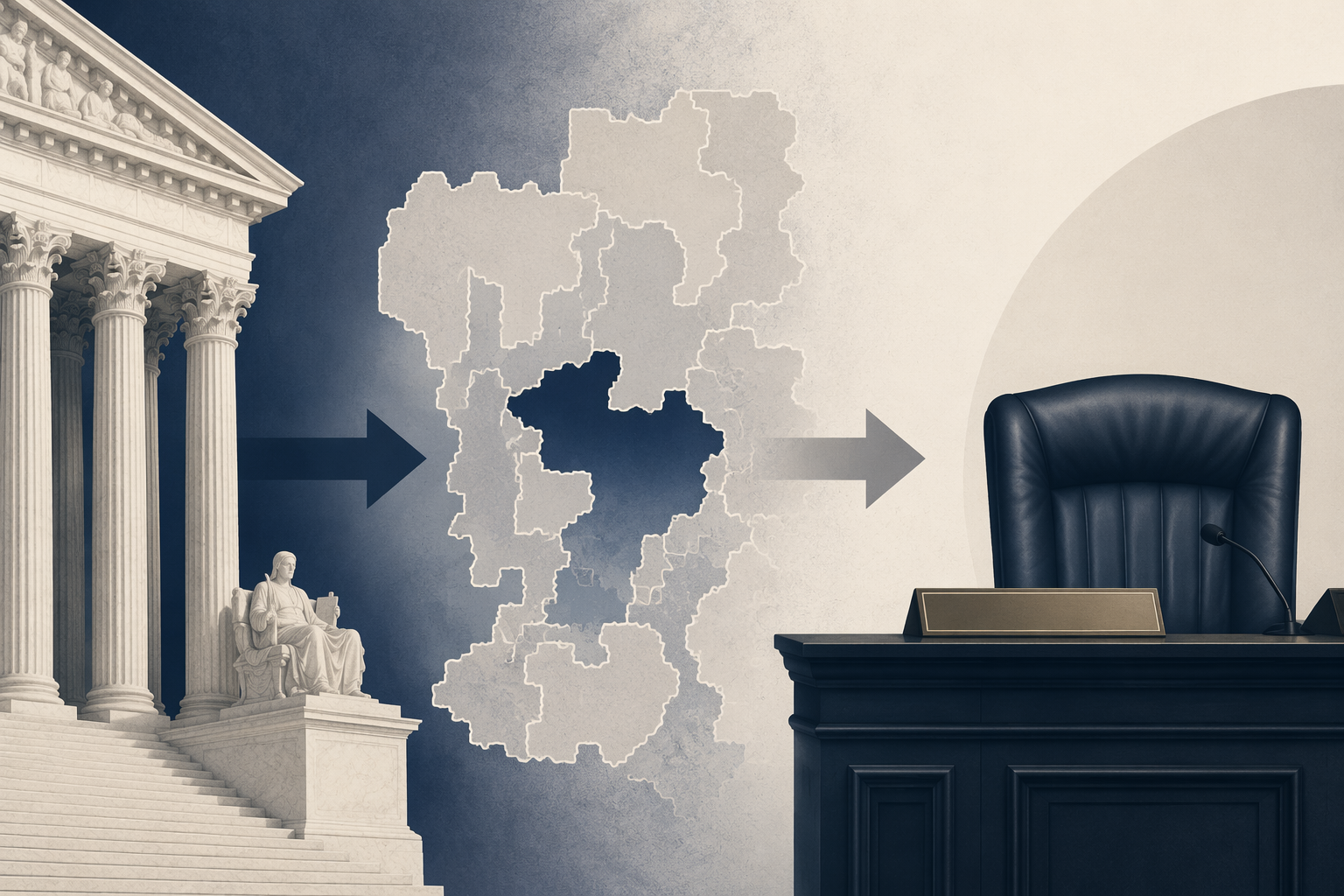
The relevant timeline is not long. On April 29, 2026, the Supreme Court decided Louisiana v. Callais in a 6-3 ruling that struck down Louisiana’s prior congressional map and narrowed the way courts apply Section 2 of the Voting Rights Act in racial-gerrymandering challenges.[3] Less than a month later, Louisiana lawmakers moved a new map through the legislature. On July 21, Fields announced that he would not run again for the House seat under the new lines.[1]
| Date | Legal or political event | Why it matters |
|---|---|---|
| April 29, 2026 | Supreme Court decides Louisiana v. Callais | The Court narrows the Section 2 framework and changes the litigation risk facing Louisiana. |
| May 2026 | Louisiana lawmakers pass SB 121 | The legislature adopts a new congressional map after Callais. |
| After SB 121 | Fields’ former district is no longer a majority-Black Democratic opportunity seat | The redrawn district is reported as solid Republican. |
| July 21, 2026 | Fields says he will not seek reelection to Congress | The legal change has become an officeholder consequence. |
None of that means the Supreme Court personally removed Fields from Congress. It did not order his retirement, and Louisiana’s elected lawmakers still made the mapmaking choices. But legal causation does not require pretending that the intervening actors were machines. The question is whether the decision changed the legal incentives and constraints under which those actors operated. On the record available now, it did.
What Callais Changed About Section 2
Before the legislature redrew Fields’ district, the Court changed the liability analysis. SCOTUSblog described the April 29 decision as a major Voting Rights Act ruling in which the Court struck down the map challenged as racially discriminatory and narrowed the governing approach to the Gingles test, the framework courts use in Section 2 vote-dilution cases.[3] The practical upshot, as civil-rights advocates and voting-law analysts read the decision, is that plaintiffs now face a more demanding burden when challenging maps that states defend as partisan rather than racial.
The NAACP Legal Defense Fund’s analysis of Callais says the ruling changes the Section 2 framework by requiring plaintiffs to prove intentional discrimination and to control for party affiliation, a change LDF argues threatens majority-minority districts beyond Louisiana.[4] For readers who need the full doctrinal breakdown, the separate guide to what the Supreme Court changed about Section 2 in Louisiana v. Callais explains the legal test in more detail. The operative change is not that Section 2 vanished from the U.S. Code, but that it became substantially harder to use against a state that can characterize its districting choices as partisan sorting.
Justice Elena Kagan’s dissent supplied the warning in plainer institutional terms. SCOTUSblog reported that she described the majority’s approach as effectively disabling Section 2 in cases where race and party overlap, the central problem in many Southern redistricting disputes.[3] Her point was not academic. In a state where Black voters and Democratic voters substantially overlap, asking plaintiffs to separate racial effect from partisan advantage can determine whether a majority-Black opportunity district survives.
Votebeat’s analysis identified the same pressure point from the mapmaker’s side. After Callais, a state can more forcefully answer a Section 2 challenge by saying it was pursuing partisan advantage, not racial dilution, and by demanding that plaintiffs disentangle the two.[5] That does not make every partisan explanation true. It does make the explanation more legally valuable.
Louisiana Took the Opening
Louisiana did not wait for the meaning of Callais to settle in law reviews. WAFB reported in May 2026 that lawmakers changed the congressional map again through SB 121 in the continuing redistricting fight.[6] The new plan moved Louisiana back toward a 5-1 Republican congressional delegation, eliminating the majority-Black 6th District that had given Fields a path to Congress.
The stated rationale matters. WAFB reported that Sen. Jay Morris framed the map in partisan terms and said the goal was to maximize Republican seats.[6] That is exactly the kind of record that becomes more potent after Callais: the state can point to party, not race, as the object of the line-drawing.
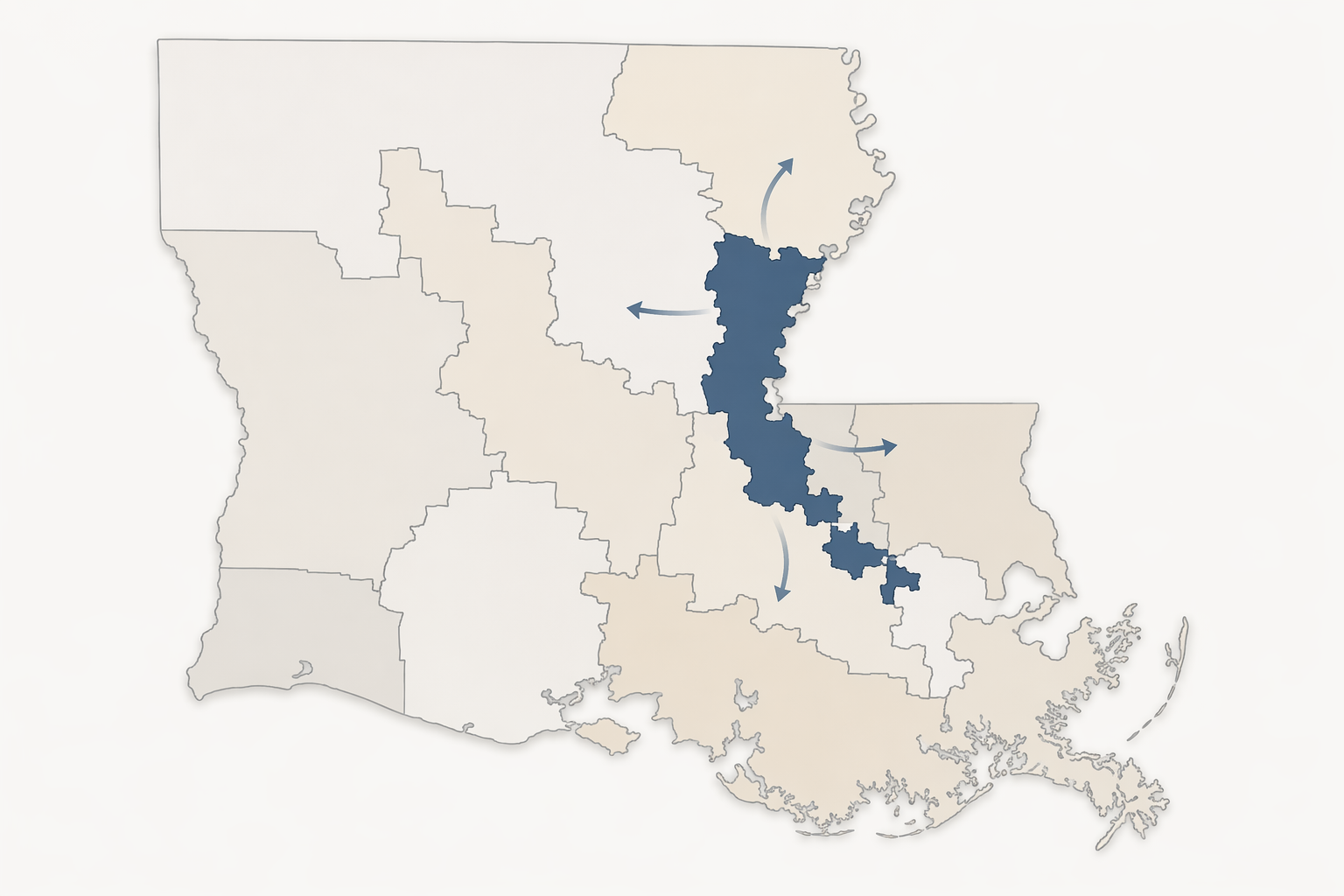
That is also why the legal story cannot stop at the Supreme Court’s syllabus. Once the Court raised the burden for plaintiffs and strengthened the practical value of partisan justifications, Louisiana’s legislature had a cleaner path to replace a remedial majority-Black district with a map designed around Republican advantage. The map did not emerge from the opinion by operation of law. It emerged because the opinion changed the cost-benefit calculation for the lawmakers who drew it.
The District Rating Shows the Consequence
Fields’ decision becomes legally legible once the district’s new political status is put beside the doctrinal change. The Hill reported that the Cook Political Report rated the redrawn district as “solid Republican.”[2] That rating is not a court order and not a vote count. It is an outside assessment of electoral viability under the new lines. For an incumbent Democrat elected from a majority-Black district, it marks the point at which a legal change becomes a campaign reality.
There are other facts about Fields that could distract from that chain. The research materials note an October 2025 STOCK Act and Oracle-related allegation as separate background, with no identified formal charges or enforcement action. On the available record, it predates the redistricting sequence and does not explain the July 21 withdrawal. Treating it as the driver would add heat and subtract proof.
Fields himself framed the decision in systemic terms rather than as a personal exit. NOTUS quoted his statement that “the issue is whether or not a person like me will have the opportunity to serve in Congress.”[1] The statement is doing more than expressing disappointment. It identifies the representational consequence: the relevant loss is not only one incumbent’s seat, but the disappearance of a district in which Black voters had the electoral structure to choose a candidate like Fields.
That point lands harder with Fields because his career has already been tied to the Voting Rights Act’s changing force in Louisiana. Readers who want that longer arc can turn to the history of how Cleo Fields’ career tracks the Voting Rights Act’s dismantling. For the present article, the narrower point is enough: the same legal regime that once made a majority-Black district possible has now been narrowed in a way that made its removal easier to defend.
Why the Partisan Defense Became So Powerful
The hard part in these cases is not that race and party are never separable. It is that, in many jurisdictions, they are entangled in the electorate. If Black voters overwhelmingly support Democratic candidates, a legislature can reduce Black voters’ opportunity to elect by pursuing a Republican advantage. After Callais, plaintiffs challenging that choice face a heavier burden to prove that race, rather than party, drove the injury.[4][5]
That shift affects both litigation and legislation. In court, it changes what plaintiffs must prove. In the legislature, it changes how safe lawmakers may feel when they draw aggressively partisan maps that also reduce minority electoral opportunity. Louisiana’s SB 121 is therefore not just another map in a long-running fight. It is a map enacted after the state received a new Supreme Court rule that made the old Section 2 objection harder to sustain.
The Brennan Center has warned that the post-Callais landscape could produce broader voting-rights consequences, drawing on post-Shelby County patterns as a warning about what happens when federal voting protections become harder to enforce.[7] That broader warning should not be overstated into a prediction that every majority-minority district will disappear. The Louisiana example supports the narrower and stronger claim: when a state has the political will and a favorable new standard, the change can be acted on immediately.
Fields Saw the Ruling Before the Map Arrived
Fields did not need to wait until July to understand the stakes. The Shreveport Times reported his reaction on April 29, the day the Supreme Court issued Callais, as the ruling struck down the district boundaries that had made his seat possible.[8] The immediate reaction matters because it confirms that the redistricting consequence was visible from the start, not discovered only after a campaign calculation months later.
By July, the abstract injury had become administrable fact: new lines, a new rating, a new electoral problem. Fields’ statement did not ask readers to treat him as a martyr. It asked them to look at whether the legal system still left room for a representative like him to serve in Congress.[1] That question is not answered by saying he remained free to file for office. A right to run in a district made nonviable by the state’s post-Callais map is not the same thing as a preserved opportunity district.
A comparison to Alabama’s post-Callais fight over Shomari Figures’ district helps show that Louisiana is not the only place where the new Section 2 regime is being translated into seat-level consequences. The better comparison, though, comes after Louisiana’s chain is complete. The Fields case is clean because the sequence has already reached the officeholder: ruling, map, rating, withdrawal. For the Alabama analogue, see Shomari Figures and Alabama’s redistricting reversal.
The State Senate Move Does Not Break the Chain
Fields did not leave politics altogether. The Louisiana Illuminator reported that, after being drawn out of his congressional district, he would seek his old state Senate District 14 seat following the July 7, 2026, death of Sen. Larry Selders.[9] That pivot is relevant, but it is not the cause of the House withdrawal. It is the available path after the congressional one was narrowed.
The distinction is important. A politician choosing a different race can be ordinary ambition. A politician moving to a state Senate race after the Supreme Court changes the Section 2 standard, the legislature eliminates his majority-Black district, and the replacement seat is reported as solid Republican is something else. It is an institutional consequence with a campaign filing attached.
That is as far as the proof needs to go. Callais did not abolish the Voting Rights Act, and it did not itself erase Fields’ name from the ballot. It changed the Section 2 risk calculation; Louisiana’s Republican-controlled legislature used that change to pass SB 121; the new map eliminated the majority-Black 6th District as a viable Democratic opportunity seat; and Fields declined to run for reelection under those conditions. In Q3 2026, that is one of the clearest real-time examples of how the post-Callais Section 2 regime can translate into lost minority representation.
References
- Cleo Fields Won't Seek Reelection After Redistricting in Louisiana, NOTUS
- Louisiana Democrat won't run for reelection after redistricting, The Hill
- In major Voting Rights Act case, Supreme Court strikes down redistricting map challenged as racially discriminatory, SCOTUSblog, April 29, 2026
- Louisiana v. Callais, NAACP Legal Defense Fund
- Supreme Court weakens Voting Rights Act, making it easier to draw gerrymandered political maps, Votebeat, April 29, 2026
- Louisiana lawmakers change congressional map again in redistricting fight, WAFB, May 21, 2026
- After Louisiana v. Callais: Here's Proof of Just How Bad Voting Rights in America Are About to Get, Brennan Center
- Louisiana Congressman Cleo Fields reacts to Supreme Court ruling, Shreveport Times, April 29, 2026
- Drawn out of congressional district, Cleo Fields will seek old state Senate seat, Louisiana Illuminator, July 21, 2026
Comments
Join the discussion with an anonymous comment.