
Federal retreat first
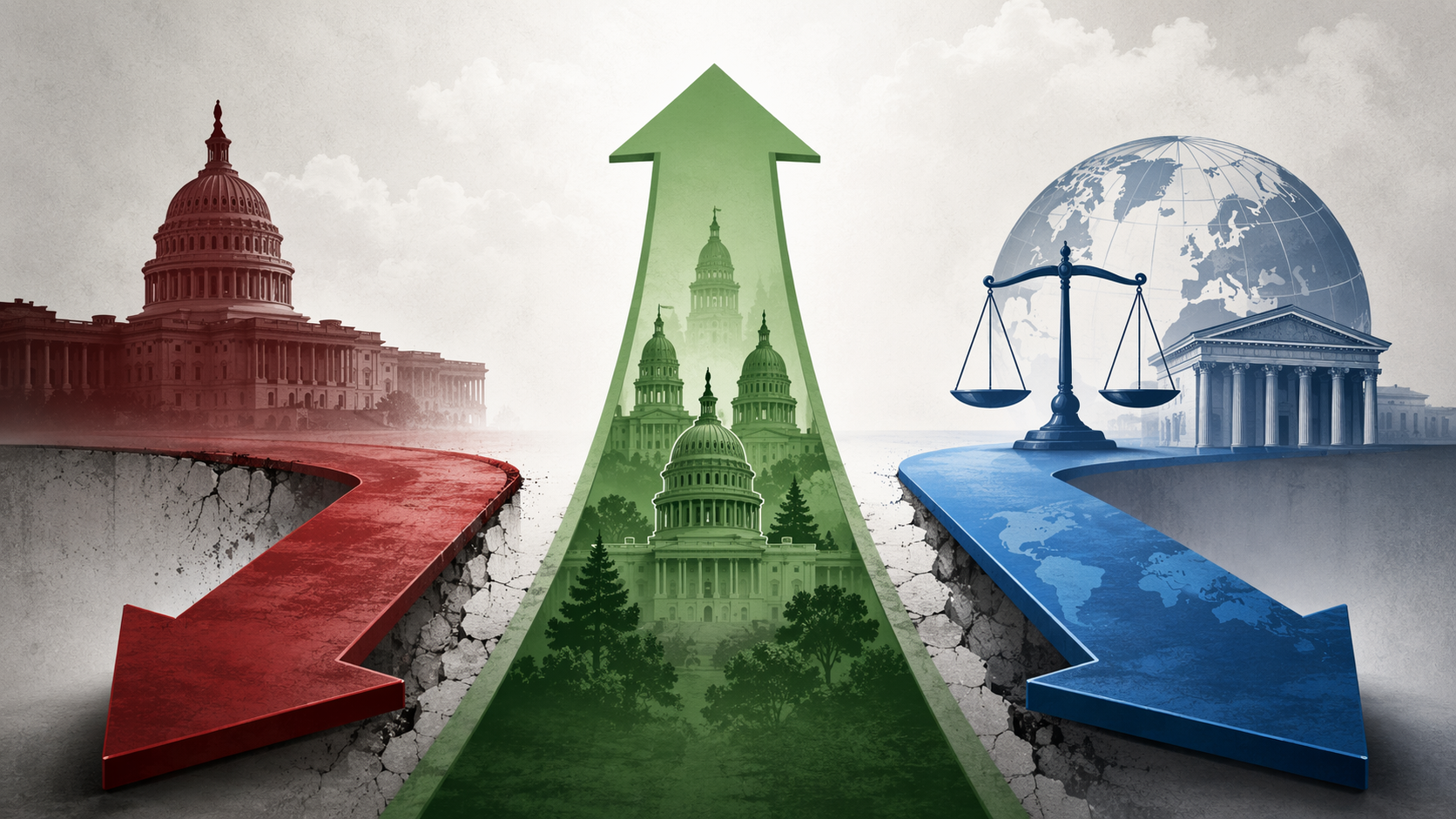
The first 2025 signal came from Washington. On March 27, the SEC voted 3-2 to end its defense of the March 2024 climate disclosure rules, and in September 2025 it proposed a formal rescission of those rules rather than leaving the litigation posture to do the work by itself. [1] A few weeks later, Executive Order 14260 directed the Attorney General to challenge state climate laws, specifically naming New York and Vermont Climate Superfund statutes and California's cap-and-trade program. [2]
States kept building
The more useful reading of 2025 is not that federal policy reversed and everything else paused. State lawmakers were already moving on their own track, and in several places they were doing so in ways that survived the first round of challenges. California's disclosure laws remained standing through most legal attacks, New York reintroduced SB 3456 to mirror California's scope 3 approach, and Colorado advanced HB25-1119. [3] New York and Vermont's Climate Superfund laws also stayed in effect even as multiple lawsuits were filed against them. [4]
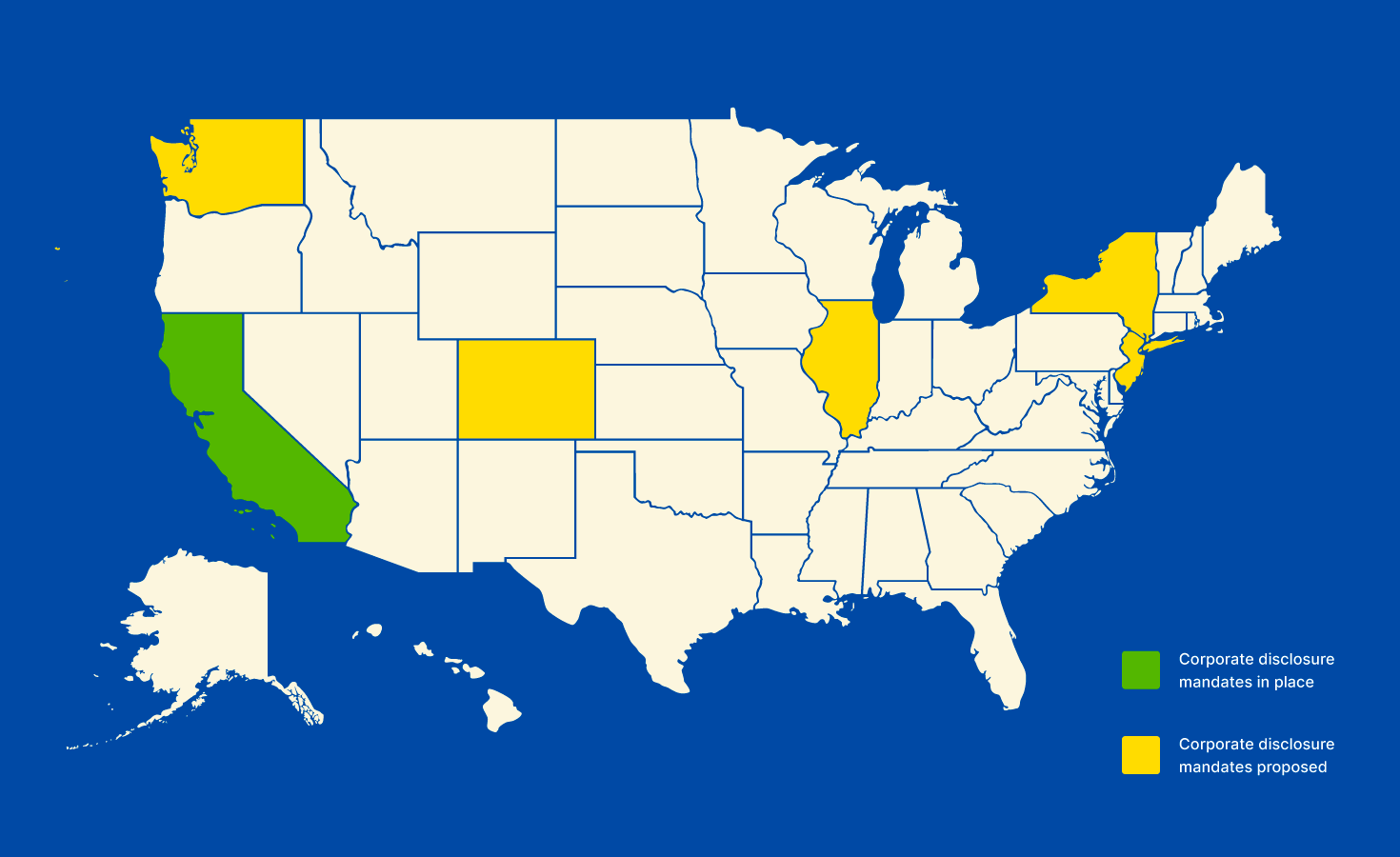
- California kept its disclosure regime in place despite litigation pressure. [3]
- New York revived SB 3456 with a scope 3 structure modeled on California. [3]
- Colorado moved HB25-1119 forward instead of waiting for a federal reset. [3]
- New York and Vermont Climate Superfund statutes were enacted, then immediately became litigation targets rather than settled law. [4]
International rules did not wait
The international layer mattered for a different reason: it added obligations that are not dependent on the mood of one federal agency. The European Union's 2040 target, advanced in 2025 and adopted in March 2026, requires a 90% net greenhouse-gas reduction, with 85% of the cut to come from within the EU and up to 5% from international credits. [5] For companies with EU exposure, that is not a policy backdrop; it is a planning constraint.
Two July 2025 opinions pushed the same point from different directions. On July 23, the ICJ said states' climate duties arise from customary international law and human rights law, and that failure to prevent significant environmental harm from greenhouse-gas emissions may amount to an internationally wrongful act; Jones Day's summary of the opinion emphasizes that states must exercise "stringent" due diligence on their nationally determined contributions. [6] On July 3, the IACtHR recognized a human right to a stable climate and said states must require corporate value-chain greenhouse-gas disclosure and adopt anti-greenwashing legislation. [7]
What counsel has to track
The practical problem for in-house teams is that these layers do not cancel one another out. A federal retreat may lower one source of pressure, but it does not erase state disclosure statutes, state climate-superfund exposure, or international obligations that can shape governance, reporting, and litigation risk.
- Treat federal posture as only one input, not the final answer, because the SEC's 2025 actions did not flatten state-level disclosure or enforcement risk. [1][3]
- Separate proposed, challenged, enacted, and binding rules in every jurisdictional tracker; New York and Vermont's superfund laws were enacted but still being litigated. [4]
- For multinational organizations, fold EU and inter-American developments into disclosure and value-chain review, even when the source is a court opinion rather than a domestic statute. [5][7]
In 2025, climate law became a jurisdictional stack, not a single federal storyline: one lane was pulling back, another was accelerating, and a third was turning legal pressure into obligations that still have to be answered for in the board packet, the disclosure draft, and the litigation hold.
References
- SEC Press Release 2025-58 - U.S. Securities and Exchange Commission, March 27, 2025
- New Executive Order Tees Up Challenges to State and Local Climate Laws - Columbia Law School Climate Law Blog, April 8, 2025
- U.S. states forge ahead with climate rules even as Trump rolls back policies - Green Central Banking, March 7, 2025
- The Pending Fate of Climate Superfund Statutes - Georgetown Environmental Law Review
- EU 2040 climate target - European Commission
- ICJ issues advisory opinion on states' legal obligations regarding climate change - Jones Day, July 23, 2025
- Climate Change Litigation Update - July 2025 - Norton Rose Fulbright, July 3, 2025
Comments
Join the discussion with an anonymous comment.