
A death investigation at a rental property is not a premises-liability case the moment police tape goes up. It is first a controlled death scene. That distinction matters in the legal implications now being discussed around Conan Harris and the Malta Street property in Mattapan, because the public record remains thin: Boston police opened a death investigation on July 18, 2026, at a home reported as owned by Conan Harris, the husband of Representative Ayanna Pressley; officials had not released the deceased person’s identity, cause of death, or whether foul play was suspected as of July 20, 2026.[1]
For a Massachusetts property owner, the first legal consequence is not a damages theory. It is loss of practical control. Under M.G.L. c. 38, § 4, the district attorney “shall direct and control” the investigation of deaths that fall within the statute’s scope, including deaths that may involve violence, casualty, suspicious circumstances, or other statutory triggers.[2] In ordinary property-management terms, that means the owner does not decide when to re-enter, clean, repair, photograph, show the premises, remove items, or resume business as usual. Access follows law enforcement release, not ownership.
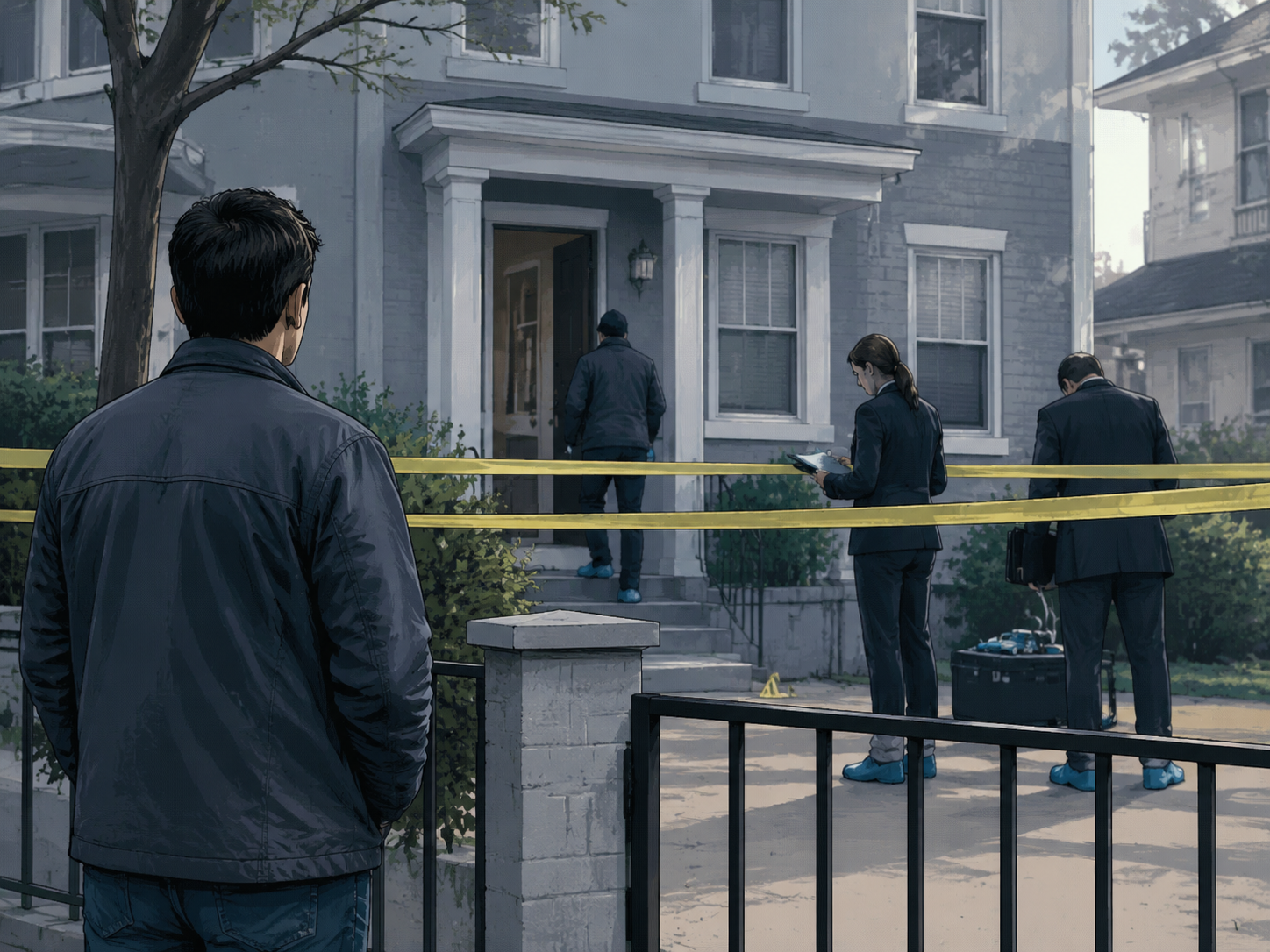
That immediate rule is often less dramatic than the questions reporters ask later, but it is the rule most likely to govern the owner’s next hour. A landlord may have no civil liability at all and still have no right to disturb the scene. A landlord may face no criminal theory and still create evidentiary, insurance, or litigation problems by treating a restricted property as if it were a routine turnover.
Three Legal Tracks Move On Different Clocks
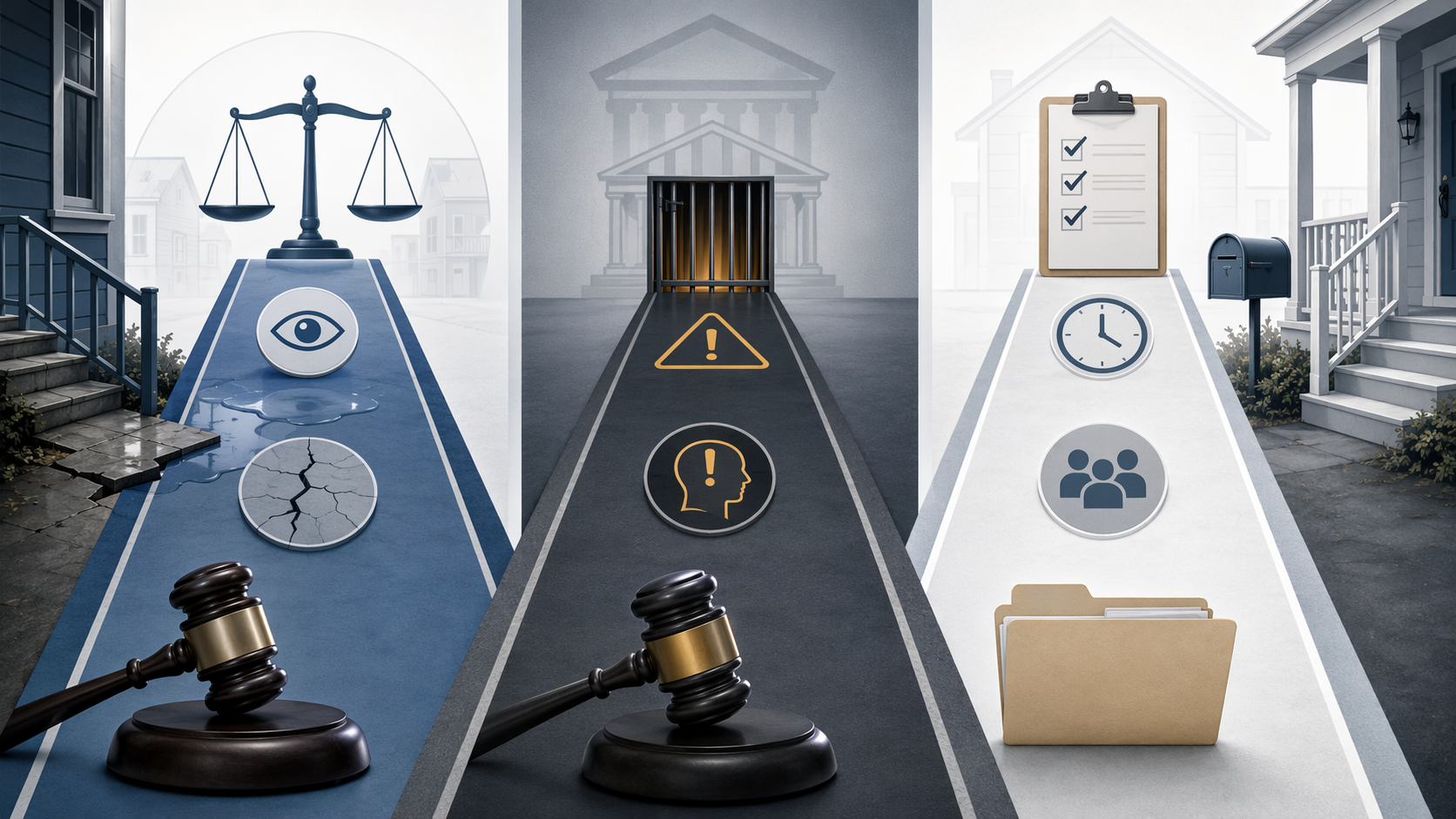
The useful way to analyze a Massachusetts landlord’s exposure after a death is to keep three tracks separate. They can overlap factually, but they do not ask the same legal question.
| Framework | Immediate Question | What Usually Matters |
|---|---|---|
| Procedural control | Who controls the scene now? | District attorney and law enforcement authority; preservation of the death scene; timing of access and release. |
| Civil liability | Did the landlord breach a duty that caused the death? | Foreseeability, notice, dangerous property conditions, prior similar incidents, maintenance records, tenant complaints, and causation. |
| Criminal exposure | Was the landlord’s conduct grossly negligent or worse? | Egregious disregard for safety, known severe hazards, repeated failures to act, and a causal connection to the death. |
The timing difference is not academic. Procedural obligations attach before anyone knows enough to evaluate fault. Civil exposure cannot be responsibly assessed until the cause of death and relevant property history are known. Criminal exposure sits still farther out, requiring a much more severe showing than ordinary negligence.
Scene Control Comes Before Landlord Judgment
M.G.L. c. 38, § 4 is blunt enough that owners sometimes underestimate it. The statute gives the district attorney control over qualifying death investigations; it does not merely invite cooperation from the property owner.[2] If investigators need to hold the premises, preserve a room, restrict entry, document conditions, or coordinate with the medical examiner, ownership does not override that process.
The owner’s practical duties are therefore modest in form but serious in consequence: do not enter without clearance, do not authorize cleanup prematurely, do not let contractors or agents disturb the site, do not retrieve items casually, and do not create a second factual dispute over what changed after police arrived. Counsel’s early value is often not in predicting the lawsuit. It is in making sure the client does not create one record for investigators, another for the insurer, and a third for later civil discovery.
That point applies even if the owner has a strong civil defense. A premises owner who believes, correctly or incorrectly, that “we had nothing to do with this” may still damage the defense by moving too fast. Photographs, maintenance records, tenant communications, inspection histories, lease documents, repair invoices, text messages with property managers, and any surveillance or access logs should be preserved because their relevance cannot be measured until the death investigation supplies facts the public does not yet have.
Civil Liability Turns On Foreseeability, Not Suspicion
Massachusetts civil liability after a death on rental property does not follow from ownership alone. In a wrongful death case, the plaintiff still must connect the death to a legally cognizable breach: a condition or risk the landlord knew or should have known about, a duty to address it, and causation.[3] Massachusetts wrongful death claims are governed by M.G.L. c. 229, § 2, and the limitations period is generally three years.[3]
The harder question is what counts as notice when the death is linked to another person’s criminal act rather than a broken stair, missing detector, defective lock, exposed wiring, or other premises condition. That is where Belizaire v. Furr does real work. In that Massachusetts Appeals Court decision, a landlord was not liable for a tenant’s shooting death where the record showed prior drug activity but not prior similar violent incidents sufficient to make the later shooting foreseeable.[4]
Belizaire is a useful corrective because it rejects a common shortcut. Prior unlawful activity on or near a property may be troubling. It may be discoverable. It may explain why litigants ask hard questions about tenant screening, complaints, police calls, or management decisions. But in the third-party-crime setting, the civil duty analysis does not treat every prior problem as notice of a later violent death. The closer question is whether prior incidents were sufficiently similar and serious to make the later harm foreseeable.[4]
That matters for the known Malta Street background. Public reporting has identified the property, the active death investigation, and the fact that the home had reportedly been listed for sale at about $1.15 million around May 2026.[1] Those facts may explain public attention, but they do not establish a dangerous condition. Nor does the mere political proximity of the property owner supply a civil duty.
The more tempting fact is a reported neighbor account that police had raided the property roughly two months before the death. That account has been reported as coming from a neighbor, and it should be treated exactly that narrowly: a single reported account, not an adjudicated fact and not a liability conclusion.[5] If civil litigation ever develops, counsel would want to know whether the reported event occurred, what officers were investigating, whether the owner had notice, whether the event involved violence, whether it involved the same unit or occupants, and whether it bore any causal relationship to the later death. Without those answers, it is background for inquiry, not proof of foreseeability.
The same restraint applies to Harris’s own history. Representative Pressley’s office stated in 2020 that Harris had served a 10-year federal sentence for drug trafficking and had rebuilt his life after release.[6] Separately, public reporting described a January 2026 incident at Chelsea City Hall in which Harris was accused of slapping a phone from a person’s hand.[7] Those facts may be part of the public-record context around Harris. They do not, by themselves, answer whether a landlord knew or should have known of a dangerous premises condition that caused a death at Malta Street.
When Belizaire Would Not Be The Right Lens
Belizaire is powerful only if the death theory is an unforeseeable third-party criminal act. If the facts instead point to a property defect, the analysis changes. A fatal fall, fire, carbon monoxide exposure, electrical hazard, structural failure, defective lock, or code-related condition would move the case toward ordinary premises and wrongful death principles. The landlord’s knowledge, inspection practices, repair history, and response to complaints would then become more central than prior similar violent incidents.
That is why the absence of public cause-of-death information is not a small gap. It is the gap that determines which civil framework even applies. A lawyer who jumps from “death at rental property” to “landlord liable” is skipping the duty analysis. A lawyer who jumps from Belizaire to “no exposure” is making the opposite mistake if the eventual facts involve a property condition rather than third-party violence.
Criminal Exposure Requires More Than Bad Management
Criminal liability for a landlord after a death is possible in the abstract, but it is rare and should not be treated as a routine extension of negligence. Massachusetts criminal-law commentary frames the threshold as gross negligence: conduct showing an egregious disregard for safety, not merely a missed repair, poor documentation, or ordinary carelessness.[8]
The Ghost Ship fire in Oakland is often invoked as the kind of factual reference point that makes criminal exposure easier to understand: alleged extreme hazards, known unsafe conditions, and catastrophic loss of life in a building being used in dangerous ways.[8] It is not a Massachusetts landlord-liability holding, and it should not be used as a prediction about Malta Street. Its value is narrower. It illustrates how far criminal negligence is from the usual civil question of whether an owner should have repaired or warned about a condition sooner.
On the present public record, there is no released cause of death, no released finding of foul play, and no released official theory tying any owner conduct to the death. That leaves no responsible basis to infer criminal exposure. The more disciplined point is that criminal-risk analysis should remain available if facts later show extreme known hazards or deliberate disregard, but it should not be smuggled into the discussion simply because the property owner is well known.
Disclosure Rules Are A Separate Problem
A death at a property can also raise later questions about sale, leasing, and disclosure, especially where a home was already on the market. Massachusetts does not generally require sellers or landlords to disclose that a death occurred on the property to prospective buyers or tenants, but they cannot affirmatively misrepresent the facts if asked or if they choose to speak.[9] That rule is distinct from both death-scene control and civil fault.
The distinction matters because cleanup, listing language, broker communications, and tenant inquiries tend to arrive after the investigative phase begins but before legal exposure is fully understood. A property owner can comply with the no-mandatory-disclosure rule and still mishandle evidence preservation. Or the owner can preserve the scene properly and later create a misrepresentation problem through careless statements during sale or leasing discussions.
Which Facts Would Actually Move The Analysis
The facts that matter most are not always the facts that attract the most attention. Political relationship, neighborhood interest, listing price, and prior publicity may explain why a death investigation is being watched. They do not by themselves establish duty, breach, causation, or gross negligence.
- For procedural control, the key facts are whether the death falls within the statutory investigation framework, whether law enforcement has released the scene, and what restrictions remain in place.
- For civil liability based on third-party violence, the key facts are prior similar violent incidents, owner notice, tenant or neighbor complaints, security measures, and causal connection.
- For civil liability based on a property condition, the key facts are the specific defect, code or maintenance history, repair requests, inspections, prior incidents, and whether the condition caused the death.
- For criminal exposure, the key facts are whether the owner knew of severe hazards and disregarded them in a way that rises beyond ordinary negligence.
- For later sale or leasing, the key facts are what the owner, broker, or manager affirmatively says, what is asked, and whether any statement is misleading.
This is also where counsel should resist one-file thinking. The criminal investigator’s file, the insurer’s file, the civil preservation file, and the real estate transaction file may overlap, but they are not interchangeable. Statements made to one audience can be discoverable or damaging in another context. A casual email about cleanup, a broker’s reassurance, or a property manager’s text about prior complaints may matter more later than the owner expected when the scene was still being held.
What Can Be Said Now
No conclusion about the Harrises’ actual liability follows from the public facts available as of July 20, 2026. The death investigation is active. The cause and manner of death have not been released. The reported prior raid is not an established civil-liability fact. Harris’s prior conviction and other public incidents do not themselves supply the missing elements of a premises claim.
What can be said is narrower and more useful. Massachusetts property owners face different legal obligations on different timelines after a death on rental property. Procedural compliance begins immediately and is controlled by the district attorney’s authority. Civil exposure depends on foreseeability, notice, dangerous condition, and causation. Criminal exposure requires a substantially more severe showing of gross negligence. Treating those tracks as one general question of “liability” is how owners, counsel, and public commentators get the first analysis wrong.
This article provides legal analysis for public-information purposes, not legal advice. In an active death investigation, the first sound legal move is not to predict the ending from the headline. It is to preserve the record, respect scene control, and keep procedural compliance, civil liability, and criminal-risk analysis in separate lanes.
References
- Death investigation underway at home owned by husband of Ayanna Pressley, Boston Herald, July 18, 2026
- General Laws Part I Title VI Chapter 38 Section 4, Massachusetts Legislature
- Fatalities Caused by Accidents on Property, BWG Law
- Landlord Not Liable For Shooting Death At Rental Property, Massachusetts Real Estate Law Blog, September 16, 2015
- Boston Globe report on Malta Street death investigation, Boston Globe, July 18, 2026
- Ayanna Pressley Statement on Conan Harris, Pressley.house.gov, 2020
- New York Post report on January 2026 Chelsea City Hall phone-slapping incident, New York Post, January 2026
- Can Landlords Be Criminally Liable If Injury Or Death Occurs Due To Negligence?, Boston Criminal Lawyer Blog
- What to Do if a Tenant Dies in Your Rental or Plans To, MassLandlords
Comments
Join the discussion with an anonymous comment.