
Current as of July 21, 2026: the Cyclospora outbreak, the Taylor Farms recall, and any related litigation posture may change after publication. As of this date, the immediate remedy for a Walmart shopper who still has the recalled Marketside product is simple: call Walmart at 1-800-925-6278 or return the product to any Walmart store for a full refund. The harder question is whether a buyer who became ill can move from refund to medical monitoring, medical-expense recovery, or a product-liability claim.
That harder question turns less on the size of the outbreak than on proof. The recalled Walmart universe is specific: Marketside bagged iceberg salad products sold in 27 states, across four SKUs, with best-by dates from July 18 through August 3, 2026, as part of Taylor Fresh Foods' July 17 voluntary recall of iceberg lettuce from Central Mexico because of possible Cyclospora contamination.[1] A consumer legal-rights analysis starts there, with the bag, the receipt, the store, the date, and the medical record.
The Legal Path Starts With Product Identification
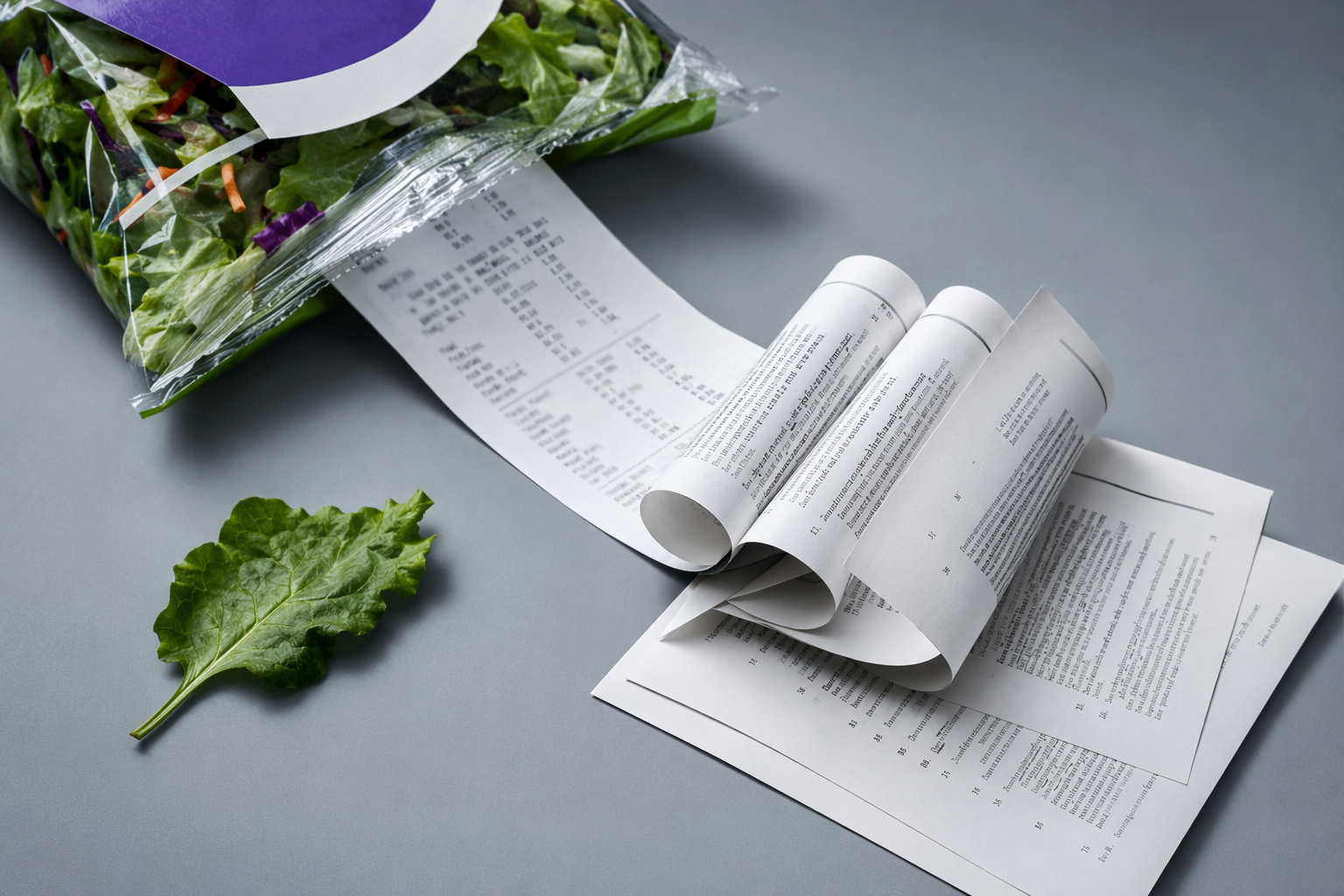
For most consumers, the first legally useful act is not filing anything. It is preserving evidence before the kitchen gets cleaned up. If the product is still in the refrigerator, keep the package or photograph every side of it before returning or discarding it. If the product is gone, find the receipt, Walmart purchase history, pickup or delivery record, credit-card statement, or any photograph of the label. A refund may not require all of that. A personal-injury claim usually will.
The proof ladder is simple to describe but unforgiving in practice:
- Purchase: the consumer bought a product that fits the recalled Marketside SKUs, state distribution, and best-by date range.
- Exposure: the consumer ate or handled that product before illness or before learning of the recall.
- Illness: symptoms led to medical care, testing, or other documented harm.
- Diagnosis: the records identify Cyclospora, not just a nonspecific stomach illness.
- Causation and damages: the timing, product trace, diagnosis, expenses, missed work, and continuing symptoms support a claim under the applicable state law.
A person can be entitled to a refund without climbing that whole ladder. A person can also have been genuinely exposed and still fail to assemble enough evidence for compensation. That distinction matters in a Cyclospora outbreak because the two biggest bottlenecks appear before a lawsuit is ever drafted: consumers must be able to recognize that their product was recalled, and clinicians must order the right test.
The Recall Notice Made Consumers Decode the Recall
The Taylor Farms recall notice did disclose affected product lines, but it also used internal shorthand that ordinary shoppers would not necessarily connect to the packages in their homes. In the notice, codes such as MKTSD, SY, JB, TCB, and WFM appeared where consumers needed plain brand or customer names. MKTSD referred to Marketside, the Walmart private-label brand; other codes corresponded to other food-service or retail channels.[2]
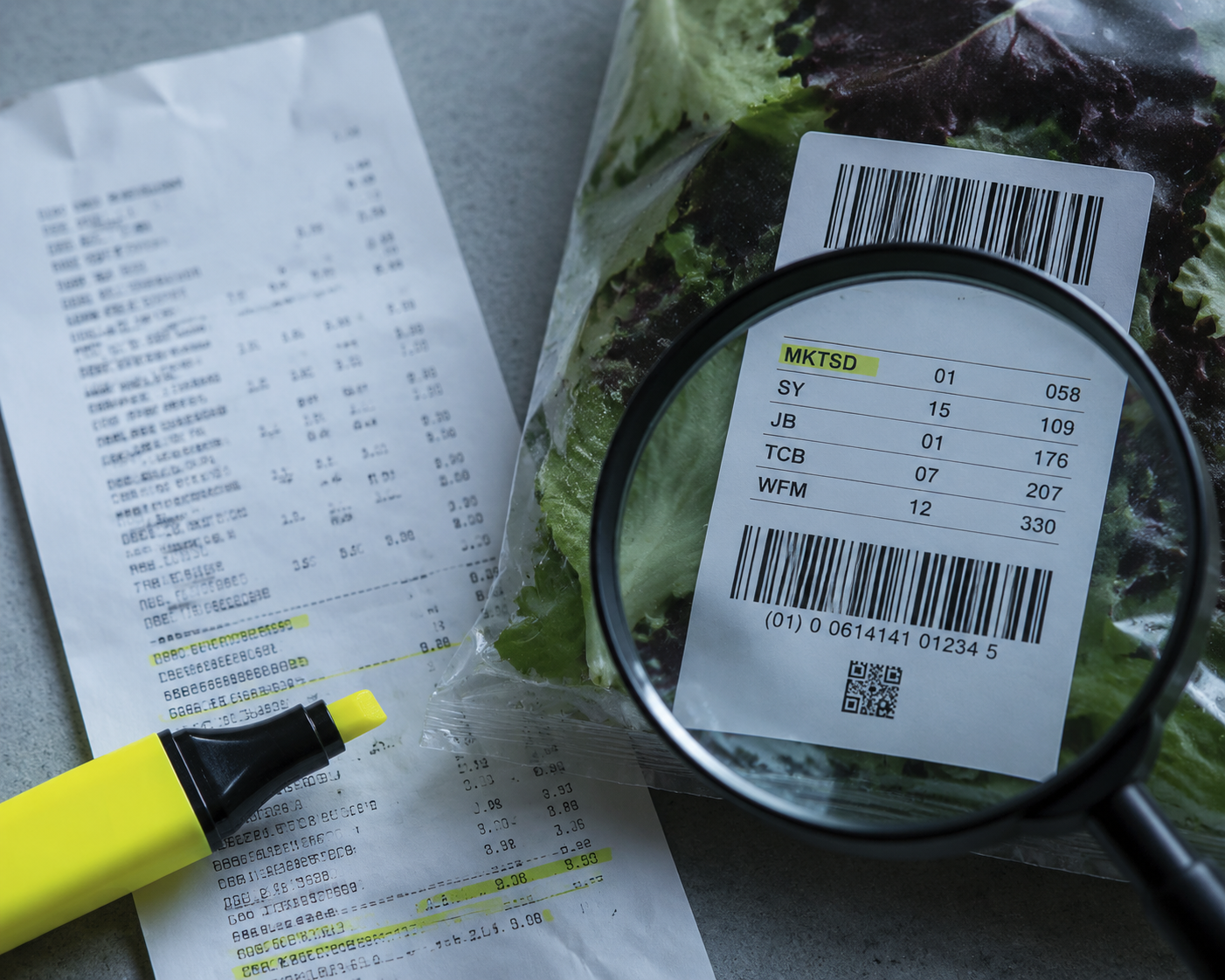
That is not a cosmetic problem. Recall rights depend on recognition. A shopper who sees “MKTSD” in a notice may not know it means the Marketside salad in the refrigerator. Consumer Reports reported that it contacted companies independently to confirm the brands behind the codes, which is precisely the kind of work a public recall notice should not require consumers to perform on their own.[2]
Food-safety lawyer Bill Marler made the same point more bluntly after the FDA reposted the Taylor Farms release. “What Taylor Farms released and the FDA simply reposted gives very little information to consumers except the state where the lettuce went,” he told USA Today. “This is inadequate public notice for an outbreak that may have sickened seven thousand Americans.”[3]
The legal consequence is practical, not theoretical. If a consumer cannot identify the recalled product in time, the package may be thrown away, the receipt may disappear, and the medical visit may be treated as ordinary gastroenteritis. By the time the consumer learns that a Walmart Marketside salad was part of the recall, the strongest evidence may already be gone.
Refunds, Medical Monitoring, and Injury Claims Are Different Remedies
A refund is the broadest remedy. It is tied to purchase of the recalled product, not to a confirmed infection. If the bag fits the recalled Marketside product universe, Walmart's stated process is to return it to any store or call 1-800-925-6278 for a full refund.[3] That remedy does not compensate for illness, lost wages, medical bills, or future monitoring.
Medical monitoring sits in a more uncertain space. A consumer who ate recalled lettuce but has no confirmed infection may still reasonably contact a clinician, watch symptoms, and preserve medical records. Whether the cost of monitoring can be recovered from anyone depends on state law, proof of exposure, and the facts that develop in the outbreak investigation. Possible exposure alone is not the same thing as a compensable injury claim.
A personal-injury claim requires more. The consumer must usually connect a recalled or contaminated product to a diagnosed illness and measurable damages. The CDC reported in a July 2 health alert approximately 7,000 known or suspected cases across 34 states, with about 9% hospitalized, linked to shredded iceberg lettuce from Taylor Farms in Central Mexico.[4] Those numbers show the outbreak's public-health scale. They do not, by themselves, prove that any one Walmart shopper has a legal claim.
| Consumer Situation | Likely Next Step | Main Proof Problem |
|---|---|---|
| Bought a recalled Marketside product but did not eat it | Seek refund through Walmart | Showing the product fits the recalled SKU, date, and state scope |
| Ate recalled product but has no symptoms | Preserve proof and monitor health | Exposure may not equal compensable injury |
| Had gastrointestinal symptoms but no Cyclospora-specific test | Ask a clinician whether appropriate testing is still useful | Routine records may not identify Cyclospora |
| Has a positive Cyclospora result and matching purchase evidence | Consult a qualified attorney about state-law claims | Causation, damages, and applicable limitation periods still matter |
The Diagnostic Trap: A Routine Stool Test May Not Be Enough
Cyclospora creates a second proof failure that many consumers will not see coming. CIDRAP has noted that Cyclospora requires modified acid-fast staining or PCR testing; a routine ova-and-parasite stool exam may not detect it.[5] In plain terms, a patient can do what seems responsible — see a clinician, provide a stool sample, get told the test was negative or unrevealing — and still not have been tested in the way needed to confirm Cyclospora.
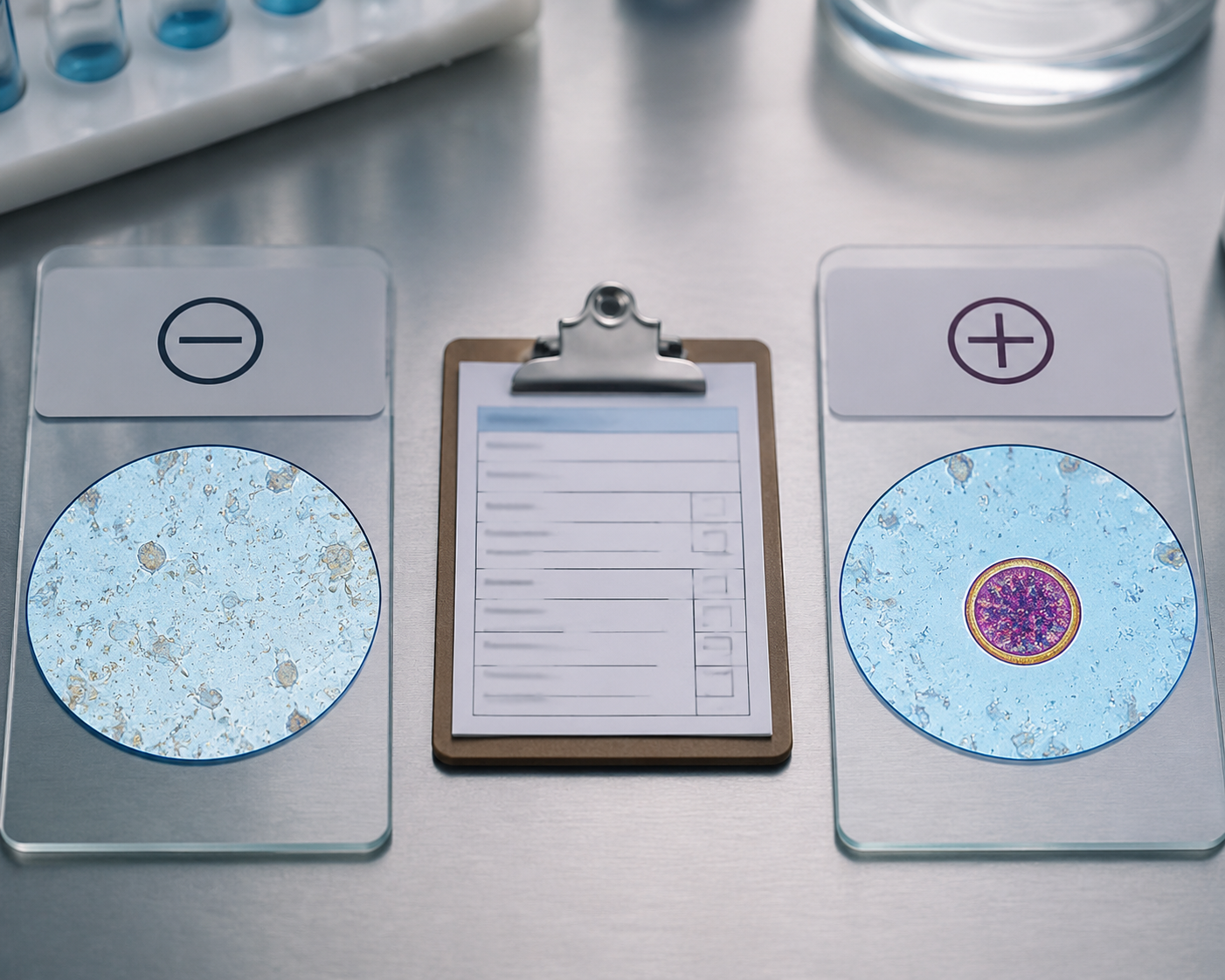
For a legal claim, that difference can be decisive. Medical records that say “diarrhea,” “food poisoning,” or “gastroenteritis” may explain why someone sought care, but they do not establish the organism. A positive Cyclospora lab result, matched with a recalled product purchase and timing consistent with exposure, is much stronger evidence than symptoms alone.
Consumers who became ill after eating a recalled Marketside salad should not assume that testing already performed covered Cyclospora. They can ask the clinician or lab whether the specimen was tested by PCR or modified acid-fast stain, whether additional testing is medically appropriate, and whether the medical record can accurately document the suspected exposure. The answer may depend on timing and clinical judgment, but the question matters.
What the First Lawsuit Shows — and What It Does Not
The first reported lawsuit in the 2026 multistate Cyclospora outbreak was not filed against Walmart. Marler Clark filed suit against Pacific Bells, a Taco Bell operator, in the Northern District of Ohio on July 16, 2026, alleging claims including strict product liability under Ohio law, breach of warranty, and violations of the Ohio Consumer Sales Practices Act. The complaint also named John Doe defendants to preserve claims against upstream growers, distributors, or other actors not yet identified in the public filing.[6]
That lawsuit is useful because it shows the legal architecture likely to matter in outbreak litigation. Plaintiffs may pursue sellers and operators under strict product-liability theories, warranty theories, and state consumer-protection statutes, while using placeholder defendants to keep the upstream traceback open. It is not proof that Walmart has been sued, and it is not proof that every buyer of recalled lettuce has a viable claim.
As of July 21, 2026, the public record identifies no lawsuit naming Walmart over this recall. Any potential claim against Walmart would depend on the shopper's state, Walmart's role as seller, the specific product purchased, the consumer's medical proof, and how the traceback evidence develops. Retailer liability is a fact-specific question, not an automatic result of a recall.
Where Consumers Most Often Fall Out of the Compensation Path
The weakest cases are not always the least sympathetic ones. A shopper may have bought the right salad, eaten it, become sick, missed work, and recovered without ever receiving the correct test. Another may have discarded the package before learning that MKTSD meant Marketside. Another may live in an affected state but have bought a similar product outside the recalled SKU or best-by range. Those people may have real frustration and real illness, but the legal system still asks for traceable proof.
The strongest consumer file looks different. It includes the bag or clear label photographs, a Walmart receipt or digital purchase record, the product's best-by date and SKU, the date eaten, symptom dates, medical visits, lab orders, test results, prescriptions, bills, missed-work documentation, and any communications with Walmart, Taylor Farms, insurers, or health departments. None of that guarantees recovery. It does keep the question from collapsing into memory.
A short preservation checklist
- Photograph or keep the package, including SKU, UPC, lot, best-by date, and any internal code.
- Save the Walmart receipt, online order record, delivery record, or payment record.
- Write down when the product was eaten and when symptoms began.
- Ask the clinician whether Cyclospora-specific PCR or modified acid-fast testing was ordered.
- Keep medical bills, lab reports, prescriptions, discharge papers, and missed-work records.
- Do not assume a refund resolves a separate injury claim unless a lawyer has reviewed the facts.
Timing Matters, but the Deadline Is Not One National Rule
Statutes of limitation vary by state, and outbreak cases can involve several possible states: where the product was bought, where the consumer became ill, where the seller operates, and where upstream companies are located. Ohio is relevant to the first Taco Bell-related filing because that case was filed in federal court in Ohio; Ohio law generally uses a two-year period for bodily-injury product-liability claims.[7] That is an example, not national guidance.
Consumers with confirmed Cyclospora infections, hospitalization, significant medical expenses, prolonged symptoms, or missed work should get state-specific legal advice promptly. Consumers without confirmed infection may still want to preserve records while the outbreak investigation develops. Delay tends to hurt the evidence first and the legal deadline second.
The legal rights are real but narrow in their proof requirements. Buyers of the recalled Marketside lettuce can seek refunds now. Symptomatic consumers should preserve product and purchase evidence, obtain medical records, and ask specifically about Cyclospora testing. Confirmed infections may support claims for medical expenses, lost income, and other damages depending on state law and the facts. But opaque recall language and missed diagnostics mean that some consumers who were exposed, and some who were genuinely ill, may never be able to prove the chain well enough for compensation. This article provides legal information, not legal advice.
References
- Taylor Fresh Foods Recalls Iceberg Lettuce from Central Mexico Because of Possible Health Risk, FDA, July 17, 2026.
- Taylor Farms Pulls Mexican Lettuce Linked to Cyclospora Parasite, Consumer Reports.
- Walmart recall: Iceberg lettuce pulled over cyclospora risk, USA Today, July 18, 2026.
- HAN Archive - 00531, CDC, July 2, 2026.
- What we truly know about the huge US Cyclospora outbreak, and what we don't, CIDRAP.
- First Lawsuit in 2026 Multistate Cyclospora Outbreak Filed Against Taco Bell Operator in Ohio Federal Court, PRNewswire via Marler Clark.
- Ohio Revised Code Section 2305.10, Ohio Laws & Administrative Rules.
Comments
Join the discussion with an anonymous comment.