
Last updated: July 20, 2026.
The most legally important hours in Luis Manuel Otero Alcántara’s exit from Cuba began before the airport photograph. Reuters reported that Cuban authorities removed the dissident artist from Guanajay prison on July 7, two days before the reported expiration of his five-year sentence on July 9; his parole approval came on July 17, and he arrived in Miami on July 18, 2026.[1] In that interval, relatives and lawyers were not merely waiting for travel paperwork. They were trying to force an answer to a threshold question: which authority had custody of him, and under what legal basis?
| Date | Procedural event | Legal significance |
|---|---|---|
| July 2021 | Otero Alcántara was arrested, according to Reuters. | The arrest began the custody period later relevant to sentence-credit arguments. |
| 2022 | He was convicted and sentenced to five years, according to Reuters. | The sentence fixed the outer custody period at the center of the 2026 release dispute. |
| March 11, 2026 | Cubalex announced a habeas corpus filing arguing that the sentence should be treated as completed after credit for pretrial detention and good-conduct reductions. | The first habeas filing framed custody as unlawful before the July sentence-expiry date. |
| July 7, 2026 | He was removed from Guanajay prison by Cuban authorities, according to Reuters and Miami Herald reporting. | The transfer created the disappearance problem: release from a prison register did not equal accountable liberty. |
| July 9, 2026 | Reuters reported this as the sentence-expiry date. | If the sentence had expired, the burden shifted sharply toward the state to justify continued custody or control. |
| July 13, 2026 | A second habeas corpus petition was filed after his removal from prison, according to Havana Times. | The petition sought a judicial response to his whereabouts and legal status. |
| July 17, 2026 | Reuters reported US humanitarian parole approval. | US discretion supplied temporary permission to enter, not a final immigration status. |
| July 18, 2026 | Reuters reported his arrival in Miami. | Physical presence in the United States changed the available legal options, but did not answer every question about the Cuban transfer. |
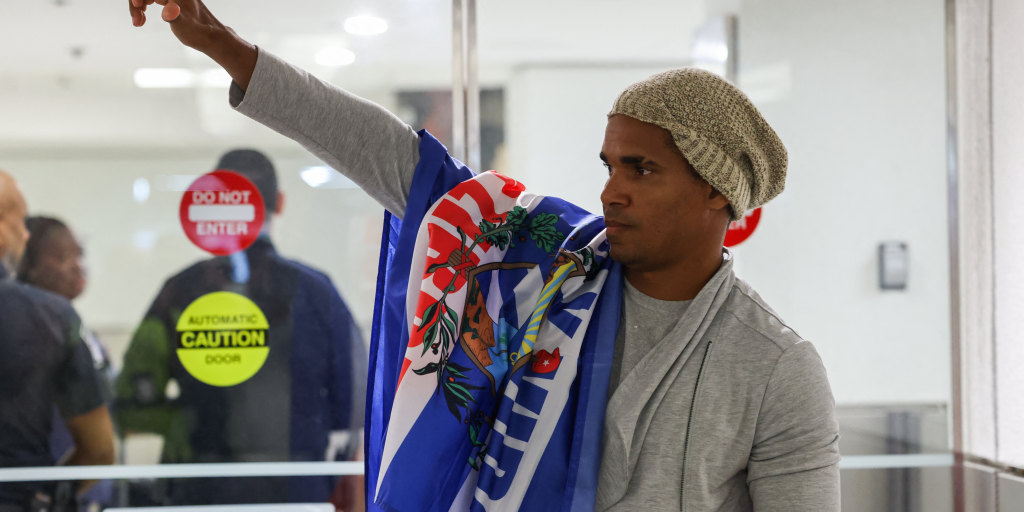
Calling this simply an asylum case is too blunt for the file as it exists today. Public reporting supports a case that passed through Cuban habeas filings and US humanitarian parole. It does not yet establish, from a primary legal source, that Otero Alcántara has filed for asylum or adjustment of status. The available record instead shows a chain of partial remedies: one aimed at custody, one at temporary entry, and one possible later path available to Cuban nationals who meet statutory requirements.
The Habeas Fight Before the Flight
Cubalex’s March filing matters because it moved the dispute from public outrage into a procedural demand. On March 11, 2026, the legal organization said it had presented a habeas corpus petition for Otero Alcántara, arguing that his sentence should be considered completed after accounting for pretrial detention and good-conduct reductions under Decree-Law 74.[2] That argument was not about whether he was famous, or whether exile would eventually be offered. It was about arithmetic, custody time, and the legality of continued imprisonment.
The July habeas petition was more urgent and narrower. After Otero Alcántara was removed from Guanajay prison, Havana Times reported that a second habeas corpus petition was filed on July 13, 2026, citing Article 96 of Cuba’s 2019 Constitution and Law 143, and pointing to Article 790.1’s 72-hour deadline for a judicial response.[3] The reported injury was no longer only overdetention. It was the state’s failure to account for the body of a prisoner whose sentence had reportedly expired.
Miami Herald reporting likewise placed the removal from Guanajay before the sentence-expiry context and described the family’s loss of contact after state authorities took him from the prison.[4] That detail is not incidental. A prisoner can disappear inside bureaucracy as easily as inside a vehicle: one authority says he has left prison, another has not yet acknowledged receiving him, and the court has not produced a timely answer. Habeas corpus is designed for exactly that kind of gap, where custody exists in fact but is denied in form.
The outcome of the July 13 habeas petition remains unclear from the available record. Available sources do not independently verify a final response from the Havana Provincial People’s Court. That uncertainty should not be cleaned up by the later Miami arrival. If a court missed or ignored a statutory deadline, the later grant of US parole may have solved a humanitarian emergency without resolving the Cuban legal violation alleged in the petition.
Three Legal Systems, Three Different Questions
Otero Alcántara’s route is easiest to misunderstand when the legal mechanisms are treated as one continuous rescue. They are not. Cuba’s habeas corpus procedure, US humanitarian parole, and the Cuban Adjustment Act operate at different moments and answer different questions. None is a substitute for the others.

Cuban habeas corpus asks whether custody is lawful
The Cuban habeas filings were directed at the state that had held him. Article 96 of Cuba’s 2019 Constitution recognizes habeas corpus, and Havana Times reported that the July petition relied on Law 143’s procedural framework, including the 72-hour response period under Article 790.1.[3] The legal question was domestic and immediate: if a person is detained, hidden, transferred, or otherwise controlled by state agents, a court should require the authority to justify that deprivation of liberty.
That is why the date stamp matters. If July 9 was the sentence-expiry date, and if he had already been removed from the prison on July 7, the state’s obligation was not satisfied by silence until an international transfer became politically convenient. The habeas petition sought traceability: who took him, where he was held, and what order authorized it.
Humanitarian parole asks whether temporary US entry is justified
US humanitarian parole is a different instrument. Reuters reported that Otero Alcántara was approved for humanitarian parole on July 17 and arrived in Miami on July 18.[1] Under INA § 212(d)(5), parole is discretionary permission to enter the United States temporarily for urgent humanitarian reasons or significant public benefit. It does not, by itself, grant asylum, lawful permanent residence, or a final protection order.
The posture also matters because the broad CHNV parole program for Cubans, Haitians, Nicaraguans, and Venezuelans was terminated in March 2025. In that environment, a case like Otero Alcántara’s had to be understood as an individual parole decision, reportedly processed through the US Embassy in Havana, not as admission through a mass-parole channel. The public record supports the fact of parole approval; it does not disclose the full government reasoning behind that discretionary approval.
The Cuban Adjustment Act asks a later residency question
Once a Cuban native or citizen is physically present in the United States, a separate statutory framework may become relevant. CLINIC’s legal resource describes the Cuban Adjustment Act as allowing eligible Cuban natives or citizens to seek adjustment after one year of physical presence, with distinctive provisions not generally available to other parolees.[5] USCIS likewise maintains a “Green Card for a Cuban Native or Citizen” eligibility page confirming that Cuban natives or citizens may be eligible to apply for lawful permanent residence under the Cuban Adjustment Act if they meet the applicable requirements.[6]
That possible route should be stated carefully. Otero Alcántara’s arrival in Miami creates physical presence. It does not prove that he has filed, or will file, an adjustment application. Nor does it turn humanitarian parole into asylum. The Cuban Adjustment Act is legally important here because it explains why Cuban parolees occupy a distinctive position after entry: temporary permission can become the bridge to a later residency application if statutory conditions are met.
| Mechanism | Authority | Question it answers | What it does not answer |
|---|---|---|---|
| Habeas corpus | Cuban courts under the Constitution and Law 143 | Is the person’s detention, disappearance, or continued custody lawful? | It does not grant US entry or immigration status. |
| Humanitarian parole | US executive discretion under INA § 212(d)(5) | Should the person be temporarily allowed into the United States for urgent humanitarian or public-interest reasons? | It does not grant asylum or permanent residence. |
| Cuban Adjustment Act | US immigration law administered through adjustment adjudication | Can an eligible Cuban native or citizen later become a lawful permanent resident? | It does not explain whether the Cuban release was lawful or voluntary. |
Why Visibility Mattered, Without Making It the Whole Explanation
Otero Alcántara was not an anonymous detainee. Reuters identified him as a Cuban dissident artist who had been imprisoned for five years, and his case drew a statement from US Secretary of State Marco Rubio after his arrival.[1] His public profile made the case legible to officials, advocates, and reporters who might otherwise never read a Cuban habeas petition. It also made the immigration decision politically visible in a way ordinary parole requests are not.
NBC News reported Human Rights Watch’s characterization that his release was “conditioned on exile.”[7] That formulation captures the central ambiguity: a person may leave prison, board a plane, and reach safety, while the voluntariness of the departure remains contested. The available sources support describing that as a human rights concern. They do not allow a definitive reconstruction of every communication among Cuban authorities, US officials, lawyers, and relatives in the days before the flight.
The comparison with Maykel Castillo Pérez sharpens the point without proving a formula. The available record states that Castillo Pérez remains incarcerated. Both men are associated with Cuban dissident art and protest culture; only Otero Alcántara, on the available record, moved through the July 2026 chain from prison removal to US parole to Miami arrival. The difference shows that visibility and discretion shape outcomes. It does not prove that visibility alone secures release, or that parole is available on equal terms to similarly situated dissidents.
Cubalex’s own institutional position belongs in that analysis. The Robert F. Kennedy Human Rights case page for Laritza Diversent et al. v. Cuba describes a pending Inter-American human rights matter involving Cubalex lawyers and allegations of persecution that forced them into exile.[8] In Otero Alcántara’s case, that means the emergency legal work was not being done from a neutral distance. It was being carried by advocates whose own legal status and professional survival had already been drawn into Cuba’s treatment of human rights defense.
What Arrival in Miami Did—and Did Not—Resolve
Arrival in Miami was legally significant. It placed Otero Alcántara outside the immediate control of Cuban prison and security authorities. It also placed him within the US immigration system, where parole supplies a temporary lawful basis for presence and where Cuban nationality may later matter under the Cuban Adjustment Act. Those are real consequences, not symbolic ones.
But arrival did not answer the habeas question. It did not establish whether Cuban courts complied with their own response deadlines. It did not confirm whether his departure was voluntary, coerced, or negotiated under conditions not yet visible in the public record. It did not determine whether he will seek asylum, adjustment under the Cuban Adjustment Act, or another form of immigration relief.
For lawyers watching the case, the cleanest way to read the file is sequentially. First, Cuban law was invoked to challenge detention and disappearance. Second, US humanitarian parole opened a temporary entry door. Third, the Cuban Adjustment Act may later supply a residency pathway if the statutory requirements are met. Each mechanism narrows one danger while leaving another unresolved.
That is the harder lesson of the case. Protection for Cuban dissidents can be fragmented, discretionary, and exposed to political timing. A high-profile artist may move quickly once several governments and advocacy networks converge on a solution. Others remain inside the first system, still waiting for the prison gate, the court response, or the discretionary decision that never arrives.
References
- Cuban dissident artist arrives in US after five years in prison, Rubio says, Reuters, July 18, 2026.
- Presentan habeas corpus a favor del artivista y preso político Luis Manuel Otero Alcántara, Cubalex, March 11, 2026.
- Habeas Corpus Filed for Cuban Artist Luis Manuel Otero, Havana Times, July 2026.
- Cuban dissident artist Luis Manuel Otero Alcántara leaves prison, whereabouts unknown, Miami Herald, July 2026.
- Seven things you should know about Cuban adjustment, CLINIC.
- Green Card for a Cuban Native or Citizen, USCIS.
- Cuban dissident artist arrives in US after five years in prison, NBC News, July 2026.
- Human Rights Lawyers Forced into Exile, Robert F. Kennedy Human Rights.
Comments
Join the discussion with an anonymous comment.