
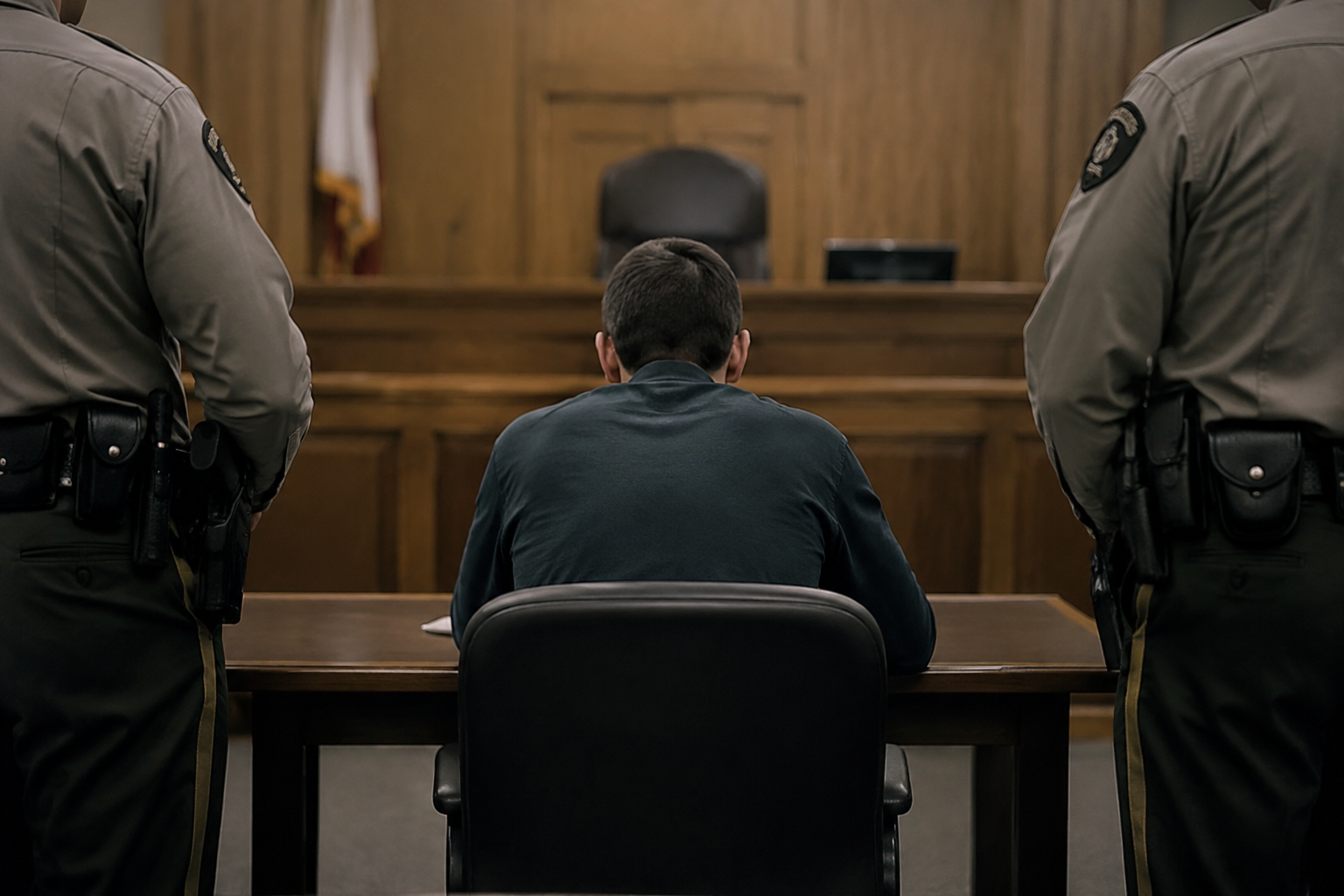
The latest D4vd court update is the handcuff request, and it is not a sideshow to the hearing; it is the hearing’s first procedural fight. Blair Berk asked to remove D4vd’s handcuffs for the preliminary hearing, pointed to five prior courtroom appearances without incident, and pushed the court to make any restraint decision turn on an individualized security record rather than on the case’s profile alone. As of the hearing’s start, any ruling status should be treated as unconfirmed unless independently verified [1].
What the motion is trying to change
Filed on July 20, 2026, as the preliminary hearing opened, the motion asks for a simple but visible change: no handcuffs at counsel table. Berk’s factual hook is the kind that matters in restraint litigation because it is case-specific rather than theatrical. Five prior appearances without incident is not a constitutional conclusion by itself, but it is exactly the sort of record a court is supposed to weigh before treating restraints as routine [1].
That matters because the defense is not arguing that security is imaginary. It is arguing that security has to be justified in this case, on this record, for this hearing. The difference is not semantic. If the court accepts a generalized explanation for visible restraints, the motion fails on the ground Sanchez-Gomez was meant to close off. If the court wants a specific reason, the defense has already put the burden where it wants it [1][2].
Why Sanchez-Gomez is the right frame
The 9th Circuit’s en banc decision in United States v. Sanchez-Gomez rejected blanket shackling policies in federal criminal proceedings. The court treated routine restraints as a due process problem, not a mere courtroom preference, and required an individualized determination supported by a compelling government purpose and the least restrictive means available [2][3].
That is the load-bearing part of Berk’s motion. Five clean appearances make the argument concrete: if the defendant has already appeared without incident, then visible restraints cannot be defended as a default response to the label “high-profile” or to the fact that the charges are severe. The point is not that restraints can never be used; the point is that the court has to say why this defendant needs them now [1][2].
Why the federal rule still needs a state-court caveat
The distinction that keeps this from becoming lazy precedent-matching is jurisdictional. Sanchez-Gomez directly governs federal courts in the 9th Circuit; it does not automatically become a binding command in California Superior Court, where California authority and courtroom-security discretion, including Code of Civil Procedure section 128, also matter. A state judge can still be persuaded by the same individualized-restraint logic, but the motion cannot be treated as if federal circuit law alone disposes of the issue [2][3].
That does not strip the motion of force. It changes the register. In state court, Berk is using Sanchez-Gomez as a constitutional framework and a pressure point: if restraints are visible, the court should have to articulate a real security rationale instead of leaning on the kind of administrative shorthand that often travels under the word “high-profile.” The defense does not need Sanchez-Gomez to be automatically controlling to make it useful [2][3].
Why the preliminary hearing makes the optics matter
This is still a judge-only proceeding, so the defense is not making a classic jury-prejudice argument. That distinction matters. The concern is narrower and more procedural: a defendant’s physical presentation can still shape the atmosphere around probable cause, especially when the court is hearing a capital-eligible murder case with special circumstance allegations and a large evidentiary record [4].
Courthouse News reported that prosecutors are previewing DNA, surveillance, and digital evidence, along with allegations that would elevate the stakes of the hearing beyond an ordinary felony calendar matter [4]. NBC Los Angeles also reported a procedural history that included multiple continuances and a large discovery production, which helps explain why the hearing has become a focus point rather than a routine step [5][6].
That context does not prove the need for shackles. It only explains why the defense is taking the issue now. A preliminary hearing is the first major public screening of the state’s case, and a visible restraint can become part of how the courtroom reads the defendant before the evidence is even discussed. For a defense team trying to keep the judge’s attention on probable cause, that is enough to justify litigating the issue early [4][5][6].
What is still unknown
The legally important point is not whether the request sounds sympathetic or performative. It is whether the court will require an individualized security justification before keeping visible restraints in place. As of publication, the ruling itself remains the unresolved fact. Until that is independently confirmed, the motion’s significance lies in the issue it forces onto the record, not in a victory or defeat that may not yet exist.
References
- D4vd Wants Cuffs Off for Preliminary Hearing — NBC Los Angeles, July 20, 2026 — https://www.nbclosangeles.com/investigations/d4vd-wants-cuffs-off-for-preliminary-hearing/3919498/
- No Shackles for Pretrial Detainees in Court, 9th Circuit Says — Courthouse News — https://www.courthousenews.com/no-shackles-pre-trial-detainees-court-9th-circuit-says/
- Court: No More Routine Shackling of Criminal Defendants — FindLaw — https://www.findlaw.com/legalblogs/criminal-defense/court-no-more-routine-shackling-of-criminal-defendants/
- Prosecutors detail grisly evidence in murder case against musician D4vd — Courthouse News — https://www.courthousenews.com/prosecutors-detail-grisly-evidence-in-murder-case-against-musician-d4vd/
- Preliminary hearing D4vd, Celeste Rivas murder — NBC Los Angeles, July 2026 — https://www.nbclosangeles.com/news/local/preliminary-hearing-d4vd-celeste-rivas-murder/3913975/
- d4vd granted delay in murder case as judge pushes probable cause hearing to July — Law Commentary — https://www.lawcommentary.com/articles/d4vd-granted-delay-in-murder-case-as-judge-pushes-probable-cause-hearing-to-july
Comments
Join the discussion with an anonymous comment.