
The preliminary hearing in the D4vd murder case is attracting the kind of attention usually reserved for verdicts, but the courtroom task is much narrower. As of July 22, 2026, the Los Angeles preliminary hearing that began July 21 remains underway. Reported estimates of its length vary: ABC News described a three-to-five-day hearing, NewsNation reported a possible three-to-seven-day span, and Spectrum News 1, relying on Associated Press coverage, described it as expected to last about four days.[1][3][2]
That range matters, but not because a longer preliminary hearing proves a stronger murder case. In California felony practice, the preliminary hearing asks whether there is reasonable cause to believe a felony was committed and that the defendant committed it. The California Courts Self-Help Guide describes the hearing as the point where a judge decides whether there is enough evidence to require the defendant to stand trial, not whether the prosecution has proved guilt beyond a reasonable doubt.[4]
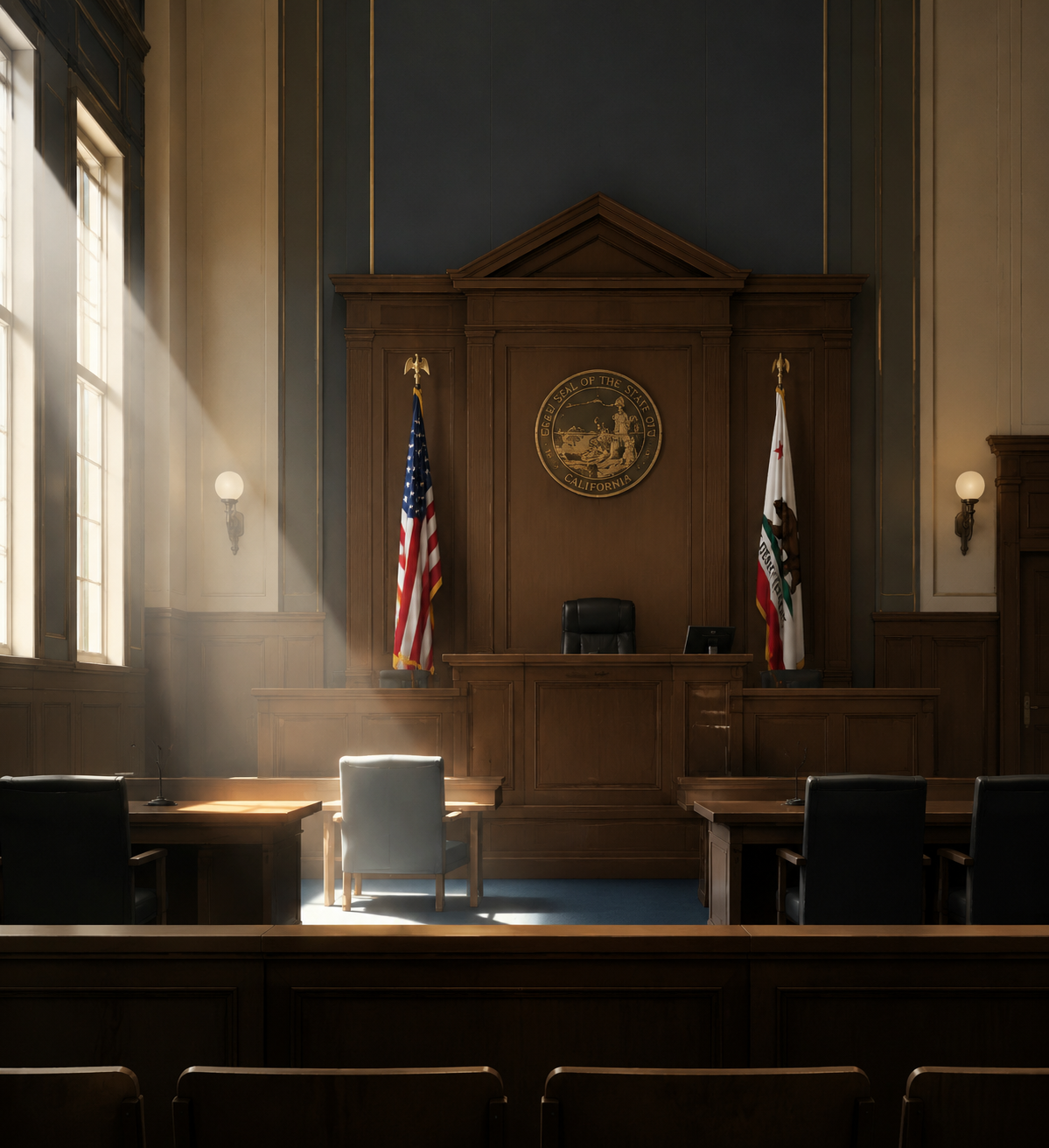
That distinction is not a technicality. It is the legal frame that keeps the proceeding from becoming a public proxy trial. The allegations involve the death of 14-year-old Celeste Rivas Hernandez and evidence described in graphic terms by multiple outlets. A professional account does not need to repeat every injury detail to explain why the hearing became unusually dense. The useful question is how the evidence is being filtered through a probable-cause screen.
The Standard Is Lower Than the Audience Expects
California preliminary hearings sit between arrest and trial. They are adversarial, recorded, and consequential, but they are not designed to resolve the ultimate factual dispute. If the magistrate finds sufficient cause, the defendant is held to answer. If not, the case may be dismissed at that stage, though dismissal at a preliminary hearing does not carry the same meaning as an acquittal after trial.
The governing idea is reasonable cause. The state-court explanation is deliberately modest: the judge determines whether the prosecution has enough evidence to move the felony case forward.[4] In practice, California decisions often describe probable cause in terms of evidence that would cause a person of ordinary caution to entertain a strong suspicion of guilt. That is far below proof beyond a reasonable doubt, and it is also below what lay observers tend to expect once cameras, celebrity coverage, and murder allegations surround a hearing.

The low threshold explains why the hearing can feel lopsided without being legally defective. The prosecution does not have to present every trial witness. It does not have to eliminate every forensic challenge. It does not have to prove the full case as it would to a jury. The defense, meanwhile, may cross-examine aggressively even while knowing that the immediate chance of defeating probable cause is limited. That does not make the defense work performative. It preserves objections, tests the state's theory, exposes gaps for later litigation, and creates a record that can matter after the case leaves the preliminary-hearing department.
Why Detective Testimony Can Carry So Much Weight
The reported testimony arc in the D4vd hearing shows the mechanism clearly. Detective Byers has been a central witness, with outlets describing direct testimony and defense cross-examination that moved through the discovery of remains, investigative steps, chain-of-custody questions, and DNA-related handling issues.[1][8] NewsNation likewise focused its coverage on detective testimony about key evidence presented at the hearing.[3]
That kind of police-witness-centered preliminary hearing is familiar in California felony practice. A detective can summarize investigative work, describe what was collected, explain how items moved through law enforcement custody, and testify to information obtained from other participants in the investigation. The resulting record is not the same thing the prosecution would put before a jury. It is a screening record.
This is where public commentary often loses the plot. A hearsay-based presentation may be vulnerable at trial and still adequate at a preliminary hearing. A chain-of-custody question may be serious for later admissibility, weight, or expert examination and still not defeat reasonable cause. A DNA-handling issue may tell defense counsel where to press, what records to subpoena, and which experts to consult, without requiring the magistrate to end the case at the preliminary stage.
The defense focus reported in the hearing fits that procedural role. Courthouse News described cross-examination aimed at chain of custody, including questions about a body bag and DNA handling.[8] That is meaningful lawyering, not necessarily a preview of a successful probable-cause challenge. A magistrate can credit the broad investigative link while leaving sharper disputes for motions, experts, and trial.
| Issue at the preliminary hearing | What it can do at this stage |
|---|---|
| Detective summary testimony | Establish the investigative basis for reasonable cause without calling every trial witness |
| Hearsay through law enforcement | Move the case forward on a screening record, subject to later litigation over admissibility and weight |
| Chain-of-custody cross-examination | Expose weak points, preserve impeachment, and identify later evidentiary disputes |
| DNA-handling questions | Pressure-test the forensic narrative without necessarily defeating probable cause |
The point is not that those defense questions are minor. In a homicide case, evidence handling can become central. The narrower point is that the preliminary-hearing judge is not asked to decide whether every evidentiary link would persuade twelve jurors beyond a reasonable doubt. The judge is asked whether the prosecution has crossed a deliberately low threshold.
The Hearing Was Procedurally Dense Before Testimony Began
A high-exposure preliminary hearing accumulates procedure before the first witness is sworn. In this case, prosecutors filed a nine-page pre-preliminary-hearing brief. Courthouse News reported on the brief's allegations and noted that the defense sought to seal it. Judge Charlaine Olmedo denied the sealing request, and Courthouse News reported her observation that the media attention was no different from what the court had seen in other cases.[8]
That ruling deserves more attention than another retelling of the most graphic evidence. A prosecution brief filed before a preliminary hearing can organize the court's view of probable cause, identify the expected proof, and frame anticipated disputes. A sealing motion then forces the judge to balance fair-trial concerns, public access, press interest, and the practical reality that some allegations are already circulating. Denying a seal does not endorse sensational coverage; it treats the hearing as a public criminal proceeding absent a sufficient showing for closure or secrecy.
Law Commentary separately reported the defense effort to seal the prosecution's filing and the court's refusal to do so.[5] The important caveat is source discipline: the underlying brief itself was not available for direct review in the provided materials, so any description of its contents should be attributed to the outlets that reported from it, not treated as independently examined court-file text.
The calendar also mattered. Law Commentary reported that the probable-cause hearing had been pushed to July after a defense-requested delay.[6] Continuances at this stage are not clerical background. They affect witness coordination, custody status, briefing, forensic preparation, and the court's ability to manage a hearing that multiple outlets expected to run several days rather than a single short session.
Security and Dignity Are Also Case-Management Questions
NBC Los Angeles reported another pre-hearing issue: D4vd asked to have handcuffs and shackles removed for the preliminary hearing. The judge allowed the handcuffs to be removed but kept leg restraints in place.[7] That is a small ruling only if one views the hearing as a stream of evidence clips. In the courtroom, restraint decisions implicate safety, dignity, visibility, movement, and the optics of presumed innocence before any trial.
At a jury trial, visible restraints can raise acute prejudice concerns. A preliminary hearing before a judge presents a different posture, but the dignitary problem does not disappear. The ruling reflects the kind of practical compromise trial judges make constantly: reduce unnecessary display where possible, maintain courtroom security where the court finds it necessary, and keep the proceeding moving.
Length Signals Management Burden, Not Trial Strength
The duration estimates are easy to overread. A three-to-five-day, three-to-seven-day, or roughly four-day preliminary hearing is plainly more substantial than the compressed felony prelim many practitioners are used to seeing.[1][3][2] It signals witness volume, evidentiary organization, public access issues, and a prosecution decision to make a fuller record. It does not, by itself, tell us whether the case will survive trial scrutiny.
ABC News reported that more than ten witnesses were expected.[1] That number explains some of the calendar footprint. A murder preliminary hearing involving forensic handling, law enforcement witnesses, physical evidence, and a minor victim can require the court to move carefully even when the legal standard remains low. Each witness may be doing less than a trial witness would do, but the cumulative logistics are real.
The prosecution also has an institutional reason not to treat the low threshold as permission to be sloppy. A bare-minimum presentation may be enough in some cases, but a high-profile murder case creates appellate, public-access, and later-motion consequences. A fuller preliminary record can educate the magistrate, lock in testimony, preview evidentiary disputes, and reduce the risk that the court sees the case as underdeveloped at the first serious screening point.
The defense has a parallel reason to litigate even uphill issues. Cross-examination at a preliminary hearing can reveal what the detective knows personally, what came from other officers or lab personnel, what was assumed, and what was documented. Even when the magistrate finds reasonable cause, that record can shape later suppression motions, discovery demands, expert review, plea negotiations, and trial preparation.
What a Held-to-Answer Ruling Would Mean
If the court finds reasonable cause, the legal consequence is not conviction. The defendant is held to answer in superior court. The prosecution then files an information, and the case proceeds to a second arraignment on that charging document. The California Courts Self-Help Guide identifies the preliminary hearing as the stage at which the court decides whether there is sufficient evidence for trial, while later proceedings govern arraignment, motions, and trial preparation.[4]
From there, California's statutory trial-timing framework becomes important. Law Commentary reported that, if D4vd is held to answer, prosecutors would file an information and the case would move toward a second arraignment, with Penal Code section 1382's 60-day trial framework implicated unless time is waived or otherwise extended.[5] That deadline is often less mechanical than it sounds in a serious felony case, because waivers, continuances, discovery, expert work, and motion practice can change the actual trial date.
The charging stakes may also change. Spectrum News 1, citing Associated Press reporting, stated that Los Angeles County District Attorney Nathan Hochman had not yet decided whether to seek the death penalty.[2] Law Commentary likewise treated the death-penalty decision as pending.[5] That unresolved decision should not be collapsed into the preliminary-hearing ruling. A magistrate's probable-cause finding and a district attorney's capital-charging decision answer different institutional questions.
The Public Window Is Wider Than the Legal Question
The D4vd hearing is unusual because the public can see so much of a stage that usually receives little sustained attention. Multiple outlets are tracking testimony, pre-hearing briefing, custody presentation, expected witness counts, and the possible next steps.[1][8][3][5][7] That visibility can be useful if it teaches the right lesson: preliminary hearings are not verdict rehearsals. They are structured screens.
The case also shows why judges in high-profile criminal matters spend so much time on matters that look peripheral from outside the courtroom. Sealing, scheduling, restraints, witness order, and the scope of cross-examination are not housekeeping once a hearing becomes publicly watched. They are the devices by which the court preserves access, fairness, security, and momentum while applying a probable-cause standard that remains intentionally modest.
That is the legal significance of the proceeding as it stands on July 22, 2026. A long, heavily covered preliminary hearing can still be governed by reasonable cause rather than the trial standard the public keeps trying to impose on it.
References
- D4vd murder case: Dayslong preliminary hearing underway in Los Angeles — ABC News
- Judge hearing evidence against singer D4vd in teen's killing — Spectrum News 1 / Associated Press — July 21, 2026
- Detective in D4vd case describes decomposed remains, severed limbs — NewsNation
- Pretrial activities in a criminal case — California Courts Self-Help Guide
- Prosecutors Detail Allegations Against D4vd in Killing of 14-Year-Old Celeste Rivas Hernandez — Law Commentary
- D4vd Granted Delay in Murder Case as Judge Pushes Probable Cause Hearing to July — Law Commentary
- Singer D4vd requests handcuffs off for preliminary hearing — NBC Los Angeles
- Prosecutors detail grisly evidence in murder case against musician D4vd — Courthouse News Service
Comments
Join the discussion with an anonymous comment.