
The David Hearn Reflecting Pool lawsuit update is, at this point, not really a lawsuit update at all. It is a criminal-case status report with a trial date, a live preservation problem, and a record that has already changed under the government’s control.
At the July 20 status hearing, Judge Edelman set Hearn’s trial for September 28, denied the defense motion to dismiss without prejudice, and warned that repairs to the Lincoln Memorial Reflecting Pool were being undertaken by the government at its “own peril.”[1][2]
That posture matters more than the label attached to the pool or the politics around the episode. The government is moving toward trial on an alleged vandalism theory while the physical condition of the scene has been altered after the alleged damage was documented. The court has not dismissed the case. It also has not resolved what consequence, if any, should follow from the repair work.
Where The Case Stands After The July 20 Hearing
The operative posture is narrow but important: Hearn remains on track for a September 28 trial; the defense has preserved its ability to renew dismissal arguments; and the judge has put the government on notice that its repair decisions may carry evidentiary consequences.[1][2]
The phrase “without prejudice” is doing real work here. The court’s denial did not foreclose the defense from returning to the issue after further development of the record. In practical terms, the hearing left the prosecution alive while keeping the evidentiary objection alive with it.
The reported defense position was that the government’s own conduct was making it harder to test the condition of the pool as it existed when Hearn was charged. The judge did not accept that as a basis to end the case then and there, but he expressly recognized the risk created by repairs to the alleged crime scene.[1]
For a lawyer tracking the case, that is the center of gravity. A September trial date is fixed. The government still has a prosecution. The defense still has a preservation argument. The factfinder may eventually have to hear about a pool that no longer exists in precisely the condition the parties are fighting over.
The Timeline Moved Quickly
The case did not drift into this posture. It got there fast.
| Date | Event | Procedural Significance |
|---|---|---|
| June 19 | Hearn was arrested and detained for about five hours. | The case began as an alleged Reflecting Pool vandalism matter. |
| June 20 | President Trump posted about the incident on social media. | The case moved into public and political attention almost immediately. |
| July 2 | A felony indictment was returned. | The matter escalated from the earlier misdemeanor posture within 13 days. |
| July 9 | Hearn pleaded not guilty and was released without conditions. | The case entered its contested felony posture. |
| July 16 | A reported visual analysis addressed possible liner failure and application flaws. | The alleged damage became harder to separate from the pool’s existing condition. |
| July 17–18 | The pool was drained for repair work. | The preservation issue became concrete. |
| July 20 | The court set trial for September 28 and denied dismissal without prejudice. | The prosecution survived, but the spoliation issue remained unresolved. |
Press accounts report that Hearn was arrested on June 19 and detained for approximately five hours. The following day, President Trump posted about the matter on social media.[3]
On July 2, prosecutors obtained a felony indictment. That is the 13-day interval that gives the case its unusual tempo: arrest in mid-June, felony indictment by the beginning of July, arraignment one week later, and a trial date set before the end of the month.[3][4]
On July 9, Hearn pleaded not guilty before Judge McLean and was released without conditions, according to AP and Reuters accounts of the arraignment.[4][5]
There is a useful caution in that last sentence. The public account of the docket still depends heavily on press reporting rather than direct review of every underlying filing. AP and Reuters are reliable for the plea and release posture, but the distinction matters when the fight turns on what was alleged in a motion, what was argued in court, and what the judge actually ruled.
Why The Repair Work Now Matters More Than The Renovation Story
The Reflecting Pool’s recent renovation history is relevant only up to a point. Reporting has described a troubled renovation in the $14 million to $16 million range, including a no-bid contract associated with a company tied to a Trump donor, along with problems such as algae blooms and peeling sealant.[3]
Those facts supply context. They do not decide whether Hearn damaged the pool, whether any charged offense can be proved, or whether the government preserved enough of the scene for the defense to test its theory. The legal problem is more specific: if the alleged damage occurred on a surface already subject to documented failure or disputed workmanship, then repair work may remove information that both sides would otherwise use.
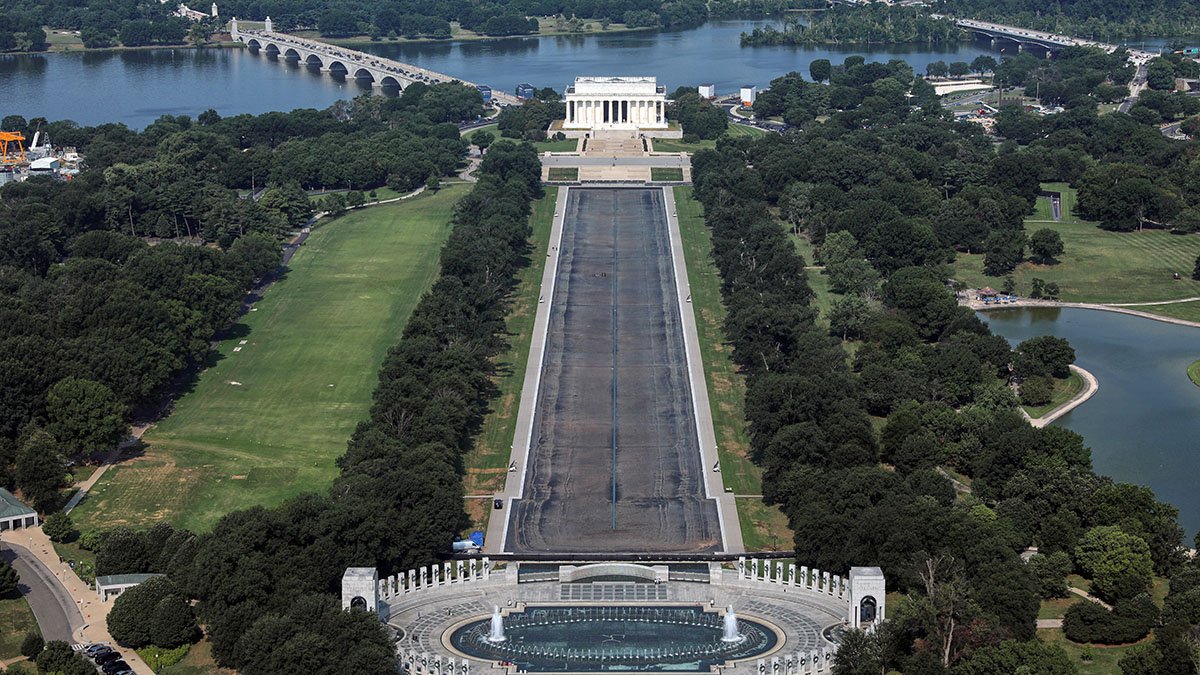
That is why the July 16 visual analysis and the July 17–18 repair window matter. The Washington Post reported a visual analysis finding liner failure consistent with application flaws. The pool was then drained for repairs over July 17 and 18, before the July 20 hearing at which the court addressed the preservation issue.[1]
Spoliation is not a magic word that automatically ends a prosecution. Courts generally care about what was lost, who controlled it, whether there was a duty to preserve it, whether the opposing party can still examine equivalent evidence, and what remedy would fit the prejudice. The available reporting does not establish that the court found sanctionable destruction of evidence. It establishes that the judge saw enough risk to warn the government that the repairs were being done at its “own peril.”[1]
That is a meaningful warning and a limited one. It preserves judicial flexibility. The court could later find no material prejudice, allow cross-examination about the repairs, give an instruction, limit evidence, or consider a renewed dismissal motion if the record supports it. The July 20 ruling did not choose among those remedies.
The Other Defendants Complicate One Easy Narrative
Hearn is not the only person reported to face charges tied to similar conduct at the Reflecting Pool. At least three other individuals have been reported as facing misdemeanor charges.[3]
That fact does not erase the defense argument about charging decisions, preservation, or proof. It does, however, make the public narrative less tidy. The case is not simply a one-person prosecution appearing out of nowhere; it sits alongside other reported misdemeanor matters. The difference is that Hearn’s case escalated to a felony indictment and now carries a September trial setting.
What Has Been Preserved Is Now The Question
The government may still have photographs, video, witness testimony, repair records, contractor observations, expert opinions, and samples or measurements taken before repair work. The public reporting does not yet show the complete inventory. That missing detail is exactly why the spoliation issue cannot be treated as a side note.
A repaired pool is not necessarily a lost case. But a repaired pool can change the litigation. If the defense expert cannot inspect the alleged damage in its original condition, the fight shifts from what the surface showed to what the government preserved, who documented it, when documentation occurred, and whether the defense can meaningfully test it.
That is the practical problem created by the current record. The prosecution moved quickly from arrest to felony indictment to trial setting. At the same time, the physical scene appears to have moved just as quickly from alleged damage to government repair. The court has allowed the case to proceed, but it has not given the government a clean evidentiary bill of health.
As of late July 2026, the next fixed point is September 28. The unresolved point is what consequence follows, if any, from repairing the thing the government says was damaged.
References
- Reflecting Pool repairs could undermine case against former Olympian, judge says, The Washington Post, July 20, 2026
- Trial date set for Olympian accused of Reflecting Pool vandalism, NBC Washington
- David Hearn, Trump, and the Reflecting Pool Damage, The Atlantic, July 2026
- Reflecting pool damage Trump David Hearn, AP News
- Former US Olympian pleads not guilty in reflecting pool vandalism case, Reuters, July 9, 2026
Comments
Join the discussion with an anonymous comment.