
Put the three 2026 dental assistant child sexual abuse sentencing outcomes beside one another and the spread is jarring: 40 years in Arizona, 55 years in Oklahoma, and 15 years to life in California. That spread is the starting point, not the conclusion. The public record points first to differences in victim count, assault pattern, plea posture, offense timing, and state sentencing frameworks, rather than to a clean story of one court being harsh and another being lenient.
| Case | State and sentencing date | Plea posture | Reported victims and assault pattern | Sentence |
|---|---|---|---|---|
| Deion Garcia | Arizona; sentenced July 17, 2026 | Pleaded guilty to 4 of 14 original felony counts | 3 children ages 4–6 abused during X-rays at Kidiatric Dental | 40 years in prison, followed by lifetime probation [1] |
| Cody Stolfa | Oklahoma; sentenced May 2026 | Pleaded guilty to more than 30 counts | 18 sedated patients, including 6 minors; assaults were recorded, and investigators reported more than 10,000 graphic files including CSAM | 55 years in prison, followed by 10 years of probation [2] |
| Tommy Medina | California; sentenced April 11, 2026 | Plea agreement included waiver of all custody credits | 3 girl patients ages 5–9 assaulted during 2012–2013 at a children’s dental office | 15 years to life in state prison [3] |
Those are not interchangeable rows in a national dataset. They are three unrelated prosecutions, in three states, with different statutes and incomplete public information about plea negotiations. Still, they are useful together because they show what a responsible comparison has to count before using the word “disparity.”

Garcia: three very young patients, X-ray-room access, and a long sentence after reduced counts
In the Arizona case, Deion Garcia was sentenced in Chandler on July 17, 2026, to 40 years in prison and lifetime probation after release. The reported victims were three children, ages 4 to 6, and the abuse occurred during X-rays while he was working at Kidiatric Dental [1].
The plea posture matters. Garcia originally faced 14 felony counts, but he pleaded guilty to four. A reduction from 14 counts to four guilty counts does not make the sentence light; it tells a legal reader that the sentence sits on a negotiated record, not on every count prosecutors first filed [1]. Without the offer letters, transcript, or full charging analysis, no public comparison can say why those counts resolved as they did.
What survives in the public record is still severe. These were preschool- and early-elementary-aged children in a clinical setting where a dental worker controlled positioning, privacy, and movement. The reported X-ray-room setting is not a decorative fact. It explains how an ordinary appointment could create a short interval of isolation in which a child patient may not have the vocabulary, confidence, or immediate adult access to report what happened.
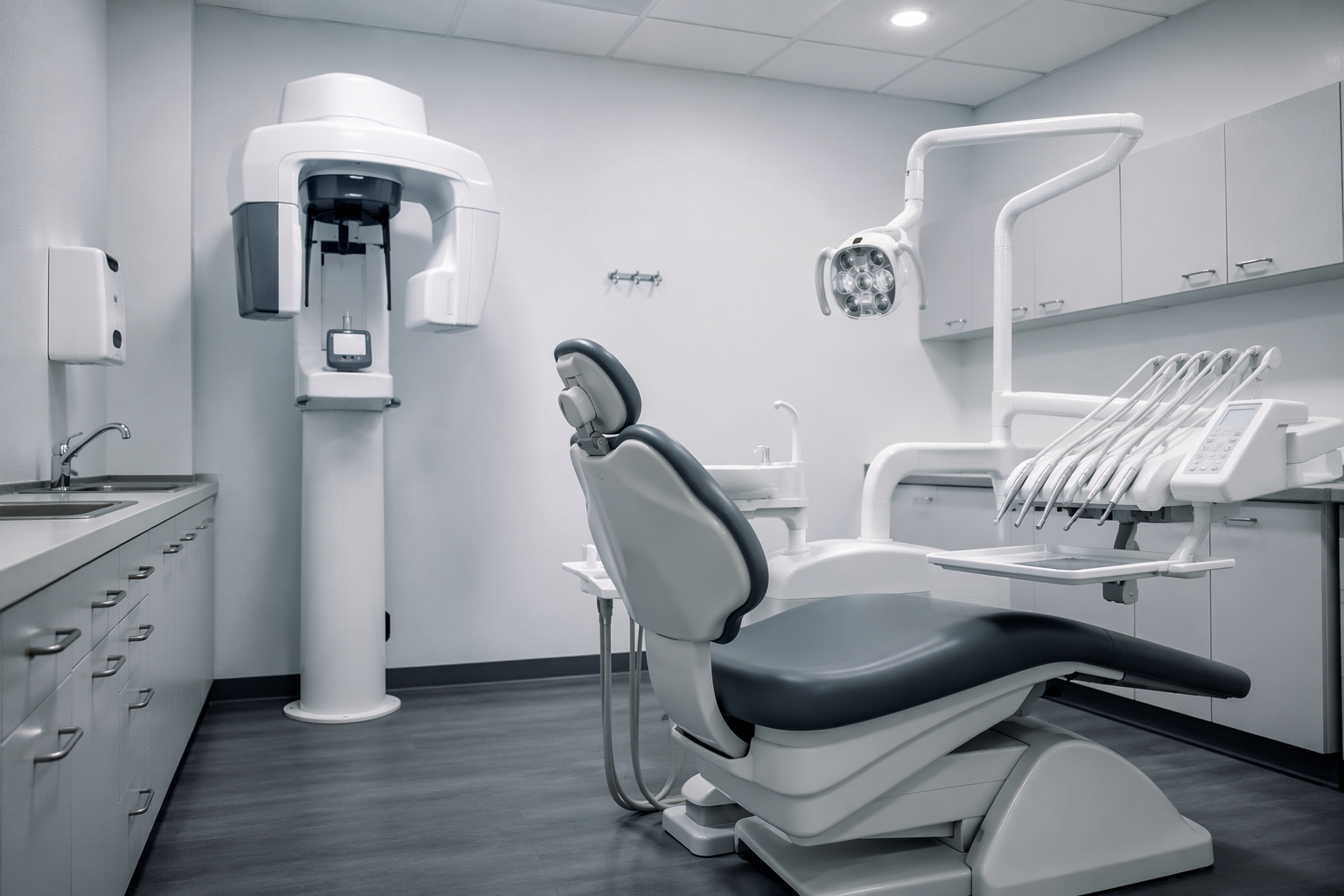
One detail from the related civil and criminal reporting sharpens that setting further: a civil lawsuit alleged that the X-ray room was the only room without a security camera, and the dentist-employer was separately indicted for failure to report [4]. That does not, by itself, prove a broader regulatory failure across dental offices. It does explain why workplace control and institutional response belong in the factual account of this sentencing.
Stolfa: the severe end of the range is tied to sedated victims, recordings, and digital evidence
Cody Stolfa’s Oklahoma sentence is the highest of the three: 55 years in prison plus 10 years of probation. The reported facts are also the broadest and most aggravated. Stolfa assaulted 18 sedated patients, including six minors, while working as a dental assistant in Stillwater for only three months [2].
Sedation changes the sentencing conversation. A conscious child may be frightened, confused, or not believed, but an unconscious patient cannot report an assault that the patient does not know occurred. According to the Oklahoma reporting, the crimes went undetected for three years because the victims were unconscious and unaware [2]. That fact does not merely add emotional weight. It helps explain why the case depended on an investigative path outside the victims’ own disclosures.
The case surfaced after the FBI found a video on Telegram through dark web monitoring in 2024. Investigators said Stolfa then led them to more than 10,000 graphic files, including child sexual abuse material [2]. The sentencing record therefore involved not only contact abuse in a healthcare setting, but recording, distribution-adjacent digital discovery, and possession or control of a large file collection.
The guilty-plea count also distinguishes Stolfa from Garcia and Medina. He pleaded guilty to more than 30 counts [2]. A sentence imposed after more than 30 guilty pleas is not meaningfully comparable to a sentence after four guilty counts unless the comparison first accounts for the charge structure and what each count permitted the judge to impose.
The sentencing judge reportedly called Stolfa “a significant threat to public safety” [5]. In ordinary sentencing language, that phrase goes to incapacitation as well as punishment. In this case, the record gave the court several reasons to view the conduct as more than opportunistic: multiple patients, unconscious victims, digital documentation, a large file cache, and the absence of victim reports until law enforcement found the evidence.
Medina: an older offense window and a life-tail sentence
Tommy Medina’s California sentence is the lowest term in this comparison, but it is not a short sentence. On April 11, 2026, he was sentenced to 15 years to life in state prison for sexually assaulting three girl patients, ages 5 to 9, at a children’s dental office during 2012–2013 [3].
The time gap is central. Medina was sentenced 13 to 14 years after the offense window. The available reporting does not provide enough detail to assign that delay to one cause, and it would be too neat to treat the sentence as a general statement about California leniency. Older cases often present different evidentiary and negotiation realities than recent cases, but the public reports here do not reveal the full plea calculus.
The reported plea agreement included a waiver of all custody credits [3]. That detail is easy to miss and should not be. Custody credits affect how much time already spent in custody counts against a prison term. A waiver does not make 15 years to life equivalent to 40 or 55 years, but it is part of the actual sentencing package rather than a footnote.
Medina’s case also lacks some of the aggravating public facts present in Stolfa’s: no reported 18-patient victim count, no reported sedated-patient pattern, no reported dark-web discovery, and no reported 10,000-file cache. That does not rank victim harm. It identifies the public sentencing facts available for comparison.
What actually drives the spread
The range from 15 years to life to 55 years looks stark because the sentences are placed in one line. Once the record is separated into sentencing variables, the spread becomes more explainable.
- Victim count: Garcia and Medina each involved three reported child victims; Stolfa involved 18 reported patients, six of them minors.
- Victim condition: Garcia and Medina involved child patients during dental visits; Stolfa involved sedated patients who were reportedly unconscious and unaware.
- Recording and files: Stolfa’s case included video evidence found through FBI dark web monitoring and more than 10,000 graphic files; comparable digital-file facts are not reported for Garcia or Medina.
- Plea posture: Garcia pleaded to four of 14 original felony counts; Stolfa pleaded to more than 30 counts; Medina’s plea included waiver of all custody credits.
- Offense timing: Medina’s assaults occurred in 2012–2013, more than a decade before sentencing; Garcia and Stolfa were reported as more recent workplace-abuse prosecutions.
- Jurisdiction: Arizona, Oklahoma, and California use different statutory schemes, sentencing ranges, credit rules, and probation structures.
The plea posture is the least visible and often the most important part of a sentencing comparison. Public articles usually report the original charges, the guilty counts, and the final sentence. They rarely show the evidentiary weaknesses, dismissed counts, witness issues, mandatory sentencing exposure, or negotiation history that made a plea acceptable to both sides.
That opacity cuts both ways. A reduced-count plea can still produce a punishing sentence, as Garcia’s 40-year term shows. A life-tail sentence can look lower than a term-of-years sentence while still leaving parole timing and custody-credit treatment to do real work, as Medina’s sentence shows. A very high term can reflect not only judicial condemnation but a much larger guilty-count base, as Stolfa’s sentence shows.
The federal benchmark is useful, but only as a benchmark
The U.S. Sentencing Commission’s FY2025 Quick Facts report on sexual abuse gives one useful point of orientation: the average federal sexual abuse sentence was 230 months, or a little over 19 years. The same report says sexual abuse offenses increased 33% since FY2021 [6].
That number should not be used as a scoring device for these three state cases. The federal category is broader than dental-office abuse and can include different offense types, federal jurisdictional hooks, guideline calculations, criminal histories, enhancements, and plea structures. It does, however, keep the scale from floating. Garcia’s 40-year sentence and Stolfa’s 55-year sentence sit well above that federal average. Medina’s 15-years-to-life sentence begins below it in minimum-term language but carries an indeterminate life tail and a reported custody-credit waiver.
What this comparison cannot prove
The available record does not support a national conclusion about dental assistant licensing, dental-office supervision, or healthcare abuse prevention. The Arizona camera-free X-ray-room allegation and employer indictment are serious case facts, but they are not a statutory survey. They can explain how one workplace is alleged to have failed; they cannot carry a broader licensing-policy claim without state-specific authority.
Nor can the comparison fully account for victim impact. Sentencing judges routinely hear facts that do not appear in short public reports: family statements, trauma history, treatment needs, defendant allocution, risk assessments, and arguments about consecutive or concurrent time. The absence of those facts from the record available here is not proof that they were absent from court.
The safest conclusion is narrower and stronger: these three unrelated 2026 sentencings show why dental assistant child sexual abuse sentencing comparisons require more than the final prison term. Victim count, assault pattern, sedation or consciousness, recording and CSAM evidence, plea reductions, offense timing, custody-credit treatment, probation tails, and state statutory context all change what the number means.
The range is real. So is the explanation available from the public facts. On this record, the 15-years-to-life, 40-year, and 55-year outcomes are better understood as fact- and framework-driven sentencing differences than as evidence of arbitrary judicial inconsistency.
References
- Ex-Chandler dental assistant sentenced for sexually abusing children under his care, AZFamily, July 17, 2026
- Cody Stolfa: Stillwater dental assistant sentenced for assaulting patients, KOCO
- Orange County dental assistant sexually assaulted three young female patients, KTLA
- ‘Exploited that trust’: Chandler dental assistant gets 40 years for molesting young patients, FOX 10 Phoenix
- Former Stillwater dental assistant sentenced after sexually assaulting sedated patients, KFOR
- Quick Facts: Sexual Abuse, United States Sentencing Commission
Comments
Join the discussion with an anonymous comment.