
A House committee has referred former Special Counsel Jack Smith to the Justice Department for possible criminal prosecution. That is not an indictment, not a charging decision, and not a command that DOJ prosecute him. It is a formal request from the House Judiciary Committee, made on July 22, 2026, asking DOJ to evaluate whether Smith violated 18 U.S.C. § 1001 during a Dec. 17, 2025 deposition about investigative steps taken in the Trump election-interference probe known as Arctic Frost.[1][2]
The referral matters because it puts DOJ in the process institutionally, even though it does not bind prosecutors. The alleged false statement is not a broad claim about whether Smith investigated lawmakers. It turns on a narrower and more lawyerly question: when Smith said his team did not subpoena lawmakers’ records, was that a literally truthful answer to the question asked, or a misleading half-truth because his team obtained and reviewed lawmakers’ text messages through a different channel?
What the referral says happened
Chairman Jim Jordan’s referral alleges that Smith gave false or misleading testimony when asked whether his team subpoenaed toll records of members of Congress. The House Judiciary Committee says Smith answered that he did not subpoena those records, while later records released by Sens. Chuck Grassley and Ron Johnson showed that Smith’s investigative team obtained and reviewed text messages involving 44 members of Congress through presidential records produced by the National Archives and Records Administration, or NARA.[1][3]
That distinction is the core dispute. The documents described in the Grassley release do not show, on the materials available, that Smith subpoenaed congressional records directly. They show that his team received text messages from NARA as part of presidential records production and then reviewed them. If the deposition question was confined to subpoenas for toll records, Smith’s defense is obvious. If the question fairly called for disclosure that congressional text messages had been obtained by another route, Jordan’s half-truth theory becomes the referral’s center of gravity.
The July 14 Grassley-Johnson release adds a separate process problem. According to the release, NARA produced the records on Aug. 21, 2023; within 30 minutes, senior prosecutor Thomas Windom downloaded them; within an hour, the investigative team was reviewing them. The DOJ cover letter quoted in that release stated that the investigative team “apparently bypassed the Filter Team and directly accessed these text messages.”[3]
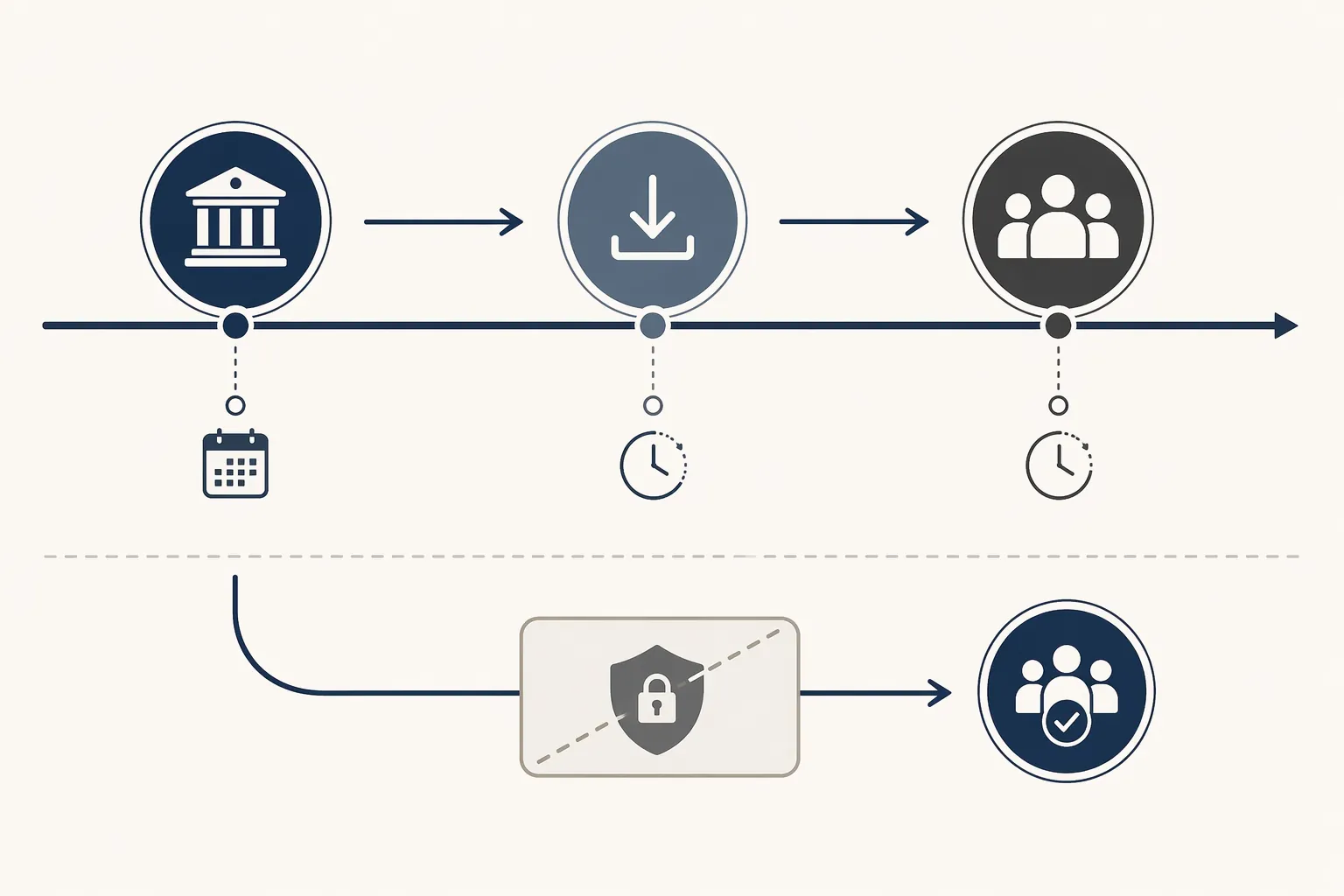
That timeline is not decoration. Filter teams exist to keep potentially privileged or protected material away from prosecutors until screening questions are resolved. When the records include lawmakers’ communications, the privilege and separation-of-powers concerns are not side issues. The uncomfortable fact, as framed by DOJ’s own cover-letter language quoted by Grassley, is that the investigative team apparently accessed the messages before that filter process did its work.[3]
But that process problem does not automatically prove a false statement. It may make the deposition answer more consequential. It may make the committee’s follow-up questions look more important. It may support an argument that Smith’s answer left out information the committee cared about. None of those propositions, standing alone, establishes a knowing and willful violation of § 1001.
Why the word “subpoena” carries so much weight
The referral is built around a deposition answer, so the wording matters more than the surrounding political weather. The reported exchange concerned whether Smith’s team subpoenaed “toll records” of members of Congress. Smith answered that he did not. Later, the Grassley-Johnson documents showed that Smith’s team had obtained and read text messages from 44 lawmakers through NARA presidential records, not through subpoenas issued to obtain the lawmakers’ records.[2][3]
| Issue | Jordan’s theory | Smith’s defense |
|---|---|---|
| What the question covered | The question reasonably implicated congressional communications obtained in the investigation. | The question asked about subpoenas for toll records, not NARA presidential-records production. |
| What the answer conveyed | The answer misleadingly suggested the team had not obtained lawmakers’ communications. | The answer was literally true because the team did not subpoena those records. |
| Why the NARA production matters | It shows the committee was denied a complete account of how lawmakers’ texts were accessed. | It confirms the records came through a different legal mechanism than the one asked about. |
| What § 1001 would require | A materially misleading half-truth or concealment made knowingly and willfully. | Proof of literal truth, ambiguity, or lack of willful falsity defeats the charge. |
This is why descriptions of the referral that jump straight from “lawmakers’ texts were reviewed” to “Smith lied” skip the hard part. A deposition witness is generally entitled to answer the question asked. At the same time, § 1001 is not limited to cartoonishly direct falsehoods. A statement can be actionable if it is materially false or if the speaker uses a trick, scheme, or device to conceal a material fact within federal jurisdiction. The fight is over which description fits this answer.
Smith’s attorneys, Lanny Breuer and Peter Koski, have called the answer “unimpeachably truthful,” arguing that the deposition question concerned subpoenas for toll records, not presidential records obtained from NARA. Ranking Member Jamie Raskin made the same basic point in political and procedural terms, saying Republicans did not ask Smith about NARA or presidential records and calling the referral baseless and vindictive.[2][7]
The § 1001 theory, without the fog machine
Section 1001 makes it a federal crime, within the jurisdiction of the federal government, to knowingly and willfully falsify, conceal, or cover up a material fact by trick, scheme, or device; to make a materially false, fictitious, or fraudulent statement or representation; or to use a writing or document containing a materially false statement. The general penalty is up to five years’ imprisonment, with higher penalties for certain categories not central to this referral.[4]
For this referral, three elements do the serious work.
- Falsity: DOJ would have to evaluate whether Smith’s answer was false, misleading in a legally cognizable way, or literally true in response to the question asked.
- Knowledge and willfulness: prosecutors would need evidence that Smith knew the answer was false or misleading and gave it willfully, not merely that later documents made the answer look incomplete.
- Materiality: under the Supreme Court’s formulation in United States v. Gaudin, the statement must have had “a natural tendency to influence” the decisionmaking body, or have been capable of influencing it.[5]
Materiality is where the filter-team timeline helps Jordan most. If the committee was investigating whether Smith’s team accessed lawmakers’ communications, then an answer that omitted NARA-obtained text messages could plausibly be described as capable of influencing the committee’s work. The 30-minute download and one-hour team review are concrete facts that make the omitted subject important, not just embarrassing.[3]
Falsity and willfulness are harder. A prosecutor reviewing the referral would not be asking whether the NARA production should have been handled differently. The question would be whether Smith’s deposition answer about subpoenas crossed the line into a materially false statement or a concealment by trick, scheme, or device. CRS has described the concealment prong as requiring more than a mere omission; it requires an affirmative act of concealment through a trick, scheme, or device.[5]
That is a narrower inquiry than the public argument now surrounding the referral. A sloppy, incomplete, or self-protective answer is not necessarily a felony. A literally true answer can still create legal risk if it is part of an intentionally misleading scheme, but the government would need evidence supporting that theory. The available public record establishes a sharp dispute; it does not, by itself, resolve the mental-state question.
What the 44-member text review shows, and what it does not
The Grassley release says the text messages involved 44 members of Congress from both parties, including lawmakers such as Grassley, Jordan, Cory Booker, Susan Collins, and Amy Klobuchar. That bipartisan list matters because it describes the scope of the records reviewed; it does not make the legal question less serious, and it does not make the referral stronger or weaker on its own.[3]
The larger Arctic Frost document fight supplies additional scale. Grassley previously released records describing 197 subpoenas involving roughly 430 Republican individuals and entities. That broader subpoena count helps explain why House Republicans were asking about investigative methods, but it should not be collapsed into the narrower Smith-deposition issue unless the particular subpoena, record type, and answer line up.[3]
The practical point is simple enough for a client alert and precise enough for a courtroom: the NARA records episode may be central to oversight, privilege review, and separation-of-powers arguments. The § 1001 referral still lives or dies on the deposition wording, the meaning a reasonable questioner and witness would attach to it, and evidence of Smith’s state of mind.
What a congressional criminal referral actually does
A committee criminal referral is a request for executive-branch action. It is not a criminal complaint filed in court and it does not require DOJ to open charges. Prosecutors retain discretion over whether to investigate, how to investigate, whether to use a grand jury, and whether any charge is supported by evidence and law.[6]
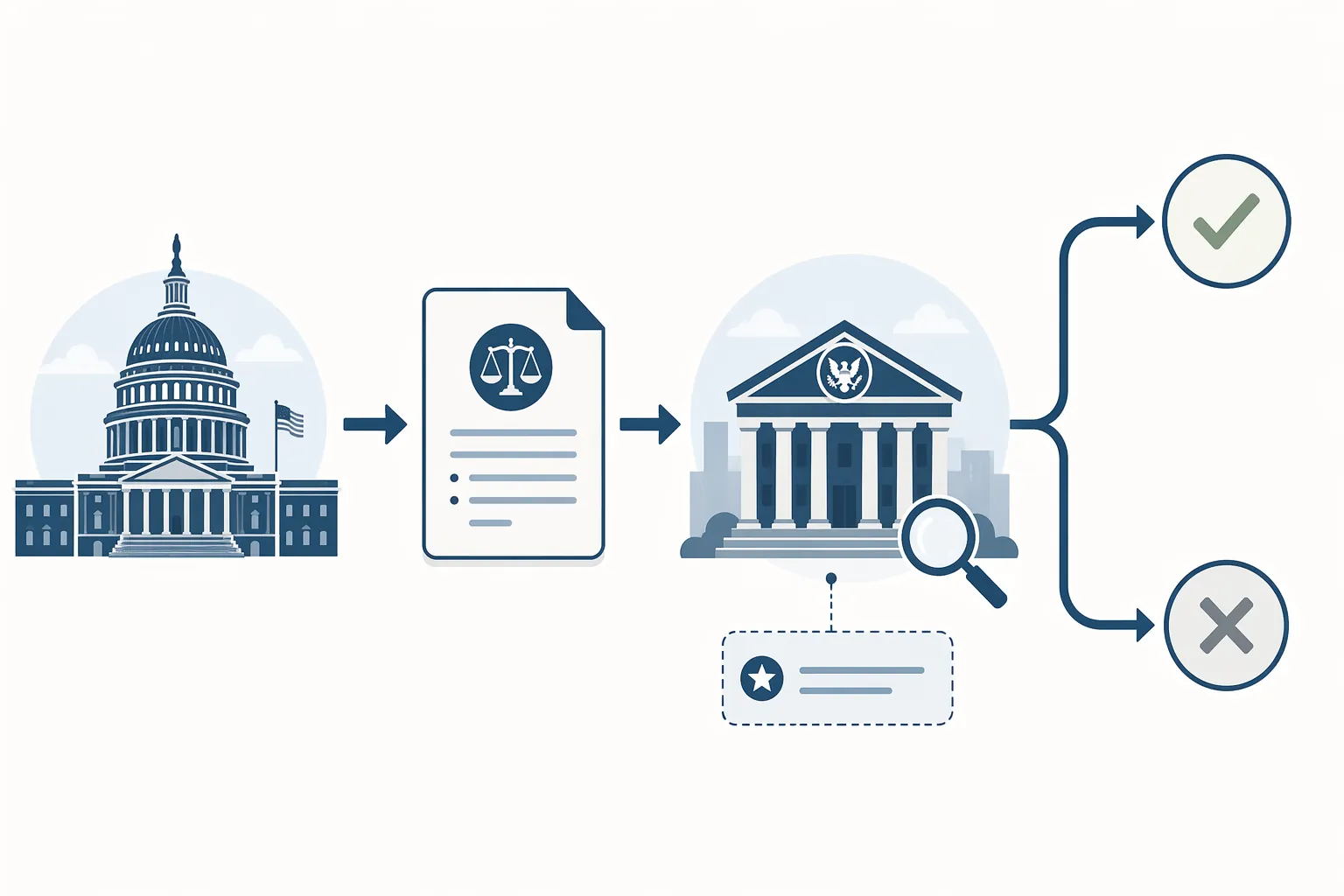
That is different from a criminal contempt referral under 2 U.S.C. § 194. In the contempt setting, the statute directs the U.S. Attorney to bring the matter before a grand jury. Ordinary criminal referrals, including referrals alleging false statements to Congress, do not carry the same statutory command.[6]
The non-binding label still should not be mistaken for irrelevance. Point of Order’s analysis of congressional referrals notes former FBI Director James Comey’s 2016 testimony that the FBI had a longstanding practice of not investigating alleged crimes against Congress without a formal referral from Congress. On that account, a committee referral can satisfy an institutional prerequisite for FBI review even while DOJ keeps charging discretion.[6]
That is the procedural posture as of July 23, 2026. The House Judiciary Committee has made the referral. DOJ has not publicly announced a charging decision. The next meaningful question is not whether Jordan’s letter itself prosecutes Smith. It does not. The question is how DOJ assigns, screens, or declines the matter once the referral reaches the department.
The Blanche problem
The referral lands at an unusually awkward address. Todd Blanche, serving as Acting Attorney General while his nomination for the permanent job was pending a Senate vote on July 23, 2026, previously represented Donald Trump in the two Smith prosecutions: the Jan. 6 election-interference case and the Mar-a-Lago classified-documents case.[2]
That does not answer the merits of the § 1001 allegation. It does, however, make the handling question unusually fraught. A referral asking DOJ to evaluate the prosecutor who charged Blanche’s former client is not an ordinary intake decision. The conflict issue is observable without guessing at anyone’s motives: prior representation, current acting authority, and a pending confirmation vote converge at the moment the referral arrives.
The cleanest next procedural signal would be administrative, not rhetorical. DOJ could assign the matter to officials insulated from Blanche, seek ethics guidance, document a recusal or screening arrangement, or decline to take further action. Until that happens, the referral remains legally contested and procedurally alive, with the strongest public facts pointing to a serious filter-team and oversight dispute and the hardest criminal-law questions still unresolved.
References
- House Judiciary Committee Refers Jack Smith to DOJ for Criminal Prosecution, House Judiciary Committee, July 22, 2026
- Jordan recommends Jack Smith charges, The Hill
- NEWS: Jack Smith’s Investigative Team Secretly Obtained Text Messages from 44 Members of Congress amid Trump Probe, U.S. Senator Chuck Grassley, July 14, 2026
- 18 U.S. Code § 1001 - Statements or entries generally, Cornell Legal Information Institute
- False Statements and Perjury: An Overview of Federal Criminal Law, Congressional Research Service, October 8, 2024
- What Exactly is a Congressional Criminal Referral?, Point of Order, March 9, 2022
- Ranking Member Raskin Slams Republicans’ Baseless and Vindictive Criminal Referral of Jack Smith, Former Special Counsel Who Prosecuted Trump’s Crimes, House Judiciary Committee Democrats
Comments
Join the discussion with an anonymous comment.