
Any legal analysis of DraftKings consumer protection lawsuits has to start with the split, not with a national verdict. In Massachusetts and Pennsylvania, promotion cases challenging deposit-bonus or similar sportsbook offers have survived major early tests; in New York federal courts, closely related theories have been dismissed after judges credited the availability or conspicuousness of DraftKings’ terms.[1][2][3][4] That is the working contradiction as of Q3 2026: materially similar marketing theories are not producing materially similar procedural outcomes.
This article is an informational analysis of published rulings, regulatory materials, law-firm releases, and legal reporting. It is not litigation strategy, compliance advice, or a prediction about how any pending court will rule.
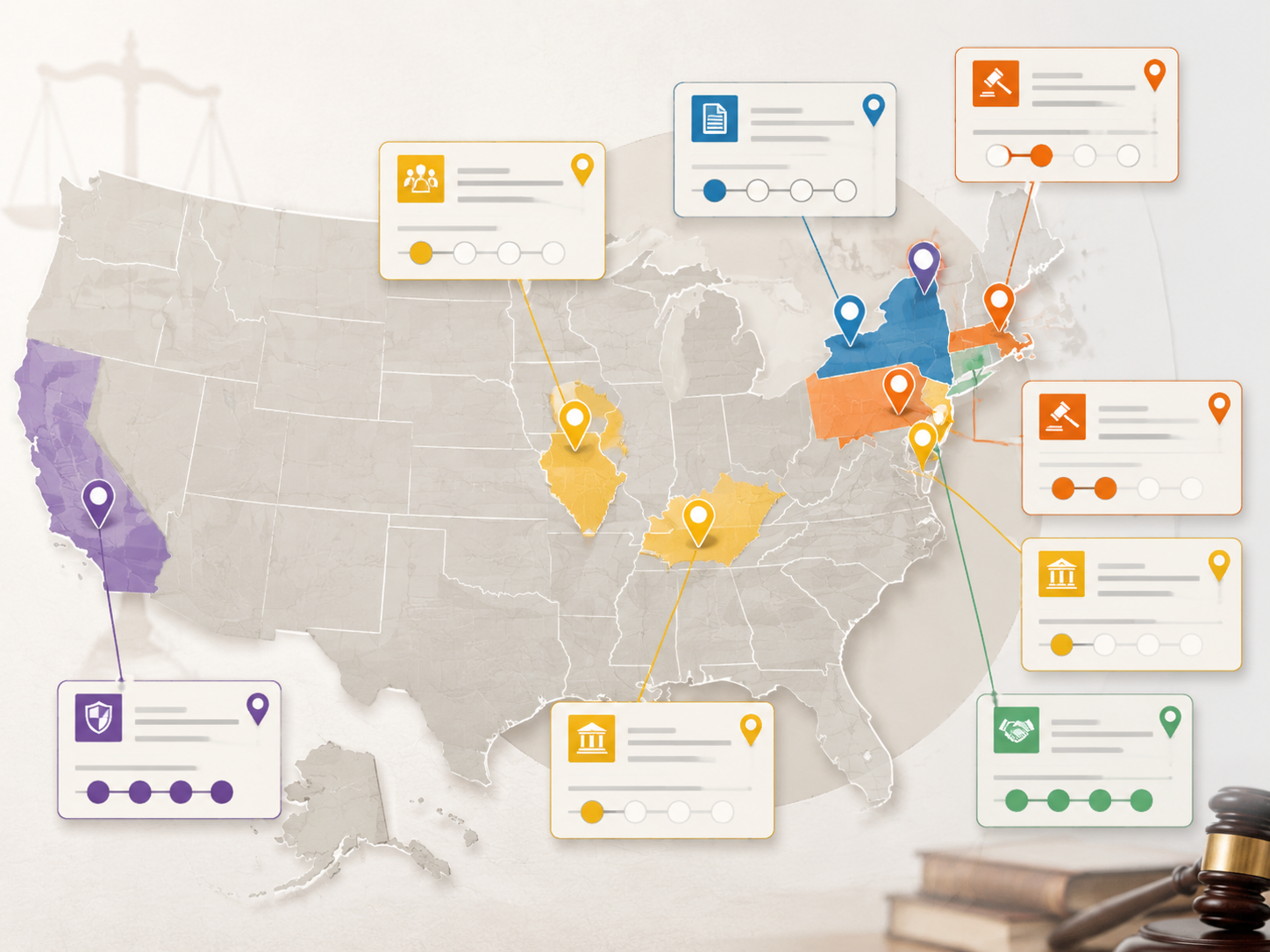
The current map is larger than a single promotional campaign. Published materials support at least seven active consumer protection class actions across Massachusetts, New York, Pennsylvania, Illinois, Kentucky, and New Jersey, plus a California data-privacy class action and a Connecticut regulatory settlement.[1][2][3][5][6][7] The exact count depends on how one counts coordinated multi-state filings, but the practical point is stable: DraftKings is defending promotion-related consumer claims in multiple jurisdictions where the same words, screens, and linked terms may matter differently.
The Docket Map, Before the Doctrine
The cases fall into three tracks that should not be blurred. The first is the core deposit-bonus and “risk-free” or promotional-offer litigation, where plaintiffs argue that consumers were drawn into offers whose wagering requirements, limits, or conditions were not adequately communicated. The second is a privacy track, represented by the California Hughes filing, which concerns browser-fingerprinting allegations rather than bonus economics.[6] The third is public enforcement or municipal pressure, where Connecticut’s settlement and Philadelphia’s preemption fight sit closer to regulatory structure than private class damages.[7][8]
| Jurisdiction | Proceeding Type | Current Posture From Published Materials | Why It Matters |
|---|---|---|---|
| Massachusetts | Consumer protection class action | Claims survived summary judgment in March 2026 | Court focused on proof of if, when, and how promotional terms reached users |
| Pennsylvania | False-advertising / consumer protection action | Claims survived dismissal in April 2026 | Court allowed theory that fine print or obscure links could make ads misleading |
| New York, EDNY | Deposit-bonus consumer action | Dismissed in July 2025 | Court found terms conspicuous and expected reasonable consumers to review them |
| New York, SDNY | Bettor-rights / promotion-related action | Dismissed in 2025 | Court found no duty to protect gamblers and treated terms as readily available |
| Illinois, Kentucky, New Jersey, New York, Pennsylvania | Coordinated class filings | Active filings described by plaintiffs’ counsel | Shows multi-state UDAP pressure beyond one forum |
| California | Data-privacy class action | Filed in June 2026 | Different theory: browser fingerprinting, not deposit-bonus deception |
| Connecticut | Regulatory settlement | $3 million voluntary refund announced in July 2025 | Completed monetary recovery, but without admission of wrongdoing |
The table is not a scorecard on whether a promotion was fair. It is a posture map. A denial of summary judgment is not a plaintiff win on the merits; a dismissal is not a full factual exoneration of every screen a customer ever saw. These distinctions matter because most of the fight is still about what can be pleaded, what can be proved, and what a reasonable consumer could be expected to notice before depositing money.
Massachusetts Turns the Promotion Into a Proof Problem
The Massachusetts Scanlon/Harris action is the most operationally concrete case in the current group because the March 2026 ruling did not simply ask whether terms existed somewhere. Judge Squires-Lee found genuine disputes about “if, when and how” the promotional terms were communicated to consumers, and DraftKings could not produce admissible records of the actual user sign-up flow.[1]

That evidentiary gap changes the character of the dispute. A sportsbook can maintain a terms archive, train staff on promotion language, and believe that a bonus was accurately described. But the question a court may need answered is narrower and more stubborn: what did this user actually see, on this device, at this point in the sign-up sequence, before money moved?
That is why the Massachusetts ruling is more than another survived motion. Summary judgment is supposed to test whether a case has enough evidentiary conflict to proceed. If a defendant cannot establish the timing, placement, and appearance of the terms it says consumers received, the mere existence of terms may not carry the burden. Attorney Amy Crafts, writing about the ruling, called it “a cautionary tale for entities selling products in Massachusetts.”[1]
For operators, the lesson is less about a magic phrase in a disclaimer than about preservation. Product teams change screens. Marketing teams revise offer language. A/B tests disappear. Mobile flows compress text, hide links, or reorder consent moments. Months or years later, litigation asks the company to reconstruct the consumer’s path with admissible evidence, not institutional memory.
Pennsylvania Keeps the Deception Theory Alive
Pennsylvania now sits closest to Massachusetts in practical effect, though at an earlier procedural stage. In April 2026, Judge Leeson in the Eastern District of Pennsylvania allowed a DraftKings false-advertising suit to stay in play, finding that the challenged ads could be misleading where key terms were allegedly placed in fine print or obscure links.[2]
The Pennsylvania ruling matters because it resists a common defense instinct: point to the terms and ask the court to treat their availability as the end of the inquiry. Availability may be relevant, but the allegation in these promotion cases is often about the path between the headline offer and the limiting conditions. If the headline does most of the work and the conditions sit where a reasonable consumer might not be expected to absorb them, a court may let the case proceed.
That does not mean Pennsylvania has found DraftKings liable. It means the complaint plausibly alleged a misleading presentation. The difference is important. At the pleading stage, the court is deciding whether the legal theory and alleged facts can move forward, not whether the plaintiff will ultimately prove that the offer deceived consumers.
New York Is the Counterweight, Not the Footnote
The New York dismissals prevent any clean plaintiff-side narrative. In Aminov, Judge Brodie in the Eastern District of New York dismissed deposit-bonus claims in July 2025, holding that the terms were “conspicuous” and that a reasonable consumer would review them.[3] In Leon, Judge Cote in the Southern District of New York dismissed a separate case in 2025, with Sportico reporting that the court found no duty to protect gamblers and treated DraftKings’ terms as readily available.[4]
Those rulings do not merely reflect a different attitude toward sports betting. They reflect a different judicial answer to a narrower consumer-law question: when are disclosures sufficiently prominent, accessible, and legally meaningful? New York’s answer, at least in these published rulings, gives more force to the presence and accessibility of terms than the Massachusetts and Pennsylvania decisions have done at their respective stages.
The reasonable-consumer inquiry is doing a lot of work here. Courts are not asking whether every bettor reads every condition. They are asking whether the law should treat the disclosed conditions as something a reasonable consumer could and should have understood. That is why two cases can look similar from a distance and still separate sharply once the court looks at page layout, link placement, offer wording, and the procedural record.
The Coordinated Filings Broaden the Map Without Resolving the Split
Loevy + Loevy has described coordinated class actions challenging DraftKings promotions under multiple state consumer-protection statutes, including filings tied to Illinois, Kentucky, New Jersey, New York, and Pennsylvania.[5] Those filings matter less because they announce a new legal theory than because they carry similar theories into states with their own UDAP statutes, pleading standards, and disclosure doctrines.
That is where national commentary tends to flatten the docket. “DraftKings promotion lawsuit” sounds singular. The active landscape is not singular. A claim can be viable in one forum because a state consumer statute is read broadly, because a court treats fine print skeptically, or because the factual record is incomplete. The same theory can fail elsewhere because the court sees the disclosures as prominent enough or the consumer expectation as legally unreasonable.
The practical consequence is that operators cannot treat a dismissal in one district as a national cure. Nor can plaintiffs treat a survived motion in another state as proof that the promotion architecture is unlawful everywhere. The current litigation is developing as a set of jurisdiction-specific tests.
California Is a Different Case
The California Hughes case should be kept separate from the deposit-bonus split. It was filed in June 2026 and concerns browser-fingerprinting allegations, according to published coverage.[6] Whatever its merits, it does not test whether a sign-up bonus was misleadingly advertised, whether wagering conditions were hidden, or whether risk-free language created an unreasonable consumer impression.
Its presence on the map still matters because it shows that consumer-facing sportsbook litigation is not limited to advertising copy. Data collection, device identification, and user tracking can become their own consumer-protection or privacy battlegrounds. But importing the California theory into the deposit-bonus cases would confuse two different evidentiary records.
Connecticut Is a Recovery, Not a Merits Judgment
Connecticut is the only completed monetary recovery in the materials reviewed. In July 2025, the Connecticut Department of Consumer Protection announced that DraftKings had agreed to voluntarily return $3 million to approximately 7,000 consumers in connection with deposit-match offers made from October 2021 through January 2023.[7]
The settlement also required annual training, enhanced promotion education, and a $50,000 payment to the state’s consumer protection enforcement fund.[7] Just as important, the agreement came without an admission of wrongdoing.[7] That makes Connecticut meaningful as a regulatory outcome and consumer refund, but not as a court finding that DraftKings’ promotion terms were deceptive.
The distinction can feel technical until it is lost. A voluntary refund can shift compliance expectations and public enforcement incentives even when it does not establish liability. It can also become part of the factual background plaintiffs point to, while still leaving courts to decide their own statutory and evidentiary questions.
Municipal Pressure Is Now Part of the Surrounding Weather
The Philadelphia dispute adds another layer. On July 16, 2026, DraftKings sued Philadelphia over the city’s 2024 Consumer Protection Ordinance, arguing that Pennsylvania’s Gaming Act and state UDAP statute displace the local ordinance.[8] That case is not another deposit-bonus class action. It is a preemption fight over who gets to regulate consumer-facing conduct.
The timing is still worth noting because municipal consumer-protection pressure does not appear purely hypothetical. Baltimore filed a city-level lawsuit against DraftKings and FanDuel in April 2025, according to published coverage referenced in the broader reporting record.[4] Philadelphia’s case therefore fits a wider question: whether local governments will try to use consumer-protection authority where they believe state gambling regulation is not enough.
For courts, that can become a statutory hierarchy problem before it becomes a deception problem. For operators, it means advertising and promotion review may increasingly need to account not only for state gaming regulators and private plaintiffs, but also for local enforcement theories that may or may not survive preemption challenges.
Why the Fragmented Outcomes Matter
The legal pressure points in these cases are unusually practical. Judges are looking at conspicuousness, reasonable-consumer expectations, the placement of fine print, the function of links, the availability of terms, and the admissibility of records showing what the user saw. Those are not abstract values. They are product-design and record-retention questions translated into consumer-protection doctrine.
A promotion flow that looks defensible in a compliance memo can become fragile if the company cannot later show the version of the screen used during the relevant period. A link that seems adequate to a New York court may look too obscure to a Pennsylvania court if the offer’s headline does more work than the conditions beneath it. A refund agreement with a regulator may change enforcement expectations without resolving private class claims.
The broader sports-betting debate is not absent from this litigation, but it is filtered through pleadings and proof. Courts are not being asked to write national gambling policy in these class actions. They are being asked whether a consumer-protection statute reaches a particular offer, presented in a particular way, to users whose alleged understanding must be reconstructed after the fact.
Federal and State Enforcement Could Change the Pressure Points
Congress has not displaced this state-by-state litigation map. The SAFE Bet Act, reintroduced in March 2025 by Senator Richard Blumenthal and Representative Paul Tonko, would impose federal standards for sports-betting advertising, affordability limits, and restrictions involving artificial intelligence, according to the sponsors’ release.[9] If enacted, such legislation could create a federal overlay on promotion practices. As of Q3 2026, the cases discussed here remain governed by existing state and federal litigation channels.
State enforcement may also grow more coordinated. Troutman Pepper Locke partner Ashley Taylor wrote in 2026 that consumer-protection lawsuits will increasingly be brought by state attorneys general through their own offices while also relying on outside counsel, adding that “the plaintiffs’ bar and AGs have relationships now.”[10] That observation is not specific to DraftKings, but it helps explain why private class actions, state settlements, and municipal initiatives should be read together rather than in isolation.
The current docket does not establish a national answer to whether DraftKings’ promotions are deceptive. It does show that legal risk for sports-betting operators is now highly state-specific, fact-dependent, and increasingly tied to their ability to prove exactly how promotional terms reached consumers.
References
- Judge Finds Jury Issues in DraftKings Class Action, Sheehan Phinney, March 2026.
- DraftKings False Advertising Suit Stays in Play After Pa. Court Decision, The Legal Intelligencer, April 9, 2026.
- DraftKings Beats Users’ Deceptive, Fraudulent Marketing Claims, Bloomberg Law, July 2025.
- DraftKings Court Rulings Raise Questions About Bettor Rights, Sportico, 2025.
- DraftKings Sued in New York for Deceptive Practices, Loevy + Loevy.
- DraftKings Class Action Lawsuit Alleges Sale of Consumer Data, AboutLawsuits, June 2026.
- DraftKings Agrees to Voluntarily Return $3 Million to Connecticut Consumers, Connecticut Department of Consumer Protection, July 2025.
- DraftKings Sues Philadelphia Over Consumer Protection Ordinance, Bloomberg Law, July 2026.
- Blumenthal and Tonko Reintroduce SAFE Bet Act Addressing Sports Gambling, Office of Senator Richard Blumenthal, March 2025.
- Consumer Protection Cases and Trends to Watch in 2026, Troutman Pepper Locke, 2026.
Comments
Join the discussion with an anonymous comment.