
The legal implications of election fraud investigations are no longer confined to subpoenas, press releases, or disputes over voter-list maintenance. On January 28, 2026, FBI agents executed a search warrant at the Fulton County Elections Hub and Operations Center in Atlanta and seized more than 600 boxes of 2020 election ballots tied to more than 500,000 voters.[1] The warrant rested on a claimed 3 percent ballot discrepancy that state-level inquiries had already rejected as unsubstantiated, including reviews by the Georgia Bureau of Investigation and Georgia Secretary of State Brad Raffensperger’s office.[1]
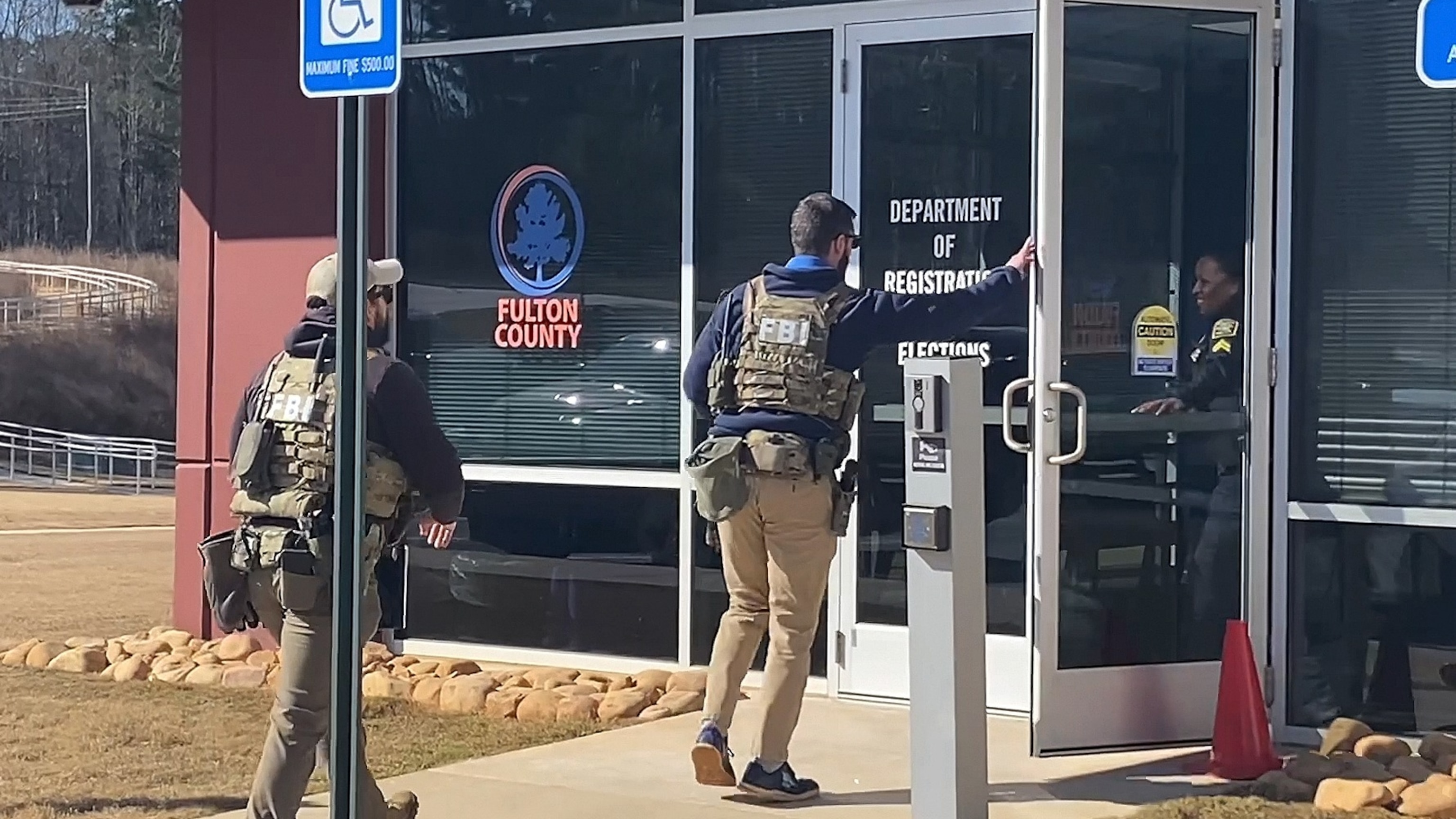
That is the point at which an election investigation stops looking like an abstract dispute over federal authority and starts looking like a custody fight. Ballots are not ordinary paper records. They are election records held under state procedures, preserved for recounts and contests, and bound up with voter privacy obligations. When federal agents take physical possession of them years after the election, after state investigators have already examined the premise for the search, the question is not whether election fraud can ever be investigated. It is who is entitled to take control of the evidence, when, and at what cost to the institutions that still have legal duties over the election.
Fulton County tried to get the materials back through a Rule 41(g) motion for return of property. The district court denied that motion in May 2026, leaving the federal government in possession while the county remained the local custodian whose election infrastructure and legal obligations had been disturbed.[2] That denial did not resolve the larger constitutional question. It left it exposed.
The old DOJ rule was built for exactly this problem
The Justice Department has long recognized that election investigations create risks different from most criminal inquiries. The eighth edition of the department’s Federal Prosecution of Election Offenses manual states that “overt criminal investigative measures should not ordinarily be taken” until the election has concluded, its results have been certified, and all recounts and election contests have ended.[3]
The word “ordinarily” matters. The manual did not create an absolute immunity period for election crime. It acknowledged that federal criminal statutes have work to do. But it also treated timing as a legal and institutional safeguard. A premature raid, public interview, or demand for live election materials can affect confidence, alter the conduct of recounts, and place state officials in the position of answering federal investigators while they are still administering the legal process that determines the result.
The manual’s removal from the Justice Department’s public website in 2026 is therefore significant, but it should not be made to carry more than it can bear. Its disappearance raises a serious question about whether the department still treats the non-intervention policy as operative. It does not, by itself, prove that the policy was formally rescinded or replaced. The more concrete point is that the Fulton County seizure departed from the posture of restraint the manual articulated: it was an overt federal criminal investigative act directed at physical ballots, after state authorities had already found the cited discrepancy theory unsubstantiated.
For lawyers advising election offices, the manual’s value was never only internal DOJ housekeeping. It supplied a baseline expectation: federal investigators may investigate federal election offenses, but the department traditionally recognized that election administration has its own clock. Certification, recounts, contests, preservation duties, and voter privacy rules are not inconveniences to be worked around. They are part of the legal environment in which any election fraud investigation operates.
Roudebush supplies the hardest constitutional test
The Fulton County seizure also raises a question that the ordinary statutory vocabulary does not quite answer. In February 2026, Edward Foley argued at SCOTUSblog that Roudebush v. Hartke points toward a constitutional limit on federal executive seizure of ballots when that seizure would impair Congress’s Article I, Section 5 authority to judge the elections, returns, and qualifications of its own members.[4]
Roudebush itself involved a state recount in a Senate election. The Supreme Court allowed the recount, but only because it did not prevent the Senate from making its own final judgment under Article I, Section 5.[4] Foley’s argument is that if a state recount must not interfere with Congress’s judging power, then a federal executive seizure that removes ballots from the officials or institutions that may need them presents an even stronger constitutional problem. The Latin shorthand is a fortiori; the practical question is simpler: if Congress has the final judging authority, why may the executive branch take custody of the materials Congress may need to exercise it?
No court has yet adopted that argument in this context. That uncertainty matters. It means the Fulton County dispute is not a settled holding waiting to be applied elsewhere. It is a warning that federal election investigations can press against more than state inconvenience or county record-retention rules. They can collide with the Constitution’s allocation of election-judging authority.

That is also why the Fulton County facts matter more than the rhetoric around them. A federal investigation aimed at counterfeit ballots, bribery, intimidation, or destruction of records sits on familiar ground if it proceeds within statutory authority and respects election processes. A federal seizure of hundreds of boxes of ballots based on a theory state investigators already deemed unsubstantiated presents a different institutional posture. The executive branch is not merely asking for evidence. It is taking custody of the election record.
The statutes do not give DOJ everything it has demanded
The statutory map is narrower than the administration’s enforcement posture suggests. The Congressional Research Service identifies several federal tools relevant to voting-record investigations, including the National Voter Registration Act, the Help America Vote Act, and Civil Rights Act provisions governing the retention and preservation of election records.[5] Those laws matter. They do not, however, automatically convert statewide voter files into records the Justice Department may compel on demand.
| Legal source | What it can support | What remains contested |
|---|---|---|
| NVRA | Federal enforcement of voter-registration requirements and list-maintenance obligations | Whether it compels disclosure of the full voter data demanded by DOJ |
| HAVA | Federal standards tied to statewide voter-registration systems and election administration | Whether it authorizes DOJ to obtain broad personal identifiers from state voter files |
| Civil Rights Act record provisions | Retention and preservation of election records for federal elections | Whether preservation duties become a federal right to seize or obtain the demanded records |
| Article I, Section 5 | Congressional authority to judge elections, returns, and qualifications of its members | Whether executive seizure of ballots can impair that authority under the Roudebush theory |
Through December 2025, the Justice Department had filed lawsuits against at least 11 states seeking voter-registration data, including full name, date of birth, residential address, and either a driver’s license number or the last four digits of a Social Security number.[6] Those identifiers are not incidental. They are the fields that make voter files useful for matching, screening, and enforcement theories, and they are also the fields that create privacy and misuse risks for voters whose eligibility has not been individually challenged.
Federal district courts have repeatedly dismissed those suits, reasoning that the NVRA, HAVA, and the Civil Rights Act “do not compel the disclosure of the voter records demanded by DOJ.”[7] DOJ has appealed, so the appellate law is not fixed. But the district court pattern already tells election officials something important: one major branch of the administration’s theory of federal investigative authority has been rejected at the threshold.
Readers who need the fuller docket-by-docket treatment can turn to Federal courts block White House election fraud response. The point here is narrower: courts are not treating federal election-integrity language as a substitute for a statutory hook. When DOJ asks for private voter information, it must identify a law that actually requires the state to disclose it.
Executive control is being asserted faster than courts can define it
Executive Order 14399, issued in March 2026 under the title “Ensuring Citizenship Verification and Integrity in Federal Elections,” belongs in this same pattern, though it is not the center of it. The order is being challenged by 24 states as an unconstitutional usurpation of state election authority.[5] The White House has framed its election-integrity program in broad terms, but its page is best read as a partisan statement of the administration’s rationale, not as proof of disputed factual claims.[8]
The constitutional objection is not that the federal government has no election role. Article I, Section 4 gives Congress power over the times, places, and manner of congressional elections, and federal statutes regulate registration, record preservation, intimidation, fraud, and civil rights violations. The problem arises when executive officials try to use those federal interests as if they conferred general supervisory authority over state election administration.
That distinction is familiar in emergency-power disputes as well. The analysis in No legal basis for Trump election emergency declaration is useful because it separates congressional election authority from unilateral executive control. The same separation matters here. A federal criminal investigation may be legitimate in purpose and still exceed the authority or timing Congress has actually supplied.
Threats against state officials change the pressure point
The latest escalation is not just litigation over records. On July 17, 2026, DHS Secretary Mullin threatened election officials in California, New Jersey, Nevada, and Pennsylvania with “fines, by penalties, and even depending on how far it goes, prison time” if they failed to comply with citizenship-verification demands.[9] DHS also claimed that more than 250,000 potential noncitizens were registered, but Reuters reported that the department did not provide corroborating evidence; Nevada Secretary of State Francisco Aguilar called the figures “wildly speculative at best.”[9]
That episode should not be inflated into a general claim about noncitizen voting. The sourced fact is more limited and more legally important: DHS made coercive threats against state election officials while advancing a numerical claim that was not corroborated in the report and was expressly disputed by Nevada. For election administrators, that is a different kind of burden from receiving a civil subpoena or defending a declaratory-judgment action. The official is no longer just preserving records or litigating statutory meaning. The official is being told that refusal may carry personal consequences.
The related SAVE database disputes, covered in Five lawsuits challenge DHS election security funding conditions, show why citizenship-verification fights cannot be treated as mere data-management disagreements. They implicate funding conditions, database reliability, voter eligibility procedures, and the line between federal assistance and federal command.
What is already settled, and what is not
Several propositions are already firmer than the surrounding politics. First, federal criminal election statutes exist and can be used. Second, the Justice Department’s own historical policy recognized that overt investigative measures can disrupt election processes and should ordinarily wait until certification, recounts, and contests have concluded.[3] Third, district courts have rejected DOJ’s argument that the NVRA, HAVA, and the Civil Rights Act compel the voter records demanded in its statewide data suits.[7]
The unsettled questions are the ones now doing the most damage to institutional confidence. Does Roudebush limit federal executive seizure of ballots when Congress may have its own Article I, Section 5 judging authority? May federal investigators take physical custody of local election records after state inquiries have rejected the factual premise offered for the search? How much voter-identifying information may DOJ demand before a concrete statutory command appears? At what point do threats of fines or prison time against state election officials become coercion rather than enforcement?
The answer is not yet a single constitutional rule. Courts have already rejected key DOJ statutory theories in the voter-data cases. The Fulton County seizure has exposed an untested but serious Roudebush argument. And the combination of ballot custody, voter privacy, and threats against state officials is forcing courts to define federal investigative power over elections more explicitly than they have before.
References
- Trump Administration Escalates Undermining Elections with Fulton County FBI Raid, Brennan Center for Justice.
- Fulton County asks court to return 2020 election documents seized by the FBI, PBS NewsHour.
- Federal Prosecution of Election Offenses, U.S. Department of Justice.
- Roudebush v. Hartke and the FBI’s seizure of Fulton County ballots, SCOTUSblog, February 2026.
- Federal Investigations and Seizures of Voting Records, Congressional Research Service.
- Justice Department Sues Six Additional States, U.S. Department of Justice.
- Federal Courts Reject Trump Administration’s Attempts to Obtain Private Voter Information, Brennan Center for Justice.
- Election Integrity, The White House.
- DHS threatens states with fines, charges over election measures, Reuters, July 17, 2026.
Comments
Join the discussion with an anonymous comment.