
This article is research-based analysis for legal professionals and policy readers. It is not legal advice.
Europe’s energy problem is no longer only a supply-security story. It is also a connection, flexibility, and governance problem. In 2025, European wholesale gas prices were reported by ECFR as roughly 3–5 times higher than U.S. prices, with the usual caveat that tax regimes, subsidies, and market design make cross-region comparisons imperfect rather than interchangeable.[1] At the same time, grid interconnection waits in established hubs can run 7–10 years, and some projects face waits of up to 13 years.[2]
That is the setting in which AI becomes legally interesting for the energy sector. The strongest claim is not that AI will build Europe a new grid. It is that AI may help use parts of the existing grid more intelligently: forecasting load, detecting faults earlier, coordinating demand response, and identifying where available transmission capacity is being underused. Brookings, citing IEA analysis, reports an estimate that AI could free up 175 GW of transmission capacity without new lines; the same source reports that predictive maintenance can reduce downtime by 50% and maintenance costs by 10–40%.[2]

Those numbers are attention-grabbing because they change the legal question. AI is not only an electricity load to be managed; in some deployments, it is also a tool for managing electricity loads. The EU regulatory framework now reflects both sides of that equation. It funds and encourages AI-enabled energy digitalisation, while also treating many AI systems used in energy infrastructure as high-risk, data-sensitive, cybersecurity-relevant, and dependent on national implementation choices.
The pressure point: AI needs power, but the grid needs intelligence
Data centres make the contradiction visible. Reuters reported in June 2026 that data centres account for about 2.5% of EU electricity consumption, while White & Case has cited projected European data centre capacity growth from 12 GW to 28 GW by 2030.[3][4] That growth does not arrive on an empty system. It lands on grids already managing renewable integration, electrification, industrial demand, and long connection queues.
For an energy lawyer, this is where generic AI optimism becomes too loose. A model that predicts equipment failures in a transmission network, a platform that shifts household consumption away from peak hours, and a data-centre cooling optimizer do not raise the same legal questions. They may all be sold as “AI for energy,” but they touch different parts of EU law: critical infrastructure safety, consumer data, cybersecurity, efficiency duties, public funding rules, and permitting.
The useful starting point is therefore functional. Load forecasting estimates future demand so grid operators or aggregators can plan dispatch and flexibility needs. Fault detection flags abnormal equipment behavior before outages occur. Demand response tools change consumption patterns, often by sending price or control signals to consumers, buildings, or industrial users. Energy-efficiency AI reduces wasted consumption in buildings, industrial systems, or data centres. Each use case may be technically sophisticated, but its legal profile depends first on what decision it informs, whose data it processes, and what happens if it is wrong.
The EU is not only regulating AI energy projects; it is also trying to create them
It is easy, and usually misleading, to describe EU law as a single brake on AI deployment. The Commission’s June 3, 2026 Strategic Roadmap for Digitalisation and AI in the energy sector points in the opposite direction as well: it launched the AI.grids initiative for a pan-European grid model and announced work on tripartite agreements among data centre operators, energy actors, and public authorities.[5] Politico reported the same day that the Commission was also looking at measures to help households reduce peak-time energy use as AI-driven demand grows.[6]
The Roadmap matters because it treats data and coordination as deployment infrastructure. A pan-European grid model is not a ribbon-cutting project; it is a legal and operational environment in which data access, model governance, and responsibility for decisions have to be settled before tools can scale across borders. Tripartite data-centre agreements point in the same direction. The issue is not just whether a hyperscale facility can obtain electricity. It is whether its location, flexibility, heat reuse, grid impact, and efficiency commitments can be made legible to energy parties and public authorities before capacity constraints harden into conflict.
Funding reinforces the point. The Commission’s digitalisation materials identify Horizon Europe support for 2026–2027 of about €100 million for smart grid solutions and about €75 million for AI energy applications.[5] That does not make every project viable, and it says nothing by itself about procurement, state aid, or data access. But it does show that the EU is not merely tolerating AI in the energy system. It is trying to steer it toward grid operation, flexibility, and efficiency use cases.
| Instrument or initiative | How it enables AI energy deployment | Where legal work begins |
|---|---|---|
| Strategic Roadmap for Digitalisation and AI | Creates policy lanes for AI.grids, data-centre coordination, and energy-system digitalisation | Translate roadmap commitments into contracts, governance structures, and accountable project roles |
| Horizon Europe funding | Supports smart grids and AI energy applications in 2026–2027 | Check eligibility, consortium duties, IP, data-sharing terms, and reporting obligations |
| Tripartite data-centre agreements | Links data centre operators, energy actors, and public authorities around grid and efficiency impacts | Allocate responsibility for flexibility commitments, grid data, confidentiality, and enforcement |
| Proposed smart meter measures | Could expand data and demand-response capability if adopted | Assess consumer data use, consent or other GDPR bases, cybersecurity, and national rollout rules |
The smart meter element remains less settled. The Roadmap and related reporting point toward possible AI-powered smart meter legislation, but implementation details remain under development. The same caution applies to data centre minimum efficiency standards, which Reuters reported are linked to a needs assessment due in 2027.[3] Lawyers should treat these as directional signals, not finished compliance checklists.
High-risk classification changes the project from software procurement to regulated deployment
The constraining side begins with classification. Baker Botts and CAPCO both identify AI systems used for grid management, load forecasting, and fault detection as falling within the energy implications of the AI Act’s high-risk framework, particularly Annex III Section 2 for critical infrastructure-related systems.[7][8] That does not mean every analytics tool used by an energy company becomes high-risk. It does mean counsel cannot wait until model procurement is finished to ask what the system does inside the energy infrastructure decision chain.
The practical distinction is between an AI tool that merely supports low-consequence internal analysis and one that influences the operation, safety, availability, or reliability of essential energy infrastructure. A forecasting model used for long-range corporate planning may raise different issues from a model embedded in operational dispatch decisions. A maintenance model that flags inspection priorities may differ from a system whose output automatically triggers asset shutdowns. The classification analysis turns on function and consequence, not the vendor’s product label.
Once a system is high-risk, the AI Act pulls the deployment into obligations around risk management, data governance, technical documentation, recordkeeping, transparency, human oversight, accuracy, robustness, and cybersecurity. For a fuller foundation on the high-risk framework, see Lex Machina Review’s coverage of the EU AI Act high-risk obligations. In energy, those duties are not paperwork at the edge of the project. They affect procurement specifications, data lineage, validation evidence, incident escalation, vendor audit rights, and the ability to explain who remains in control when a model output conflicts with operational judgment.
This is also where “AI will optimize the grid” becomes a weak legal description. Optimize what, for whom, under which constraint? A demand-response system may reduce peak demand but shift costs or inconvenience toward certain users. A grid-balancing model may improve efficiency while depending on data from distributed assets, smart meters, or commercial facilities. A fault detection model may be valuable precisely because it sees patterns across assets that were previously siloed. Those features create legal value and legal exposure at the same time.
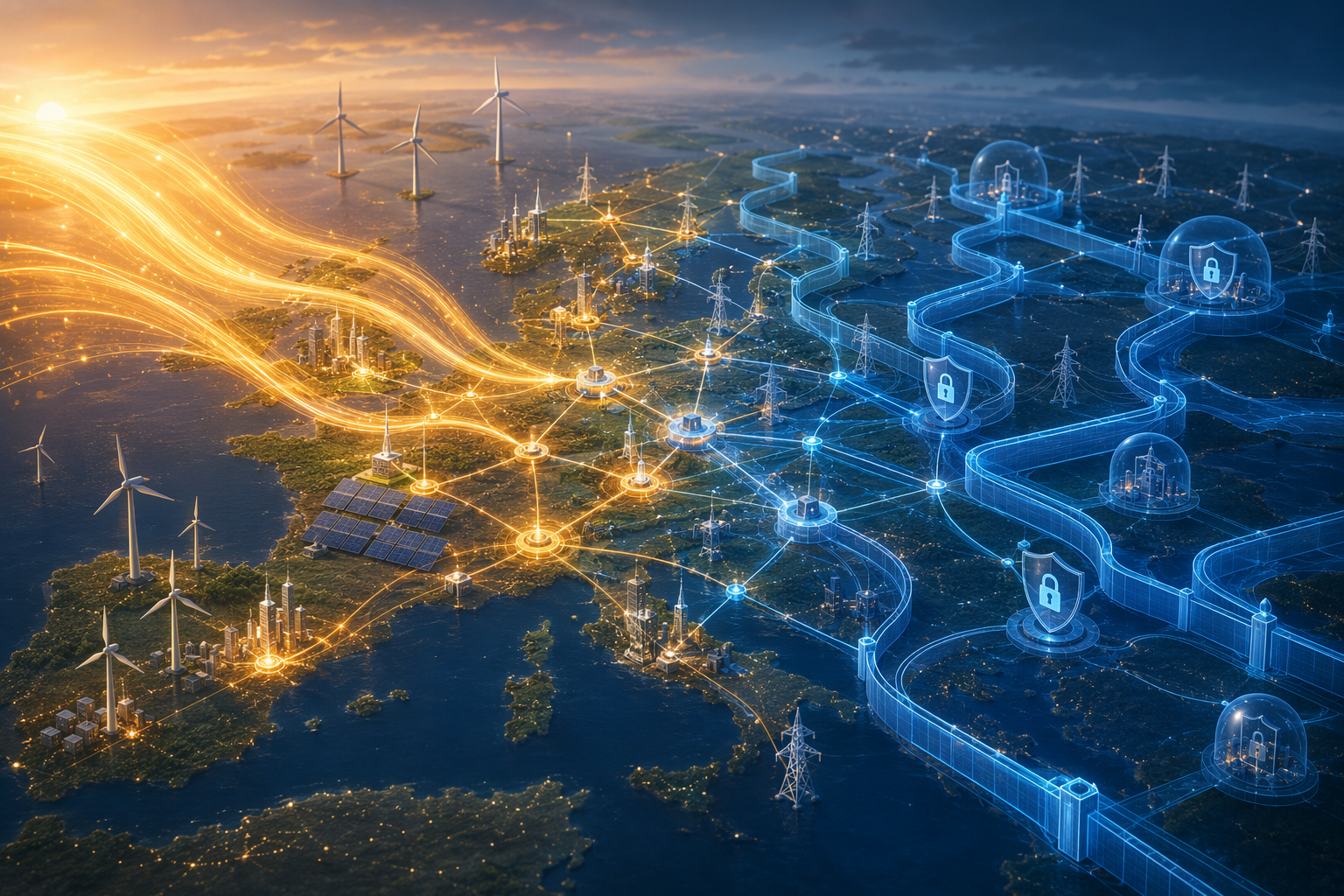
Data sharing is the hinge between usefulness and compliance
Energy AI systems need data that is often operationally sensitive, commercially valuable, personal, or all three. Smart meter data can reveal household routines. Industrial load data can reveal production patterns. Grid asset data can expose vulnerabilities. Training and validating models across these datasets may improve performance, but GDPR and confidentiality constraints determine whether the data can be reused, combined, transferred, or retained for that purpose.
The legal work is therefore more specific than reciting GDPR principles. Counsel needs to know whether the project uses personal data, whether the proposed training or validation purpose is compatible with the original collection purpose, whether anonymization is genuine or only asserted, whether household or customer-level data can be aggregated, and whether a data-sharing agreement gives each party enough rights to meet AI Act and sectoral accountability duties. In a multi-party grid project, the data map is often more important than the model description.
The Roadmap’s enabling logic depends on this problem being solved. AI.grids, smart meter modernization, and demand-response coordination all become more useful when data can move across organizational boundaries. But the same movement triggers questions about lawful basis, data minimization, access controls, retention, processor-controller allocation, trade secrets, and cybersecurity. A legally deployable project needs a data structure that is narrower than the engineering appetite but broader than a compliance team’s first instinct to keep every dataset isolated.
Energy efficiency law is becoming part of AI governance
The revised Energy Efficiency Directive matters because the “energy efficiency first” principle has legal standing for the first time under the 2023 revision, as White & Case notes in its data centre regulatory analysis.[4] For AI energy projects, that principle can cut in two directions. It supports AI tools that reduce wasted energy, flatten peaks, or improve asset use. It also sharpens scrutiny of AI infrastructure that increases electricity and water demand without credible efficiency commitments.
Data centres sit at the center of that tension. The expected Cloud and AI Development Act, described by White & Case as targeting a tripling of EU data centre processing capacity over 5–7 years, is framed as conditional on energy and water efficiency.[4] That makes efficiency a market-access and project-design issue, not only a sustainability disclosure theme. A facility seeking grid connection, public support, or political acceptance will increasingly need to show how efficiency, flexibility, and infrastructure impact have been considered before deployment.
There is already fragmentation in how this area is implemented. White & Case notes that Germany’s Energy Efficiency Act uses a 300 kW threshold, compared with the EU-level 500 kW threshold, creating a stricter national layer for some operators.[4] That kind of divergence matters for cross-border AI and data-centre strategies. A compliance model built only around EU-level thresholds may be too blunt for actual site selection, permitting, reporting, and contracting.
Cybersecurity duties attach because energy AI touches critical systems
NIS2 is not an AI statute, but it is difficult to separate from AI deployment in energy. A model that helps operate grid infrastructure, coordinate demand response, or manage energy-consuming assets may affect systems where disruption has consequences beyond ordinary service downtime. The relevant question is not whether the model is impressive. It is whether the organization and service fall within cybersecurity obligations, whether the AI supplier is part of the risk surface, and whether incident response arrangements account for model-related failures, data poisoning, unauthorized access, or compromised operational signals.
This is where procurement language often lags behind regulatory exposure. Energy companies may obtain AI components from cloud providers, analytics vendors, equipment manufacturers, or system integrators. If the contract treats cybersecurity as a generic IT warranty, it may not allocate responsibility for monitoring, vulnerability disclosure, logging, access to technical evidence, or cooperation during a regulatory incident. The AI Act’s own cybersecurity and robustness expectations for high-risk systems make that gap harder to defend where the system is operationally material.
The timing is not one deadline
Legal timing is unusually easy to misstate here. Travers Smith reported that the May 2026 AI Act Omnibus political agreement would delay Annex III compliance deadlines to December 2, 2027 and Annex I deadlines to August 2, 2028, while noting that the agreement awaited formal adoption.[9] Baker Botts separately identifies material penalties of €15 million or 3% of global annual turnover for certain AI Act infringements.[7]
That is not frictionless breathing room. The precise Omnibus text may still shift before formal adoption, and energy AI projects have long design, procurement, testing, permitting, and integration cycles. A high-risk grid management system contracted in 2026 may still be operating when delayed obligations apply. If the deployment depends on public funding, data-sharing consortia, or national permits, compliance architecture has to be built before the formal deadline becomes operationally urgent.
| Issue | Status in Q3 2026 | Why counsel should care |
|---|---|---|
| AI Act Annex III timing | Delay politically agreed, awaiting formal adoption | Project documents should not assume the dates are final until the text is adopted |
| Annex III high-risk obligations | Reported delayed date: December 2, 2027 | Energy systems procured now may still need to meet documentation, oversight, and governance duties later |
| Annex I timing | Reported delayed date: August 2, 2028 | Relevant for certain AI systems depending on legal classification and scope |
| Data centre efficiency standards | Pending needs assessment due in 2027 | Site strategy and power procurement should account for likely efficiency scrutiny without treating rules as final |
| National implementation | Divergent across Member States | Thresholds, permitting practice, and reporting duties may alter deployment timelines |
The energy infrastructure timeline is even less forgiving. If grid connections can take 7–10 years in established hubs, and in some cases up to 13 years, then AI governance cannot be treated as a late-stage compliance overlay.[2] A data-centre operator, grid technology vendor, or flexibility platform may discover that the legal bottleneck is not one regulation but the sequencing of permits, data access, cybersecurity assurance, high-risk AI documentation, and local energy-efficiency implementation.
The counsel’s map before an AI energy project moves forward
The legal analysis should start before the project is described as an AI transformation. A lawyer advising on a grid, demand-response, predictive maintenance, or energy-efficiency deployment needs enough technical understanding to locate the system in the operational chain, but does not need to pretend to validate model performance. The first task is to identify what the system does and what consequence follows from its output.
- Is the AI system used in the management or operation of critical energy infrastructure, including grid management, load forecasting, or fault detection?
- Does the system merely advise a human operator, or can its output trigger operational, commercial, or consumer-facing consequences?
- What personal, operational, commercial, or security-sensitive data is used for training, validation, deployment, and monitoring?
- Which party is responsible for AI Act documentation, human oversight, logging, cybersecurity, post-market monitoring, and incident cooperation?
- Do Energy Efficiency Directive implementation rules, data-centre obligations, national thresholds, or permitting conditions change the project’s economics or timeline?
- Does the project depend on pending EU measures, such as smart meter legislation or data centre efficiency standards, that are not yet final?
Those questions often expose a mismatch between policy announcements and deployable projects. A company may have funding eligibility but no lawful data route. It may have a compelling predictive maintenance tool but insufficient audit rights against the vendor. It may have an efficiency narrative but face stricter national thresholds. It may have time under a delayed AI Act deadline but still need to build evidence during procurement because retrofitting high-risk compliance after integration is expensive and sometimes impossible.
The EU framework is therefore neither simply a brake nor a subsidy machine. It is a layered operating environment. The same policy package that opens lanes for AI.grids, smart grid funding, data-centre coordination, and demand response also narrows those lanes through high-risk AI duties, GDPR limits, NIS2 expectations, efficiency law, and national implementation. AI energy projects become viable when those layers are assessed together: funding, data governance, high-risk classification, cybersecurity, efficiency duties, and infrastructure timing as one project map rather than separate legal memos.
References
- Fast energy: How Europe can power the AI revolution, ECFR
- Global energy demands within the AI regulatory landscape, Brookings
- EU plans energy standards for data centres, Reuters, June 3, 2026
- Data centres and energy consumption: evolving EU regulatory landscape and outlook for 2026, White & Case
- Digitalisation of the energy systems, European Commission
- EU wants households to cut peak time energy use as demand from AI soars, Politico
- The EU AI Act: What Energy Executives Should Know Before August 2026, Baker Botts
- EU AI Act energy implications, CAPCO
- EU agrees to delay key AI Act compliance deadlines, Travers Smith
Comments
Join the discussion with an anonymous comment.