
The public version of the 2026 World Cup security story now has two facts legal professionals have to hold together. FBI Director Kash Patel says the tournament closed with zero major security incidents after 78 matches across 11 U.S. host cities, crowds above 65,000 at major venues, more than 5,000 FBI personnel deployed, 59 Homeland Security Task Forces engaged, and more than 700 drones intercepted or neutralized around protected sites.[1] At the same time, the strongest post-tournament account is still an exit interview, not a completed public after-action report.
That distinction matters. A clean tournament result is operationally significant; anyone who has reviewed a public-safety procurement file for a multi-jurisdiction event knows how many ways such a plan can fail before a case ever reaches a courtroom. But the legal afterlife of this operation will not turn on the phrase “AI-enabled.” It will turn on records: what the systems detected, who reviewed the alerts, what was retained, what was discarded, and whether the relevant output can be explained later to a judge, a procurement board, a defense lawyer, or a city council committee.
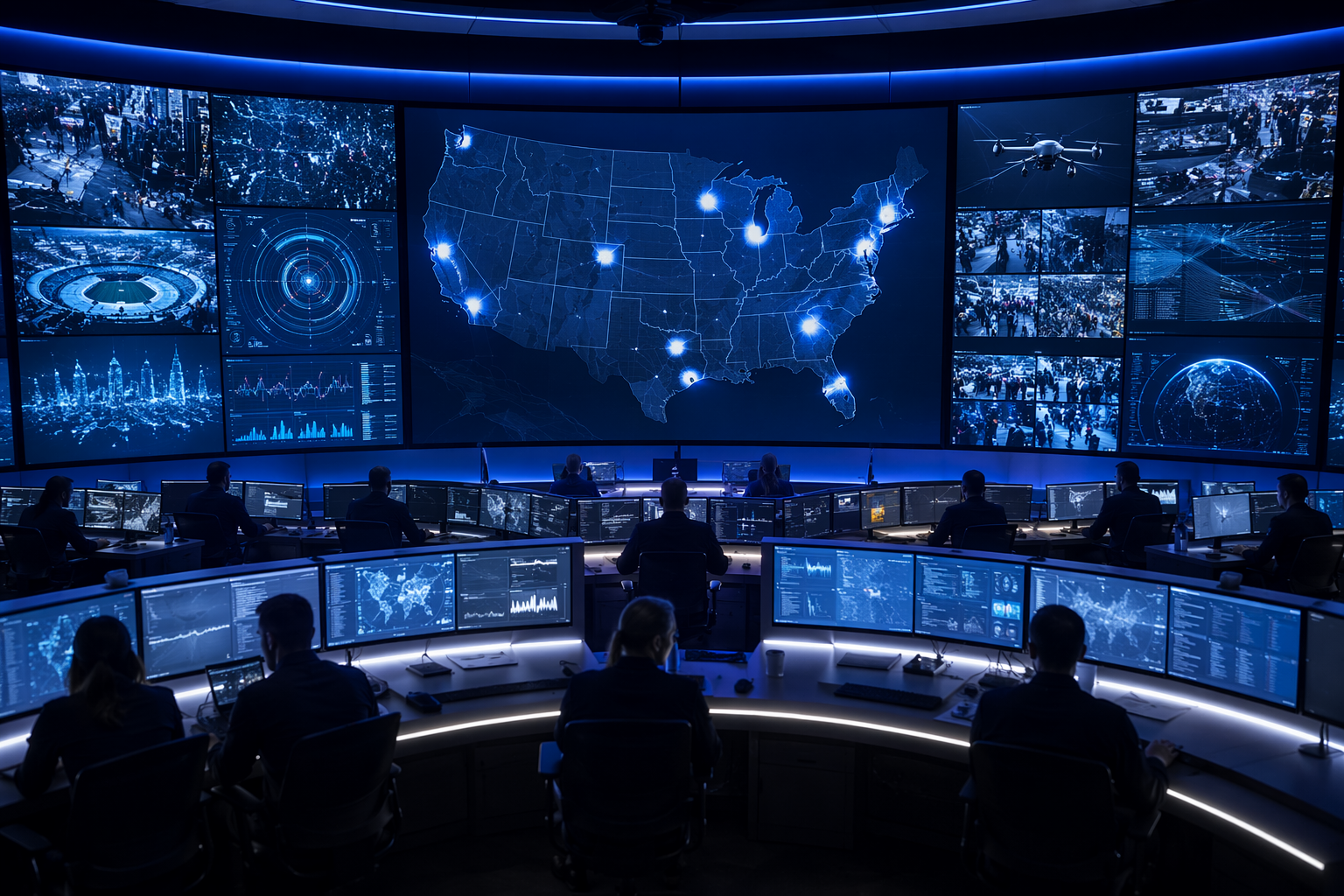
The better way to read the operation is not as one FBI gadget. It was a stack: counter-drone detection and interdiction; local body-worn camera translation; intelligence fusion across three command centers; online threat monitoring; and interagency coordination that reached from local police departments to embedded foreign police partners. The success claim belongs to the workflow as a whole.
The Security Stack Was Built Around Three Centers, Not One Dashboard
The official FBI account of the tournament architecture is more useful than the victory lap because it tells legal readers where decisions were supposed to sit. The FBI described a three-center model: a Joint Operations Center with embedded representatives from 46 of the 48 participating nations, an International Police Cooperation Center in Northern Virginia with more than 70 personnel, and an Intelligence Coordination Center with more than 400 personnel.[2]
The Intelligence Coordination Center is the part that deserves the most attention. Before the tournament, the FBI said that center expected to process about 26 incidents per day and had produced roughly 100 intelligence reports in preparation for the event.[2] Those numbers do not prove that any particular AI model was accurate. They do show the institutional placement of the tools: AI-assisted collection and triage appear to have been feeding a staffed intelligence process rather than operating as a free-standing automated enforcement machine.
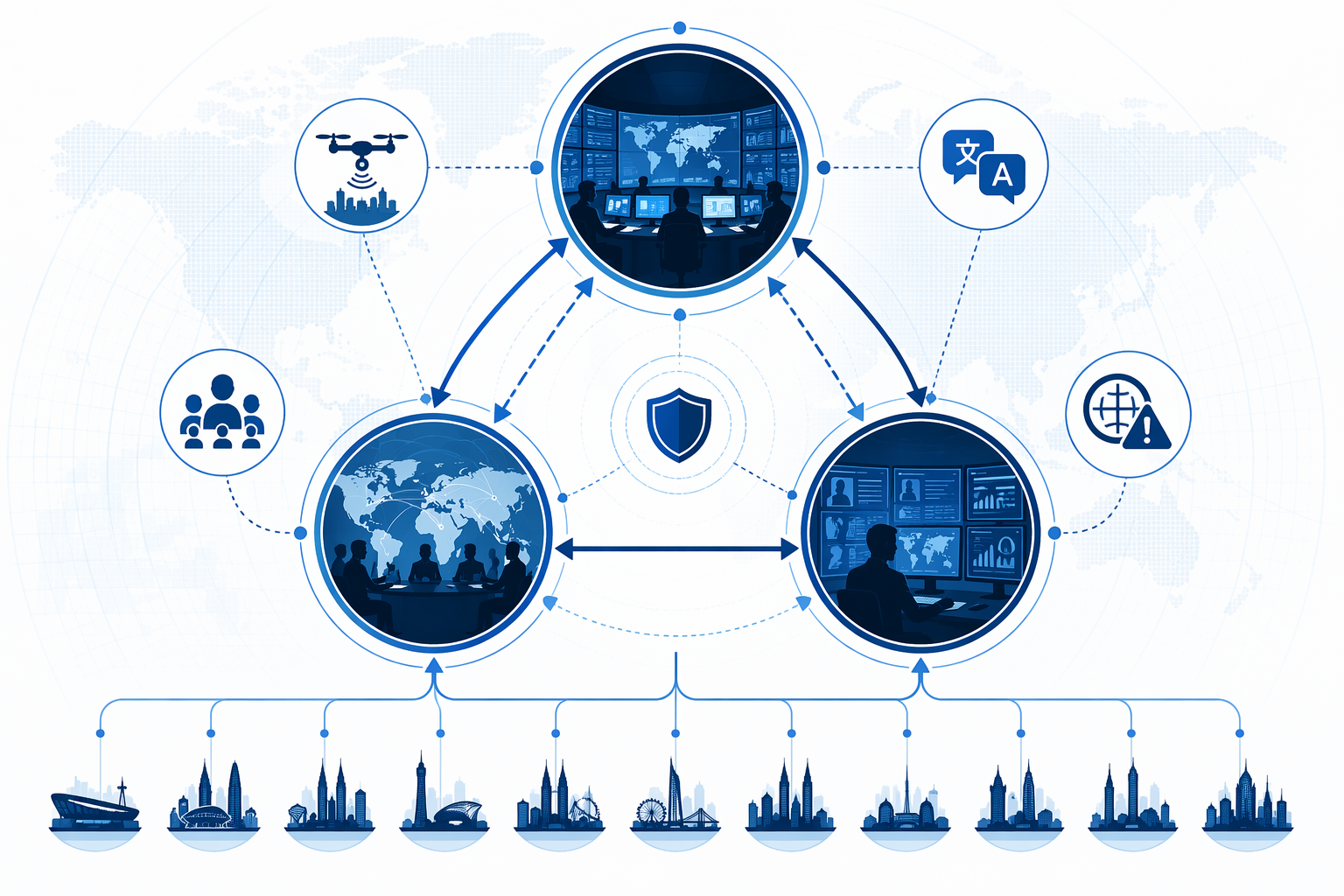
For procurement and evidence purposes, that architecture creates a chain of artifacts. A threat-monitoring lead may become an intelligence report. A local police observation may become a cross-agency referral. A foreign police liaison may add context about a traveling supporter group or suspect. A drone detection may become an interdiction log. Each artifact has a different legal character, and each demands a different explanation if it later supports a detention, search, exclusion decision, or criminal charge.
That is why the three-center model is more important than a generic claim that “AI helped.” The model tells us where human review likely occurred, where interagency handoffs likely happened, and where records should exist if oversight bodies later ask how a digital signal became an operational decision.
Counter-Drone AI Is the Cleanest Procurement Story
Patel’s most concrete post-tournament technology claim involved drones: more than 700 interceptions or neutralizations, coupled with a counter-UAS training program at Redstone Arsenal for state and local officers.[1] Before the tournament, Patel had said the FBI was training officers on detection, tracking, and interception, with No Drone Zones around the 11 host cities and 40 team base camps, and potential fines of up to $100,000 for unauthorized drone operators.[3]
For vendors, this is the number likely to appear in sales decks. For lawyers, the useful question is narrower: what did “interception” mean in each logged event? A drone spotted near a stadium and a drone forcibly disabled do not raise the same factual or legal questions. A false positive that briefly disrupted a credentialed media operation would not look like an actual prohibited flight. A system that helped classify, locate, and route a drone response is not the same as a system that autonomously selected a target.
The Redstone Arsenal training detail matters because it suggests the FBI was not merely buying equipment for a single tournament. It was creating a repeatable operational capability for state and local partners.[1][3] In procurement terms, that turns the World Cup into a benchmark event: agencies considering counter-UAS platforms will ask whether vendors can support training, audit logs, operator certification, role-based access, incident export, and integration with multi-agency command centers.
The benchmark should not be overstated. The available public materials support a conclusion that counter-UAS tools were deployed at scale in a successful protective operation. They do not yet provide a public denominator for attempted incursions, false alerts, abandonment events, near misses, or contested interdictions. Without those categories, “700-plus” is impressive but incomplete as a validation metric.
The Philadelphia Translation Example Is Small, But Legally Dense
The body-camera translation example should not be mislabeled as an FBI-owned AI system. In Patel’s post-tournament account, the Philadelphia Police Department used body-worn camera technology with real-time translation capability as part of the broader World Cup security operation.[1] That makes it a local deployment integrated into the event stack, not proof that a federal translation platform ran across every venue.
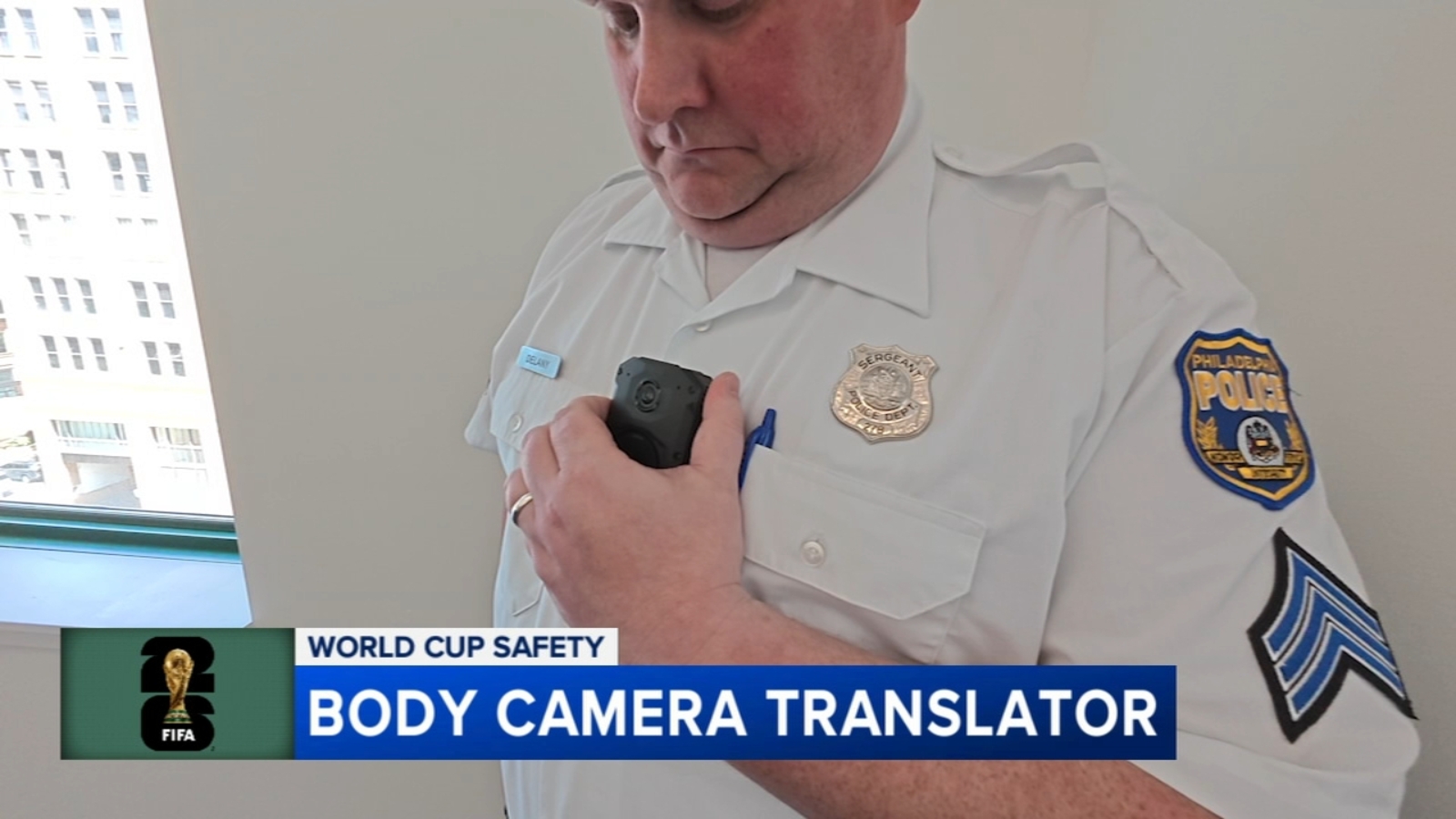
It is also the example most likely to become legible in an ordinary case file. Imagine a street-level encounter outside a stadium: an officer asks a visitor to move from a restricted area, the visitor responds in another language, the body camera produces a translated exchange, and the incident later becomes part of an arrest report or use-of-force review. That translation is no longer a convenience feature. It may become a contested account of what was said, whether an instruction was understood, and whether the officer’s next step was reasonable.
Several questions follow immediately. Was the original audio retained? Was the machine translation retained separately from any officer summary? Did the system identify uncertainty, dialect issues, overlapping speech, or background noise? Could a defense expert compare the original recording with the translated output? Did the officer rely on the translation in real time, or was it used later for review?
The biometric-surveillance concern is adjacent but real. A body-worn system that translates speech may also sit inside a device ecosystem capable of indexing video, audio, location, officer identity, and incident metadata. The public materials here support a careful point, not a sweeping one: the translation feature illustrates how event-security AI can move from crowd management into routine evidentiary practice when the same local tools remain in police use after the tournament.
Threat Monitoring and the Alleged UFC Plot Need Careful Attribution
Patel also linked the tournament security apparatus to a broader threat-monitoring success: an alleged plot to attack a White House UFC event, with eight defendants charged across six states.[1] On the current public record supplied here, that is a Patel-attributed operational claim, not an independently reconstructed case narrative.
The legal significance is still substantial if treated at the right level of generality. Online threat monitoring can produce leads that never become charges, leads that become intelligence reports, and leads that become criminal evidence through later investigative steps. Those are not interchangeable. A procurement reviewer should want to know whether the system flags keywords, images, networks, behavioral patterns, geolocation signals, or combinations of those inputs. A criminal court may care less about the dashboard and more about whether investigators can identify the first lawful step that moved the matter from monitoring to investigation.
This is also where language tends to outrun documentation. “AI found the plot” is rarely the legally useful sentence. The better record says what source was monitored, what the tool flagged, what analyst reviewed it, what corroboration followed, which agency received the referral, and what evidence supported any later charge. If the World Cup operation becomes a model for future mass-event security, that level of provenance will matter more than the branding of the analytic platform.
What the Available Sources Actually Prove
The strongest official sourcing proves architecture and scale. The FBI’s own materials describe the three-center model, embedded foreign police participation, the International Police Cooperation Center, the 400-plus-person Intelligence Coordination Center, the expected daily incident flow, and the production of roughly 100 intelligence reports.[2] Those facts establish that the tournament security model was not improvised at the stadium gate.
The Hill’s pre-tournament coverage captured Patel’s characterization of the assignment as “probably the biggest lift in FBI history,” a fair description of the scale even before the final match was played.[4] The FBI also released pre-tournament remarks by Patel on the security posture, reinforcing that the operation was being framed publicly as a national protective mission rather than an ordinary event-policing assignment.[5]
The most vivid outcome metrics, however, come from Patel’s July 20 interview: zero major incidents, more than 700 drone interceptions, stadium entry under 15 minutes for crowds exceeding 65,000, the 5,000-person FBI deployment, 59 Homeland Security Task Forces, and the alleged multi-state UFC plot.[1] Those claims may be accurate and still need the ordinary discipline of after-action reporting. Public-safety technology should not get an evidentiary shortcut because the event ended well.
| Publicly described function | Current source support | Likely legal artifact |
|---|---|---|
| Counter-UAS detection and interdiction | Patel post-tournament interview; pre-tournament Patel interview | Drone detection record, interdiction log, operator action record |
| Multilingual body-camera translation | Patel post-tournament interview, attributed to Philadelphia Police Department | Original audio/video, translated transcript, officer report, disclosure material |
| Intelligence fusion | FBI official podcast and related FBI materials | Intelligence report, lead-routing record, analyst review note, interagency referral |
| Online threat monitoring | Patel post-tournament interview for the alleged UFC plot claim | Flagged lead, analyst assessment, investigative referral, charging support if later developed |
| International and interagency coordination | FBI official podcast; FBI international operations material | Liaison note, foreign partner communication, command-center log |
The Courtroom Problem Is Traceability
A mass-event command center can tolerate a certain amount of ambiguity that a courtroom cannot. During a match day, an alert may be useful because it gets an officer to look at the right gate, roofline, social post, or radio channel. Months later, if that same alert is part of a suppression motion or discovery dispute, usefulness is not enough.
Traceability starts with the system output. A useful record distinguishes raw input from machine inference, machine inference from analyst judgment, and analyst judgment from field action. It also preserves timing. A two-minute delay in translation may not matter for crowd assistance; it may matter if the government argues that an officer understood a threat before using force. A drone alert that occurred after interdiction may not support the same narrative as one that preceded it.
The same issue appears in intelligence fusion. If the Intelligence Coordination Center produced reports from multiple streams, a later reviewer needs to know whether a conclusion came from a foreign liaison, a domestic law-enforcement database, open-source monitoring, a local officer’s observation, or an AI-assisted triage system. Those sources carry different reliability problems and different disclosure obligations.
None of this means AI-derived security information is unusable. It means agencies that want to rely on it beyond immediate situational awareness should build records as if the alert will be challenged by someone with subpoena power.
The Procurement Lesson Is Not “Buy What the FBI Used”
The World Cup will now be cited in government AI procurements. That is unavoidable. A vendor with any connection to drone detection, command-center analytics, real-time translation, or threat monitoring will point to the tournament as proof that AI-assisted security can work under pressure.
A careful procurement file should ask for more than association with a successful event. It should require performance definitions, testing conditions, integration records, human-review procedures, incident export formats, cybersecurity controls, retention settings, and documentation of known failure modes. If a vendor claims World Cup validation, the next question is which function was validated: detection, translation, triage, routing, reporting, or operator training.
- For counter-UAS systems, require event logs that separate detection, classification, tracking, operator review, and interdiction.
- For translation tools, require access to original audio, translated output, confidence or uncertainty indicators where available, and correction workflows.
- For intelligence-fusion platforms, require source labeling, analyst attribution, role-based access, and exportable audit trails.
- For threat-monitoring tools, require rules for lead escalation, non-hit deletion, human review, and documentation before referral.
- For any integrated platform, require a retention schedule that distinguishes operational awareness from evidence, intelligence, training data, and vendor diagnostics.
That last category is often where public agencies under-specify. A system can work beautifully during a tournament and still create a records problem afterward if no one can tell which data belongs in an evidence file, which data belongs in an intelligence archive, which data must be disclosed, and which data should never have been retained beyond the event.
What Changes If This Moves Into Ordinary Policing
World Cup security is an unusually favorable environment for intensive coordination. The mission is time-limited. The venues are known. Airspace restrictions can be publicized. International partners have a reason to cooperate. Local agencies expect surge staffing and exceptional command structures.
Routine policing is different. A translation-enabled body camera used around a stadium may later be used during traffic stops, protests, domestic calls, or school incidents. A threat-monitoring workflow built for a global event may tempt agencies to monitor less-defined categories of online speech. A drone-detection platform bought for a protected venue may be repurposed for recurring downtown events. Once the emergency architecture becomes ordinary infrastructure, the legal justification has to be rebuilt.
The FBI’s international coordination framework also does not map neatly onto everyday local use. FBI materials on international operations emphasize cooperation with foreign partners for the tournament context.[6] That does not answer how local departments should handle foreign-provided information, data minimization, translation disputes, or retention when the same channels are used outside a discrete protective event.
There is also a timing footnote that should not be inflated into a separate article: the Section 702 debate was unfolding on a calendar close to the tournament. That matters for the broader surveillance-law atmosphere, but the sources here do not support treating the World Cup AI stack as a Section 702 case study. The better focus is the documented command architecture and the records it should have produced.
The Narrow Conclusion the Record Supports
The 2026 World Cup operation is now the leading U.S. case study for AI-driven law-enforcement coordination at scale. The public facts support that much: a large federal deployment, a three-center intelligence architecture, embedded international partners, counter-drone operations, local translation technology, online threat monitoring, and a tournament that officials say ended without a major security incident.
What the record does not yet support is the stronger claim that every component is courtroom-ready, procurement-ready, or regulation-proof. That conclusion would require after-action documentation, system-level performance data, retention policies, disclosure practices, translation accuracy records, false-positive handling, and proof of where human decision points sat in the workflow.
The tournament’s legal significance will depend less on whether officials can keep saying “zero major incidents” and more on whether agencies can show how the operation worked when a specific alert, translation, drone event, intelligence report, or referral is pulled from the stack and examined on its own. This analysis is not legal advice; it is a reading of the public record as of July 20, 2026.
References
- FBI boss Kash Patel details how agency, partners secured record-shattering FIFA World Cup, Fox News, July 20, 2026.
- Inside the FBI Podcast: Securing the World Cup, FBI.gov.
- Kash Patel reveals FBI’s top security concerns ahead of World Cup, Fox News.
- Patel: World Cup security ‘probably the biggest lift in FBI history’, The Hill.
- Director Patel on Securing the 2026 FIFA World Cup, FBI.gov, June 11, 2026.
- Protecting FIFA: Same Countries, Different Games, FBI.gov.
Comments
Join the discussion with an anonymous comment.