
As of July 18, 2026, the White House election fraud response is not chiefly being tested in press statements or oversight letters. It is being tested in orders dismissing DOJ voter-data suits, permanent injunctions against executive orders, and the first appellate decision to affirm one of those dismissals. The record so far is stark: at least 11 district court dismissals, a reported 0-13 DOJ district-level record in voter-data litigation, two permanent injunctions from the District of Massachusetts, and a Sixth Circuit affirmance in the Michigan voter-data case.[1][2][3][4]
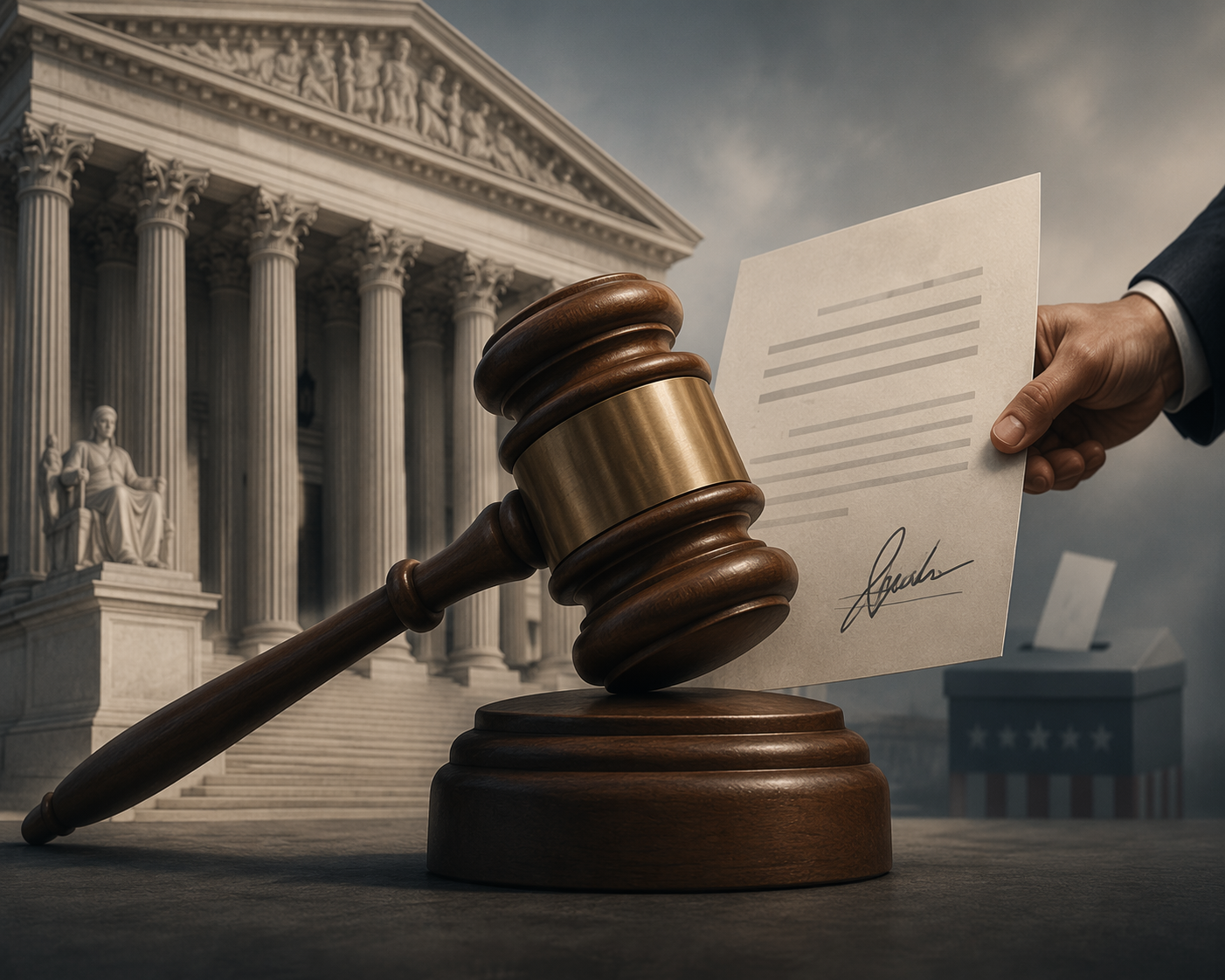
That is not the same thing as a final constitutional settlement. Appeals remain pending, and a district-court run of losses can be narrowed, recast, or reversed once the courts of appeals take up the cases. But the current legal analysis cannot start with generalized election-fraud politics and then drift toward doctrine. The operative question is more concrete: when the President or DOJ directs state election officials to produce voter information or comply with executive election rules, what source of law requires those officials to obey?
The Litigation Scoreboard Is Now Part of the Merits
Litigation win-loss tallies are often a poor substitute for legal analysis. Emergency orders can turn on timing, standing, administrative records, or remedial posture. Here, though, the pattern matters because the losses are clustering around the same institutional defect: the executive branch is trying to move from investigating alleged election fraud into directing, burdening, or extracting from state election systems without a sufficient statutory or constitutional hook.
The Brennan Center tracker reports DOJ at 0-13 in voter-data lawsuits at the district-court level, with courts rejecting demands for state voter information rather than merely postponing production.[1] That figure is useful not because it proves the appellate outcome, but because it shows that district judges in multiple cases have not treated the requests as ordinary civil investigative housekeeping.
The two Massachusetts injunctions make the separation-of-powers problem harder to describe as isolated resistance to discovery tactics. On June 24, 2026, Judge Denise Casper permanently enjoined provisions of the March 2025 executive order, holding that they were “unconstitutional and void because they are ultra vires and violate the separation of powers.”[2] The next day, Judge Indira Talwani ruled against the March 2026 executive order, finding that it “unconstitutionally violate[s] the separation of powers.”[3]
Those rulings do more than stop discrete policies. They translate what might otherwise look like ordinary election-administration disagreement into a constitutional boundary: the President does not acquire election-regulation power by labeling the subject election fraud, and DOJ does not become a general supervisory authority over state voter rolls by opening investigations.
What the Massachusetts Injunctions Actually Blocked
The March 2025 and March 2026 executive orders matter here only to the extent they attempted to impose federal executive direction on election administration. The relevant judicial response was not a policy preference for one voting rule over another. It was a finding that the executive branch had crossed from execution of law into lawmaking or regulation of elections, a domain the Constitution assigns elsewhere unless Congress has supplied authority.
| Ruling | Order at issue | Legal effect |
|---|---|---|
| Judge Denise Casper, D. Mass., June 24, 2026 | March 2025 executive order provisions | Permanent injunction; provisions held ultra vires, unconstitutional, void, and in violation of separation of powers |
| Judge Indira Talwani, D. Mass., June 25, 2026 | March 2026 executive order | Permanent injunction; order held to unconstitutionally violate separation of powers |
Casper’s “ultra vires” formulation is doing important work. It is not simply saying that the executive branch used a bad process or failed to justify a regulation adequately. It says the President lacked power to do the thing at all.[2] That distinction matters for state officials deciding whether compliance can be negotiated, delayed, or cured by a better administrative explanation. If an order is ultra vires and void, the problem is not the paperwork around the command. It is the command.
Talwani’s ruling, coming one day later and reaching a similar separation-of-powers conclusion, gives the Massachusetts litigation its larger significance.[3] A single injunction can be dismissed by critics as judge-specific. Two permanent injunctions on adjacent days, aimed at related executive-order efforts and resting on the same constitutional architecture, are harder to treat as a procedural accident.
The Voter-Data Cases Exposed a Different Weak Point
The voter-data litigation is narrower than the executive-order cases, but in practice it may be more burdensome for state election officials. A demand for unredacted voter information reaches the office that has custody of records, privacy obligations, state-law constraints, and election-calendar deadlines. The legal question arrives as an instruction to produce data, not as a speech about federalism.
District courts have repeatedly declined to accept DOJ’s position that its investigative authority permits broad acquisition of state voter data. The reported 0-13 district-level record reflects more than a series of denied requests; it reflects judicial unwillingness to convert federal civil-rights or election-integrity rationales into open-ended control over state voter files.[1]
The most damaging feature of the voter-data cases is not only the lack of a clear legal hook. Brennan Center analysis notes that multiple courts cited DOJ’s “ulterior motives” and loss of the “presumption of regularity.”[1] Courts do not lightly withdraw that presumption from executive officials. Once they do, the government’s usual institutional advantage changes shape: explanations that might have been accepted as ordinary enforcement judgments become evidence to be tested against timing, scope, and statutory fit.
Protect Democracy’s analysis similarly frames the DOJ effort as an attempt to acquire state voter data that exceeded the department’s lawful role in election administration.[5] The point is not that DOJ can never investigate election-related violations. It is that investigative authority does not automatically include power to demand unredacted statewide voter data untethered from a valid, properly bounded enforcement need.
That distinction is easy to blur in public debate and difficult to blur in litigation. A state lawyer responding to a subpoena or demand letter has to ask what statute authorizes the demand, what records are covered, what privacy rules apply, and what remedy the federal government can seek if the state refuses. The district-court record to date suggests that DOJ has not supplied answers strong enough to survive that scrutiny.
Why the Sixth Circuit Affirmance Changes the Posture, Not the Whole Map
The Sixth Circuit’s Michigan decision is the first appellate ruling on DOJ voter-data demands, and that makes it more significant than another district-court entry on the same side of the ledger.[4] Appellate validation gives state defendants and other courts something district orders alone cannot provide: a circuit-level account of why the demand fails.
Still, the Michigan affirmance should be kept in proportion. It does not bind every circuit hearing a related appeal, and it does not by itself decide the legality of every executive-order provision or voter-data request. Its importance lies in moving the judiciary’s response from trial-court resistance into appellate review. The pattern now has a foothold above the district courts, but it is not yet national law.
For counsel watching the 2026 midterm calendar, that posture matters. A district-court injunction can stop an immediate demand. A circuit affirmance can shape how aggressively DOJ continues to press similar demands and how state officials assess their litigation risk. But pending appeals in other circuits still leave room for disagreement over statutory authority, standing, remedies, and the degree of skepticism courts should apply to DOJ’s stated rationale.
The DHS Number Does Not Carry the Legal Argument
The administration’s broader election-fraud response has also included a DHS figure of 278,000 non-citizens, but the available record does not disclose a public methodology for that number.[4] That caveat is not a minor footnote. Without a disclosed method, the figure cannot do the work that litigation requires: identifying the data source, explaining the matching criteria, accounting for false positives, and connecting the number to a lawful demand placed on a state official.
A number may have political force while carrying little legal weight. Courts reviewing executive authority are not simply asking whether the administration has asserted a problem. They are asking whether the official response has a lawful source, a permissible target, and a remedy the Constitution allows.
Removal Power Is the Unresolved Flank
The Election Assistance Commission removal issue sits differently from the voter-data and executive-order cases. The available record identifies commissioner removal under the Slaughter context as novel constitutional terrain, with no court ruling yet on the specific Trump removals. That means it should not be counted as another judicial defeat for the White House. It is better understood as an unresolved flank in the same separation-of-powers conflict.
The Bipartisan Policy Center’s executive-order analysis places the dispute within a larger question about presidential authority over election administration and independent election institutions.[6] If the removal issue reaches a merits ruling, it may test a different mechanism of control: not whether the President can command a state to comply, but whether the President can reshape the federal election-administration body charged with carrying out statutory duties.
That distinction matters because courts may be more divided over removal doctrine than over direct executive regulation of state election procedures. The current record is strongest where federal officials have demanded state data or imposed executive-order requirements. It is less settled where the fight concerns control over federal officers inside the election-administration architecture.
What the Current Court Record Means for Separation of Powers
The cleanest way to understand the current legal posture is to separate three questions that are often compressed into one. First, may the federal government investigate actual violations of federal election law? Yes, within the bounds Congress has set. Second, may the President regulate state election administration by executive order? The Massachusetts injunctions say no, at least as to the provisions before those courts.[2][3] Third, may DOJ demand unredacted state voter data on the theory that election-integrity enforcement requires it? District courts have repeatedly rejected that position, and the Sixth Circuit has now affirmed the Michigan dismissal.[1][4]
The through-line is not hostility to election integrity as a governmental interest. It is refusal to let that interest supply missing authority. In the current cases, the legal defect appears when a national executive official turns a generalized concern about fraud into a binding instruction to actors who operate under state election law, federal statutes, privacy obligations, and judicially enforceable constitutional limits.
That is why the district-court record has become institutionally important even before all appeals are resolved. Clerks, state election directors, agency counsel, and federal judges are not working with an abstract civics diagram. They are receiving demands, reading executive orders, assessing statutory authority, and deciding whether compliance would itself create legal exposure. The courts have so far supplied the clearest answer: the executive branch must identify lawful authority before it can shift the burden of its election-fraud response onto state election systems.
For now, the judiciary is the main effective check on the White House’s election-fraud response. That check is real but not complete. Its durability depends on appellate review of the voter-data cases, the treatment of the Massachusetts injunctions if appealed, and unresolved removal-power disputes that could affect federal election institutions before the November 2026 midterms.
References
- Tracker of Justice Department Requests for Voter Information, Brennan Center for Justice, updated July 2026.
- Permanent injunction report, Democracy Docket.
- PBS coverage of Talwani ruling, PBS NewsHour.
- Five things to know, Reuters.
- DOJ attempt to acquire state voter data, Protect Democracy.
- Executive order analysis, Bipartisan Policy Center.
Comments
Join the discussion with an anonymous comment.