
After a ferry capsizes, the first legal answer is usually unsatisfying: it depends which layer of responsibility is being tested. A captain may face criminal charges for abandoning passengers or failing to render aid. An owner may face civil claims, then immediately seek to confine those claims inside a limitation proceeding. Crew members may have employment-based maritime remedies that passengers do not. Passengers and families may plead negligence, unseaworthiness, or wrongful death. Nearby vessel masters may have statutory rescue duties. The Coast Guard may have authority to help without an affirmative duty to start a rescue at all.
That is the architecture behind legal liability and maritime rescue disputes after a ferry capsizing. The moral sequence may look clean: a vessel overturns, people are trapped, someone failed, someone should pay. Admiralty law rarely stays that clean for long. It asks a colder set of questions: whose vessel, which waters, which flag, which forum, which statute, what vessel value remains, who knew what before departure, and whether the failed act was criminal, civil, regulatory, or only politically unforgivable.
The Liability Map Is Wider Than the Captain
The captain is the easiest figure for public anger to find, and sometimes the law finds him too. In the Sewol disaster, the South Korean ferry sank on April 16, 2014, killing 304 people, many of them schoolchildren; passengers had been told to stay put, and the captain left the vessel while many remained inside. He was later sentenced to life imprisonment for homicide, and 14 crew members were convicted on related charges.[1] In January 2026, however, a South Korean court dismissed a follow-up lawsuit by families seeking additional compensation from the government.[2]
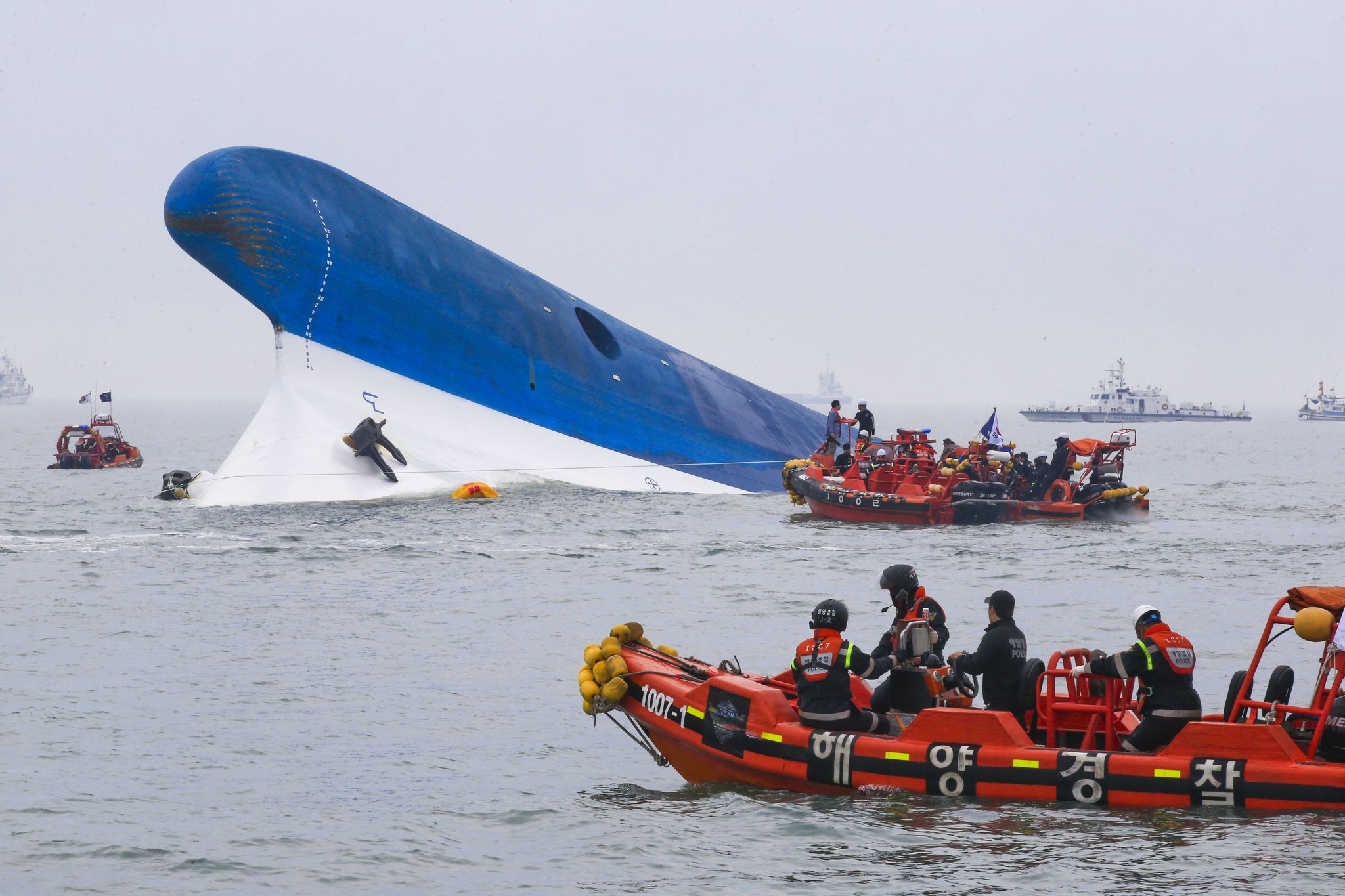
That sequence is the part worth lingering over. Criminal conviction, license loss, compensation, and failed government-liability litigation are not the same legal event. They answer different questions. Did the captain commit a crime? Did the operator breach duties to passengers? Did families receive court-ordered compensation? Did the state owe an actionable duty for what it did or failed to do? The answers may point in different directions even when they arise from the same sinking.
U.S. law has its own version of this fragmentation. A master of a U.S. vessel has a statutory duty to render assistance to individuals found at sea in danger of being lost, so far as the master can do so without serious danger to the master’s vessel or individuals on board. Violation can carry a penalty of up to a $1,000 fine, imprisonment for up to two years, or both.[3] That kind of statute can matter after a ferry disaster, but it does not by itself create a complete compensation system for passengers or families.
| Legal Layer | Who It Usually Reaches | What It Does Not Necessarily Do |
|---|---|---|
| Criminal law | Captain, crew, sometimes managers | Guarantee full civil recovery |
| Civil maritime claims | Owner, operator, vessel interests, sometimes manufacturers or contractors | Avoid limitation defenses automatically |
| Crew remedies | Employer or vessel interests under seamen-specific doctrines | Give passengers the same claims |
| Rescue duties | Masters of nearby vessels; sometimes government actors after rescue begins | Create a broad affirmative duty for every public agency to rescue |
| Limitation proceedings | Vessel owner seeking to cap exposure | Answer the moral scale of the loss |
Civil Recovery Starts With Status: Passenger, Crew, or Family
Before reaching the owner’s limitation defense, counsel has to sort the claimants. A ferry employee injured in the casualty may be treated as a seaman and look to Jones Act negligence theories, maintenance and cure, and related maritime doctrines. A passenger will more often proceed through general maritime negligence, arguing that the operator failed to use reasonable care under the circumstances. Depending on the facts, unseaworthiness may be pleaded where the vessel, crew, equipment, loading, or operating condition made the ferry unfit for its intended service. Where the death occurs beyond the statutory maritime threshold, the Death on the High Seas Act may become part of the analysis.[4]
Those categories are not academic housekeeping. They change the defendants, the damages, the available defenses, and the evidence that matters. A passenger’s family may care most that the ferry listed and people could not escape. The complaint still has to translate that grief into acts and omissions: unsafe loading, defective equipment, negligent navigation, inadequate emergency instructions, poor crew training, ignored weather, ignored stability warnings, failed evacuation orders, or a delayed distress response.
The harder question is often not whether someone was negligent. It is whether the negligence can be legally tied to a defendant with assets, insurance, jurisdictional reach, and no successful statutory cap.
The Limitation Act Is Where Accountability Often Narrows
The federal Limitation of Liability Act remains the central irritant in U.S. mass-casualty maritime litigation. In broad terms, it allows a vessel owner to seek to limit liability to the post-casualty value of the vessel and pending freight, provided the loss occurred without the owner’s privity or knowledge.[5] Defense counsel call it a stabilizing rule for maritime commerce. Claimants’ counsel see what it can do after the vessel has burned, sunk, or become scrap.
The procedural move matters. After a casualty, the owner can file a limitation petition in federal court, deposit or stipulate to the limitation fund, and seek an injunction drawing claims into a single proceeding. The court then sorts two linked questions: whether negligence or unseaworthiness caused the loss, and if so, whether the owner lacked privity or knowledge of the condition or conduct that caused it.[6]
Post-accident value is not a metaphor. It is the cap’s engine. After the Titanic sank, the limitation fund was reported at about $92,000. In the Conception dive-boat fire, where 34 people died, the owner’s limitation filing asserted a vessel value of $0. After the 2024 Baltimore bridge collapse involving the MV Dali, the owner and manager filed a limitation petition seeking to cap exposure at $43.6 million.[5][7]
The practical effect can be jarring because the cap does not begin with the number of dead, the depth of loss, or the likely lifetime value of claims. It begins with what is left of the vessel and qualifying freight. For certain vessels over 300 gross tons, the sources identify an additional tonnage-based cap of $420 per ton under 46 U.S.C. § 30506, another reminder that maritime limitation analysis often turns on measurements far removed from the human scale of the casualty.[5]
The real fight is usually privity or knowledge. A remote investor who lacked notice of a latent defect is in a different position from an owner-operator whose managers knew about unsafe loading, unstable modifications, undertrained crew, defective alarms, or a pattern of ignored near misses. Sewol is not a U.S. limitation precedent, but it shows why this factual inquiry is not ornamental: accounts of the sinking report that Sewol’s regular captain had warned management about stability issues and was threatened with firing.[1]
A claimant trying to break limitation will look for documents and testimony that move knowledge up the corporate chain: inspection reports, maintenance deferrals, crew complaints, loading records, stability calculations, training manuals, internal emails, prior incident reports, Coast Guard communications, classification records, and budget decisions. The owner will try to keep the causal fault at the operational level: a navigation error, a crew mistake, an unforeseeable emergency, a rogue employee, or a condition not known and not reasonably knowable to management.
There is a legitimate defense-side argument that limitation prevents unpredictable maritime exposure from destroying vessel finance and commerce. There is also no serious way to discuss modern ferry catastrophes without admitting how alien a nineteenth-century shipowner-protection rule can look when applied to mass passenger death. Reform proposals, including H.R. 5503 in 2010 and the 2021 Small Passenger Vessel Liability Fairness Act, did not become law; the doctrine is controversial, but it should not be treated as if repeal is waiting just offstage.[7][8]
Sewol Shows the Gap Between Punishment and Compensation
Sewol remains the most developed modern warning against treating accountability as a single switch. The captain’s abandonment, passenger instructions to remain in place, criminal convictions, and public fury produced consequences. They did not produce a simple legal closure.
South Korean courts and authorities imposed criminal and administrative consequences after the sinking. The captain received a life sentence for homicide, 14 crew members were convicted, and the operator lost its license.[1] In 2018, a South Korean court ordered compensation reported at about $177,000 per victim.[9] Then, in January 2026, families lost a follow-up lawsuit seeking additional government compensation.[2]
That last result should not be misread as absolution of the disaster response in any moral sense. It means the particular government-liability theory failed in that court. The distinction is narrow but essential. Criminal punishment of a captain does not automatically establish civil liability against every institution that failed the passengers. A compensation award does not prove that later state-liability claims will succeed. A license revocation does not make families whole. Each remedy has its own defendant, elements, defenses, limitation periods, proof problems, and damages rules.
For U.S. maritime lawyers, Sewol is therefore most useful as a comparative disaster narrative, not as a shortcut to U.S. ferry doctrine. It helps identify the fault lines: evacuation orders, crew conduct, corporate knowledge, regulatory supervision, rescue timing, and the difference between visible blame and recoverable damages.
Rescue Duties Sound Broader Than They Often Are
Rescue law is where lay expectations and maritime doctrine most sharply diverge. International maritime law speaks in mandatory terms. UNCLOS Article 98 and SOLAS Chapter V are commonly understood to require masters to assist persons in distress at sea when they can do so without serious danger to their own vessel, crew, or passengers. U.S. law reflects a similar command in 46 U.S.C. § 2304, which imposes a duty on vessel masters to render assistance to individuals found at sea in danger of being lost, subject to the serious-danger limitation.[3]
That duty can matter for a nearby ferry, tug, fishing vessel, excursion boat, or commercial ship that encounters a capsizing. It is less useful when the defendant being blamed is a public rescue agency that allegedly should have launched sooner, searched longer, or coordinated differently. In a 2013 Fourth Circuit decision, the Coast Guard was described as having authority to initiate rescue, not an affirmative legal duty to commence one; once it does undertake a rescue, however, it must exercise reasonable care under Good Samaritan principles.[10]
That distinction is not a technicality for a family whose claim depends on delayed search and rescue. A negligent-rescue theory generally needs more than proof that the agency could have helped. It may require showing that the agency undertook the rescue and then acted unreasonably, worsened the position of those in danger, or induced reliance that displaced other aid. Authority plus tragedy is not always duty plus damages.
The Marine Rescue Doctrine sits in a different corner of the same room. It is designed mainly to protect rescuers by limiting contributory-negligence arguments against them unless their conduct was wanton and reckless. The rule encourages lifesaving action; it is not the main engine for passenger recovery after a ferry capsizing.[11][12]
Recent Ferry Incidents Are Stress Tests, Not Finished Precedents
The 2025 and 2026 ferry incidents in Indonesia, the Philippines, and Florida are useful because they show the recurring fact pattern: many passengers, fast-moving rescue decisions, uncertain survivability windows, and immediate public pressure for someone to be held responsible. They should not be overused as if mature liability rulings already exist.
In July 2025, a ferry sank near Bali; Reuters reported six dead and 30 missing after Indonesia suspended the search.[13] In January 2026, the Associated Press, as reported by NBC News, described a Philippines ferry disaster with 15 dead and 316 rescued.[14] Those incidents arise under non-U.S. legal systems, and no developed liability litigation is identified here. Any U.S.-law discussion of owner limitation, Jones Act remedies, Coast Guard duty, or U.S. rescue statutes is therefore analogy, not direct analysis of those cases.
The Clearwater Ferry crash is closer to the U.S. civil-litigation frame but still fact-specific. WWSB reported that two passengers filed suit in June 2026 over a 2025 Clearwater Ferry crash.[15] A case like that may implicate ordinary negligence questions familiar to maritime practitioners: lookout, speed, traffic, training, emergency response, comparative fault, and operator procedures. It does not, without more, answer how a true capsizing mass-casualty case would move through limitation, wrongful death, or rescue-duty doctrines.
What Counsel Should Look for First
The first hours after a ferry capsizing produce evidence that later determines whether liability remains fragmented or reaches the parties with meaningful control. The legal team does not need a slogan about accountability. It needs the record before it is overwritten, salvaged, translated, normalized, or lost.
- Vessel status: flag, ownership, charter arrangements, operator identity, passenger capacity, gross tonnage, route, and post-casualty value.
- Pre-departure knowledge: stability warnings, loading records, maintenance history, inspection findings, crew complaints, weather decisions, and prior incidents.
- Onboard conduct: evacuation orders, passenger announcements, bridge communications, muster procedures, life-saving equipment access, and timing of abandonment.
- Rescue timeline: distress calls, nearby vessel responses, Coast Guard or equivalent agency actions, search suspension decisions, and reliance by other potential rescuers.
- Claimant status: passenger, crew member, contractor, rescuer, survivor, estate, or family member, because each status may point to a different remedial path.
Those facts decide whether the case is only about operational error or also about institutional knowledge. They shape whether limitation is a serious threat or a defeatable pleading move, whether rescue failures are actionable or legally unreachable, and whether the available forum can do anything proportionate to the loss.
A ferry capsizing exposes a layered system rather than a single chain of blame. The captain may be punishable. The operator may be negligent. The owner may invoke a cap. Crew and passengers may stand in different remedial lines. Nearby masters may have rescue duties. The Coast Guard may owe reasonable care only after it undertakes rescue. Families may win one form of compensation and lose another. Responsibility can be obvious in the wreckage and still emerge from court fragmented, capped, or outside the jurisdictional reach of the claim.
References
- Sinking of MV Sewol — Wikipedia
- Court Rejects Sewol Ferry Families' Compensation Lawsuit — The Chosun Ilbo, January 15, 2026
- 46 U.S. Code § 2304 — Cornell LII
- Ferry Boat Accidents and Liability — FindLaw
- Shipowners' Limitation of Liability Act — Kreindler
- The Limitation of Liability Act: A Vessel Owner's First Line of Defense — CSK Legal
- Limitation of Liability Act of 1851 — Wikipedia
- Why Ditching the Limitation of Liability Act is a Bad Idea — Maritime Law
- South Korean Court Orders Big Payouts to Families of Ferry Victims — The New York Times
- United States Court of Appeals Outlines Coast Guard's Duty — Cruise Law USA
- Marine-Rescue Doctrine — US Legal Forms
- Compensation for Workers Under the Maritime Rescue Doctrine — Hofmann & Schweitzer
- Indonesia suspends search for 30 missing after ferry sinks near Bali — Reuters
- 15 dead, hundreds rescued from ferry disaster in Philippines — NBC News/AP
- Two passengers file lawsuit over 2025 Clearwater Ferry crash — WWSB
Comments
Join the discussion with an anonymous comment.