
The immediate question after President Trump’s July 16–17, 2026 election-security speech controversy was not whether networks liked the speech, disliked it, or preferred to avoid a political fight. It was more concrete: if a broadcast network makes an editorial decision about presidential remarks while FCC leadership is publicly entertaining license consequences, is the resulting pressure a lawful licensing concern or an unconstitutional attempt to control content? Reuters framed the dilemma as one facing U.S. networks over whether to air the speech; USA Today reported the next day on the surrounding FCC and network-license dispute involving ABC, NBC, and other broadcasters.[1][2]
That is the right entry point for a First Amendment analysis of threats to revoke network licenses in Trump-related disputes, because the practical burden does not wait for a final revocation order. The station lawyer or compliance officer has to decide whether the threat changes coverage, whether to document editorial independence, whether to answer an FCC inquiry, and whether the risk belongs in a board memo. Treating the issue as only a campaign-media quarrel misses the harder legal problem.
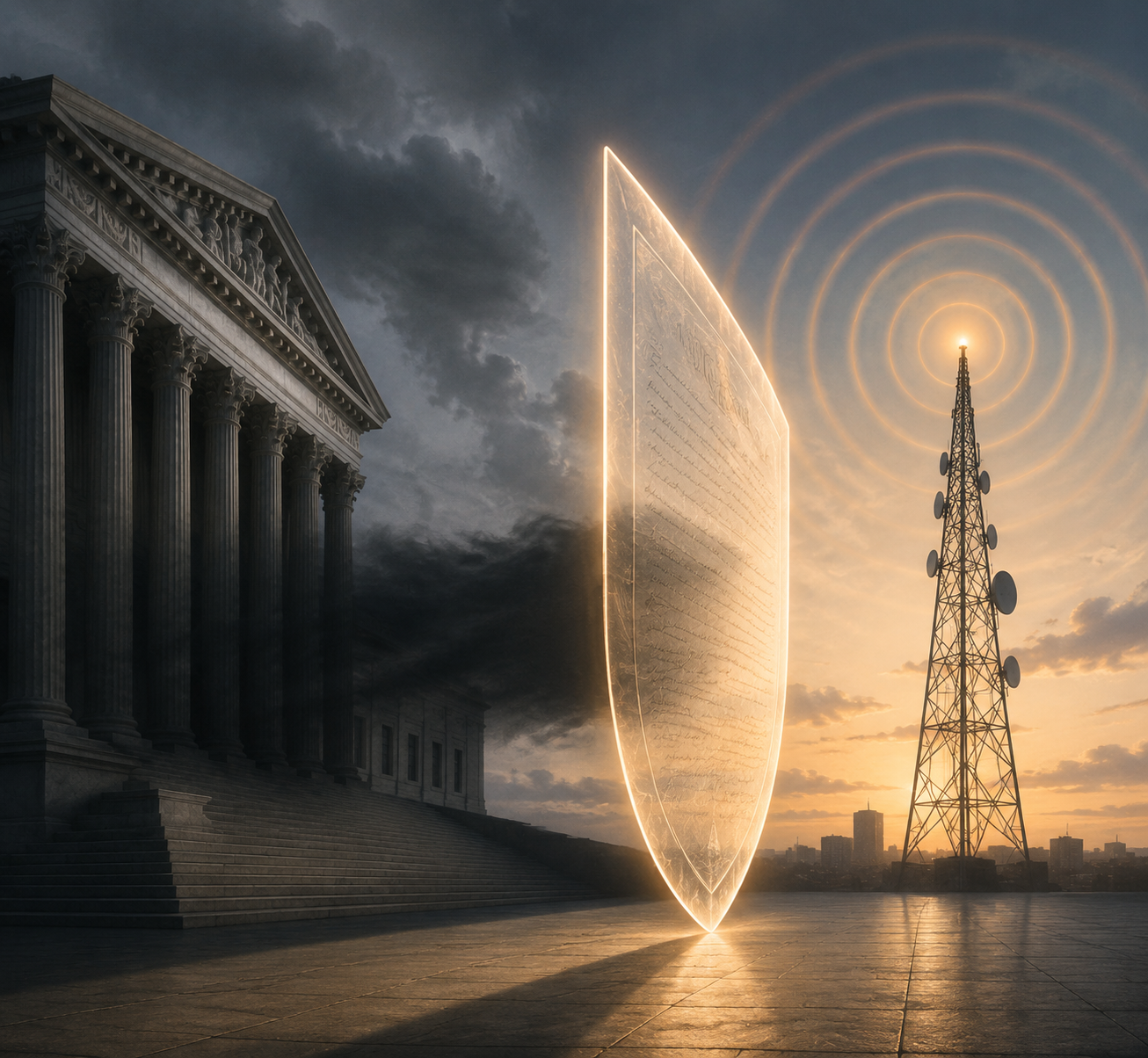
The federal answer begins with three constraints that travel together. The FCC’s statutory authority over programming content is limited; the First Amendment sharply disfavors viewpoint-based government action; and recent Supreme Court doctrine treats coercive regulatory pressure as constitutionally meaningful even before the regulator completes the threatened sanction. None of those constraints disappears because the regulated entity holds a broadcast license.
The FCC starts with limited content authority, not a general editorial veto
The FCC’s own consumer guidance is a useful antidote to the casual phrase “pull the license.” The agency tells the public that it “has limited legal authority to act on complaints relating to the content of television or radio programming.”[3] That sentence is not a First Amendment treatise, but it is a fair description of the agency’s starting position: broadcast regulation exists, yet it is not a general-purpose mechanism for punishing editorial disagreement.
Professor James Speta’s Yale Journal on Regulation analysis puts the point in the sharper statutory frame. Section 326 of the Communications Act prohibits FCC censorship and blocks the agency from interfering with the right of free speech by radio communication. Section 312 gives the Commission tools to revoke licenses for specified statutory grounds, including willful or repeated violations, but it does not convert disagreement with coverage choices into a freestanding violation.[4]
That distinction matters because license revocation is not a presidential remote control attached to a network control room. A revocation case has to be tied to legally cognizable misconduct. The FCC also has not revoked a broadcast license over content in more than 50 years, and revocation requires willful or repeated violations proved through an evidentiary process. That enforcement history does not make threats harmless; it does make the legal distance between a televised threat and an actual revocation order much larger than political coverage often suggests.
The end of comparative renewal after the 1996 statutory changes further narrows the older idea that broadcasters must continually win a broad, content-sensitive beauty contest against challengers. The “public interest” standard remains part of the Communications Act, but public interest language has to operate inside the statute Congress enacted, including Section 326’s anti-censorship command and the First Amendment’s restrictions on viewpoint discrimination.[4]
Viewpoint discrimination is the constitutional wall
A license-revocation theory based on editorial viewpoint faces a constitutional objection separate from the Communications Act. The Supreme Court’s broadcast cases have allowed some medium-specific regulation, but they have not authorized the government to choose licensees because officials prefer one political, economic, or social viewpoint over another. Speta’s analysis emphasizes NBC v. United States, where the Court drew precisely that line against selecting among applicants on the basis of their political, economic, or social views.[4]
This is where invocations of “public interest” tend to do too much work. A public-interest standard can guide spectrum management, technical licensing, ownership review, and other regulatory judgments. It cannot be treated as a password that lets the government punish a broadcaster for carrying, declining, editing, fact-checking, delaying, or criticizing political content because the administration dislikes the resulting message.
The familiar broadcast precedents do not rescue a viewpoint-based revocation threat. Red Lion’s scarcity rationale and Pacifica’s treatment of broadcast indecency are often mentioned when broadcast speech is at issue, but neither stands for the proposition that the government may revoke or threaten licenses because it objects to the broadcaster’s political perspective. Scarcity may explain why the broadcast medium has historically received a different regulatory treatment from print; indecency doctrine may explain why certain time, manner, and audience-protection rules exist. Neither supplies a license to impose viewpoint orthodoxy.
That is why the legal analysis should not turn on whether a network’s judgment was wise, timid, partisan, sensational, or self-protective. Those may be fair subjects for media criticism. They are not the statutory elements of a license-revocation case, and they are not exceptions to the nearly per se First Amendment rule against viewpoint discrimination.
What the FCC can still regulate
None of this means broadcasters operate outside federal law. The FCC may regulate real licensing and broadcast-law categories. The important move is to keep those categories distinct from editorial disagreement.
| Category | Why it differs from viewpoint punishment |
|---|---|
| Technical and licensing violations | They concern compliance with license terms, spectrum use, station operation, and related statutory or regulatory obligations. |
| Obscenity and indecency | They arise from recognized broadcast content rules, not from the government’s preference for one political viewpoint over another. |
| Sponsorship, public-file, and similar compliance duties | They regulate disclosure, records, and process rather than the ideological acceptability of coverage. |
| News distortion | The doctrine is narrow and does not become a general right for officials to punish unfavorable journalism. |
The news-distortion point is especially prone to abuse in political argument. A genuine doctrine aimed at knowing falsification or staging is not the same thing as an official’s claim that coverage was unfair, insufficiently loyal, or too aggressive. If the complaint is really that a network selected the wrong angle, gave the wrong guest airtime, used the wrong framing, or declined to broadcast a speech in full, the legal problem is viewpoint and editorial control, not a conventional licensing violation.
Threats and investigations can be the First Amendment injury
The analysis becomes more serious, not less, when officials stop short of a final revocation order. A common defense of regulatory threats is procedural: no license was revoked, no final agency order was entered, and therefore no constitutional harm occurred. NRA v. Vullo makes that answer too thin. The Supreme Court held in 2024 that government officials violate the First Amendment when they use regulatory authority to coerce private parties into suppressing disfavored speech.[4]
That framework fits broadcast-license threats uncomfortably well. A regulator does not need to say “I hereby censor you” for a threat to matter. The practical pressure comes from the official’s authority, the regulated party’s dependence on licenses and approvals, the specificity of the warning, and the connection between official displeasure and threatened regulatory consequences.
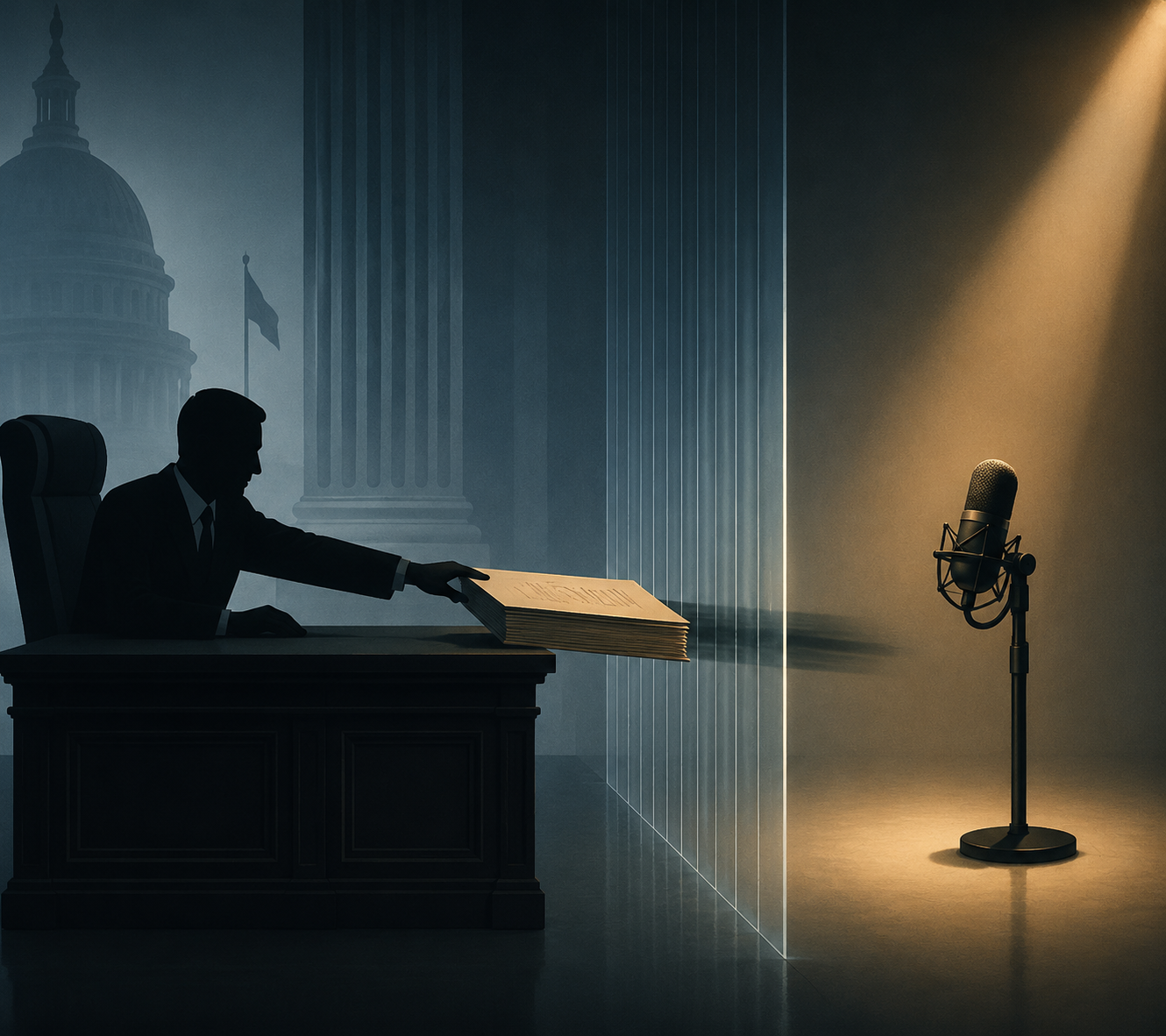
That is why FCC Chair Brendan Carr’s reported “easy way or hard way” warning to ABC matters legally even if no completed revocation follows. NPR reported the warning in connection with the Jimmy Kimmel controversy and Trump-era free-speech disputes; Brookings likewise treated it as part of a broader pattern of heavy-handed FCC regulation rather than deregulation.[5][6] The phrase is not a statute. It is evidence of coercive posture when spoken by an official with regulatory authority over the industry being warned.
The coercion concern also changes how one should view investigations. An inquiry can be legitimate when tied to a real statutory category. It can become constitutionally suspect when the investigation’s evident function is to discipline or deter disfavored editorial choices. Regulatory process is burdensome even when it ends without a sanction: lawyers respond, executives adjust risk tolerance, affiliates call, advertisers ask questions, and future editorial calls are made in the shadow of the file.
The Carr Doctrine is evidence of pressure, not the source of the rule
Brookings described what former FCC Chair Tom Wheeler called a “Carr Doctrine”: unilateral, coercive investigation tactics pursued without Commission votes, presented not as deregulation but as heavy-handed regulation.[6] That framing is useful because it captures the institutional mechanics of pressure. It is not necessary to invent a new constitutional doctrine. The relevant legal rule already exists in the combination of Section 326, viewpoint-discrimination doctrine, and NRA v. Vullo.
Commissioner Anna Gomez’s dissent over the use of the equal time rule points in the same direction. USA Today reported her objection that the rule was being used “as a way to harass broadcasters for content that it disfavors” in violation of the First Amendment.[7] The significance is not that one commissioner’s dissent decides the law. It is that an institutional actor inside the agency identified the same pressure mechanism: a facially legal broadcast rule can be deployed in a way that targets disfavored content.
That is the administrative-law problem behind the political headline. The FCC can investigate within its jurisdiction. It can enforce real rules. But if the selection of targets, the language of official warnings, or the threatened penalty shows that the agency is using licensing leverage to change editorial behavior because of viewpoint, the absence of a final revocation order does not end the First Amendment inquiry.
How a revocation theory would have to survive
A legally serious revocation theory would have to do more than point to presidential displeasure or public anger. It would have to identify a statutory or regulatory duty; show a willful or repeated violation where the Communications Act requires that showing; proceed through the agency’s evidentiary and procedural requirements; and survive judicial review under the First Amendment. For a content-based theory, it would also have to explain why Section 326’s censorship prohibition does not bar the action.
A viewpoint-based theory fails before it gets far into that sequence. If the alleged wrong is that a broadcaster treated Trump’s election-security speech, a late-night segment, a candidate interview, or a news package in a way the administration disliked, the government is not describing a neutral licensing violation. It is describing editorial disagreement. The First Amendment problem is not incidental to that theory; it is the theory.
Nor does the network-affiliate structure make the threat cleaner. The FCC licenses local broadcast stations, not national broadcast networks as such. That does not make pressure on networks irrelevant, because network programming and affiliate relationships can create obvious leverage. But it does mean the phrase “revoke the network’s license” often compresses several legal steps that would have to be unpacked before it could become an agency action.
For counsel evaluating actual risk, the better distinction is not “could the FCC ever act against a broadcaster over content?” The answer to that is yes in limited categories. The better distinction is whether the government can threaten or pursue license consequences because it disapproves of political or editorial viewpoint. Under current federal law, that answer is no.
The present answer, and the uncertainties that remain
Under the Communications Act’s anti-censorship language, the statutory limits on revocation, NBC’s rejection of viewpoint-based licensing choices, and NRA v. Vullo’s coercion framework, FCC threats to revoke broadcast licenses over editorial disagreement cannot withstand First Amendment scrutiny. The conclusion does not depend on sympathy for broadcasters. It depends on the government’s lack of authority to use licensing power as a penalty for disfavored speech.
The threat itself can be constitutionally significant. If a regulator with licensing power tells a broadcaster there is an “easy way or hard way,” opens investigations against disfavored programming, or uses broadcast rules as pressure points to change editorial behavior, the First Amendment analysis begins before the final order. That is the practical lesson of Vullo in this setting.
Several boundaries remain. The Supreme Court’s pending removal-power litigation, argued in December 2025, could alter assumptions about FCC structural independence if the Court extends presidential removal control over commissioners. The public-interest standard remains flexible because Congress has not reduced it to a closed list. And this analysis addresses U.S. federal law only. Those uncertainties affect institutional posture and future litigation strategy; they do not supply a current federal-law basis for viewpoint-based license threats.
References
- US networks face dilemma over whether to air Trump’s election-security speech, Reuters, 2026-07-16
- Trump election speech FCC ABC NBC networks, USA Today, 2026-07-17
- The FCC and Speech, Federal Communications Commission
- The FCC Lacks Authority to Punish Broadcasters for Their Viewpoints, Yale Journal on Regulation
- FCC Brendan Carr Kimmel Trump free speech, NPR, 2025-09-19
- Not deregulation, but heavy-handed regulation at the Trump FCC, Brookings
- The View James Talarico interview creates split at FCC, USA Today, 2026-03-26
Comments
Join the discussion with an anonymous comment.