
The cleanest way to compare Peggy Flanagan vs Angie Craig primary election law differences is to start with the candidate who already has a federal paper trail. Craig's record is built from bills, votes, and roll calls that can be checked line by line, while Flanagan's record comes from Minnesota-level action and stated commitments that would have to be translated into Senate text and committee votes.
Craig's federal record is the firmer baseline
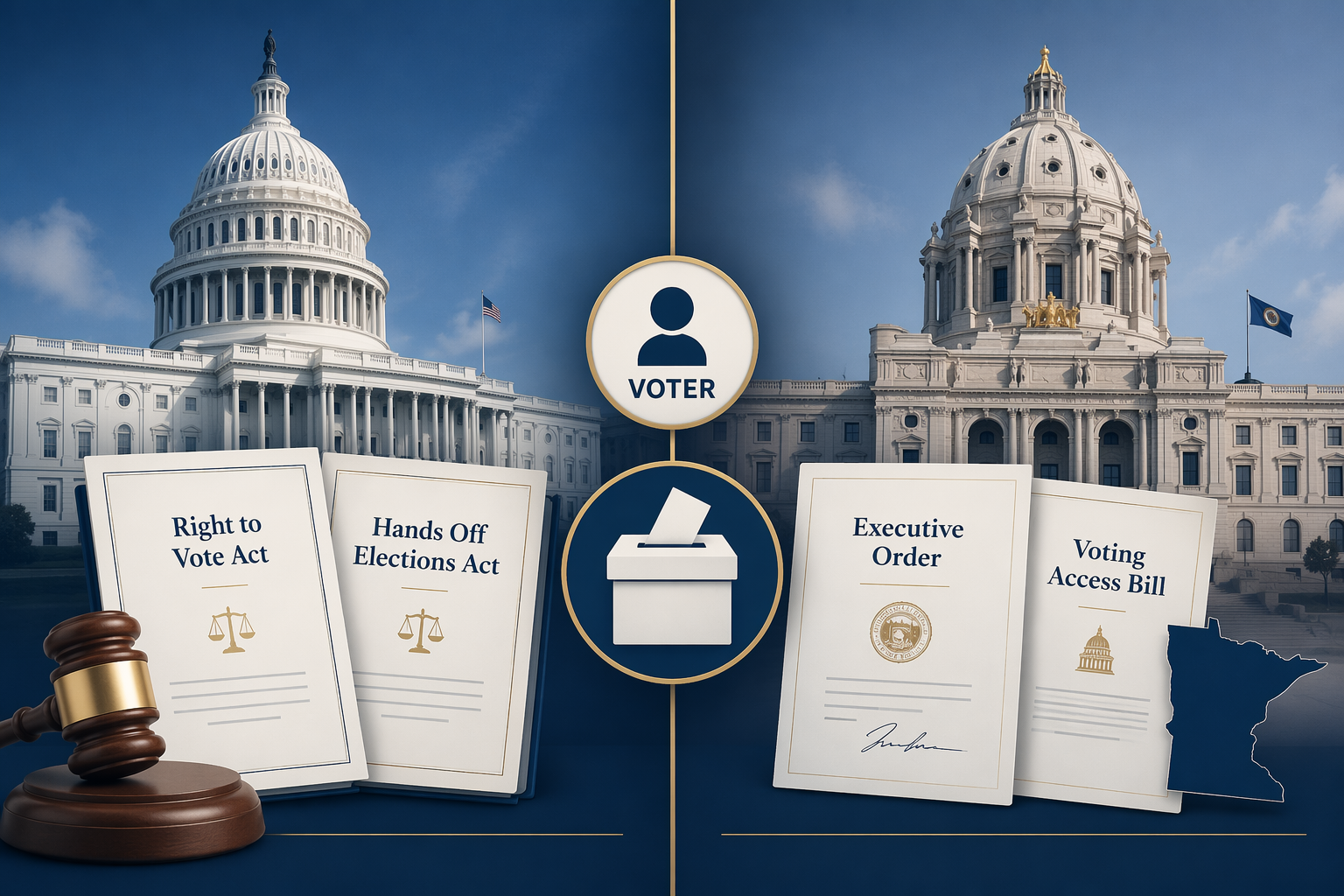
On the specific election-law issues a senator would actually vote on, Angie Craig offers the more verifiable record. In June 2026, she co-led the Right to Vote Act, described as the first statutory right to vote in federal elections, and the Hands Off Elections Act, which would prohibit election interference by executive-branch officials [1][2]. She also voted against the SAVE Act, which she called "a blatant attack on our democracy," and her federal alignment extends to the John Lewis Voting Rights Act, the CLEAN Elections Act, the Election Mail Act, and a constitutional right-to-vote amendment [3][4].
That matters because it tells you what Craig thinks Senate power is for: writing rules, limiting interference, and giving election administrators a clearer statutory backstop. Her record is not just pro-voting-rights in a general sense; it is specific about where the leverage sits, whether that is in election administration, federal mail voting, or barriers to eligibility.
Flanagan's record is state-level, not congressional
Peggy Flanagan's evidence base is different. Her public support for the John Lewis Voting Rights Act and her work on voting access come from Minnesota-level governance and policy commitments rather than Senate roll calls [5][6]. That is not a weaker moral claim; it is a different institutional one. Flanagan is speaking from the posture of an executive-branch official who has had to think about access, implementation, and how a rule works on the ground.
That distinction is the real methodological divide in this race. Craig shows how she would legislate. Flanagan shows how she has approached access and administration in state government. The overlap on core voting-rights principles is wider than the campaign noise suggests, but the evidence is not symmetrical: one side has federal votes, the other has state action and pledges.
Money and process show a narrower but real split
Campaign finance is not the main legal issue here, but it still says something about governing style. Flanagan has leaned on a no-corporate-PAC message, while Craig has accepted corporate PAC money; in the March 31, 2026 snapshot, Craig reported about $4.8 million cash on hand and Flanagan about $1.1 million, though later filings could change that picture [7][8]. Flanagan has also cited about $12 million in outside super PAC spending, but that figure is her campaign's claim rather than an independently audited total [9].
The primary process points in the same direction. Craig bypassed the DFL convention and put the race to all primary voters, while Flanagan won the DFL endorsement with 57% of first-ballot delegates [7][8]. That does not make one candidate more democratic than the other. It does show a difference in where each side thought legitimate authority should come from: delegates, or the broader primary electorate.
So the practical conclusion is fairly narrow. On voting rights, election administration, and anti-interference rules, Craig has the clearer federal record and the more sourceable paper trail. Flanagan brings state-level experience, access-oriented governance, and public commitments that would still need to be translated into Senate votes and statutory language. The larger contrast is not a fight over whether voting rights matter; it is a comparison between legislative specificity and executive-style posture, with campaign finance and primary process providing the sharper clue about how each would use power.
References
- Craig, colleagues introduce Right to Vote Act — U.S. House Office of Rep. Angie Craig, June 2026
- Craig, colleagues introduce Hands Off Elections Act — U.S. House Office of Rep. Angie Craig, June 2026
- H.R. 22 - SAVE Act — Congress.gov
- CBS Minnesota report on Rep. Angie Craig's SAVE Act vote — CBS Minnesota
- Peggy Flanagan profile — Local Candidates
- Interview with Peggy Flanagan — CAP Action Fund
- MinnPost coverage of the DFL endorsement and primary path — MinnPost
- CBS Minnesota coverage of March 2026 cash-on-hand reports — CBS Minnesota
- Flanagan campaign claim on outside spending — InForum, July 8, 2026
Comments
Join the discussion with an anonymous comment.