
Flock Safety’s July 2026 decision to remove its human distress detection pilot narrowed one part of the company’s audio-surveillance controversy. It did not remove the harder question for cities: whether Raven microphones that continuously process ambient sound, even briefly and on-device, create legal exposure that automatic license plate readers did not.
The distinction matters because the public-facing concession was feature-specific. Flock said it removed the human distress detection pilot after “careful consideration and community consultation,” while leaving Raven’s microphone infrastructure in place for other qualifying sounds and reserving room to evaluate future capabilities under new criteria.[1] That makes the legal issue less about one paused category of sound and more about the architecture that made the category possible.
| Issue | What Changed | What Did Not Change |
|---|---|---|
| Human distress detection | The pilot feature was removed in July 2026. | The same class of street-mounted audio sensors remains capable of processing ambient sound for qualifying events. |
| Raven audio workflow | Flock no longer presents distress detection as an active pilot capability. | Raven still analyzes rolling audio windows on-device and transmits only sounds classified as qualifying events, according to Flock. |
| Legal risk | The most provocative feature is no longer active. | State wiretap, Fourth Amendment, procurement, and municipal-liability questions remain tied to continuous audio processing. |
The legal event is the processing, not only the stored file
Flock’s description of Raven is precise enough to be useful and incomplete enough to leave municipalities exposed. The company says Raven processes audio locally in 5-second rolling windows, identifies qualifying events such as gunshots, and discards audio that does not match a qualifying pattern. Flock also says audio is not recorded or stored unless an event is detected.[1]
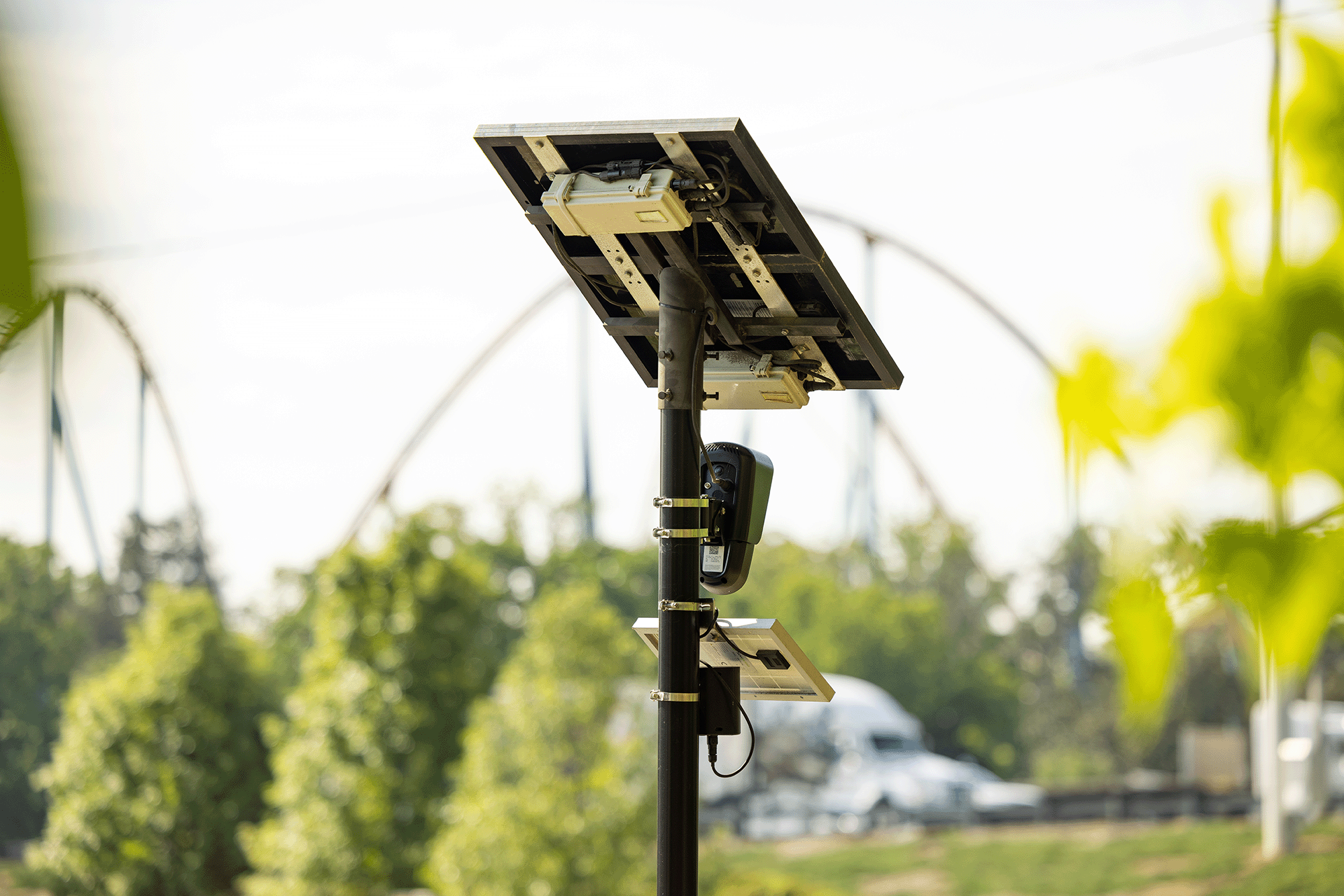
That workflow is not legally neutral simply because the company avoids the word “recording.” Wiretap and eavesdropping statutes often turn on terms such as intercept, acquire, overhear, record, or use. A municipal attorney reviewing a Raven contract therefore cannot stop at the vendor’s storage claim. The first question is whether the device’s temporary acquisition and machine analysis of sound is covered by a state statute before any retained clip exists.
Nor can the city treat the 5-second window as a rounding error. Five seconds is short as evidence storage, but it is still enough time for the system to receive ambient sound, classify it, and decide whether the government customer should receive an alert. The legal significance depends on jurisdictional text, deployment location, implementation details, and proof of how the device actually functions. Flock’s technical description is company-reported and, on the materials available, unaudited by an independent third party.
That is why the removed human distress feature remains relevant. The Electronic Frontier Foundation reported in October 2025 that Flock had changed marketing language from “screaming” to “distress” detection, a vocabulary shift that did not eliminate the underlying point: Raven was being positioned to classify human vocal sounds, not only explosive acoustic signatures.[2] The July 2026 removal lowers one immediate risk, but it does not answer whether the city already authorized an always-listening classifier without saying so plainly in procurement records.
All-party-consent states are where the wiretap problem sharpens
The state-law risk is not uniform. It is sharper in all-party-consent states, where audio recording or interception can require consent from every party to a covered communication. The research materials identify 11 such states: California, Connecticut, Florida, Hawaii, Illinois, Maryland, Massachusetts, Montana, New Hampshire, Pennsylvania, and Washington.[2] The existence of Raven in a public place does not by itself answer whether a covered communication exists, whether machine processing counts as interception, or whether any public-place exception applies.
Illinois deserves particular attention because disputes involving Flock in Evanston put the company’s technology in a jurisdiction with a demanding eavesdropping framework. That does not mean Raven has already been held unlawful there. No court has yet ruled that Raven’s on-device audio processing constitutes interception or recording under Illinois law, or under any other state wiretap statute. The point is narrower and more useful: a city deploying audio sensors in an all-party-consent state is taking a statutory-position risk that a city deploying cameras may not have taken.
The hardest factual issue is the one most likely to be glossed over in a council packet. If the device continuously receives neighborhood sound, holds it in a rolling buffer, transforms it into a machine-readable representation, and discards it unless it matches a model, has the system “intercepted” audio? A vendor may answer no because no non-event clip is stored. A defense lawyer may answer differently if an alert helped initiate a stop, a search, or a chain of investigative decisions. A city attorney has to defend the answer actually built into the contract and the deployment record.
This is where Flock’s own wording does real work but cannot carry the whole legal load. “Analyzed on the device and immediately discarded” is a technical claim, not a statutory exemption. If a state statute focuses on acquisition or interception rather than retention, the absence of a stored file may reduce evidentiary consequences without eliminating the threshold question. If a statute is written around recording, storage may matter more. The answer changes state by state, which is precisely why describing Raven as an ALPR accessory is a poor governance habit.
Flock’s ALPR Fourth Amendment defense does not transfer cleanly to audio
Flock’s Fourth Amendment argument for automatic license plate readers rests heavily on the idea that ALPRs generate discrete, point-in-time observations of vehicles in public. In its white paper, updated in July 2026, the company distinguishes ALPR data from the prolonged location tracking concerns that animated Carpenter by emphasizing limited, event-like plate reads rather than comprehensive personal monitoring.[3]
Raven pressures that distinction. A microphone designed to continuously process ambient sound is not just another sensor producing a visual observation when a car passes through a camera frame. It is an aural monitoring system whose legally relevant action occurs before a retained event is generated. That difference does not automatically make Raven a search. It does make the ALPR analogy less stable than it may appear in a procurement presentation.
Carpenter-style mosaic arguments are likely to be more inviting where surveillance is persistent, automated, and capable of producing inferences that no officer could practically gather by casual observation. ALPR networks raise that issue through aggregate vehicle-location data. Raven raises it through a different pathway: continuous acoustic scanning of public and near-residential space. The device may only transmit a small category of events, but the classification process depends on constant intake.
That point should be kept bounded. The current materials do not establish that Raven captures conversations, stores non-qualifying speech, or identifies speakers. They do establish that the system processes ambient audio in rolling windows, that Flock expanded or tested classifications beyond gunshots into human distress, and that those capabilities entered municipal environments before the legal category was settled. That is enough to separate the Fourth Amendment question from the familiar ALPR pitch.
Jackson shows how the risk reaches city hall before it reaches a court
The cleanest municipal-risk example is not a constitutional holding. It is Jackson, Mississippi, where the city terminated its Raven contract after a troubled trial. Mississippi Today reported that only 57 of 216 planned devices had been installed, that some were placed on residential lawns without property owner permission, and that the trial generated no usable data.[4]
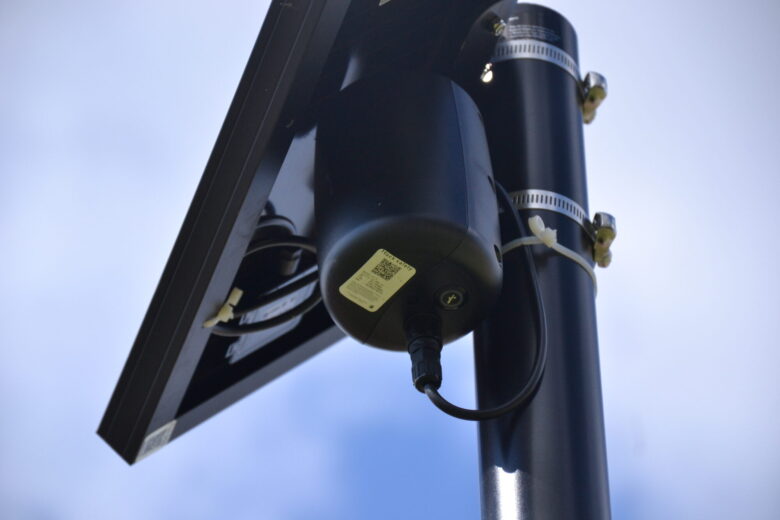
Jackson should not be stretched into proof that every Raven deployment is unlawful or ineffective. It is more important as a procurement failure. A city authorized an audio-sensing deployment, the installation process reached residential property without adequate permission, the promised trial did not produce usable data, and officials had to unwind the arrangement after the devices were already in neighborhoods.[4]
That sequence creates the kind of record litigators care about. Who approved the locations? What did residents receive before installation? Did the council understand that Raven was a microphone system rather than only a gunshot-detection service? Were data retention, event review, audit access, model changes, and vendor representations reduced to enforceable terms? If the answer is scattered across sales materials and staff memoranda, the city inherits ambiguity at exactly the moment it needs precision.
Municipal liability risk does not require a court to announce a new Raven doctrine first. It can arise from notice failures, contract vagueness, installation trespass or property disputes, inadequate council authorization, misleading public descriptions, or downstream criminal litigation in which a defendant asks how an audio-derived alert entered the investigation. The civil liberties dispute and the criminal procedure dispute may not arrive in the same lawsuit, but both begin with the same municipal record.
Regulators are catching up to Flock-style networks, mostly through ALPR rules
The regulatory pressure around Flock is no longer hypothetical. Washington’s SB 6002, effective March 30, 2026, restricts ALPR use to felony and gross misdemeanor investigations, imposes a 21-day retention period, and requires court-issued probable cause warrants for access to private-entity ALPR data.[5] The law is an ALPR statute, not an audio-surveillance statute, but it shows legislatures moving from broad unease about networked surveillance toward operational limits: authorized uses, retention periods, warrant thresholds, and private-vendor access.
The ACLU has pushed in the same direction with model ALPR legislation that treats license plate databases as a distinct governance problem requiring limits on collection, sharing, retention, access, and auditing.[6] Those controls are still more developed for plate reads than for street-level audio processing. That gap is now part of Raven’s legal controversy: cities have begun to learn how to ask ALPR questions, but many have not built an equivalent checklist for microphones.
Market pressure is also visible. NPR reported in February 2026 on cities canceling Flock license plate reader contracts amid immigration-surveillance concerns, and the ACLU reported in July 2026 that at least 30 municipalities had canceled or deactivated Flock contracts since January 2025.[7][8] Those figures are not measures of Raven’s legality or performance. They are evidence that Flock contracts now carry public-trust and governance costs that cities cannot treat as collateral.
EFF’s 2025 year-in-review likewise catalogued alleged patterns of surveillance abuse involving Flock systems, adding to the broader record of skepticism around vendor-controlled public safety networks.[9] For Raven, the important consequence is not that every criticism of ALPR sharing maps neatly onto audio. It is that a city choosing Flock hardware does so in an environment where courts, advocates, journalists, and legislators are already reading the fine print.
The procurement record has to say audio
A council can reasonably want faster gunshot alerts. A police department can reasonably prefer an automated signal to waiting for a resident to call 911, especially in neighborhoods where reporting is inconsistent. Those interests do not answer the legal question. They explain why the legal question needs to be asked before installation rather than after a device appears on a residential block.
For Raven, the procurement record should not borrow an ALPR governance frame and leave the microphone details to a technical exhibit. The legally operative facts are the sensing modality, the rolling processing window, the classification categories, the model-change process, the event transmission rule, the retention rule, the audit right, the installation authority, and the notice given to affected residents. If human distress detection was enabled, tested, paused, removed, or reserved for future reconsideration, that history belongs in the record too.
The absence of retained non-event audio may become an important defense. So may public-place deployment, limited event categories, short processing windows, and technical controls that prevent speech capture. But those are defenses to be verified and documented, not assumptions to be imported from camera law. A city that cannot independently confirm how the device processes and discards sound is relying on a vendor representation at the point where statutory interpretation may turn on architecture.
That is the narrower lesson of the July 2026 removal. Taking human distress detection out of the pilot reduces one visible source of controversy. It does not resolve whether continuous on-device audio processing is interception under state law, whether persistent acoustic monitoring changes the Fourth Amendment analysis, whether residents received adequate notice, or whether criminal defendants can obtain enough technical information to test an audio-derived lead.
Those are unresolved questions, not concluded violations. They are also concrete enough that municipalities and practitioners cannot responsibly treat Raven as merely another Flock attachment on a pole. The legal review has to be jurisdiction-specific, technically verified, and written in procurement records as audio surveillance in its own category.
References
- How Flock’s Audio Detection Works, Flock Safety.
- Flock’s Gunshot Detection Microphones Will Start Listening for Human Voices, Electronic Frontier Foundation, October 2025.
- Automated License Plate Readers and the Fourth Amendment, Flock Safety, November 2025, updated July 2026.
- Jackson pulls gunshot listening devices…, Mississippi Today, October 28, 2025.
- What to Know About the New Restrictions on Flock, MRSC, April 2026.
- Automatic License Plate Reader Privacy Model Bill, ACLU.
- Why some cities are canceling Flock license plate reader contracts, NPR, February 17, 2026.
- Flock Safety Credibility Lost, ACLU, July 2026.
- EFF’s Investigations Expose Flock Safety’s Surveillance Abuses: 2025 in Review, Electronic Frontier Foundation, December 2025.
Comments
Join the discussion with an anonymous comment.