
Ford Expedition Seat Belt Recall Tests NHTSA Consent Order
The June 2026 Ford Expedition seat belt recall marks the third expansion of a single pretensioner defect and the first major recall action under the November 2024 NHTSA consent order. This article examines whether the 5.5× scope increase signals that the order's mandated recall review is working or that Ford's defect identification still falls short — and what product liability and regulatory compliance attorneys should watch.
- Hallucination rate
- Not measured / undisclosed
Ford’s June 2026 Expedition and Lincoln Navigator seat belt recall is not legally interesting simply because it covers 419,967 U.S. vehicles. The harder fact is that recall 26S34 is the third expansion of the same front seat belt retractor pretensioner defect, and it arrives while Ford is operating under a broad NHTSA consent order that requires the company to reexamine recent recalls and improve its safety-data systems.[1][2]
The remedy is concrete: Ford is to replace the front seat belt retractor pretensioner assemblies. The remedy timing is less satisfying for risk analysis, because owner notification and repair availability were not expected until August 2026.[1] That leaves a familiar interval in recall practice: the defect population has been publicly expanded, but the full corrective process has not yet run its course.
For attorneys evaluating the legal implications of the Ford Expedition seat belt recall, the threshold question is not whether a seat belt pretensioner defect matters. It does. The question is when Ford had enough information to draw the wider boundary, and whether the June 2026 expansion reflects a consent-order process working as designed or a defect-identification process that remained too narrow for too long.
The Recall Did Not Arrive All at Once
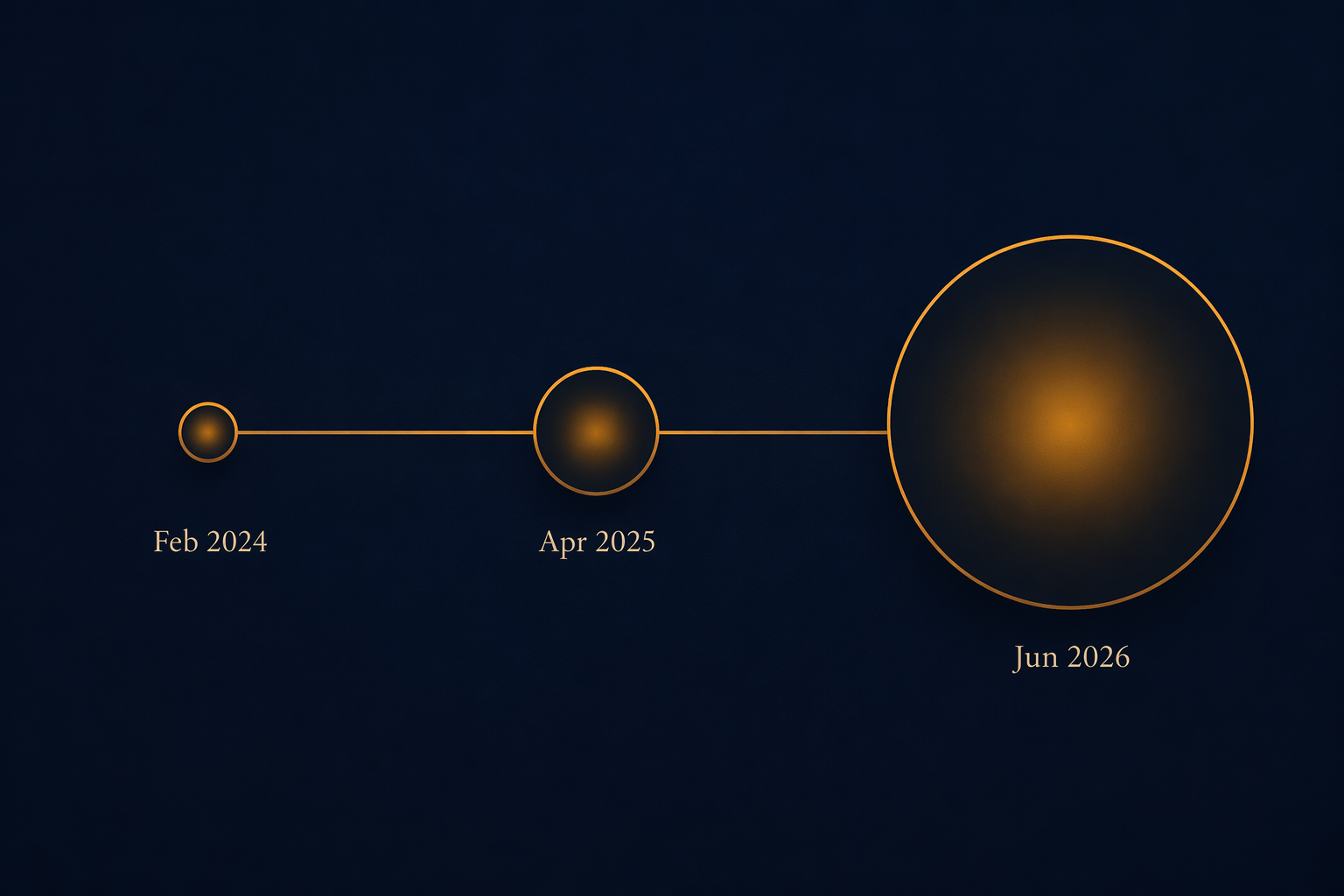
The public sequence matters because each later campaign changes how lawyers will read the earlier one. In February 2024, Ford recalled about 77,000 vehicles under NHTSA campaign 24V099. In April 2025, that population expanded to about 105,000 vehicles under campaign 25V197. In June 2026, campaign 26S34 brought the covered population to nearly 420,000 vehicles.[1][2]
| Recall point | Campaign identifier | Approximate covered population | Why it matters legally |
|---|---|---|---|
| February 2024 | 24V099 | About 77,000 vehicles | Initial public defect boundary for the pretensioner issue |
| April 2025 | 25V197 | About 105,000 vehicles | First expansion after NHTSA had opened a related investigation |
| June 2026 | 26S34 | 419,967 vehicles | Third expansion and first major recall action under the November 2024 consent-order oversight regime |
A 77,000-vehicle recall becoming a nearly 420,000-vehicle recall is roughly a 5.5-fold increase. That ratio is not, by itself, proof of delay or misconduct. Recall populations can legitimately change when engineering, supplier, production, warranty, and field data are reanalyzed. But a later population this much larger does force a process question: what separated the first boundary from the third?
The chronology also runs through a regulator’s prior interest in the same general condition. In November 2024, NHTSA opened a probe into more than 110,000 Ford SUVs after reports involving Expedition seat belts, including concerns that the seat belts could lock and fail to retract properly.[4] The April 2025 expansion followed that probe. The June 2026 expansion then followed the entry of Ford’s consent order with NHTSA, which had been announced days before the probe became public.[4][5]
That ordering creates the awkward legal posture. The seat belt defect was not first discovered in 2026. NHTSA had already looked at a related seat belt concern in late 2024. Ford had already expanded the campaign once in 2025. Then, under consent-order oversight, the population grew again and much more dramatically.
The Known Incident Record Cuts Against a Simple Story
The public incident data complicates any easy accusation that Ford ignored an obvious injury pattern. Through May 2026, FordAuthority reported one injury, two warranty claims, and two field reports globally associated with the condition.[3] Those are low numbers for a population approaching 420,000 U.S. vehicles.
Low reported incident counts matter in litigation and regulatory conversations. They affect how counsel evaluates notice, materiality, damages narratives, punitive-exposure arguments, and the practical likelihood that owners experienced the alleged condition before the expanded recall. They also give defense counsel a factual basis to resist any argument that the June 2026 expansion, standing alone, proves Ford knowingly tolerated widespread harm.
They do not end the inquiry. A seat belt locking or retraction condition may not always generate a warranty claim, field report, crash, or injury report. Some owners may tolerate intermittent symptoms. Some may not recognize the issue as a reportable safety defect. Some vehicles may never present the condition before the recall remedy is available. The public record therefore supports a narrow conclusion: reported incidents were low through May 2026, not that the underlying defect was insignificant or that Ford’s earlier scope decisions were necessarily sound.
The Consent Order Was About Cameras, but Its Machinery Is Broader
The November 2024 consent order did not arise from the Expedition seat belt issue. It resolved NHTSA allegations involving delayed rearview camera recalls and imposed a civil penalty of up to $165 million.[5][6] Treating the order as though it were a seat belt finding would overstate the record.
But the order’s compliance architecture is not limited to cameras. NHTSA said Ford must retain an independent third-party monitor, meet with the agency quarterly, and improve its analysis of safety data.[5] The order also requires Ford to review all recalls it filed in the prior three years and, if needed, file new recalls.[5][6] That is why the Expedition expansion belongs in the same legal conversation even though the original enforcement matter involved a different component.
The data obligations are especially relevant. NHTSA described requirements for a safety data analytics infrastructure with VIN-level traceability.[5] For a recall population that changed repeatedly, VIN-level analysis is not a compliance ornament. It is the difference between identifying a narrow group that shares a suspect part, build window, supplier path, or production condition and recognizing that the same risk extends farther than the first campaign admitted.
The order has a three-year base term, with a possible fourth year, keeping Ford under oversight through at least 2027.[5] That timing makes the June 2026 recall more than a one-off product safety notice. It is an early public test of whether the order’s recall-review and analytics requirements can surface broader defect populations before NHTSA or plaintiffs’ lawyers do.

Two Readings of the June 2026 Expansion
The charitable reading for Ford is straightforward. A company under a new consent order reviews prior recalls, improves data aggregation, applies closer scrutiny to VIN-level populations, and files an expanded recall when that process shows the prior boundary was too small. On that view, 26S34 is not a failure of oversight; it is the kind of correction the order was designed to produce.
That reading has support in the public framework. The order expressly requires a backward-looking review of recent recalls and new filings where needed.[5][6] The Expedition seat belt issue sits comfortably within that mandate because the first campaign was filed in February 2024, inside the three-year lookback window. If Ford or the monitor reexamined that campaign and concluded that additional vehicles shared the relevant risk, an enlarged June 2026 recall would be evidence that the review mechanism had teeth.
The less forgiving reading is just as available. Ford had an initial recall in early 2024, a NHTSA probe in late 2024, and an expansion in 2025. If the proper population was nearly 420,000 vehicles, lawyers will ask why the 2025 expansion stopped at roughly 105,000. The consent order may have helped get to the larger number, but that does not answer whether Ford’s pre-order or early post-probe process should have gotten there sooner.
The public record does not let either reading win cleanly. It does not disclose Ford’s internal recall committee materials, the monitor’s work, NHTSA’s oversight communications, the specific analytics that led to 26S34, or the production characteristics that separated the earlier populations from the June 2026 population. Without that record, the most defensible conclusion is narrower: the expansion is consistent with a consent-order review catching missed scope, and it is also consistent with the possibility that earlier recall-boundary decisions were too conservative.
Why the Timing Question Will Matter in Legal Files
Product liability files rarely turn only on the final recall size. They turn on notice and response: what the manufacturer knew, when it knew it, who received the information, and what action followed. A recall expansion gives plaintiffs’ counsel an obvious question to ask in discovery. It gives regulators a reason to compare the earlier and later defect populations. It gives insurers and risk officers a reason to separate the cost of the field action from the cost of explaining the delay narrative.
The Expedition sequence supplies several pressure points. The first is the February 2024 campaign boundary. The second is the November 2024 probe into more than 110,000 SUVs.[4] The third is the April 2025 expansion, which increased the population but did not approach the June 2026 number.[1][2] The fourth is the consent-order obligation to review recent recalls and strengthen VIN-level analytics.[5] Each point may be reasonable in isolation. Together, they create a document trail that will invite comparison.
The August 2026 remedy timing adds another practical layer. Until replacement assemblies are available and repairs are performed, owners remain in the gap between defect notice and completed remedy.[1] That period can matter if additional incidents occur, if parts supply slows repair completion, or if owner communications become a separate target of criticism. The current public materials do not show those problems, but they identify the interval in which they would emerge.
The absence of an identified Expedition-specific class action as of July 18, 2026, also keeps the litigation posture narrower than the regulatory one. A broader seat belt litigation analog involving another Ford SUV model may be useful for anticipating theories, but it should not be treated as evidence of Expedition-specific pleading, defect proof, or class certification risk. For now, the firmer record is regulatory: campaigns, dates, vehicle counts, incident disclosures, and consent-order obligations.
What to Watch Next
The most important next disclosure would be any statement tying 26S34 to the consent order’s mandated recall review. If NHTSA, Ford, or the monitor connects the June 2026 expansion to that review, the “oversight is working” reading becomes stronger. If later documents show that the expansion arose from ordinary field reports, supplier analysis, or regulator pressure unrelated to the order, the legal significance changes.
The second item is repair execution. A recall population can be correctly defined and still create exposure if remedy availability, owner notification, parts distribution, or dealer capacity lags. The public schedule pointing to August 2026 makes that a concrete monitoring point rather than a speculative one.[1]
The third is whether future filings change the incident picture. One injury, two warranty claims, and two field reports globally through May 2026 leave Ford with a materially different risk narrative than a record showing numerous injuries or repeated owner complaints.[3] If later reports remain low, the case for widespread realized harm stays limited. If they grow, the timing of earlier boundary decisions becomes harder to defend.
The fourth is pattern. A single recall expansion under a consent order can be read several ways. Multiple broader or earlier corrections across Ford’s recent recall portfolio would say more about whether the NHTSA order changed corporate recall behavior. The consent order’s oversight term through at least 2027 gives regulators, plaintiffs’ lawyers, and compliance counsel time to see whether 26S34 is an isolated correction or part of a larger recalibration.[5]
This is legal analysis, not legal advice. On the present public record, the June 2026 Expedition recall is a real test of the consent order. The same facts support two competing interpretations: a mandated review may be finding missed scope, or the underlying process may still have reached the correct population later than it should have. The record does not yet say which one is true.
References
- Ford to recall nearly 420,000 US vehicles over seat belt issue, NHTSA says, Reuters, 2026-06-03
- Ford recalls nearly 420,000 SUVs over seat belt issue, AP News
- 420K Ford Expedition, Lincoln Navigator SUVs Recalled Over Seat Belt Issue, FordAuthority, 2026-06
- US opens probe into over 110,000 Ford SUVs on seat belt concern, Reuters, 2024-11-18
- NHTSA finalizes consent order with Ford, including $165 million civil penalty, NHTSA
- Ford Motor hit with $165 million US civil penalty over delayed rearview camera recall, Reuters, 2024-11-14
Chronological incident history
No sanction cases have named this tool in the tracked record set to date. This does not imply the tool is safe — see Risk Digest for ongoing monitoring.
← Compare peer toolsReport a correction or tip
Spotted an outdated figure, a misstated fact, or a ruling this tool profile should reflect? Public comments are disabled for this content given the professional cost of a misreported case outcome, penalty amount, or rule text — use the structured correction channel instead.
Report a correction or tip for this record →