
The legal story in the FY2026 defense bill does not begin with the headline authorization number. It begins with a procurement market that is suddenly large enough for statutory language to matter in ordinary bid files, supplier questionnaires, model inventories, and certifications. Federal AI contract obligations rose from $261 million to $7.2 billion from 2022 to 2026, while potential award values rose from $355 million to $91.8 billion; Brookings describes that potential-award growth as a 1,912% increase and reports that DoD accounts for 98.9% of federal AI spending.[1] For counsel assessing the defense budget’s legal implications for AI, that concentration is the point: the operative AI market is already a defense procurement market.
The FY2026 National Defense Authorization Act, signed on December 18, 2025, authorizes $900.6 billion and contains at least 81 procurement-related provisions, including several AI-specific requirements scattered across the bill.[2] That is not the same thing as the administration’s earlier $1.01 trillion budget proposal. Authorization and appropriation do different legal work. The NDAA authorizes programs, conditions, and policy direction; appropriations provide budget authority. Contractors that collapse those categories risk misunderstanding both the size of the funded opportunity and the source of the compliance obligation.

The bill’s AI provisions should be read less as a technology-policy announcement than as procurement plumbing. They tell agencies what frameworks to build, tell contractors which systems they may not use, and change the pricing rules that determine when certified cost or pricing data must be submitted. The practical consequence is familiar: a sales description becomes a representation, a representation becomes a contract term, and a contract term becomes something legal, finance, supply chain, and engineering all have to be able to defend.
The AI Security Provisions Are Not Isolated Clauses
Section 1512 requires a DoD-wide artificial intelligence and machine-learning security policy. Section 1513 requires DoD to develop a risk-based cybersecurity and physical-security framework for AI systems, addressing insider threats, workforce training, supply-chain risks, and continuous monitoring.[2] On paper, those are separate statutory sections. In a contractor’s control environment, they will not remain separate for long.
A model deployed for targeting support, logistics optimization, cyber defense, maintenance forecasting, or intelligence triage will not be evaluated only by asking whether the software is accurate. The statutory language points toward a broader security file: who trained or tuned the model, who has access to the development environment, what third-party components are embedded, how changes are monitored, what incident path exists, and whether the contractor can detect and respond to compromise. The notable feature of Section 1513 is its reach into physical security and insider-threat concerns, not just conventional network controls.[2]
That matters because many AI compliance programs are still organized around model performance, privacy, or general cybersecurity. Section 1513 points to a different operating question: can the contractor explain how an AI system is protected as a mission asset? A generic secure-development policy will not necessarily answer that. Neither will a one-page responsible-AI statement if the contract file later requires evidence of supply-chain review, monitoring, or training.
| Provision | Legal Hook | Contractor Consequence |
|---|---|---|
| Section 1512 | DoD-wide AI/ML security policy | Contractors should expect AI security expectations to migrate into solicitations, clauses, program guidance, and evaluation criteria. |
| Section 1513 | Risk-based cybersecurity and physical-security framework for AI systems | Controls may need to cover insider threats, workforce training, supply-chain risks, and continuous monitoring, not only software security. |
| Section 1532 | Restrictions on specified foreign and adversary-linked AI systems | Model provenance and vendor screening become contract diligence issues. |
| Section 6602 | Intelligence-community AI performance tracking | AI capability claims may be measured after award in intelligence-community settings. |
The overlap is the compliance problem. Section 1512 supplies the department-wide policy architecture; Section 1513 supplies the security framework; Section 1532 supplies a prohibited-source rule; Section 6602 extends attention to performance tracking in the intelligence community. A contractor that treats each clause as a discrete legal memo may miss the combined effect: DoD is being directed to build a more disciplined AI assurance environment, and contractors will be the entities asked to produce the artifacts.
The Foreign-AI Ban Turns Provenance Into a Bid Issue
Section 1532 is the provision most likely to create problems for companies that have not inventoried their AI dependencies. It bans DoD and its contractors from using AI systems from DeepSeek, High Flyer, or entities linked to China, Russia, North Korea, and Iran.[2] The covered names are attention-grabbing, but the harder work sits in the phrase “or entities linked to” adversary countries. That phrasing pushes compliance beyond an obvious vendor-name screen.
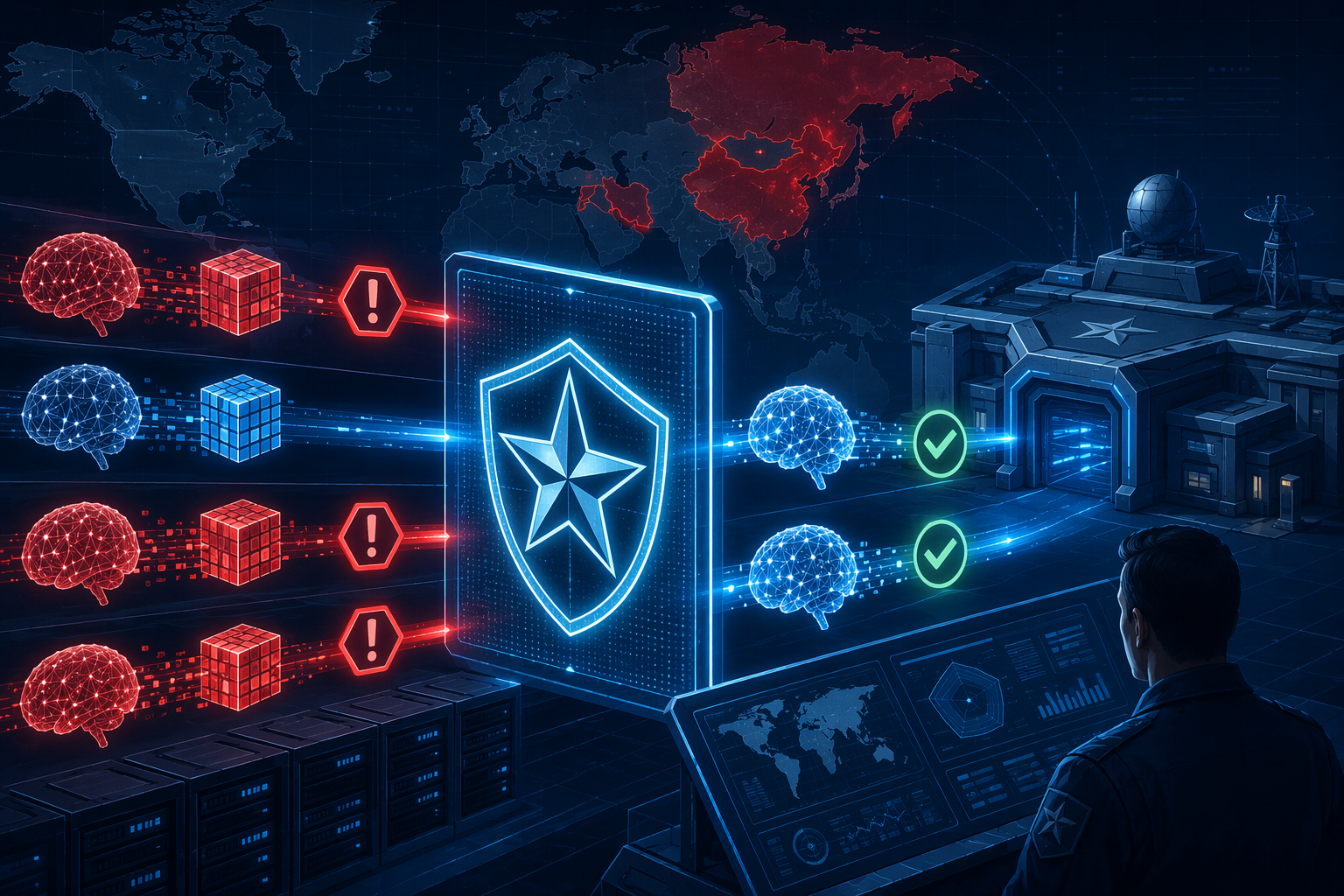
For prime contractors, the immediate question is whether their AI tools, embedded models, subcontractor platforms, data-labeling arrangements, code-assistance tools, and hosted development services are within scope. For subcontractors, the question may arrive as a representation in a prime’s questionnaire before the company has ever seen a DoD clause. For startups, the problem may be more basic: the product stack was assembled for commercial speed, not for an adversary-linked provenance review.
This is where a casual demo can become a contract problem. If a company shows a capability using one model during capture, substitutes another during delivery, or relies on a hosted tool without knowing whether Section 1532 is implicated, the risk is not merely reputational. The relevant facts may appear in a proposal, a security plan, a subcontractor certification, an invoice support package, or a termination file. The statute does not need to use the phrase “supply-chain certification” for supply-chain evidence to become necessary.
The safer reading is not that every AI dependency is prohibited. The safer reading is that every AI dependency used in performance should be knowable. Contractors need enough provenance information to distinguish a permitted tool from a restricted one, and enough internal discipline to keep that answer current when engineering teams change models, vendors, endpoints, or data-processing workflows.
Security Controls Will Have to Follow the System, Not the Org Chart
Section 1513’s combination of cybersecurity, physical security, insider threats, training, supply-chain risk, and continuous monitoring is awkward for organizations that divide those functions among different owners.[2] Cybersecurity may sit with IT or security engineering. Physical security may sit with facilities. Insider-threat processes may sit with security, legal, or HR. Supply-chain diligence may sit with procurement. Workforce training may sit with compliance. AI model governance may sit with a product or data science team that is not accustomed to government-contracts evidence.
That distribution is normal. It is also why the statute should be mapped around the AI system rather than the company’s administrative chart. If the deliverable is an AI-enabled platform, the compliance file needs to show how the system is secured across its lifecycle. Who can modify the model or prompts? Who approves third-party components? What logging exists when the system is used in a classified or sensitive environment? How are anomalies reviewed? What training is required for operators? Which vendors can touch data, weights, infrastructure, or outputs?
The answer will vary by contract, system, classification level, and mission use. The statute does not create a one-size-fits-all contractor checklist. It does, however, make it difficult to defend a purely paper AI policy that cannot be tied to the actual technical and operational path of the system being sold.
Section 6602 Adds a Performance-Tracking Layer
Section 6602 addresses artificial intelligence performance tracking in the intelligence community.[2] It should not be overread as a universal measurement code for every defense AI award. Its importance is narrower and still meaningful: it signals that AI compliance is moving beyond pre-award assurances into post-award performance visibility, especially where intelligence agencies are involved.
That changes the risk profile of capability claims. A proposal that says a system can classify, summarize, identify, predict, or recommend at a particular level of usefulness may not remain marketing language once the system is under contract. If an agency tracks performance, and if the contractor’s claims are materially inconsistent with actual behavior, the dispute may no longer be about optimism in a slide deck. It may be about whether the government received the capability it paid for.
The practical discipline is simple to describe and harder to execute: capability representations should be traceable to test conditions, limitations, data assumptions, and known failure modes. AI vendors entering the defense and intelligence markets often want flexibility because models evolve. Government buyers may accept iteration. They are less likely to accept a record that cannot explain what was promised, what was delivered, and what changed.
The Cost-Data Threshold Increase Is Relief With a Trap Door
Section 1804 raises the Truth in Negotiations Act threshold for certified cost or pricing data from $2.5 million to $10 million, described in the available analysis as the largest single increase in decades.[2] For some AI procurements, that is real deregulatory relief. Contracts below the new threshold may avoid a certified-cost-data burden that can be especially foreign to commercial AI vendors, software companies, and startups.
The trap is assuming the higher threshold ends the pricing inquiry. It does not. The legal question is not simply whether the company prefers commercial-style pricing or whether the product feels innovative. The question is whether certified cost or pricing data are required under the applicable rules and contract structure. Misreading the threshold, ignoring exceptions, or failing to preserve support for price reasonableness can still create audit and dispute exposure.
AI contracts make this more delicate because the pricing inputs are often unstable. Compute, data rights, engineering labor, cloud architecture, model licensing, support obligations, and retraining requirements may change between proposal and performance. A contractor that falls below the TINA threshold may have less certification burden, but it still needs internal pricing discipline if it wants to defend what it charged and why.
The Nontraditional-Contractor Exemption Does Not Answer the Audit Question
Section 1826 is more tempting than Section 1804 and more uncertain. It exempts nontraditional defense contractors from FAR Part 31 cost principles, TINA, and multiple DFARS business-system requirements.[2] That is a significant invitation to companies that have avoided defense work because they do not have mature government accounting systems. In AI, that invitation will matter. Many of the companies with useful models, infrastructure, or data pipelines are not legacy defense contractors.
The unresolved issue is cost-reimbursement work. If a startup receives a cost-type AI award but is exempt from familiar cost principles and business-system requirements, how will the government evaluate allowability, allocability, billing discipline, indirect costs, and system adequacy? The research materials do not support a settled answer. That uncertainty should not be treated as permission to operate without audit logic. It should be treated as a design problem that must be solved before the first invoice becomes the test case.
There is a predictable bad pattern here. A startup hears “nontraditional exemption” and assumes commercial books are enough. A program office wants the capability and moves quickly. The contract type requires cost visibility. Months later, finance, contracts, and engineering have to reconstruct labor categories, cloud costs, model expenses, subcontractor charges, and indirect allocations. Section 1826 may reduce certain formal obligations, but it does not eliminate the government’s interest in whether public money was billed properly.
FCA Exposure Is a Risk Context, Not an Automatic Result
False Claims Act discussion can become overheated quickly, especially around AI. The better approach is to be precise. A breach of an NDAA provision does not automatically become FCA liability. The risk grows when a contractor makes or causes a material false claim or false statement connected to payment, eligibility, performance, or compliance. AI security certifications, cybersecurity representations, prohibited-source attestations, cost-data statements, and capability claims are the kinds of facts that can become relevant if they are inaccurate and material.
The enforcement environment is not theoretical. CCS Global Tech reports that the Department of Justice recovered $6.8 billion under the False Claims Act in FY2025, the highest single-year total ever, and identifies cybersecurity certifications and AI capability representations as emerging enforcement priorities.[3] That does not mean every AI compliance failure will be prosecuted. It does mean contractors should assume that the records supporting AI-related representations may later be read by someone other than the capture team.
This is why the NDAA provisions belong in the same conversation as proposal governance, subcontractor flowdowns, model inventories, billing controls, and change management. If the company cannot identify which AI system was used, which vendor supplied it, which representation covered it, which security controls applied, and which costs were billed, the legal issue is not abstract AI regulation. It is ordinary government-contracts evidence applied to a newer technical stack.
The Executive-Order Layer Is Separate From the NDAA
Contractors may experience the NDAA, agency guidance, cybersecurity rules, and executive orders as one compliance stack, but the legal sources should not be blurred. The separate “woke AI” executive-order issue involving ideological-neutrality certifications is not part of the FY2026 NDAA. It may affect contractors through other procurement channels, but it should not be cited as if Congress placed that requirement in these NDAA sections.
The distinction matters in contract files. A statutory restriction, a solicitation clause, an agency policy memorandum, and an executive-order implementation requirement may all produce obligations, but they do not have the same source, scope, effective date, or remedy path. When an AI representation is challenged, those differences can matter more than the broad political narrative around defense AI.
What Contractors Should Treat as Binding, Not Atmospheric
The most complete accessible legal analysis in the research materials is the GT Law treatment of the FY2026 NDAA procurement provisions; other law-firm discussions were visible only through limited snippets. That matters because the statute is broad, implementation will take time, and contractors should resist filling gaps with confident folklore. The right posture is not panic. It is controlled uncertainty.
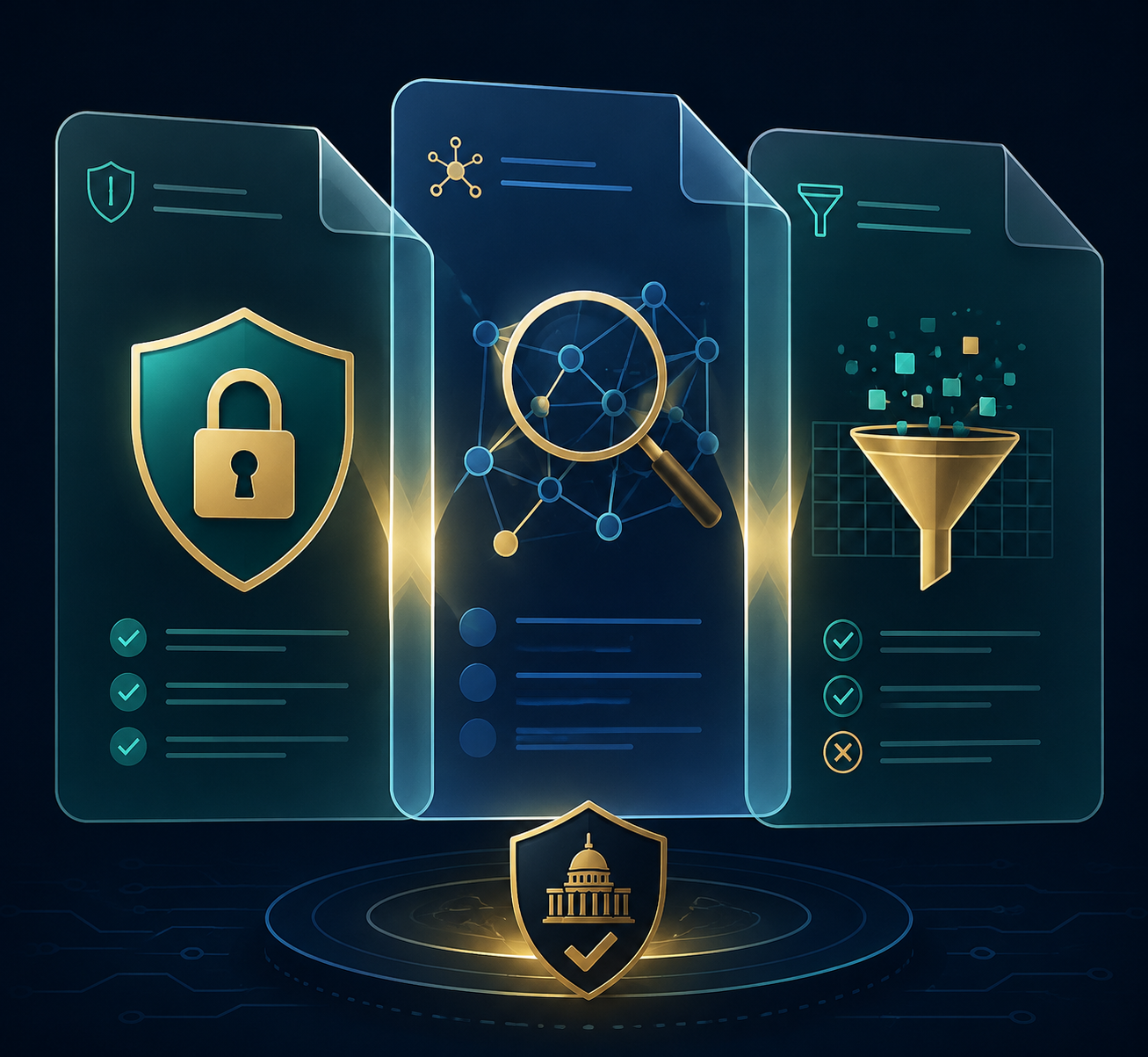
At minimum, the FY2026 NDAA makes four categories of AI facts harder to treat casually. Security controls around AI systems will need to account for cybersecurity, physical security, insider threats, training, supply-chain risks, and monitoring. Model and vendor provenance will need to be knowable enough to address Section 1532 restrictions. Pricing and cost representations will need to reflect the new TINA threshold without assuming that threshold relief means pricing immunity. Nontraditional contractors will need a defensible billing and audit approach even where Section 1826 removes some familiar obligations.
That is the quiet rewrite. The FY2026 NDAA expands the DoD AI market while converting AI security, supply-chain provenance, cost representations, and capability claims into contract-law and FCA-sensitive issues. Contractors selling into that market should track those obligations as binding legal conditions of performance, not as policy atmosphere around a growing budget.
References
- Where Does Federal AI Spending Stand in 2026?, Brookings, https://www.brookings.edu/articles/where-does-federal-ai-spending-stand-in-2026/
- FY 2026 NDAA: The Substantial Impact of the Fiscal Year 2026 National Defense Authorization Act on Federal Procurement Law, GT Law, https://www.gtlaw.com/en/insights/2026/2/fy2026ndaa/fy-2026-ndaa-the-substantial-impact-of-the-fiscal-year-2026-national-defense-authorization-act-on-federal-procurement-law
- Federal Contractors: Defense AI Strategy, CCS Global Tech, https://ccsglobaltech.com/federal-contractors-defense-ai-strategy/
Comments
Join the discussion with an anonymous comment.