
The manslaughter charge in the Hannah Rapp death case becomes legally intelligible at the point where the vehicle allegedly stopped moving away from the cyclists and began moving back toward them. Probable cause materials described by news outlets say Rapp and her boyfriend were cycling in Brazos County when an altercation followed a near-strike; Charles Medina then allegedly drove forward more than 200 feet, stopped, accelerated in reverse at high speed, and struck Rapp from behind, killing her at the scene.[1][2]
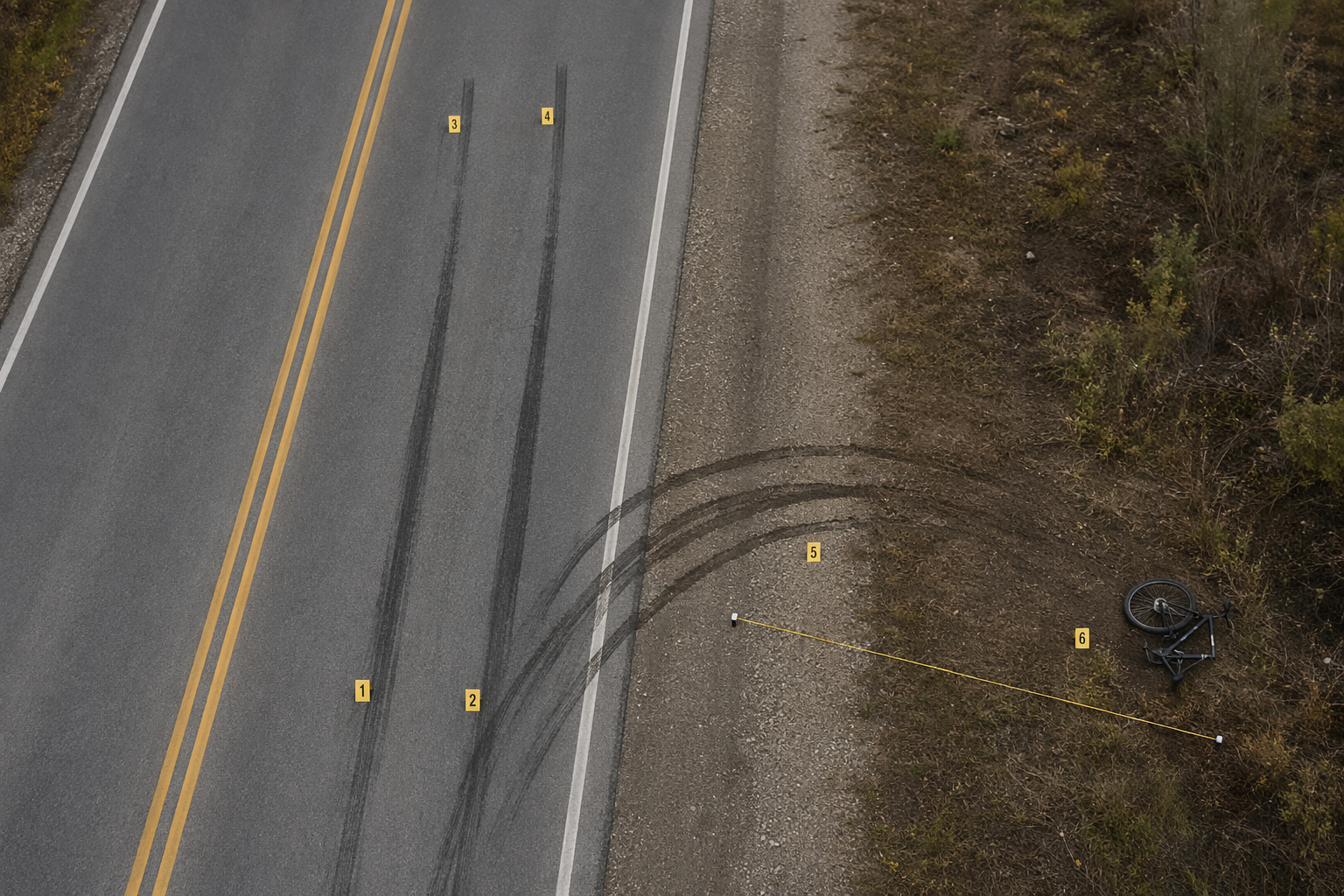
That sequence matters more than the “road rage” label. Road rage is a news phrase, not the element prosecutors have to prove. Texas manslaughter turns on recklessness: whether the defendant was aware of but consciously disregarded a substantial and unjustifiable risk that death would result. On the public record so far, the most important facts are not insults, tempers, or prior accusations. They are the vehicle movement, the skid marks, and what those marks may say about power, direction, and awareness.
Rapp was 26, a professional featherweight boxer, and a fire and life safety inspector at Texas A&M University.[1] She had recently fought for a WBC world title on ESPN, a fact that explains why boxing outlets and sports pages picked up the story quickly.[3] But the charging analysis does not depend on whether the victim was becoming famous. It depends on whether the affidavit gives prosecutors a coherent route from a fatal collision to the mental state required by Texas Penal Code § 19.04.
Why the skid marks are doing the legal work
Medina reportedly told investigators he reversed at about 15 mph and did not see Rapp until the last moment.[2] That statement is not a throwaway defense detail. It is the account prosecutors must overcome if they want the case to be about conscious disregard rather than a catastrophic but less culpable backing collision.
The affidavit evidence, as reported, gives them a direct answer. Investigators described two distinct sets of skid marks: one set from braking while the vehicle was moving forward, and another set from acceleration while the vehicle was moving in reverse.[1][2] KBTX quoted Deputy Sheriff Mike Stumpf as stating that “the angle of the reverse skid marks appeared as if the defendant was steering towards something while backing up.”[2] Other reporting also described rear-end damage, including a crushed rear hatch and shattered rear window, consistent with the vehicle striking Rapp from behind.[1][4]
Those are reconstruction facts, not character facts. If the reverse marks really show acceleration under power, the jury would not have to infer state of mind from anger alone. If the angle of those marks supports steering toward the cyclists, prosecutors may argue the reverse movement was not a blind, low-speed backing maneuver. The marks would instead support an inference that Medina was operating the vehicle in a way that created an obvious lethal risk to people he had just encountered on bicycles.
That is still not the same thing as a conviction. Probable cause affidavits are prosecution-facing documents, usually assembled early, and the public record does not yet include crash reconstruction testimony, body-camera material, vehicle data, a medical examiner report, or cross-examination. But the affidavit’s physical evidence is why the manslaughter charge is not merely an emotional response to a death. It gives the State a fact pattern that can be mapped onto a specific culpable mental state.
The Texas manslaughter fit
Texas Penal Code § 19.04 provides that a person commits manslaughter if the person “recklessly causes the death of an individual.” The offense is a second-degree felony.[5] The operative word is “recklessly.” It is the difference between a tragic collision that belongs in a lower culpability category and a homicide charge carrying serious prison exposure.
In ordinary courtroom terms, recklessness asks whether the person was aware of a substantial and unjustifiable risk and consciously disregarded it. The State does not have to prove that Medina’s purpose was to kill Rapp. It does have to prove more than inattention. The alleged forward travel, stop, reverse acceleration, and steering angle matter because each point makes the movement less passive.
| Legal category | Mental-state question | How the reported affidavit evidence relates |
|---|---|---|
| Criminal negligence | Should the person have perceived a substantial and unjustifiable risk? | A low-speed backing mistake or failure to notice a cyclist would more naturally point here, depending on the proof. |
| Manslaughter | Was the person aware of the risk and did the person consciously disregard it? | Forward braking, stopping, reverse acceleration under power, and reverse marks angled toward the victims may support this inference. |
| Murder | Did the person intentionally or knowingly cause death, or act under another murder theory? | The currently reported charge does not require prosecutors to prove an intent to kill. |
The table is not a verdict chart. It is a way to keep the culpability categories from collapsing into one another. Criminal negligence is a failure-to-perceive case. Manslaughter is a conscious-disregard case. Murder, at least in the intentional or knowing form most readers instinctively think of, asks for a higher state of mind. The current charge appears to sit where the reported physical evidence is strongest: not on a claim that Medina set out to kill Rapp, but on the claim that he consciously used a vehicle in reverse in a way that created a substantial risk of death.
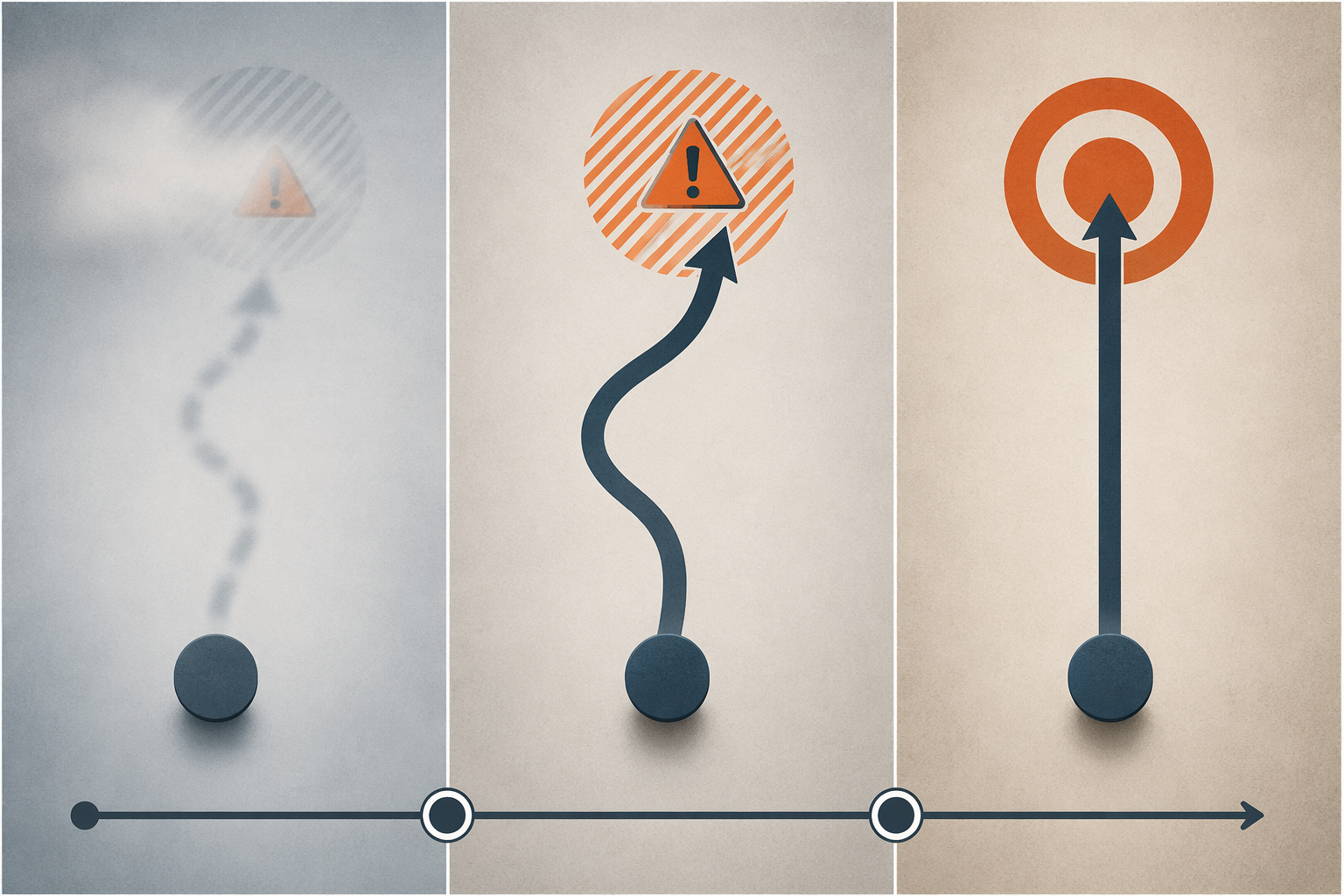
This is also why Medina’s reported 15 mph statement is not beside the point. A slow reverse speed and a late sightline would tend to make the conduct look less like conscious disregard and more like a terrible misperception. The skid-mark evidence, as described in the affidavit reporting, undercuts both parts of that account. Acceleration marks point away from a gentle reverse. Steering marks angled toward the victims point away from a purely accidental line of travel. Prosecutors do not need either fact to do all the work alone; together, they may allow the State to argue that the risk was not merely foreseeable, but actually disregarded.
What prosecutors still have to prove
The public record is still young. The incident was reported as occurring on July 18, 2026, and as of July 20 the case remains at the affidavit-and-charge stage, with no available docket number, arraignment record, medical examiner report, or filed civil complaint in the materials reviewed.[1][2] That procedural posture should temper the language around every conclusion.
At trial, if the case reaches trial, the State would have to prove the statutory elements beyond a reasonable doubt. That means proving identity, causation, death, and the reckless mental state. The defense would be expected to test the reconstruction: where the cyclists were positioned, what Medina could see, whether the marks are correctly attributed, how speed was estimated, whether the vehicle’s path can be reconstructed reliably, and whether the affidavit language overstates what the pavement can actually show.
The affidavit facts are powerful because they are physical, but physical evidence still has to be authenticated and explained. Skid marks do not walk into court and interpret themselves. Someone has to establish how they were measured, photographed, connected to the vehicle, and distinguished from other roadway marks. Someone also has to explain what “accelerating in reverse” means in this vehicle, on this surface, and under these conditions. That is where a probable cause narrative becomes trial evidence, or gets narrowed.
The criminal history issue is narrower than it looks
KBTX reported that Brazos County jail records showed 13 prior bookings for Medina since 2012, including charges described as deadly conduct by discharging a firearm, assault causing bodily injury, reckless driving, hit-and-run, and evading arrest.[2] That list is attention-grabbing, and some of the alleged conduct sounds thematically close to a vehicular recklessness case. It should not be treated as proof that Medina committed those prior offenses.
The missing word is disposition. A booking is not a conviction. A charge may have been dismissed, reduced, deferred, or resolved in a way that changes its legal significance. None of the crawled sources supplied complete dispositions for the reported prior bookings. That makes the history relevant as a reporting fact and potentially important for later proceedings, but not a clean substitute for admissible punishment evidence.
If there is a conviction or plea and the case moves to punishment, Texas procedure gives the State a broader field than the guilt-innocence phase. Prior criminal history can matter at punishment under Texas Code of Criminal Procedure Article 37.07, subject to the usual admissibility fights and proof requirements. The practical point is limited but important: Medina’s reported history may affect sentencing exposure if qualifying prior acts or convictions are proved in the proper phase, but the booking count itself does not establish that result.
Sentencing exposure if manslaughter is proved
Because Texas manslaughter is a second-degree felony, the ordinary punishment range is 2 to 20 years in prison and a fine of up to $10,000.[5][6] That is the exposure attached to the current charge, not a prediction of the sentence. Sentencing would depend on the proof admitted, the procedural path, any plea negotiations, the defense mitigation case, victim-impact evidence, and any legally usable criminal history.
There is no apparent limitations problem on the materials provided. Texas law does not impose a limitations bar for manslaughter prosecution in the way it does for many lesser offenses.[6] Given that the charge followed immediately after the July 18 incident, limitations is not where the live litigation energy is likely to be. The live issues are proof of recklessness, causation, admissibility of reconstruction evidence, and later, if the case gets there, punishment proof.
Bond and immediate posture
Medina was reported held at the Brazos County Detention Center on a $250,000 bond as of July 19, 2026.[2][4] The public reports reviewed did not specify bond conditions such as GPS monitoring, travel restrictions, alcohol restrictions, driving restrictions, or no-contact provisions. Without those documents, the bond figure says only so much. It shows the court treated the allegation as serious enough to require substantial secured release; it does not show what supervision terms would apply if Medina posted bond.
No filed wrongful death complaint appears in the materials reviewed. Texas civil litigation may become part of the story later, particularly because a death allegedly caused by a driver can produce parallel civil claims, but any discussion now would be prospective rather than case-specific. The criminal file is the only concrete legal track visible from the available public record.
Why the charge is coherent, and why that is all it is for now
The strongest version of the State’s case is not that a heated road encounter ended in death, although that is the human frame. It is that Medina allegedly drove away, stopped, reversed under power, and left marks that investigators say angled toward the victims before the vehicle struck Rapp from behind. That is the kind of physical sequence that can support a manslaughter theory because it speaks directly to conscious disregard of risk.
The strongest caution is just as plain. The public record is still built around affidavit reporting, not tested evidence. Medina’s statement has not been litigated. The reconstruction has not been cross-examined. The medical examiner’s findings are not available in the reviewed sources. The prior booking history has not been sorted into convictions, dismissals, deferred dispositions, or inadmissible allegations. This article is informational legal analysis, not legal advice and not a prediction of guilt.
On the current public record, the manslaughter charge is legally coherent because the alleged reverse movement and skid-mark direction bear on recklessness in a way ordinary outrage does not. The remaining gaps are the reason to stop there: coherent charge, serious exposure, unresolved proof.
References
- Rising boxer Hannah Rapp killed in Texas after police say driver accelerated in reverse and struck her bicycle — NBC News.
- Hannah 'Hanarchy' Rapp, champion boxer, killed in Brazos County crash — KBTX, July 19, 2026.
- Pro boxer Hannah Rapp killed in road rage incident in Texas — USA Today.
- Featherweight boxer Hannah Rapp killed by road-raging driver: cops — NY Daily News, July 19, 2026.
- Texas Penal Code § 19.04 — FindLaw.
- Texas Manslaughter Laws and Penalties — Ruiz Law.
Comments
Join the discussion with an anonymous comment.