
The April 2026 audit letter
The legal break point in Hawaii's homeless prevention funding framework is not a slogan; it is a file. In an interim letter dated April 20, 2026, State Auditor Les Kondo said the Kauhale Initiative's no-bid contracts produced nearly $1.7 million in questioned costs across 10 HomeAid Hawaii contracts totaling nearly $40 million, with about $770,000 later credited back to the state and about $916,000 flagged as potentially improper charges, unsupported costs, procurement violations, or HomeAid overhead passed through to the state.[1] One $2.1 million invoice had no supporting documentation at all.[1] Because the letter was interim, those questioned-cost figures are still provisional, not the final word.

The problem was not just the missing invoice backup. The audit said SOHHS had no defined contract management structure, no meaningful invoice review process, and staff made verbal amendments to contract terms without documentation. It also warned that invoices continued to be submitted and paid with limited substantive review while the audit was still underway.[1] That is the point where an emergency program stops looking like a temporary response and starts looking like a controls failure.
How emergency contracting opened the gap
That control failure mattered because the work was routed through emergency procurement. Under Governor Green's homelessness emergency proclamation, the normal procurement code was suspended, which allowed no-bid contracting in the Kauhale program and left public funds exposed once temporary discretion became routine.[1] The legal issue is not whether an emergency response can ever be justified; it is whether the state kept enough documentation to show who approved what, under what authority, and how the money could be checked afterward.
What Act 309 changed
The legislature's response in HB431 CD1, enacted as Act 309, did not try to defend the old paper trail. It imposed a different compliance structure for kauhale spending.[2]
- Contracts over $1 million must draw at least two bidders.
- Projects must connect to utility grids.
- Rent is capped at 30% of area median income.
- Community consultation is required before siting.
- Quarterly expenditure reports must go to the legislature.
- The state keeps recoupment rights if funds are misused.
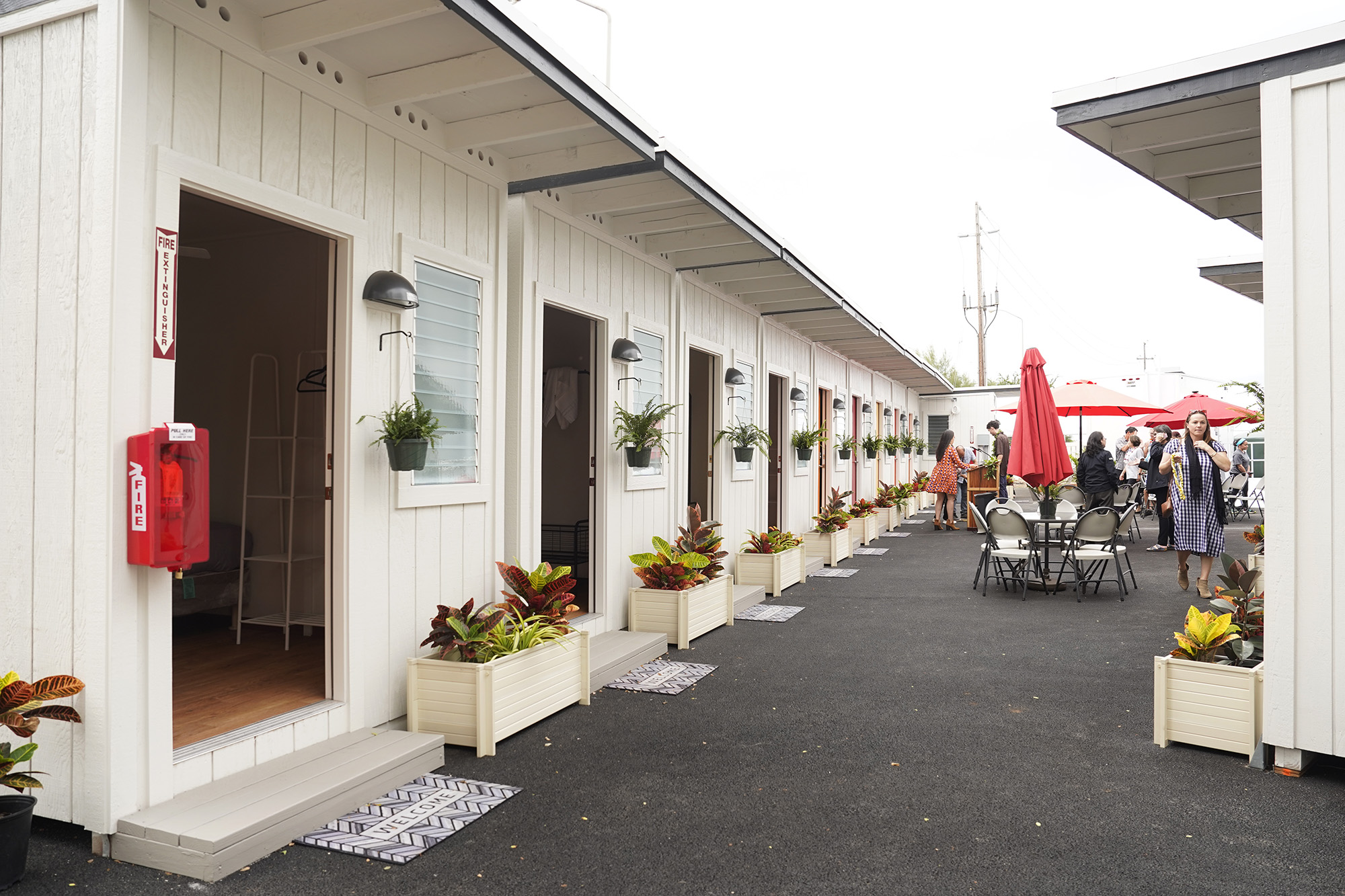
For lawyers and program staff, the shift is practical before it is political. Kauhale dollars now have to move through a file that shows competition, siting review, rent discipline, reporting, and a path to recover money if a vendor falls short. That is a very different regime from an emergency allowance that assumes speed will explain itself.
The wider funding rails
Kauhale is only one part of Hawaii's homeless funding structure, and that matters because compliance has to be read across more than one program. Hawaii's Office on Homelessness and Housing Solutions says Ohana Zones began with a $30 million appropriation under Act 209 in 2018; the program was later made permanent in HB431 CD1 Part II, and the office says 16 projects across 20 sites had served 5,510 individuals as of November 2021.[3][2] The legislature also made the Return-to-Home pilot permanent in SB360 after the 2023 pilot sent more than 100 people back to their home states.[4]
County and federal funding add another layer of review. Hawaii County's Homelessness and Housing Fund reported $6 million in FY2025-26 grants across 12 projects.[5] On Oahu, the most recently reported Continuum of Care allocation was $16.2 million in 2025, while the neighbor islands received $4.2 million collectively; roughly 70% of Oahu's CoC money went to permanent supportive housing.[6] That federal layer remains unsettled as well: in December 2025, Judge Mary McElroy preliminarily enjoined parts of HUD's policy overhaul, leaving some funding terms unresolved.[6]
Taken together, those layers do not erase the audit problem; they make it harder to hide. Hawaii's homeless prevention funding legal framework has moved from emergency discretion toward mandatory process, and anyone advising on these dollars now has to read the old emergency base together with Act 309's overlay. State reform has made the procurement question clearer, but federal risk has not gone away. The useful legal question now is not whether Hawaii can move fast; it is whether it can move fast without losing track of the money.
References
- Hawaii Free Press — April 20, 2026 — Auditor: Out-of-Control Homeless Program Puts Public Funds at 'Immediate Risk'
- 2025 Hawaii Legislature — HB431 CD1 — Relating to Housing
- Statewide Office on Homelessness and Housing Solutions — Ohana Zones
- 2025 Hawaii Legislature — SB360 — Relating to Homelessness; Return-to-Home Program
- Hawaii County Office of Housing and Community Development — Homelessness and Housing Fund (HHF)
- Civil Beat — December 2025 — HUD Plan Leaves Millions For Hawaiʻi Homeless Housing In Limbo
Comments
Join the discussion with an anonymous comment.