
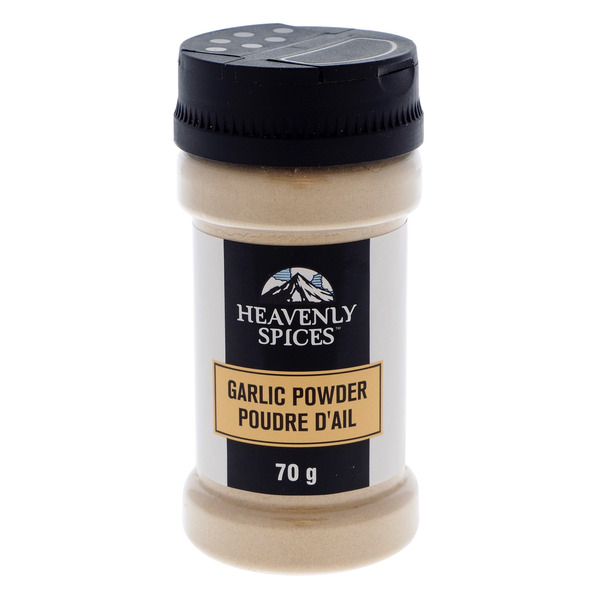
The legally useful starting point is not that garlic powder was recalled. It is the particular recall record: CFIA recall RA-82337, issued July 15, 2026, for Heavenly Spices garlic powder, UPC 067567003903, distributed nationally through Dollarama’s online channel, classified as a Class 2 recall because of possible Bacillus cereus contamination, with no reported illnesses at the time of the notice.[1]
For a U.S. lawyer, that fact pattern is easy to misread in both directions. It is not a U.S. recall. It is not, on the public record, an outbreak case. The manufacturer has not been publicly identified. But it is also not a customer-service footnote simply because the product was sold in Canada and the official notice used a moderate-risk classification rather than the language that tends to draw national attention.
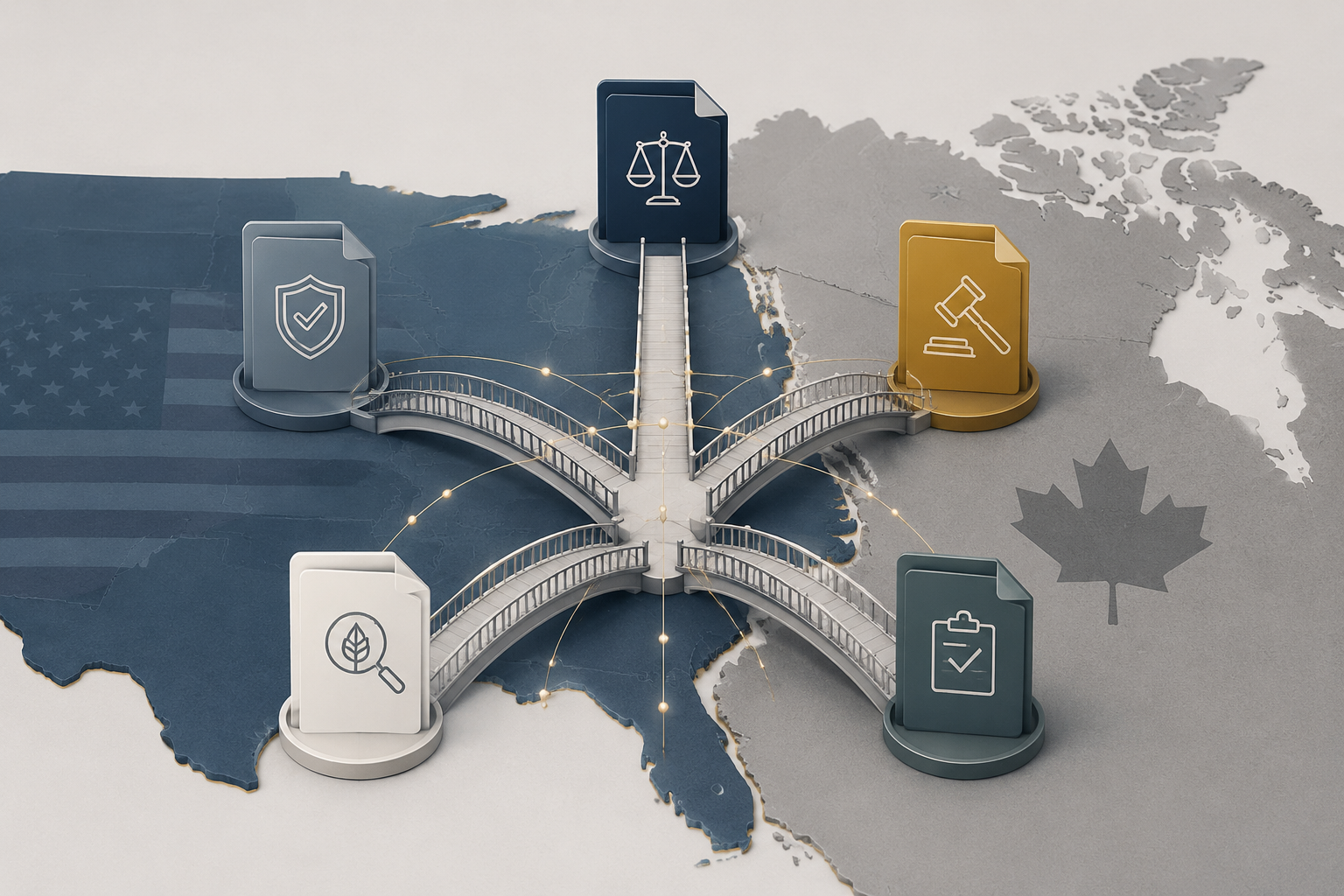
The cross-border issue is narrower and more practical: a Canada-only food recall can still create legal work for U.S. parent companies, suppliers, insurers, private-label administrators, and counsel managing Canadian subsidiaries or distribution agreements. The question is not whether RA-82337 automatically becomes a U.S. class action. It is which legal systems get to decide whether the recall response was enough.
The recall record creates five exposure points
The Heavenly Spices recall is small enough to look administratively routine and specific enough to expose the usual weak seams in cross-border food-risk analysis. A U.S. lawyer advising around it would not begin with a damages model. The first pass is an exposure map.
| Exposure point | Why it matters for U.S. counsel |
|---|---|
| CFIA compliance | The operative regulator is the Canadian Food Inspection Agency, not FDA, and the recall classification, distribution facts, and public notice are Canadian records. |
| Canadian retailer and product-safety duties | Retailers and manufacturers may face duties under Canadian consumer-product and food-safety frameworks that do not mirror U.S. federal recall practice. |
| Canadian class action risk | Economic-loss claims may remain viable without the same Article III standing filter that often controls U.S. federal food-recall litigation. |
| U.S. standing barriers | A parallel U.S. case based only on a Canadian recall, with no U.S. purchase or injury, would face serious justiciability problems. |
| Coordinated recall litigation | Post-recall consumer filings increasingly travel across product categories, jurisdictions, and settlement playbooks, even when the underlying recall record is limited. |
That map matters because each exposure point asks for different proof. CFIA compliance turns on the Canadian notice, the product identifier, distribution channel, hazard, and remedial instructions. Class certification turns on pleadable loss, common issues, and the adequacy of the proposed representative case. U.S. standing turns on injury in fact, traceability, and redressability. Treating those questions as one undifferentiated “recall risk” is how companies end up overconfident in one forum and overreactive in another.
Why Bacillus cereus is legally relevant here
The pathogen issue does not need embellishment. Bacillus cereus is legally relevant because it is a spore-forming bacterium, because dried spices can be contamination vehicles, and because illness may occur after a relatively short incubation window depending on the syndrome. Canada’s pathogen safety materials describe Bacillus cereus as spore-forming and note an 8-to-16-hour incubation period for the diarrheal type; they also identify spices as a vector and report contamination rates reaching 50% to 100% in dried spices.[2]
Those details do not prove anyone became ill from this product. The CFIA notice reported no illnesses as of July 15, 2026.[1] They do, however, make it harder to dismiss the recall as a technical labeling exercise. A low-moisture, shelf-stable spice can still matter in food-safety litigation because contamination may be latent, broadly distributed, and difficult for consumers to evaluate by ordinary inspection.
The Canadian regulatory frame is not FDA with different stationery
For U.S. counsel, the first temptation is to translate the Canadian event into familiar FDA categories and then ask whether the client would have handled the same SKU differently in the United States. That may be useful for internal triage, but it is not the legal frame that governs the public action. RA-82337 is a CFIA recall record involving a product sold through Dollarama’s Canadian online channel.[1]
Canadian recall and product-liability analysis also sits within a different statutory and procedural setting. Canadian product-recall commentary identifies duties involving manufacturers, retailers, distributors, and suppliers, and notes that penalties under the Canada Consumer Product Safety Act can reach $50,000 or six months’ imprisonment.[3] That figure should not be inflated into a prediction of criminal enforcement in this garlic-powder matter. It simply shows why a Canadian recall cannot be evaluated only as a voluntary refund process.
The public record leaves an important blank: the actual manufacturer of Heavenly Spices garlic powder has not been identified in the materials available for this analysis. That limits any responsible manufacturer-side assessment. A supplier indemnity clause, private-label agreement, or importer-of-record file may eventually do more work than the public recall notice, but those documents are not public facts.
The class action question splits at the border
The sharpest legal divide is not between contaminated and uncontaminated product. It is between Canadian class action analysis and U.S. federal standing doctrine. A U.S. complaint premised only on a Canada-only recall would have to explain why a U.S. federal court has a live case or controversy before it ever reaches the familiar product-liability questions.
Cozen O’Connor’s March 2026 alert on post-recall consumer class actions is useful precisely because it does not treat all recall claims as automatically viable. It discusses Ward v. Smucker, McLean v. Walmart, and Catalano v. Grimmway as part of a U.S. standing pattern in which plaintiffs who did not suffer personal injury, did not still possess the recalled product, or received adequate refund opportunities may struggle to establish Article III injury.[4]
Applied to Heavenly Spices, that analysis would make a U.S. federal class action difficult if the pleaded theory is simply that a Canadian retailer recalled garlic powder sold through a Canadian channel. A U.S. plaintiff who did not buy the product, did not consume it, did not discard it, did not lose money in a U.S. transaction, and did not face a concrete health consequence has a standing problem before getting to negligence, warranty, consumer-protection, or unjust-enrichment theories.
That does not make the Canadian side disappear. Canada does not apply Article III, and Canadian class proceedings can be built around economic-loss and consumer-protection theories without the same constitutional gatekeeping. The point is not that certification follows from a recall notice. It is that a defense argument that may end a U.S. federal case at the courthouse door may be only one merits or certification argument in Canada.
Recent Canadian food-recall litigation gives that distinction practical content. The Silk and Great Value plant-based beverage litigation resolved in a $7.5 million CAD settlement, showing that recalled food and beverage products can produce economic settlement value in Canada even where the litigation is not a U.S. Article III exercise.[5] The Quaker salmonella recall also spurred a Canada-wide proposed class action, with Global News identifying Slater Vecchio as the plaintiff firm involved in that proceeding.[6]
Those examples should not be overread. A beverage recall settlement and a salmonella cereal-products case are not garlic powder. They do not establish that RA-82337 will generate litigation, much less that plaintiffs would prevail. They do show why “no illnesses reported” is not the same as “no class action risk,” especially where the alleged loss may be the purchase price, disposal of the product, loss of benefit of the bargain, or inadequacy of the recall remedy.
Dollarama’s response has to be separated into official and reported facts
Dollarama’s official product-recalls page directs customers to contact the company by email or phone regarding recalled products.[7] That is the verifiable company-facing recall channel in the materials available here. The much-discussed $2 e-gift card is a different evidentiary category: it has been reported by news outlets, but the precise terms of eligibility, receipt requirements, proof of purchase, and redemption conditions were not verifiable from Dollarama’s official recall page alone.[8]
That distinction is not pedantic. In U.S. federal litigation, an accessible refund program can matter to standing, mootness, adequacy of remedy, and ascertainable injury. Cozen’s discussion of post-recall refund-program defenses reflects that a defendant may argue a plaintiff has not suffered a redressable economic injury if the company offered a refund or comparable remedy for the recalled product.[4]
On that U.S. logic, a small e-gift card might do more legal work than its dollar value suggests. If a product sold for roughly that amount and consumers could obtain the remedy without meaningful friction, the company would at least have a defense narrative: no injury remains, the transaction has been unwound, and litigation is not necessary to redress the loss.
Canada is a harder audience for that same answer. A Canadian court does not have to treat a retailer’s post-recall offer as a constitutional standing cure. Plaintiffs may still argue that the remedy was incomplete, inconvenient, conditional, underpublicized, or structured in a way that did not compensate all purchasers. If the $2 figure becomes a litigation exhibit, the issue will not be whether $2 sounds small in the abstract. The issue will be whether the recall remedy actually addressed the legally cognizable loss for the proposed class.
Where U.S. entities can enter the risk picture
The public recall notice names the product and retailer channel, not a U.S. defendant.[1] That is why the analysis should be careful about exposure architecture. A U.S. company could still care about the recall if it owns or controls a Canadian entity, supplied ingredients, managed private-label sourcing, insured Canadian operations, processed claims data, designed recall communications, or sits in a contractual chain that shifts costs upstream or downstream.
Those are not all the same risk. Parent-company exposure is not supplier exposure. An indemnity dispute is not a consumer class action. Insurance notice is not an admission of liability. A private-label retailer’s consumer-facing recall burden may be immediate even where manufacturer fault remains unknown. The public facts do not support collapsing those roles into one generalized “company liability” conclusion.
- For a U.S. parent, the first file to review is corporate control and recall decision-making, not only sales geography.
- For a supplier, the key documents are specifications, testing records, indemnity provisions, and traceability records.
- For an insurer, the immediate questions are notice, defense obligations, jurisdiction, and whether economic-loss claims fall inside the policy language.
- For retailer counsel, recall communications and remedy design are litigation documents in waiting, not merely customer-care scripts.
The Cozen alert also places recall litigation in a broader post-recall class action environment, citing settlement benchmarks including Quaker at $6.75 million, TreeHouse at $4.4 million, and Boar’s Head at $3.1 million.[4] Those are not Canadian garlic-powder comparators in any precise damages sense. They are reminders that plaintiff-side firms increasingly understand recall notices as ready-made public records around which economic-loss complaints can be drafted.
What the Heavenly Spices recall does, and does not, support as of Q3 2026
As of the CFIA notice date, this is not an illness case on the public record. No illnesses had been reported.[1] There is also no public identification of the manufacturer in the materials available for this analysis, and the official Dollarama recall page does not itself verify the detailed terms of the reported $2 e-gift card response.[7][8]
That limits the responsible conclusion. The Heavenly Spices garlic powder recall does not, by itself, forecast a successful class action or a U.S. liability event. It does illustrate a cross-border exposure pattern: Canadian regulatory action, a retailer-facing recall remedy, possible economic-loss theories in Canada, weak U.S. federal standing for plaintiffs with no concrete U.S. injury, and contract or insurance consequences that may reach entities outside Canada.
The practical mistake would be to let U.S. standing doctrine do more work than it can. It may be a strong answer to a parallel U.S. federal class action based only on a Canada-only recall. It is not a universal answer to Canadian class proceedings, Canadian recall duties, or the internal allocation of recall costs across a cross-border supply chain.
References
- CFIA recall notice RA-82337, Canadian Food Inspection Agency, July 15, 2026, recalls-rappels.canada.ca
- Pathogen Safety Data Sheet: Infectious Substances – Bacillus cereus, Canada.ca, Canada.ca
- Understanding Product Recalls and Your Legal Rights in Canada, Wagners, Wagners blog
- The Continuing Rise of Post Recall Consumer Class Actions, Cozen O’Connor, March 2026, Cozen O’Connor
- Silk/Great Value settlement, settlement materials
- Quaker recall spurs Canada-wide class-action lawsuit, Global News, 2024, Global News
- Product recalls, Dollarama, dollarama.com/en-CA/corp/product-recalls
- Heavenly Spices garlic powder recall reporting, CityNews, NY Post, Fox Business, The Independent, CityNews
Comments
Join the discussion with an anonymous comment.