
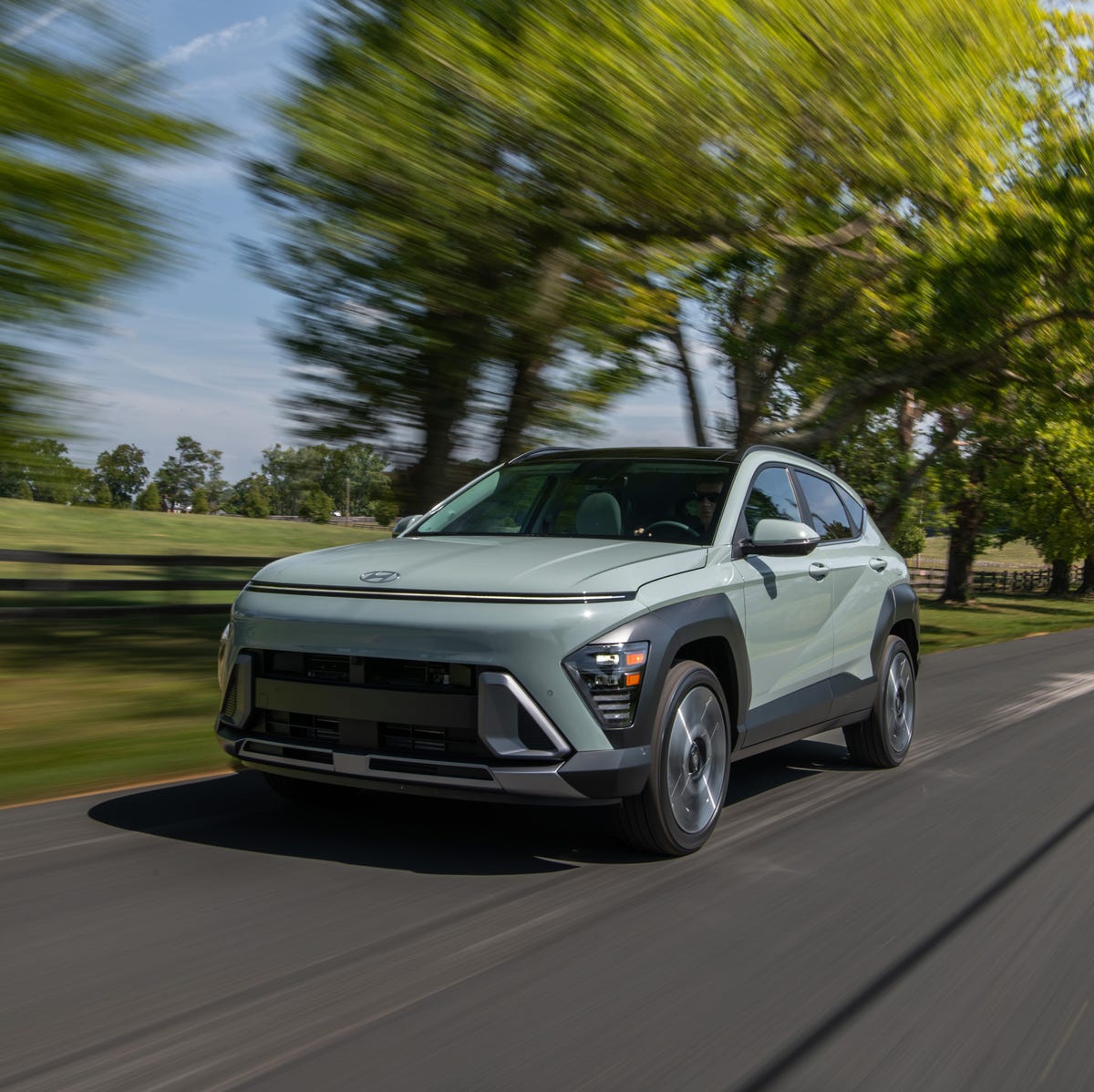
The legally useful part of the 2026 Hyundai Kona steering-knuckle recall is not that it proves a damages case by itself. It does not. Hyundai reported no crashes or injuries tied to the condition as of the recall reporting described by Car and Driver, which keeps the present claim universe narrow and makes any injury analysis necessarily conditional.[1] The useful part is the paper trail: NHTSA recall 26V069, approximately 4,555 vehicles built from March through September 2025, a supplier casting problem, an estimated defect population, a stop-sale affecting roughly 3,775 dealer-stock vehicles, and a dated sequence between internal awareness and owner notification.[1][2]
That is the narrow legal implication: this recall is best understood as an evidentiary sequence, not a completed liability story. If a later steering-loss incident, crash, or injury were alleged in one of the covered vehicles, the recall file would give lawyers a starting structure for defect, knowledge, notice, causation, repair status, and damages. It would not relieve any claimant of proving that the recalled condition actually caused the harm.
The Recall File Before The Lawsuit
The reported defect mechanism is unusually clean for product-liability analysis. TFLcar, citing Hyundai's NHTSA Part 573 filing, reported that contamination in a supplier's casting mold could weaken the structural integrity of the steering knuckle. The supplier reportedly corrected the mold issue in October 2025, Hyundai filed a Speak Up for Safety report on January 5, 2026, and owner notification began April 6, 2026.[2]
Those facts matter because they arrive in the order litigators usually have to reconstruct after a serious event: product component, defect mechanism, production window, internal awareness date, remedial action, dealer-stock control, and owner notice. Here, the sequence exists before any reported crash or injury. That makes the recall more useful as a case study than as a claim valuation exercise.
| Recall fact | Potential litigation use | Immediate caveat |
|---|---|---|
| Contaminated supplier casting mold | Manufacturing-defect evidence | Does not prove causation in any later crash by itself |
| March-September 2025 build window | Vehicle identification and class-boundary evidence | Only vehicles within the recalled population carry this specific record |
| Approximately 4,555 vehicles | Scope of exposure and notice population | Population size is not the same as injured claimant count |
| Estimated 6% defect rate, roughly 275 vehicles | Process-failure and expert-analysis input | Reported as an estimate from secondary coverage of the filing |
| Roughly 3,775 dealer-stock stop-sale vehicles | Recognition of risk before retail delivery | Stop-sale supports risk awareness, not automatic liability |
| January 5 internal awareness and April 6 owner notification | Notice-timing and punitive-damages-relevant fact pattern | Punitive relevance depends on later harm, state law, and proof of conscious disregard |
Why This Fits The Manufacturing-Defect Bucket
Product-defect litigation commonly separates claims into manufacturing defect, design defect, and failure to warn. Plaintiff-side law firm explainers from Conley Griggs and McCallister Law Firm describe recalls as potentially important evidence in that framework, while also recognizing that a recall is not the whole lawsuit.[3][4] Those sources are useful as practitioner framing, not as neutral academic authority.
The Kona facts fit most naturally as a manufacturing-defect example. A design-defect theory usually asks whether the product line was built according to a design that was itself unreasonably dangerous. A manufacturing-defect theory asks whether particular units departed from their intended condition because something went wrong in production. A contaminated casting mold at a supplier is the kind of fact that points to the second category.
That distinction keeps the legal implications from spreading too far. The recall does not, on the available reporting, establish that every 2026 Kona steering system was defectively designed. It identifies a manufacturing process problem affecting a defined population of vehicles. For a claimant, that narrows the proof path: first place the vehicle inside the recalled build population, then connect the alleged steering failure to the weakened steering knuckle condition, then prove injury and damages.
What The Recall Helps Prove
A safety recall is not a confession that every later accident involving a Kona was caused by the steering knuckle. It is more precise than that. In a product case, the recall notice can help prove that the manufacturer identified a safety-related condition, defined the affected product population, described the component-level mechanism, and chose a repair path. Plaintiff-side recall commentary commonly treats that kind of notice as powerful evidence of defect and manufacturer knowledge, subject to the rules of evidence and the facts of the particular case.[3][4]
The NHTSA Part 573 reporting function adds another layer. It gives the parties a dated regulatory record rather than a loose public-relations statement. In a later lawsuit, that record could shape discovery requests, deposition outlines, expert reports, and motions over admissibility. Lawyers would still fight over whether the recall is admissible for a particular purpose, whether it is unfairly prejudicial, and whether the alleged failure mode matches the recalled condition.
The recall also helps defense counsel in a way broad plaintiff narratives often skip. The same file that documents defect can document limits: no reported crashes or injuries as of the recall reporting, a defined build window, an identified supplier process issue, and a repair campaign. If a later claim involves a vehicle outside the build window, a different steering component, or an owner who ignored notice for an extended period, the recall record may narrow rather than expand liability.
Knowledge, Notice, And The Three-Month Gap

The most litigation-sensitive sequence is the reported timing: Hyundai's Speak Up for Safety report on January 5, 2026, and owner notification beginning April 6, 2026.[2] The gap does not prove punitive damages. It does, however, create the kind of dated question punitive-damages briefing often turns on: what did the company know, when did it know it, what risk did it understand, and what did it do before consumers were directly notified?
The stop-sale figure matters in the same cluster of proof. TFLcar reported that approximately 3,775 dealer-stock units were covered by the stop-sale.[2] Dealer-stock control is not the same as owner notification, but it is evidence that Hyundai treated unsold vehicles differently once the issue was identified. In a later injury case involving a sold vehicle, a plaintiff would likely compare the company's control over dealer inventory with the timing and content of notices sent to owners already on the road.
A careful punitive-damages analysis would need more than the public recall chronology. It would need internal communications, engineering evaluations, supplier correspondence, risk assessments, regulatory exchanges, and state-law standards. The public sequence is still meaningful because it tells litigators where to look. The question is not simply whether there was a delay; it is whether the reason for the delay looks reasonable once the underlying documents are produced.
The Defect-Rate Estimate Is Process Evidence, Not Injury Evidence
TFLcar reported an estimated defect rate of about 6%, or roughly 275 vehicles within the approximately 4,555-vehicle recall population, based on the NHTSA filing it described.[2] That number should be handled carefully. It does not say that 6% of owners will crash, lose steering, or suffer injury. It says, as reported, that Hyundai estimated the share of the recalled population affected by the defective condition.
For defect proof, that estimate can still do real work. It gives experts and lawyers a concrete production-quality signal rather than an anecdotal complaint file. A 6% estimated defect rate in a safety-critical steering component is the kind of figure that can support questions about supplier validation, casting inspection, quarantine procedures, escalation thresholds, and how Hyundai calculated the affected VIN range.
It also helps separate population risk from individual causation. In a hypothetical later crash case, the plaintiff would need evidence that the claimant's vehicle had the defective knuckle or failed in a way consistent with the recall mechanism. The defense would be expected to test alternative causes: impact damage, maintenance history, post-sale repairs, road hazard, alignment work, or unrelated steering components. The statistic frames probability; it does not replace vehicle-specific proof.
Where Comparative Negligence Enters
Comparative negligence is not the center of this recall, because the available record emphasizes manufacturer and supplier conduct before owner notification. It becomes more important after notice. Plaintiff-side recall explainers commonly identify unrepaired recalls as a defense theme: if an owner received a recall notice, had a reasonable opportunity to obtain the remedy, and continued driving without repair, the defense may argue that the owner's conduct contributed to the harm.[4]
That argument would still be fact-dependent. A court or jury would care about whether the owner actually received the notice, whether the repair was available, whether the dealer could perform it, whether the vehicle exhibited symptoms, and how long the owner waited. A recall letter in a mailbox is not automatically comparative fault. A documented refusal or long unexplained delay after available repair is a different record.
Hyundai Context, Kept In Its Lane
There is broader Kona-related litigation history, but it should not be allowed to swallow this recall. ClassAction.org reported a $62.1 million Hyundai-Kia settlement over alleged ZF-TRW airbag control unit defects covering several models, including 2018-2023 Kona vehicles, with preliminary approval in April 2025.[5] That settlement may be useful background for counsel monitoring Hyundai safety litigation, but it is not evidence that the 2026 steering-knuckle recall has produced injury claims or that the defect theories are the same.
The difference matters. The airbag-control-unit allegations concerned crash-deployment systems in earlier model years. The 2026 Kona recall concerns a steering knuckle linked to a supplier casting-mold contamination issue. Treating both as a single Hyundai safety narrative may be rhetorically attractive, but it blurs component, model-year, defect mechanism, and causation proof.
The Evidentiary Spine Of A Future Case
If a covered Kona later appears in a lawsuit, the recall file will likely become one of the first exhibits both sides read. The plaintiff will use it to establish that Hyundai identified a safety-related steering component defect, traced it to a supplier manufacturing process, defined the affected vehicle population, estimated the defect rate, and began a remedy campaign. The defense will use the same file to emphasize the absence of reported crashes or injuries at the recall stage, the limited population, the availability of repair, and any facts showing timely regulatory compliance.
That dual use is why the recall should neither be inflated nor dismissed. No reported crashes or injuries means there is no completed injury case to analyze from the public record. But the file already shows how a recall can become the evidentiary spine of a future case: defect first, knowledge next, notice timing after that, and causation still to be proven if harm later occurs.
References
- Hyundai Recalls Some 2026 Kona SUVs for Faulty Steering Knuckles, Car and Driver
- 2026 Hyundai Kona Owners Will Want to Pay Attention to This Recall, TFLcar
- The Impact of Vehicle Recalls on Product Liability Cases, Conley Griggs
- How Recalls Affect Product Liability Lawsuits, McCallister Law Firm
- $62M Hyundai, Kia Settlement Resolves Lawsuit Over Alleged Airbag Deployment System Defect, ClassAction.org
Comments
Join the discussion with an anonymous comment.